Your Guide to a Solid Wood Dining Table and Bench

Dinner still happens at the table, but modern family life doesn't stop there. It's homework after school, laptops during the workday, a quick sandwich standing up, and the long Saturday meal that somehow turns into an evening conversation. That's exactly why a solid wood dining table and bench deserves more thought than a style board usually gives it.
Most shoppers get plenty of advice on finish, farmhouse versus modern, and what looks good in a staged photo. What they don't get is enough guidance on comfort, knee clearance, real seating capacity, and whether a bench will work for the people using it every day. Existing content often treats bench seating as a visual choice, not a daily-living decision. That gap is real, and it matters.
A good dining set should feel grounded the moment someone touches it. The weight of solid oak. The smooth face of maple. The quiet confidence of walnut. Done well, it becomes the room's anchor and stays there for decades, not a few seasons. Dining table sets are where memories are made, but only if the set also works for how a household lives.
Table of Contents
- Finding the Heart of Your Home
- The Foundation of Quality Understanding Solid Wood
- The Seating Debate Bench Versus Chairs
- Sizing Your Space for a Perfect Fit
- Designing Your Set Style Finish and Customization
- Protecting Your Investment Care and Long-Term Maintenance
- Bringing Your Heirloom Home The Vinson Experience
Finding the Heart of Your Home
A dining table earns its place differently than almost any other piece in the house. It isn't only seen. It's leaned on, wiped down, bumped into, filled up, and depended on. That's why the right solid wood dining table and bench should be chosen like a long-term household tool, not a temporary decoration.
For many Columbus homeowners, the decision starts with one practical question. What will happen at this table every week, not just on holidays? A young family may need one side open for quick bench seating and easier cleanup. An empty nester may want chairs at every place setting for slower meals and longer conversations. A mixed-age household usually needs both comfort and flexibility.
Practical rule: Start with use before style. A table that fits daily life will still look right years later.
The strongest choices usually come from three filters.
- Household rhythm: Families with children often appreciate the easy in-and-out movement of a bench.
- Room behavior: Open-concept spaces benefit from furniture that can tuck in cleanly and keep walkways clear.
- Comfort tolerance: If people routinely sit for long dinners, some households should favor chairs on at least one side.
The table itself carries emotional weight too. A solid top has a presence that lighter-built furniture never quite matches. Hands feel the grain. Elbows notice the mass. The room feels settled.
What deserves attention first
Before anyone falls in love with a finish, these questions should be answered:
- Will the set be used for more than dining? If the answer is yes, durability moves to the top of the list.
- Will children use the bench often? That changes how forgiving and useful the setup may feel.
- Does the room need open leg space? Base design matters as much as tabletop shape.
- Will the bench tuck under cleanly? If it won't, the whole room can feel crowded.
That's where many buyers go wrong. They shop the silhouette before they test the fit. A bench can be excellent, but only when the geometry works and the wood is worth living with for the long haul.
The Foundation of Quality Understanding Solid Wood
A dining table has been part of Western life since at least the 7th century BCE, and modern dining height of about 30 inches was already established by the 1600s. That kind of continuity says something important. The form has lasted because it works. Solid wood remains the most convincing version of that form because it feels substantial, ages well, and can stay in service for decades.
Why solid wood still matters
A full-thickness hardwood top isn't just a visual preference. It changes ownership. The piece can live through scratches, years of use, and changing tastes because the surface can be renewed rather than abandoned. That's the compelling argument for solid wood furniture Ohio homeowners should care about. Longevity isn't a slogan. It's built into the material.
Amish-made dining sets make particular sense here because craftsmanship shows up in the parts people don't always see first. The joinery, the way a base handles weight, the way the top sits, and the way the whole piece stays composed through repeated use all matter. The result feels bench-made, not stamped out.
Solid wood asks for commitment up front, then gives that commitment back in years of service.
The wood choice shapes the character of the room. These four hardwoods deserve the most attention.
Solid hardwood characteristics at a glance
| Wood Type | Hardness & Durability | Grain Pattern | Natural Color | Best For |
|---|---|---|---|---|
| Oak | Often chosen for high hardness and scratch resistance | Pronounced and visible | Warm, classic tones | Busy family dining rooms |
| Maple | Durable and dependable for everyday use | Smoother and subtler | Light, clean, adaptable | Transitional and modern spaces |
| Cherry | Durable with an elegant aging pattern | Refined and flowing | Rich, warm undertone | Formal or heritage-inspired rooms |
| Walnut | Strong and substantial | Deep, expressive figure | Naturally darker and more dramatic | Statement tables and tailored interiors |
Oak deserves special respect for active homes. It's repeatedly cited as a strong dining-table choice because of its hardness and scratch resistance. Maple offers a cleaner canvas and takes finish beautifully. Cherry rewards patience because it develops a richer look with time. Walnut brings immediate depth and a quieter luxury.
For buyers weighing wood species carefully, this hardwood guide on longevity and style helps narrow the choice.
What to recommend without hesitation
- Choose oak for the household that uses the table hard and often.
- Choose maple for a cleaner profile and finish flexibility.
- Choose cherry when warmth and age character matter more than trend.
- Choose walnut when the table should read as the room's richest piece.
Solid cherry, oak, maple, and walnut all belong in serious dining rooms. The wrong move isn't choosing among them. The wrong move is buying something that can't be repaired, refinished, or respected years from now.
The Seating Debate Bench Versus Chairs
Bench seating works beautifully for some homes and poorly for others. That's the truth. The right answer depends less on aesthetics and more on who sits there, how long they stay, and how often the room has to flex.
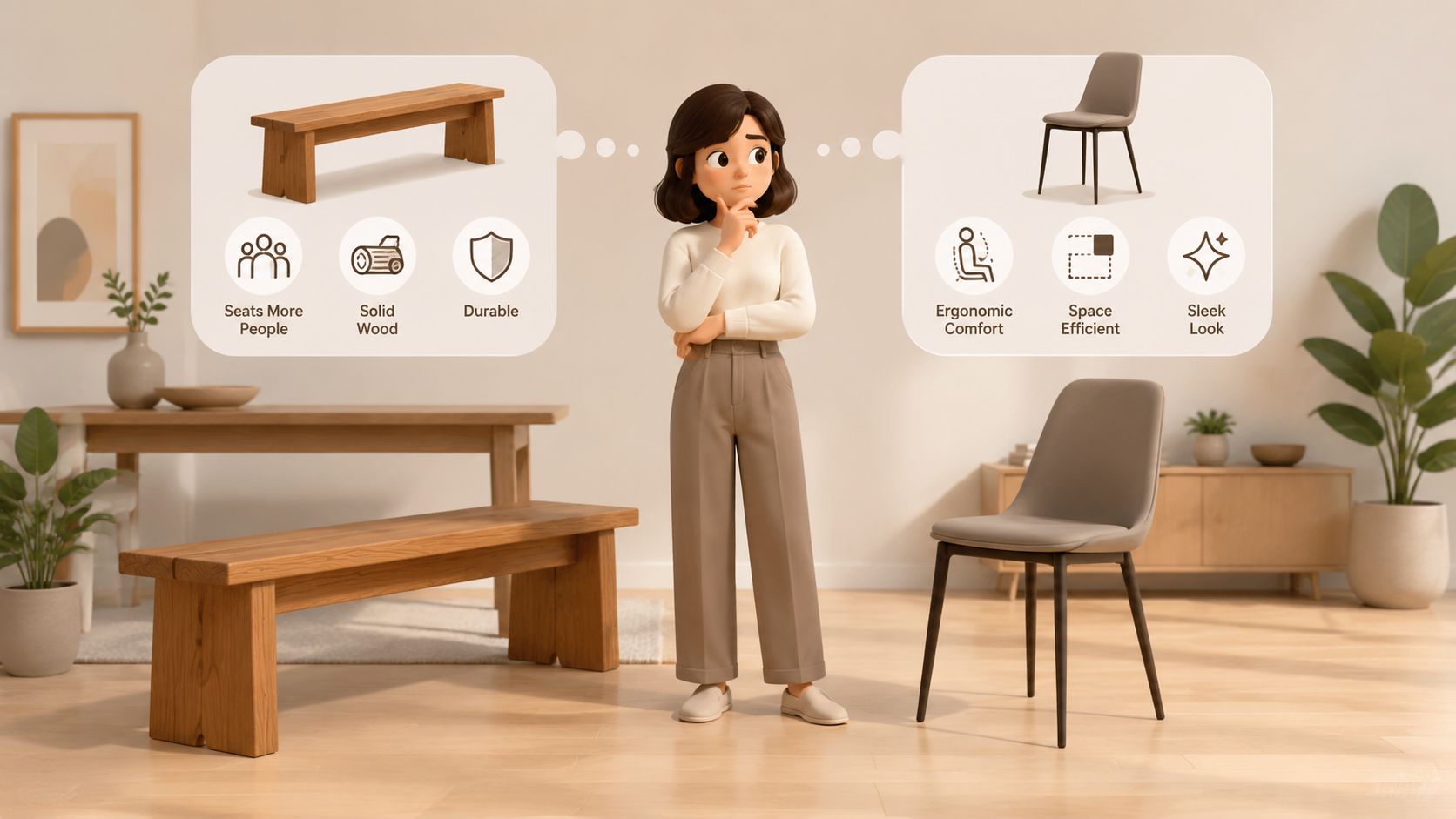
A bench should sit about 12 inches lower than the tabletop, and an 84-inch table is often paired with a 72-inch bench that can comfortably seat three adults. That's not decorative trivia. It's what separates comfortable seating from a setup that feels awkward from day one.
For buyers considering mixed seating, this look at bench seating around the kitchen table is worth reviewing before making the final call.
Where a bench wins
A bench is often the smarter choice when the room has to work hard.
- Children slide in easily: Younger family members don't need a fixed chair at each place.
- The room stays cleaner visually: A bench tucked under the table leaves less interruption in the floor plan.
- Extra flexibility helps: Seating isn't locked into rigid positions the way individual chairs are.
There's also a social quality to a bench that many people like. It feels more relaxed. More communal. Less formal.
That said, bench seating isn't automatically more comfortable. It's more flexible.
Where chairs still do the better job
Chairs remain the better answer for long meals and frequent entertaining. They provide back support, clearer personal space, and easier access for anyone who doesn't want to shuffle sideways to sit down.
A bench is excellent for casual family life. Chairs are better for staying put.
Households with grandparents, taller adults, or anyone who values support should take that seriously. A bench can become tiresome if every meal runs long. In those homes, the strongest layout is often one bench on a side and chairs at the heads or opposite side. That combination handles real life better than an all-or-nothing approach.
A direct recommendation
For modern families, a solid wood dining table and bench usually works best in one of these forms:
- Bench on one side, chairs on the other for the broadest everyday usability
- Bench plus head chairs for a casual table with stronger support where it counts
- All chairs if comfort during long meals matters more than flexibility
A bench should earn its place by function. If the room needs adaptability and the users are mostly moving in and out, it's a strong choice. If support and individual seating matter more, chairs should lead.
Sizing Your Space for a Perfect Fit
Most dining rooms don't suffer from bad taste. They suffer from bad math. A table that's too large turns every meal into a navigation problem. A bench that won't tuck under cleanly leaves the room looking crowded every day.
The two measurements that matter most
Standard planning guidance calls for about 24 inches of width per diner and 36 inches of clearance around the table for comfortable chair movement. That same guidance also notes that a pedestal or trestle base can improve seating capacity by removing corner leg interference.
Those two measurements do most of the heavy lifting.
Per-person width
Each diner needs breathing room. If a household crowds this number, elbows will tell the story fast.Clearance around the table
Chairs need space to pull back, and walkways need to stay usable. Even if a room can physically fit a larger table, that doesn't mean it should.
A room should feel open after the dining set arrives, not solved by squeezing past it.
Base design matters more than many buyers expect. Four corner legs can limit where people sit. Trestle and pedestal bases open up placement and often make a bench work better because there's less interference at the ends.
For anyone measuring a room before shopping, this furniture measuring guide gives a practical starting point.
How to size the bench correctly
Bench fit is a geometry problem, not a style problem. The bench should be shorter than the inside-leg span of the table so it can tuck in without hitting the base. It should also avoid crowding table legs.
A simple decision process works well:
- Measure the room first: Confirm the table leaves proper circulation space.
- Measure the base second: Check where legs or supports sit.
- Size the bench last: Match the bench to the usable opening, not just the tabletop length.
Many buyers benefit from design help. A bench that looks right in a product photo can behave completely differently once the table base, dining rug, and room traffic are involved. Good space planning saves frustration before a piece is ever built.
Designing Your Set Style Finish and Customization
The right dining set shouldn't look imported into the room. It should look like it belongs there. That usually happens when the wood species, finish, edge profile, and base style are chosen together instead of one at a time.

How the design comes together
A strong solid wood dining table and bench starts with the mood of the house.
An interior with a particular aesthetic may call for walnut with a quieter profile and a sculptural base. A brighter family kitchen may come alive with maple and a cleaner finish. A home leaning traditional often looks right with oak or cherry, especially when the grain is allowed to show its full character.
The finish matters just as much as the species. Some buyers want boards that read rustic and expressive. Others want a smoother, more refined visual field. Neither choice is wrong. The mistake is picking a finish without considering what daily use will do to it.
A table used for regular family meals should hide life gracefully. It doesn't need to be precious. It needs to wear well.
Why customization changes the result
Custom ordering proves its value. Details that sound small on paper often decide whether a set feels generic or personal.
- Shape: Rectangular, round, or extension-friendly forms change how a room moves.
- Base style: Trestle and pedestal designs can open seating and change the look from formal to relaxed.
- Edge profile: The tabletop edge influences whether the piece feels rustic, refined, or contemporary.
- Finish selection: Stain depth can make the same species feel either airy or grounded.
For homeowners furnishing with intention, the process often extends beyond dining. A home with Amish-made dining sets may also call for Mavin bedroom furniture, while nearby seating areas may pair better with Smith Brothers furniture Easton shoppers seek for their custom upholstery and motion options. In family rooms, custom leather sectionals Columbus buyers choose often work best when the dining space carries the same material honesty and craftsmanship.
For tabletop styling once the set is in place, a restrained centerpiece usually looks strongest. Seasonal candles can work well, and this DIY floating candle guide offers tasteful ideas that won't overwhelm the wood itself.
A practical route for personalization is available through Vinson Fine Furniture, where the Custom Order Program includes brands such as Canadel, Mavin, and Smith Brothers, plus in-store design support and visualizers for reviewing finish and configuration choices. That matters when a buyer wants the table, bench, and surrounding seating to feel coordinated without looking overmatched.
Protecting Your Investment Care and Long-Term Maintenance
A serious dining table should survive real life. It should handle spilled water, sliding dishes, school papers, and the occasional scratch without becoming disposable. That's one of the clearest reasons solid hardwood stays in demand.
Solid hardwood tables can be sanded and refinished multiple times if damaged, while veneer tables generally cannot. That difference changes the value equation completely. Repairability is what turns a purchase into an heirloom.
What daily care should actually look like
Daily care doesn't need to be complicated, but it does need to be consistent.
- Wipe spills promptly: Water rings are easier to prevent than remove.
- Use a soft cloth: Abrasive materials do more harm than people realize.
- Treat the table like a working surface: Heat, moisture, and grit should be managed, not ignored.
A bench deserves attention too. It gets dragged, nudged, and kicked more than chairs do. Floor protection under the bench helps preserve both the floor and the bench base, especially in high-use kitchens.
For owners who want a straightforward wood-maintenance primer, Everti's guide to wood care offers a useful way to think about routine conditioning and respect for natural material surfaces.
Why repairability matters more than perfection
A solid wood top doesn't need to remain flawless to remain beautiful. In many homes, small marks become part of the table's story. The point is that damage doesn't end the life of the piece.
The best dining tables aren't the ones that avoid every mark. They're the ones worth restoring.
For long-term upkeep, this wood furniture care article covers the basics homeowners should have on hand. Good maintenance protects the finish. Better construction protects the investment. Solid wood does both when the piece is chosen correctly from the beginning.
Bringing Your Heirloom Home The Vinson Experience
Once the wood, seating plan, and finish are settled, the buying experience should be just as considered as the furniture itself. Heavy dining furniture isn't something most households want to second-guess after delivery day.
What a good buying process should include
The right process includes more than product selection. It should account for customization, room planning, and delivery that respects the piece.
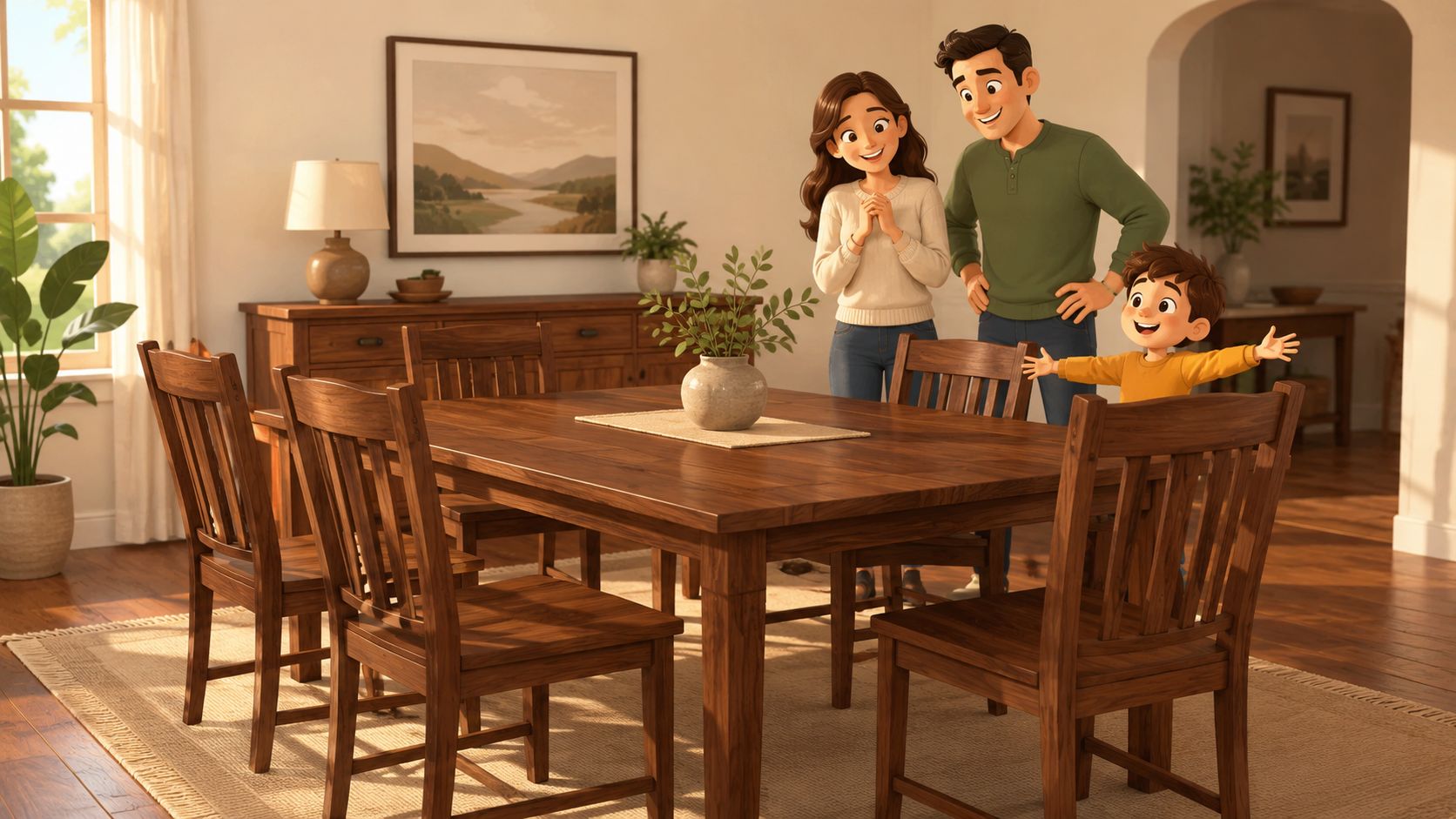
A family-owned showroom at Easton Town Center gives buyers something online browsing never can. They can touch the top, compare oak against maple in person, sit on the bench, and feel whether the table edge and seating posture are comfortable. That sit-test matters.
The same household may also be furnishing beyond dining. That's where coordinated guidance becomes useful. A dining room in solid hardwood often connects naturally to living spaces with top-grain leather, swivel chairs, recliners, rockers, gliders, or sectionals with power motion. Those categories don't need to match, but they should feel like they belong to the same home.
Why the showroom visit still matters
White-glove delivery is especially important with a substantial table and bench. Large solid wood pieces are awkward to move, easy to damage if handled poorly, and not something homeowners should wrestle with on stair turns or tight entries. For anyone curious about the practical side of moving heavy household pieces, these tips for relocating large furniture show why professional handling matters.
Value matters too, but not in the shallow sense. A low price upfront means very little if the furniture doesn't age well. Better value comes from durable construction, customization that avoids replacement regret, and service that protects the purchase from showroom floor to final placement.
For shoppers in Central Ohio, that combination is easiest to judge in person. Easton remains the right place to compare weight, finish, seating comfort, and scale before making a lifetime buy.
Vinson Fine Furniture offers Columbus homeowners a place to evaluate solid hardwood in person, compare Amish-made dining sets, explore custom options from Canadel, Mavin, and Smith Brothers, and work through room planning in the Easton Town Center showroom. For buyers who want a solid wood dining table and bench that feels right on day one and still belongs years from now, that hands-on step is worth taking.