Custom Wood Bedroom Furniture: Heirloom Quality Design

A familiar Columbus story starts the same way. A bedroom looks good for a year or two, then drawer bottoms sag, the finish dulls, and the bed that once felt sturdy begins to creak every time someone turns over at night. What should be the calmest room in the house starts reminding the homeowner of every compromise made at checkout.
That's usually the moment custom wood bedroom furniture starts to make sense. Not as a luxury phrase. As a practical one. A bedroom set isn't just décor. It's daily use, daily contact, and daily wear. Hands grip the same drawer pulls every morning. Lamps rest on the same nightstands every evening. The bed frame carries the same weight night after night. When those pieces are made from solid hardwood, sized well, and built with repairable construction, the room feels different. Quieter. More grounded. More permanent.
For homeowners furnishing a primary suite, renovating a guest room, or finally replacing a stopgap setup, the key question usually isn't, “What style is trending?” It's, “What will still feel right years from now?” That's where heirloom thinking matters. It values fit, material honesty, and craftsmanship over fast turnover. It also answers a very local problem. Columbus homes vary widely, from older bedrooms with odd wall jogs and narrow clearances to newer homes with generous footprints that still need balanced proportions.
Table of Contents
- Your Guide to Heirloom-Quality Bedroom Furniture
- Why Choose Custom Solid Wood Over Mass-Market Options
- Designing Your Perfect Bedroom Piece by Piece
- The Vinson Customization Process From Vision to Reality
- Mastering Sizing for Your Unique Columbus Home
- Understanding the Investment in Heirloom Furniture
- From Showroom to Sanctuary With White-Glove Service
Your Guide to Heirloom-Quality Bedroom Furniture
A well-made bedroom doesn't announce itself with flash. It earns trust through daily use. Drawers open smoothly. Bed rails stay tight. The surface under a reading lamp still feels substantial years later. That's the difference between furniture that fills a room and furniture that becomes part of a home.
What heirloom quality really means
Heirloom quality starts with solid hardwood, but it doesn't end there. It also includes proportion, joinery, finish, and the discipline to build something worth maintaining instead of replacing. In bedroom furniture, that often means choosing wood with presence, selecting a finish that suits the room's light, and specifying storage pieces that work with the way the household lives.
Buyers often get stuck on the word custom because it sounds complicated. In practice, custom usually means something simpler and more useful:
- Right dimensions: The bed fits the room instead of overpowering it.
- Right function: Nightstands hold what the household uses at bedtime.
- Right material: The wood species matches both the style of the room and the level of wear expected.
- Right details: Hardware, drawer construction, and finish all support long-term use.
A bedroom set becomes heirloom-worthy when it serves the room well now and still deserves repair rather than replacement later.
Why Easton shoppers often start with the bedroom
The bedroom is often the first place homeowners decide to stop buying temporary furniture. That choice is practical. The room is personal, used every day, and less forgiving of poor fit than many living spaces. A dresser that blocks an outlet or a bed that leaves cramped walkways affects the room every single day.
That's also why Easton shoppers often approach the bedroom with a different mindset than occasional furniture. They're not only asking what looks beautiful under showroom lighting. They're asking what will feel restful at home, what will suit an older Columbus floor plan, and what will still make sense when the rest of the house evolves.
A strong bedroom plan usually starts with four questions:
- How much clearance does the room need around the bed?
- Which solid hardwood fits the home's style and wear needs?
- What storage is missing from the current setup?
- Which details make the piece worth keeping for the long term?
Why Choose Custom Solid Wood Over Mass-Market Options
The case for solid wood is easy to understand once someone touches it. The weight is different. The edges feel cleaner. The grain has variation that doesn't repeat like a printed pattern. A hardwood dresser doesn't feel hollow when a drawer closes. It feels planted.
That preference isn't niche. The global bedroom furniture market was valued at USD 266.15 billion in 2024, and wood accounted for 39.45% of the market share according to Mordor Intelligence's bedroom furniture market analysis. Wood remains the leading material inside a very large category, which helps explain why serious buyers continue to come back to it.
The material difference shows up immediately
Mass-market bedroom furniture often wins on speed and convenience. It rarely wins on feel. The first clue is motion. Furniture built for short-term turnover tends to flex more, loosen earlier, and age less gracefully under ordinary use.
Solid hardwood behaves differently because the starting material is different, and the construction often is too. In custom and Amish-made work, buyers regularly look for durable species such as cherry, oak, maple, and walnut, along with bench-made joinery that supports repeated use.
For anyone comparing wood options more closely, this hardwood guide for longevity and style is helpful because it frames the decision around wear, appearance, and lifespan rather than trend language.
Practical rule: If a piece will be touched every day and loaded every week, construction matters as much as appearance.
A clear comparison at a glance
| Attribute | Solid Hardwood (Vinson Standard) | Mass-Market Alternatives |
|---|---|---|
| Feel in the room | Weighty, grounded, substantial | Often lighter and less anchored |
| Surface character | Natural grain variation and depth | More uniform appearance |
| Long-term repairability | More suitable for refinishing and repair | More limited repair options |
| Daily drawer use | Better suited to repeated opening and loading | More prone to wear showing early |
| Aging over time | Develops character with use | Often looks worn rather than lived-in |
| Fit for custom sizing | Well suited to made-to-order dimensions | Usually limited to standard sizes |
Custom solid wood also gives a bedroom emotional value that's hard to fake. A cherry dresser catches morning light differently than maple. A walnut bed frame can make a large room feel more intimate. Oak brings visible grain and a more traditional sense of permanence. Those aren't marketing details. They're the qualities that make a room feel settled.
Designing Your Perfect Bedroom Piece by Piece
The design stage is where most shoppers either get excited or overwhelmed. It helps to slow the process down and treat the room as a set of connected choices instead of one giant decision. Start with the wood. Then the finish. Then the shape of each piece. Then the details touched every day.
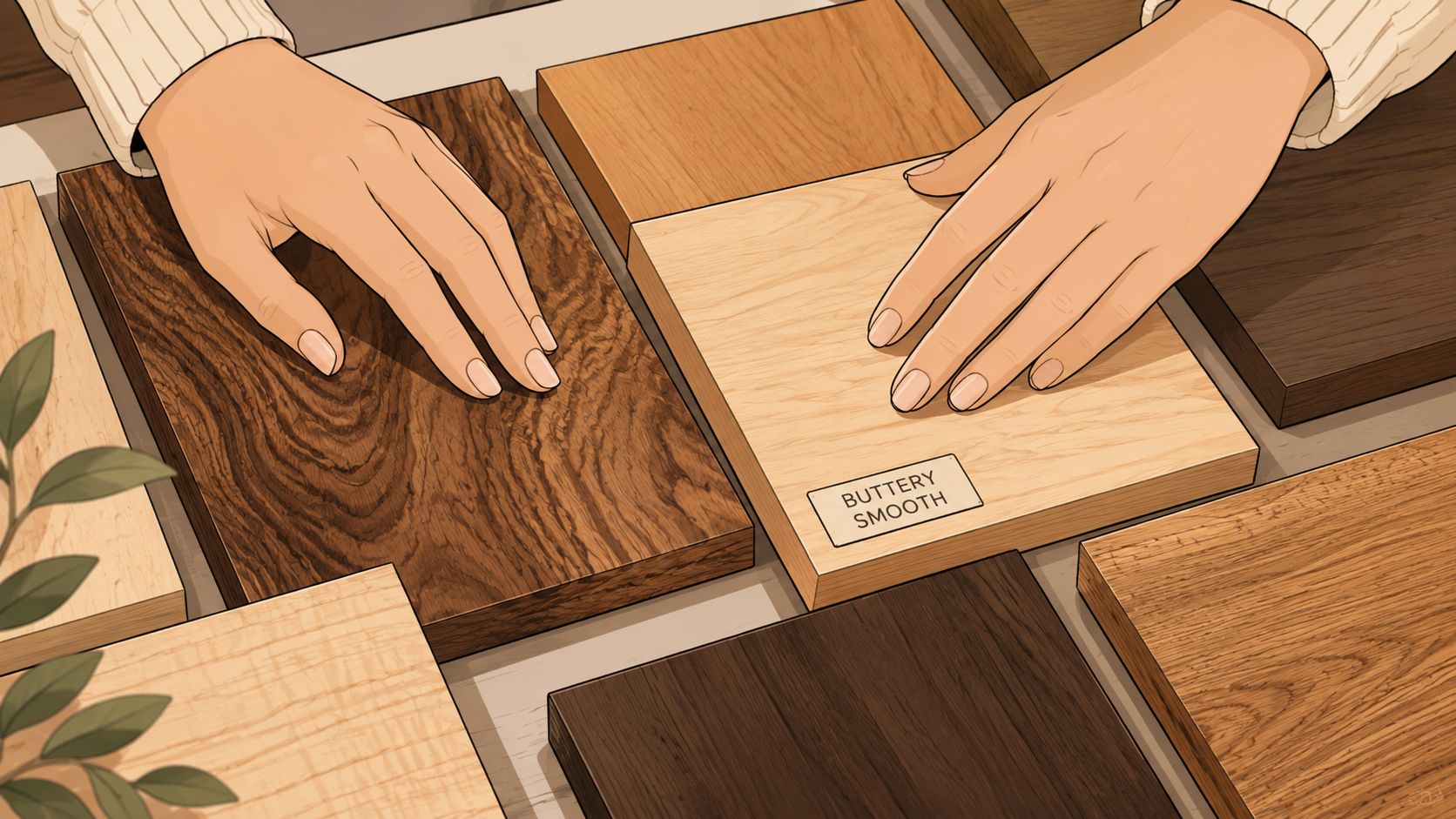
How each hardwood changes the mood of a room
Cherry has warmth and quiet richness. In a bedroom, it often feels calm and refined. It works well in homes that lean traditional, transitional, or softly formal.
Oak brings grain forward. It has visible movement and a classic furniture presence. In a room that needs character, oak can do a lot of work without ornament.
Maple reads cleaner. Its grain is tighter and its look often feels more refined and contemporary, especially in lighter finishes.
Walnut tends to create depth quickly. It can make a simple silhouette feel architectural, especially in bedrooms with neutral textiles and restrained color palettes.
A finish changes each species again. The same bed design can look more formal, casual, rustic, or modern depending on stain depth and sheen. That's why wood samples matter. A species chosen from memory often looks different under the actual lighting in a home.
For readers shaping a room around rest rather than just storage, this guide to a mindful bedroom oasis offers useful ideas on atmosphere, layering, and how material choices affect the feeling of the space.
Details that improve daily use
Construction details become visible after the furniture arrives and ordinary life begins. High-quality custom bedroom collections are commonly built from durable hardwoods such as oak, cherry, and maple, and often specify dovetail drawers with full-extension glides for better stability and access, as described in this overview of solid-wood bedroom construction details.
That matters in practical ways:
- Full-extension glides let the back of the drawer stay usable instead of becoming dead space.
- Dovetail drawers help support repeated loading and unloading.
- Well-scaled case pieces keep the room balanced instead of bulky.
- Thoughtful hardware affects grip, comfort, and the furniture's visual tone.
A bedroom rarely needs every matching piece available. It needs the right combination. Some rooms want a tall chest and smaller nightstands. Others need a broad dresser and a bed with a stronger headboard presence. Good custom wood bedroom furniture doesn't ask the room to adapt. It's built to suit the room.
The Vinson Customization Process From Vision to Reality
Custom furniture feels less intimidating when the process becomes visible. Most buyers don't need to arrive with exact drawings or expert vocabulary. They need room measurements, a sense of what isn't working, and a few visual preferences. From there, the decisions become more manageable.

The broader market supports that shift toward personalization. The custom furniture market is estimated at USD 44.76 billion in 2026 and is forecast to reach USD 115 billion by 2035, growing at an 11.2% CAGR, according to Market Data Forecast's custom and wooden furniture outlook. Buyers are increasingly choosing made-to-order furniture because fit and function matter.
What happens during a design consultation
A strong consultation usually begins with the room, not the catalog. The first questions are often simple.
- What feels wrong now? A bed may be too tall, a dresser too deep, or storage poorly divided.
- What must the new piece do? Some households need better folded-clothing storage. Others need a bed scaled to a difficult wall.
- What atmosphere suits the home? The answer changes wood species, finish, and hardware.
One practical starting point is a custom order planning guide that explains how shoppers can prepare dimensions, inspiration images, and priorities before making final selections.
This is also where the showroom process becomes useful. A single visit can bring together complimentary design consultations, the In-Store Design Studio, and the Custom Order Program for brands such as Mavin, Canadel, and Smith Brothers of Berne. Even in a bedroom-focused project, that broader custom framework helps homeowners coordinate nearby spaces and make finish choices with confidence.
Why visualizers reduce costly guesswork
Many people can't translate a small finish swatch into a whole bedroom. That's normal. Digital visualizers help by showing the likely result before production begins. The same bed can appear dramatically different in maple versus walnut, or with different hardware and stain combinations.
That kind of preview changes the conversation from abstract preference to practical judgment. A buyer can notice when a headboard feels too heavy for the wall, when a finish darkens the room more than expected, or when matching every piece too closely would flatten the space.
The best custom process doesn't create more decisions. It makes each decision easier to see.
Mastering Sizing for Your Unique Columbus Home
A beautiful bedroom set can still be wrong for the room. That's one of the most common and expensive furniture mistakes. Buyers focus on bed size and dresser style, then discover later that a nightstand blocks an outlet, a drawer can't open fully, or the path around the bed feels cramped.
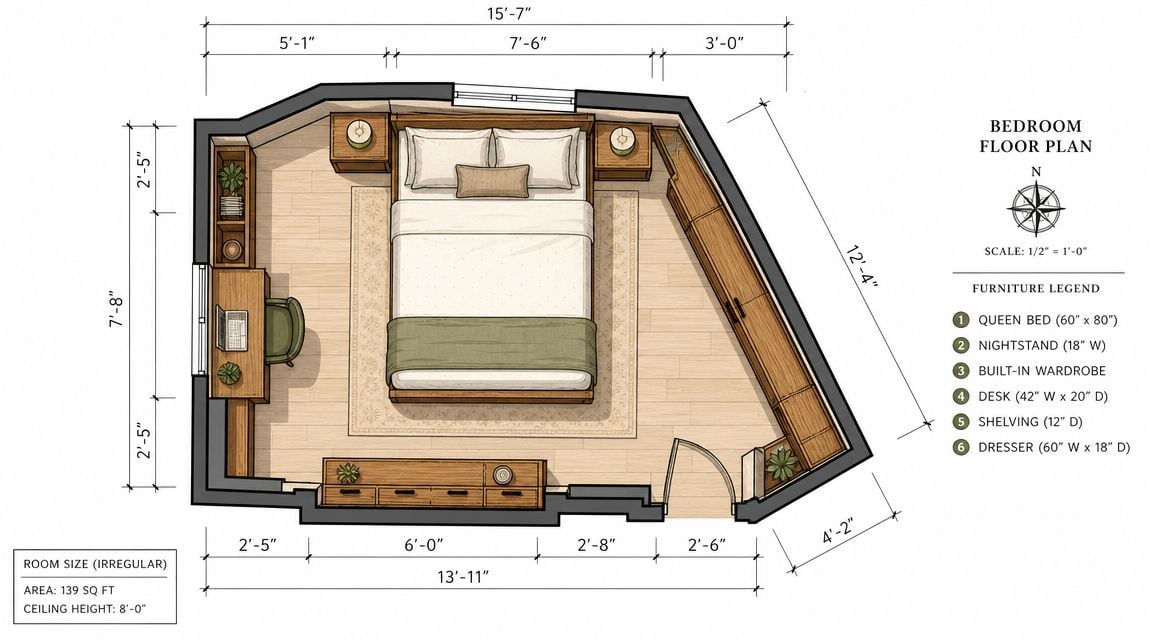
A critical step in selecting bedroom furniture is accounting for dimensional clearance. Experts recommend measuring room length, width, and height, while also noting doors, windows, vents, and outlet access, so pieces fit correctly and circulation remains comfortable, as outlined in this bedroom furniture measuring and clearance guide.
The measurements that matter most
Most homeowners measure wall-to-wall and stop there. Designers go further.
- Door swing: A dresser that fits on paper may still interfere with entry.
- Window placement: Headboards, mirrors, and taller chests need to respect trim and light.
- Vent location: Blocking airflow can make a room less comfortable.
- Outlet access: Nightstands should support lamps and charging without awkward extension cords.
- Walking paths: The room must still feel easy to move through after every drawer is open.
A good measuring checklist can help prevent those problems before they become expensive. This furniture measuring guide is useful for thinking beyond simple wall dimensions.
When custom sizing solves a real problem
More than just a style upgrade, custom wood bedroom furniture also functions as a layout solution. Older Columbus homes often have non-standard wall lengths, radiator constraints, sloped ceilings, or awkward niches. Newer homes can present the opposite challenge. Large rooms that swallow undersized furniture and feel visually unfinished.
A custom bed can be scaled to preserve circulation. A chest can be narrowed without losing presence. A nightstand can be built with the right depth for a tighter wall. In rooms with unusual mattress sizes or specific sleep setups, custom sizing may be the only way to get both comfort and proportion right.
Rooms don't fail because the furniture is unattractive. They fail because the furniture ignores clearance, access, and daily movement.
Understanding the Investment in Heirloom Furniture
The most useful way to discuss price is to separate upfront cost from long-term ownership. Those aren't the same thing. A lower ticket today can still become the more expensive choice if the piece needs replacement, can't be repaired, or never fits the room properly in the first place.
That's why durability and total cost of ownership matter so much in custom wood bedroom furniture. Focusing on durable hardwoods and repairable construction helps extend useful life and reduce replacement risk, as discussed in this overview of durability and long-term furniture value.
Upfront price and long-term value aren't the same thing
Heirloom furniture asks for more intention at the start, but it often returns value in three ways.
First, it performs longer. A solid hardwood dresser built with repairable construction is designed to keep serving the room instead of being discarded when one element fails.
Second, it fits better. A piece that's made for the room is less likely to be replaced because of layout frustration.
Third, it tends to age with more dignity. Wear on solid wood often reads as character. Wear on disposable furniture often reads as decline.
Homeowners already understand this logic in other parts of the home. For example, this article on Richmond hardwood floor value is a useful parallel because it shows how durable, natural materials are often evaluated through longevity, upkeep, and perceived value rather than just purchase price.
Ways shoppers protect value while buying well
A careful purchase doesn't always mean choosing the most elaborate piece. Often, the strongest value comes from simpler forms built with better material and better construction.
Two practical options can help buyers stay disciplined:
- Low Price protection: A retailer policy such as a 110% refund of the difference can reduce pricing anxiety when comparing authorized local options.
- Clearance opportunities: A Clearance Gallery with savings up to 70% can make premium solid-wood pieces more accessible for buyers who are flexible on timing or floor samples.
For shoppers thinking in lifespan instead of impulse, this guide on how long furniture should last is a useful way to frame value around years of use rather than a single receipt.
The point isn't that every bedroom needs the most expensive build. It's that the smartest purchase is often the one that combines exact fit, durable hardwood, and construction worth maintaining.
From Showroom to Sanctuary With White-Glove Service
The final stage matters more than many buyers expect. A carefully built bed can still suffer from rushed delivery, improper assembly, or careless placement. Heavy solid wood deserves careful handling from the truck to the final room position.

What a careful delivery changes
White-glove delivery is valuable because it turns a complex handoff into a controlled one. Placement, assembly, inspection, and packaging removal happen as part of a coordinated process rather than an improvised one.
For anyone comparing why professional setup matters, this article on bed assembly service considerations gives helpful context on the practical benefits of trained assembly and in-room setup. A related local explanation of what white-glove delivery includes is also useful for understanding what to expect before delivery day.
Simple care for solid wood over time
Once the furniture is in place, care is straightforward.
- Dust gently: Use a soft, dry cloth and stay consistent rather than aggressive.
- Protect from harsh sunlight: Direct sun can alter finish appearance over time.
- Manage room conditions: Bedrooms with steadier humidity tend to be kinder to solid wood.
- Clean spills promptly: Quick attention helps preserve the finish.
- Avoid dragging pieces: Lift and reposition carefully when the room changes.
Solid hardwood rewards ordinary care. It doesn't need fuss. It needs respect, stable conditions, and a household that treats it as a long-term part of the home rather than a temporary placeholder.
For homeowners ready to replace short-term furniture with something built for lasting use, Vinson Fine Furniture offers a way to explore solid hardwood bedroom pieces in person at Easton Town Center, compare finishes and wood species, and use design support to solve real room-planning questions before an order is placed.