Home Office Furniture Used: A Columbus Buyer’s Guide

A spare bedroom becomes an office almost overnight. The dining room corner starts collecting a laptop stand, a task lamp, and a stack of files. Then the search begins for home office furniture used, because it feels practical to start with what's available now and what appears to cost less.
That instinct makes sense. A secondhand desk or chair can be a smart buy. It can also become the kind of purchase that looks efficient on Saturday and feels disappointing by Tuesday, when drawers stick, the top wobbles, or the chair doesn't support a full workday. The better approach is to shop the used market with a craftsman's eye. Materials, joinery, adjustability, transport, and lifespan matter more than the tag hanging on the piece.
Table of Contents
- Finding Value in a Growing Market for Home Office Furniture
- Where to Find Used Home Office Furniture in Central Ohio
- The Craftsman's Inspection Checklist for Used Furniture
- Beyond the Price Tag Negotiating and Hidden Costs
- From Secondhand Find to Cohesive Home Office
- The Investment Alternative Heirloom Quality and Perfect Fit
Finding Value in a Growing Market for Home Office Furniture
A Columbus homeowner who needs a desk this week usually starts in the same place. Marketplace listings, local resale photos, and quick comparisons between “good enough” and “worth restoring.” That's reasonable, because the home office is no longer a temporary corner of the house.
The broader demand tells the same story. The global home office furniture market is projected to reach $40.11 billion in 2026, with North America as its largest regional market, according to The Business Research Company's home office furniture market report. That matters because it points to a lasting shift toward home-based work, not a short-lived buying cycle.
Why the search feels urgent
Used furniture appeals to buyers for three simple reasons.
- Immediate availability. A buyer can often pick up a desk or chair the same day.
- Visible value. The price looks favorable at first glance.
- Older construction. Some secondhand pieces were built with heavier materials than many mass-market options available today.
That said, urgency often creates sloppy decisions. A homeowner may buy based on dimensions and finish alone, then discover the keyboard height is wrong, the filing drawer catches, or the chair only felt comfortable for ten minutes.
Practical rule: A home office piece earns its place by how it performs over time, not by how attractive the listing looks on a phone screen.
What value actually looks like
True value has less to do with chasing the lowest number and more to do with choosing pieces that still have strong years ahead of them. For a desk, that means rigidity, sound joinery, and a work surface that can handle daily use without sagging or chipping. For a chair, it means genuine adjustability and support rather than a padded seat that has already collapsed.
A savvy buyer treats the used market as a sorting exercise. Some pieces are excellent candidates for second life. Others are at the end of theirs. The difference usually shows up in the bones of the furniture.
That is why a good guide starts with evaluation, not excitement. A fine desk should feel substantial when a hand rests on its edge. A proper chair should support a long afternoon of work without constant shifting. If a piece can't do that, it isn't a value purchase. It's a compromise wearing a tempting price tag.
Where to Find Used Home Office Furniture in Central Ohio
Central Ohio gives buyers several practical paths, and each one rewards a different kind of shopper. Some buyers want speed. Others want the chance to inspect in person before committing.

Online listings with fast turnover
Online sources tend to move quickly, which is useful if a buyer needs a desk before the next workweek.
- Local marketplace apps. These are often the fastest route to used desks, task chairs, filing cabinets, and bookcases. Good listings disappear quickly, so buyers should ask for underside photos, drawer-close videos, and exact measurements before driving across town.
- Neighborhood selling groups. These can be useful for finding cleaner household pieces that were lightly used in guest rooms or bonus spaces rather than in full commercial settings.
- Estate and moving sales online. These often surface sturdier wood case goods, especially when a homeowner is downsizing and wants furniture removed promptly.
The trade-off is inconsistency. Photos can hide finish wear, loose joints, or uneven legs. A buyer has to assume nothing until the piece is seen and touched.
Local in person sources worth checking
Brick-and-mortar sources are slower than scrolling, but they often provide a better inspection environment.
- Office furniture liquidators. These are worth visiting when the goal is ergonomic seating, worktables, storage, or surplus commercial desks from business downsizing.
- Consignment stores. Better for wood desks, accent seating, and bookcases that need to blend with the rest of the home rather than look overtly corporate.
- Auction houses and local estate events. Strong option for substantial older furniture, especially if the buyer recognizes quality joinery and solid hardwood construction.
For homeowners who want to compare used options with current retail selections in one local search, furniture for sale in Columbus, Ohio can also help establish what new pieces cost, how they're built, and whether a secondhand listing is a worthwhile value.
The right source depends on the target. Commercial resale tends to be stronger for ergonomic chairs. Consignment and estate sources tend to be stronger for wood furniture with domestic character.
A disciplined buyer keeps a short checklist ready before leaving home. Measure the room. Measure the doorway. Measure the stairs. A remarkable desk that can't make the turn into an upstairs office is still the wrong desk.
The Craftsman's Inspection Checklist for Used Furniture
The inspection is where value is either confirmed or exposed as wishful thinking. A handsome finish can distract from weak structure, and a low price can make buyers excuse damage they'd never accept in person from a new piece.
How to inspect a used desk or cabinet
Start with the frame. A desk should sit flat and feel planted. Press on the top corners. Grip one side and apply light pressure. If the piece twists, creaks, or rocks, the joinery may be tired or the frame may have loosened over time.
Then inspect the construction details.
- Check the underside. Solid wood usually shows more natural variation in grain and board seams. Thin printed surfaces and swollen panels often reveal lower-grade construction.
- Look at drawer boxes. Better drawers feel firm and aligned. Poor ones rack when opened or leave uneven gaps when closed.
- Study the joints. Strong furniture tends to show thoughtful assembly rather than stapled panels and cam locks doing all the work.
- Inspect wear patterns. Edge chips, bubbling surfaces, and sagging centers usually signal a short remaining lifespan.
A useful companion read is how to tell if furniture is real wood, especially for buyers deciding whether a listing has real substance or just a wood-look surface.
How to judge a used office chair
Used seating requires a different kind of scrutiny. Comfort in the first minute doesn't tell the whole story. Hybrid work has increased the supply of used office chairs, but buyers still need to evaluate ergonomics carefully. A chair without proper lumbar support, seat depth, or armrest adjustability can look like a bargain and still lead to discomfort and productivity loss over time, as noted by Discount Office Furniture's guidance on used office furniture.
Test every mechanism slowly. Raise and lower the seat. Recline it. Lock and release tilt positions. Check whether arms wobble or hold firm. If the chair has casters, make sure they roll evenly and don't bind.
A used chair should be judged like a tool, not like decor. If its adjustments no longer work cleanly, its value drops sharply.
Solid hardwood vs engineered wood a buyer's guide
For desks, return pieces, and storage, material quality often determines whether the purchase will feel satisfying a year from now.
| Attribute | Solid Hardwood (Cherry, Maple, Oak) | Engineered Wood (Particle Board, MDF) |
|---|---|---|
| Weight and feel | Substantial, dense, reassuring in hand | Often lighter in structure or heavy without the same integrity |
| Joinery potential | Supports durable joinery and repairability | Commonly relies on surface fasteners and compressed core strength |
| Aging | Develops character with use | More prone to edge damage, swelling, or surface failure |
| Refinishing | Can often be restored and refreshed | Limited restoration options once surface breaks down |
| Long-term ownership | Better fit for heirloom use and repeated moves | Better suited to shorter-term use |
Experienced buyers are selective. A used solid maple or solid oak desk with honest wear can be a far better purchase than a newer-looking piece whose surface and core are already separating. The older piece may need polish. The weaker one may need replacement.
Beyond the Price Tag Negotiating and Hidden Costs
A strong used purchase is never just about the number agreed upon. It's about what the buyer has to spend, fix, clean, and tolerate after the furniture gets home.

What to negotiate before money changes hands
Negotiation should focus on condition and completeness, not theater.
- Ask about missing hardware. A desk with one absent pull, one missing key, or one broken glide isn't complete.
- Confirm the workability of moving parts. Drawers, height mechanisms, and tilt functions should all be tested before pickup.
- Request clear dimensions and loading details. Buyers need to know whether the piece comes apart, whether glass is removable, and how many people are required to move it.
- Discuss pickup timing plainly. Sellers often become more flexible when removal is fast and uncomplicated.
A fair negotiation sounds calm and specific. It should tie the offer to visible condition, not to aggressive bargaining habits.
The hidden costs that change the deal
Many used purchases often lose their initial appearance of value. Many shoppers focus on savings claims of up to 80% on used furniture but overlook hidden risks such as structural wear, upholstery hygiene, and missing parts. Smart secondhand buying depends on separating genuine value from “false economy” purchases that won't hold up, as discussed by OFOVA's overview of used office furniture buying risks.
Common hidden costs include:
- Transportation. Renting a vehicle, protecting the furniture in transit, and carrying a desk up stairs all have a cost, whether paid in money or time.
- Repairs and supplies. Replacement casters, touch-up materials, fasteners, drawer slides, or deep cleaning products add up quickly.
- No return path. Many used purchases are final, even when flaws become obvious after setup.
- No delivery support. Buyers who don't want to wrestle with a heavy desk may prefer learning how white-glove delivery service works when comparing the full ownership experience.
A used desk can be affordable and still expensive to own.
The strongest buyers think in total cost of ownership. If a piece needs a rented truck, a weekend of repairs, and a replacement chair mat just to become usable, the original price no longer tells the whole story.
From Secondhand Find to Cohesive Home Office
A used piece deserves proper preparation before it enters the workday. Even a well-built desk can feel neglected if it arrives dusty, marked, or visually disconnected from the rest of the room.
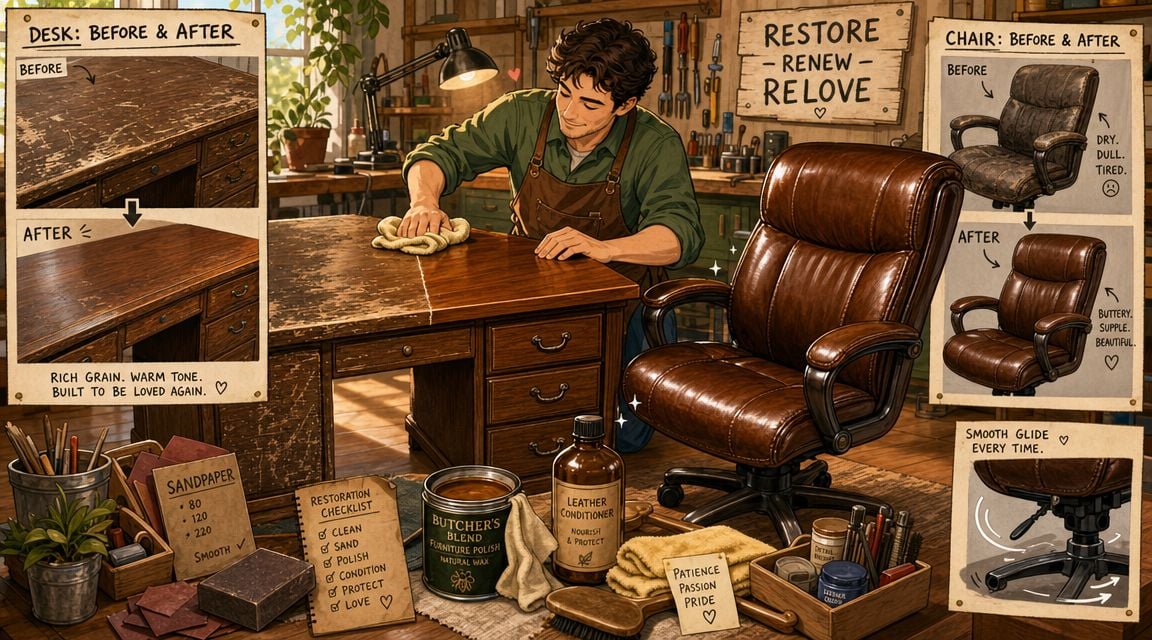
Clean first and repair lightly
Start with restraint. The goal is to preserve the piece, not overwork it.
- For wood surfaces. Use a gentle cleaner appropriate for finished wood, followed by a soft cloth. Avoid soaking the surface or scrubbing edges aggressively.
- For upholstered seating. Vacuum creases first, then clean according to the fabric or leather type. If odor lingers, the buyer should treat that as a serious quality concern, not a cosmetic inconvenience.
- For moving parts. Tighten accessible hardware and test again after setup. Minor looseness can improve. Structural failure usually won't.
- For visible wear. Light scratches often soften with careful touch-up. Deep chips, blown corners, and split panels usually remain signs of a tired piece.
A good room also needs a practical plan for workflow, lighting, and layout. For broader planning ideas, this guide to a thoughtful home office setup offers useful context on arranging a productive space before final placement.
How to make mixed pieces feel intentional
Most secondhand offices become mismatched by accident. A dark desk meets a black task chair, then a light oak shelf arrives from another source, and the room starts feeling assembled rather than designed.
Three choices usually improve cohesion:
- Repeat one wood tone family. Pieces don't need to match exactly, but they should relate.
- Limit metal finishes. Too many different hardware tones make a room feel restless.
- Balance domestic comfort with work function. A home office should still belong to the home.
When the mix still feels unresolved, how to mix furniture styles can help a homeowner combine old and new pieces with more discipline.
A restored secondhand desk can absolutely anchor a room. The challenge is that one good find rarely solves the whole office. Matching height, scale, wood character, and seating comfort across multiple purchases takes patience. That's where many homeowners start to see the appeal of choosing a more unified path from the start.
The Investment Alternative Heirloom Quality and Perfect Fit
A lot of buyers reach this point the same way. They spend a few weekends chasing used listings, save screenshots of promising desks, measure doorways twice, then realize every option asks for another concession. One desk has the right size but tired veneer. Another has good wood but awkward proportions. A chair looks fine online and feels wrong after an hour.
When used makes sense and when it doesn't
Used pieces still have a place. A small file cabinet, a side chair, or a simple bookcase with solid joinery can be a sensible buy. If the structure is sound and the wear is honest, those purchases often work out well.
The primary desk and everyday chair deserve a stricter standard. They handle daily use, affect posture, and set the tone for the whole room. In an open-plan home or a multipurpose guest room office, those pieces also need to look intentional for years, not just acceptable for now.
That is where false economy shows up. Saving money up front can disappear quickly if a drawer starts racking, the top mars easily, the chair never feels right, or the finish clashes with the rest of the house and has to be replaced sooner than expected.
A better long term path for the investment homeowner
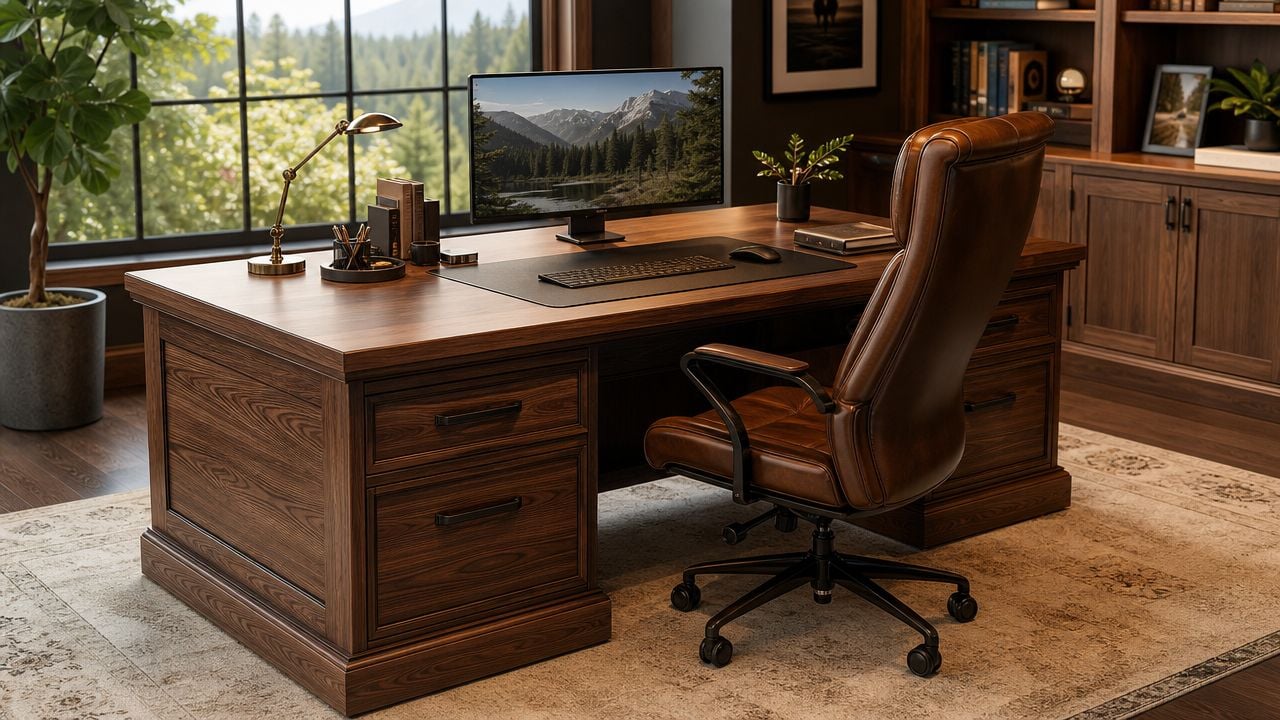
Solid hardwood changes the decision. A well-built desk in cherry, maple, oak, or walnut gives the buyer known dimensions, dependable joinery, a repairable surface, and a finish chosen for the room. That is a different proposition from taking whatever the secondhand market happens to offer this month.
For homeowners in Columbus, Vinson Fine Furniture offers a practical alternative to the long used-furniture hunt. The Easton showroom includes an in-store design studio, custom order options, and finish choices that let buyers select pieces designed for the room instead of settling for close enough. That matters in a home office, because the office often shares visual space with a bedroom, hallway, loft, or living area.
The question is not just what the piece costs today. It is how long it will do its job well, and how it will look after years of daily use. This guide on how long furniture should last is a useful frame for that decision.
I usually tell clients to spend their money where their body and eyes spend time. A substantial desk with proper joinery, a chair with real comfort, and materials that age well create a room that feels settled. Drawers run true. The top stays stable. The office feels finished, and that satisfaction tends to last much longer than the thrill of finding a bargain.