Best Leather Sectional Sofas in Columbus at Vinson Fine

A new homeowner often reaches the same point after the paint dries and the boxes are gone. The living room is open, the television wall is chosen, and one big question remains. What belongs in the center of the space for the next several years, or longer?
That's where leather sectionals become more than a style choice. They become the seat for movie nights, visiting relatives, sick days, Sunday reading, and the everyday wear that tells the truth about quality faster than any showroom tag ever will. The problem is that most buyers can spot a handsome sectional, but many still struggle to judge durability and value in motion leather sectionals, and even expert forum discussions show uncertainty about which brands offer quality. That gap matters because premium leather sectionals are long-term purchases, yet most shoppers don't have a simple framework for comparing frame construction, leather grade, and reclining mechanisms, as noted in this quality discussion on reclining leather sectionals.
A careful buying process helps. A practical starting point is this sectional buying guide, which helps homeowners organize room measurements, seating goals, and configuration choices before they fall in love with the wrong shape.
Table of Contents
- Your Guide to Choosing an Investment-Grade Sectional
- Decoding Leather Quality and Durability
- The Foundation of a Lifetime Sectional Frame and Support
- Finding Your Perfect Fit Sectional Layouts and Sizing
- The Vinson Advantage Customization and Design Services
- Investing Wisely with Value and Confidence
- Caring for Your Leather Investment for Lasting Beauty
Your Guide to Choosing an Investment-Grade Sectional
A sectional usually becomes the largest upholstered piece in the home's main gathering space. It has to look right from the entry, feel supportive at the end of a long day, and hold up when children, pets, guests, and daily routines all use it differently. That's why the search for the best leather sectional sofas can feel oddly difficult. Many pieces look impressive at first glance, but appearance alone doesn't tell a buyer whether the cushions will keep their shape or whether the frame will stay solid.
The strongest mindset shift is simple. A leather sectional isn't just another sofa purchase. It's a household asset. Industry buying guidance consistently points to the same core standards for a true long-term investment: full-grain or top-grain leather, kiln-dried hardwood frames, and high-density foam of 2.0 lb/ft³ or higher, all described in this guide to best leather sectional sofa construction. Those details separate a short-life purchase from one that can stay relevant through changing rooms, growing families, and evolving layouts.
What investment-grade really means
An investment-grade sectional doesn't have to be ornate. In fact, many of the most enduring pieces are visually quiet. Clean arms, balanced proportions, sturdy seat cores, and leather that gets richer rather than tired looking tend to age far better than trend-heavy silhouettes.
Three practical questions usually reveal the truth:
- How is the frame built? A heavy, rigid frame changes how the sectional feels every time someone sits down.
- What kind of leather covers the seat and arms? These are the zones that show wear first.
- Will the layout still work if the room changes? Homes rarely stay frozen in one arrangement.
A good sectional should feel settled in the room, not temporary.
What often confuses first-time buyers
New homeowners often compare sectionals by color, softness, or how plush the back cushions feel for the first few minutes. Those factors matter, but they're not the whole story. A piece can feel soft on day one and still be poorly supported underneath.
That's why the best leather sectional sofas are usually judged backward from how they'll be used. A family that hosts often may need a wide, anchored configuration. A couple in a city townhouse may need a modular plan that can pivot with a future move. A homeowner who loves power recline should pay close attention to how the motion seats integrate with the rest of the frame, so the sectional feels cohesive rather than mechanical.
Decoding Leather Quality and Durability
Leather is the first thing people notice and the last thing they should judge in isolation. It carries the eye, but it also takes the hand, the weight of everyday use, and the slow polishing effect of real life. A good hide doesn't just survive that contact. It responds to it.
A well-crafted leather sectional can last for decades, which is one reason leather remains a benchmark material in the premium sofa category, as explained in this overview of leather sectionals as long-term purchases. That kind of longevity changes the buying decision. The conversation stops being about what looks nice this season and starts becoming about what will still look dignified years from now.
Why leather still defines the premium sofa category
The appeal of leather isn't only durability. It's the way quality leather settles in. Good leather has a supple hand, a fine surface grain, and a depth of color that doesn't look printed on. It reflects light softly instead of shining like a coating.
Top-grain leather often becomes the practical sweet spot for many homes. It offers a refined surface, a smooth touch, and strong day-to-day performance without losing the natural character that gives leather warmth. In active rooms, performance leathers can also make sense for homeowners who want the leather look and feel with extra resilience built into the finish.
For buyers who want a deeper material primer, this guide to choosing leather furniture is a useful next step.
Leather Grade Comparison
| Leather Type | Feel & Appearance | Durability & Aging | Best For |
|---|---|---|---|
| Top-grain leather | Smooth, refined, naturally rich, often with a soft hand | Strong long-term performance, develops character with use | Main family rooms, everyday luxury seating |
| Full-grain leather | More natural markings, visible grain, organic variation | Excellent aging potential, often chosen by buyers who welcome patina | Homes that appreciate a more natural, lived-in look |
| Split leather | Can look uniform, often less nuanced in touch | Usually less resilient than upper-hide options | Secondary-use areas where appearance matters more than heirloom wear |
| Bonded or heavily reconstituted leather | Often looks consistent at first glance, less depth in feel | Generally not the first choice for long-term investment seating | Shorter-term furnishing needs |
What a homeowner should touch and inspect
Leather tells the truth through touch. A shopper should sit down, place a hand on the arm, and notice what happens at the surface.
- Check the hand feel: Quality leather should feel supple, not plasticky or stiff.
- Watch the wrinkle pattern: Natural movement is fine. Harsh, thin-looking collapse is more concerning.
- Look for depth in color: Better leather tends to show variation and warmth, not a flat sprayed look.
- Inspect high-contact areas: Seat tops, front rails, and arm caps reveal more than the back panel ever will.
Practical rule: If the leather looks flawless but feels lifeless, the buyer should ask more questions.
Confusion often starts with terminology. “Genuine leather” can sound impressive while telling very little about how the sectional will age. “Top-grain” is more useful. It points the buyer toward a better conversation about surface quality, consistency, and wear characteristics.
The best leather sectional sofas aren't always the ones with the flashiest finish in the showroom. They're the ones whose leather still looks better after real use, when light scuffs blend into character instead of exposing weakness.
The Foundation of a Lifetime Sectional Frame and Support
The leather gets the attention. The frame earns the trust.
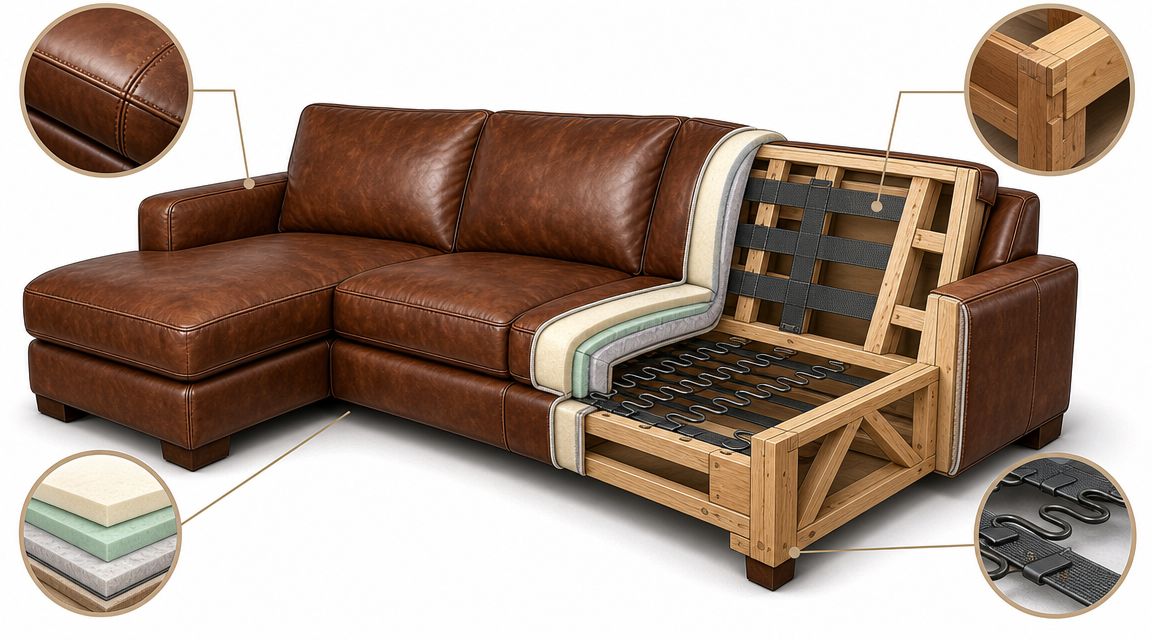
A sectional frame works like a house foundation. If it shifts, weakens, or twists under load, every visible part above it starts to show the consequences. Seats lose their level feel. Arms can loosen. Seams start working harder than they should. That's why a high-quality top-grain leather sectional should use a kiln-dried hardwood frame and high-density seat foam of at least 35 kg/m³, because the frame helps prevent warping under load and the denser foam resists compression that leads to cushion collapse and excess wrinkling, according to this guide to top-grain leather sectional construction.
What sits under the leather matters most
Vinson's hardwood standard reflects a principle that serious furniture buyers learn quickly. Solid hardwood matters. For seating, that means the frame should feel dense, stable, and dependable under repeated use.
Kiln-drying is especially important because wood continues to react to moisture if it hasn't been properly prepared. A kiln-dried frame is far less likely to warp, twist, or move unpredictably over time. That matters more in a sectional than many people realize, because sectionals spread body weight across longer spans and multiple joined components.
Seat support matters just as much. High-density foam helps the cushion keep its shape, which changes how the leather looks year after year. When a cheap seat core softens too quickly, the leather above it starts to puddle, stretch, and lose that defined appearance.
The support checklist worth asking about
A buyer doesn't need to become a furniture engineer. A short checklist covers the essentials.
- Frame material: Look for solid hardwood. Maple, oak, cherry, and walnut are all strong furniture woods when used properly.
- Wood preparation: Ask whether the frame is kiln-dried.
- Seat core density: Ask what's inside the cushion, not just how soft it feels.
- Joinery and reinforcement: Strong connections help the sectional stay square under daily stress.
- Suspension: The seat should feel supportive and even, without a hollow or trampoline-like drop.
The unseen build determines whether a sectional still feels composed after years of family use.
Some homeowners focus only on the seat cushion and forget the back half of the experience. Yet every time someone drops into a corner seat, leans against an arm, or uses a chaise edge to stand up, the frame and suspension carry that force. Good construction makes those actions feel quiet and controlled.
There's also a strong relationship between support and appearance. A well-built sectional doesn't just last longer. It also keeps its silhouette. The seat line stays cleaner. The arms stay prouder. The leather wrinkles more gracefully because the structure underneath still holds its intended form.
That's why the best leather sectional sofas usually feel substantial when someone sits down. Not hard. Not stiff. Substantial.
Finding Your Perfect Fit Sectional Layouts and Sizing

A sectional can be beautifully made and still be wrong for the room. That's the mistake many homeowners make after focusing on upholstery and skipping layout. Fit is about more than wall length. It's about movement, sightlines, and how people occupy the room.
For anyone building a room from the floor up, even rug scale matters. This guide to rug dimensions for open spaces is a useful companion when planning how a sectional should sit inside an open living area rather than float awkwardly around it.
A helpful planning tool for configuration ideas is this design-your-own sectional resource, especially for homeowners deciding between chaise, corner, reclining, and modular layouts.
How to measure a room without guesswork
A practical room plan starts with four measurements and one sketch.
- Measure the full room length and width. That establishes the hard perimeter.
- Mark doors, windows, vents, and floor registers. These often affect placement more than wall size does.
- Map traffic paths. A beautiful sectional that blocks the natural walking route will feel wrong every day.
- Check delivery access. Hallways, stair turns, and entry doors matter before the sectional ever reaches the room.
- Add nearby pieces. Coffee tables, side tables, recliners, and media cabinets all change the footprint.
A sectional should support the room's use, not dominate it by accident. In a primary family room, the right layout usually allows conversation, television viewing, and easy movement to coexist without anyone feeling boxed in.
Which sectional shape suits which room
Different shapes solve different problems.
- L-shape: Strong for corners, open-concept rooms, and households that want a clear lounge zone without closing off the space.
- U-shape: Best for larger gathering areas where face-to-face seating matters.
- Chaise sectional: Ideal for rooms where one side needs a deeper lounging seat without the width of a full return.
- Modular sectional: Useful when flexibility matters, especially in homes that may rearrange often or move in the future.
Modular designs deserve closer attention because stability matters as much as flexibility. Systems that use weighted modules and rubberized grip feet can stay aligned without hook connectors, reducing shifting between units and lowering stress on seams and frame joints, as described in this modular leather sectional design example.
Power motion adds another layer of planning. Reclining seats need wall clearance, leg room, and enough spacing around tables so the room still functions when the footrests are extended. In a well-designed sectional, motion shouldn't interrupt the room's flow. It should disappear into it.
The best leather sectional sofas fit the body and the floor plan at the same time. If either side of that equation is off, the sectional never quite settles into the home.
The Vinson Advantage Customization and Design Services
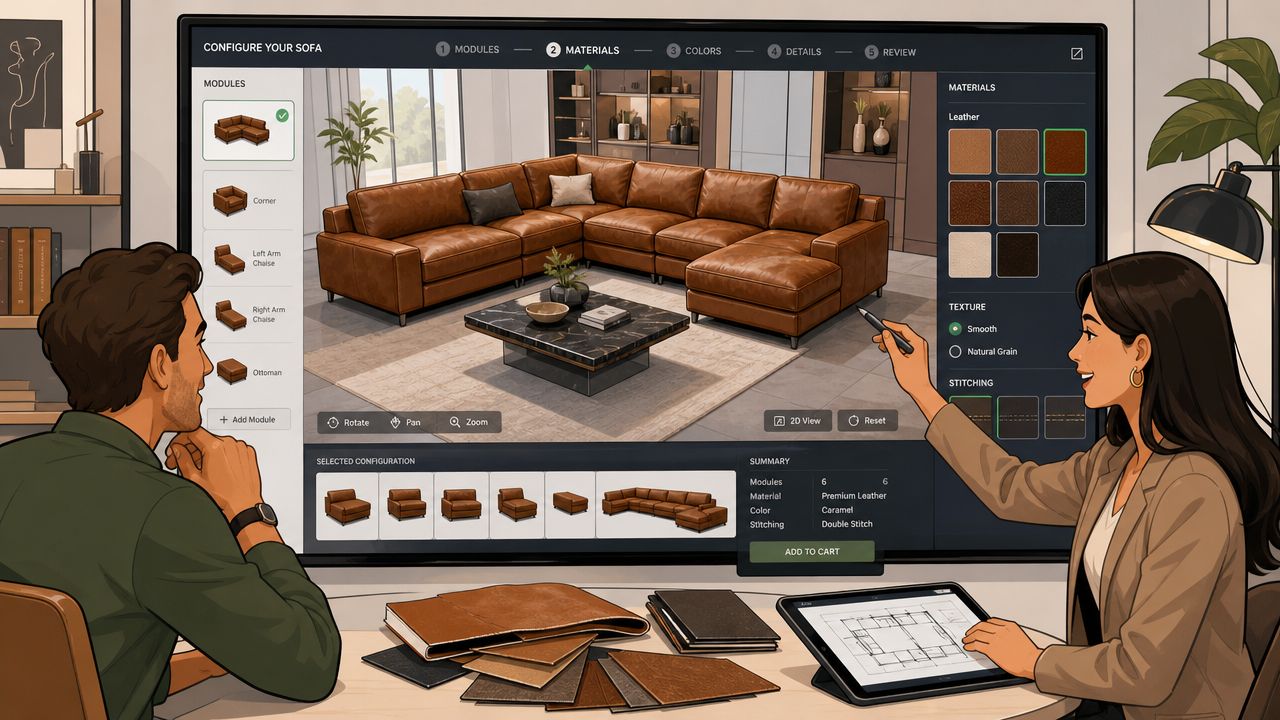
A leather sectional often looks settled online right up until a homeowner sits in one, feels the seat depth, and sees the leather beside their own flooring and paint. That is the moment many buyers realize they were not choosing a photo. They were choosing how a room will live every day for years.
That gap between research and certainty is where showroom guidance earns its place. A complimentary design consultation gives homeowners a place to bring measurements, inspiration photos, and practical questions about comfort, leather feel, motion features, and room flow, then sort those choices with someone who works with these decisions every day.
Why customization changes the outcome
A good custom process helps a sectional fit the household instead of forcing the household to adapt to the sectional.
One family may need firmer seats that make it easier to stand up. Another may want a deeper corner for long movie nights. A condo owner may need a configuration that keeps walkways open, while a larger home may need a sectional that holds a room without making it feel heavy. Those are different jobs, and they call for different choices in scale, cushion feel, layout, and leather.
That is why made-to-order programs matter. They let homeowners combine the elements that matter most instead of settling for a single floor sample that is close, but not quite right. In practical terms, that often means choosing from:
- Leather options: Smooth or pebbled texture, matte or higher-sheen finish, lighter or richer color.
- Configuration options: Chaise ends, corner units, reclining seats, modular groupings, or other room-specific arrangements.
- Comfort options: A seat with more support, a softer sit, or a middle ground that works for mixed preferences.
- Scale options: Different arm profiles, back heights, and footprints that change how large the sectional feels in the room.
- Coordination options: Materials and colors that work with existing wood furniture, rugs, and architectural finishes.
Each of those choices sounds small on its own. Together, they shape whether the sectional feels natural in the room or slightly off every time you use it.
What happens during a guided showroom visit
Leather is one of the easiest materials to misunderstand through a screen. A swatch that looks soft and warm online can read cool under daylight. A brown that seemed neutral can suddenly pull red next to hardwood floors. Even comfort can be misleading, because the difference between “supportive” and “too firm” usually becomes clear only when you sit down.
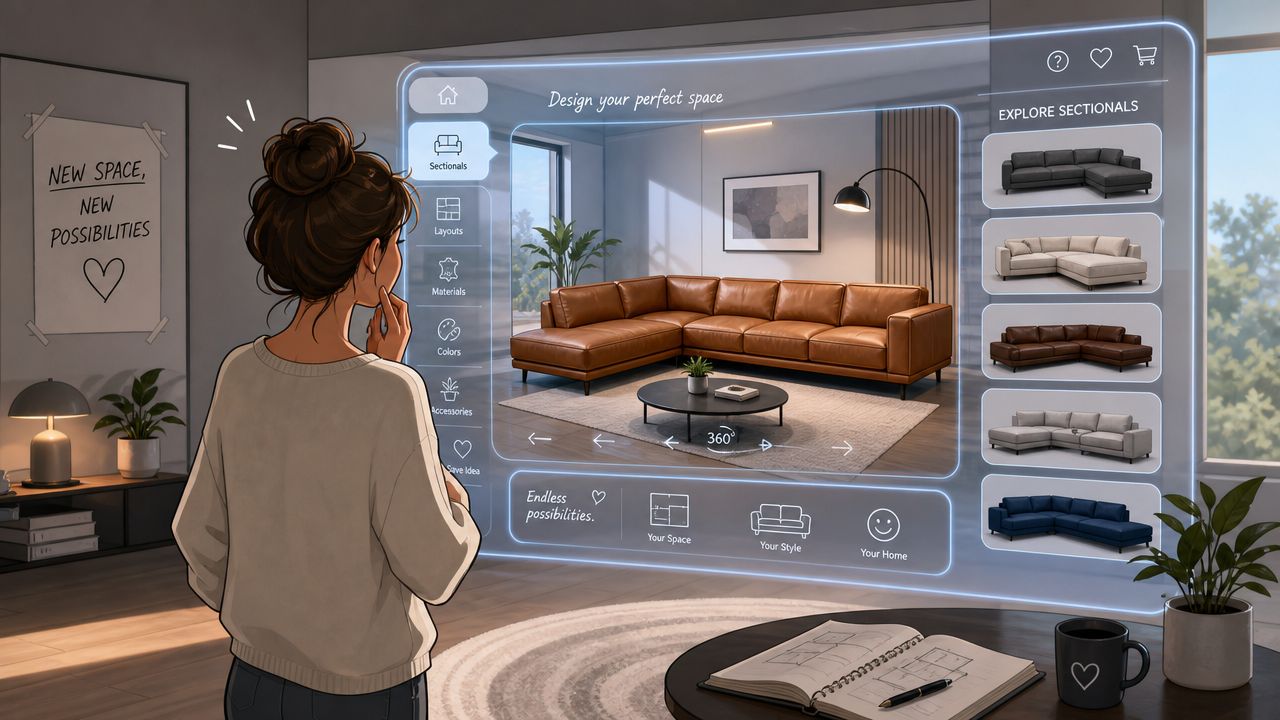
At Vinson Fine Furniture, the design process gives shoppers a chance to test those variables in person. Buyers can compare leather by touch, sit in different seat depths, review motion features, and use digital visualizers to see how a sectional configuration may look before placing an order. That process helps turn broad preferences into specific decisions.
Good guidance starts with the household. Who uses the sectional most often. How people sit. Whether pets jump on the arms. Whether the room is for quiet evenings, frequent guests, or both. Those details may sound ordinary, but they are the details that protect a major purchase from becoming an expensive compromise.
The same design thinking can extend beyond the sectional itself. If a homeowner is also furnishing a dining room or bedroom, it helps to choose pieces with related scale, finish, and character so the home feels considered as a whole. The result is not a matching set. It is a home where the materials, proportions, and comfort level make sense together.
Investing Wisely with Value and Confidence
A large sectional purchase carries a practical kind of stress. It's bulky, expensive, and difficult to reverse once it's in the house. That stress gets sharper with custom furniture because the piece is often made according to the buyer's choices.
That concern is reasonable. Return policies in the category vary widely, from 3-day returns to 30-day returns, which creates real uncertainty for shoppers and makes expert consultation, space planning, and clear service terms more important than style rankings alone, as noted in this overview of leather sectional buying friction and return policy variation.
Price matters, but purchase risk matters too
The smartest buyers don't look only at ticket price. They look at risk.
A lower price doesn't help much if the sectional arrives oversized for the room, poorly fitted to the household's seating habits, or unsupported after delivery. That's why confidence-building services often matter more than a flashy promotion. Good guidance, accurate planning, and transparent terms protect the investment before the order is ever placed.
Value is the combination of quality, fit, service, and how long the piece remains useful.
That broader definition matters in a market where sectionals vary so widely in construction and policy. A homeowner who receives careful planning help is far less likely to make an expensive mistake than one who buys from a product photo alone.
Where long-term value actually comes from
Long-term value usually comes from five places working together:
- Material quality: Better leather and stronger internal construction resist premature wear.
- Correct sizing: A sectional that fits the room stays comfortable to live with.
- Customization: The right shape and finish reduce the urge to replace the piece too soon.
- Service support: Delivery, setup, and problem prevention matter more than many people expect.
- Smart savings opportunities: A clearance floor sample or closeout can make premium construction more accessible.
For Columbus-area homeowners, practical value may also include showroom programs such as a low price guarantee, clearance savings, financing options for qualified buyers, and white-glove delivery that places and assembles the furniture in the home. Those details don't change the sectional's frame or leather, but they do change the buying experience. They reduce friction, protect the home during delivery, and make a major purchase feel more manageable.
A careful buyer can treat value and quality as allies, not opposites. That's often where the best decisions happen.
Caring for Your Leather Investment for Lasting Beauty
Leather care sounds intimidating until it becomes a small routine. In practice, most high-quality leather sectionals need consistency more than complexity. Dust removed regularly is gentler on the surface. Stable room conditions are kinder than heat swings. A quick response to spills works better than aggressive scrubbing later.
For a helpful outside primer on everyday upkeep, this guide to protecting your leather furniture offers simple maintenance reminders that align with the kind of calm, steady care leather responds to best.
A more specific companion is this leather furniture protection guide, which helps homeowners think through daily habits that preserve both feel and appearance.
A simple care routine that works
A practical routine usually looks like this:
- Dust gently: Use a soft, dry cloth to remove surface grit before it can abrade the finish.
- Blot spills promptly: Press, don't rub. Rubbing can spread moisture and stress the surface.
- Keep it out of harsh sun: Direct light can dry and unevenly age leather over time.
- Give it breathing room from heat: Vents, radiators, and concentrated warmth can accelerate drying.
- Use leather-specific care when needed: Follow the maker's guidance rather than experimenting with household products.
The goal isn't to keep leather frozen in pristine condition. Good leather should live. It should soften, settle, and show graceful character. What a homeowner wants to prevent is dryness, neglect, and avoidable damage.
How leather ages well instead of wearing out
A quality leather sectional should become more inviting as it matures. The surface gains depth. The room starts to feel anchored by it. Minor signs of use can add charm when the underlying materials remain strong.
That's part of the appeal of the best leather sectional sofas. They don't need constant fuss. They need reasonable respect. Clean them gently, protect them from unnecessary stress, and let the material do what it's known for doing well. Age with dignity.
For anyone still comparing options, the most useful next step isn't more scrolling. It's a sit-test, a swatch in hand, and a careful look at how the piece is made.
A homeowner who wants to compare leather feel, motion comfort, room-fit options, and custom configurations in person can start with Vinson Fine Furniture, located at Easton Town Center. The showroom offers access to design consultations, custom order programs, solid hardwood furniture, and premium leather seating so buyers can move from online uncertainty to a more confident, investment-minded decision.