How to Protect Leather Furniture for Lasting Beauty and Value


When you bring a beautiful top-grain leather piece home from Vinson Fine Furniture, you're not just buying a sofa. You're starting a relationship with an investment piece that will anchor your home for years, gaining character and history along the way. The secret to making that relationship last a lifetime? Proactive care is always better than trying to fix a problem after it has already happened.
Knowing what kind of hand-finished leather you have is always the first step. This guide provides expert, grounded advice to protect that investment with confidence.
Your Guide to Lifelong Leather Furniture Protection
A gorgeous leather armchair or sofa is so much more than just a place to sit. It’s an investment in comfort and sophisticated style that’s built to last. With the right care, it will develop a rich, beautiful patina over the decades, eventually becoming a treasured family heirloom.
Protecting that investment shouldn't feel like a chore. The key is building a few simple habits to preserve the supple feel and hand-finished look you fell in love with at our furniture store in Columbus, Ohio.
This guide provides real-world strategies for real-life situations—from simple cleaning routines to what to do the second a glass of wine spills. We'll show you exactly how to care for your solid-wood furniture with confidence, treating it as the long-term investment it is.
Why a Little Prevention Is Everything
That old saying, "an ounce of prevention is worth a pound of cure," couldn't be more true when it comes to both solid wood furniture Ohio and premium leather. If you wait until you see cracking, fading, or stains to take action, the damage is often already set. A little proactive care keeps the leather's natural oils and protective finish intact, making it tough enough for daily life.
The global passion for leather furniture speaks to its timeless value. The market hit a staggering USD 11.45 billion in 2024, with sofas alone making up over 38.5% of that. It’s clear that people worldwide choose leather for its lasting appeal, which makes knowing how to protect it more important than ever.
At Vinson Fine Furniture, we believe that taking care of your furniture is part of the joy of owning it. These pieces are meant to be lived on and loved, and our job is to give you the confidence to do just that, worry-free.
To help with this, we've put together a quick-reference guide. It boils down the most critical parts of leather protection into four simple pillars.
Essential Leather Protection Quick Reference Guide
This table breaks down the fundamental pillars of protecting your leather furniture. Think of it as a quick cheat sheet for keeping your investment looking its best for years to come.
| Protection Pillar | Key Action | Why It Matters |
|---|---|---|
| Routine Dusting | Gently wipe with a soft, dry cloth weekly. | Prevents abrasive dirt and dust from scratching the surface and dulling the finish. |
| Conditioning | Apply a quality leather conditioner every 6-12 months. | Replenishes the natural oils, keeping the leather soft, supple, and resistant to cracking. |
| Smart Placement | Keep furniture away from direct sun and heat sources. | Protects the color from fading and stops the leather from drying out and becoming brittle. |
| Spill First-Aid | Blot spills immediately with a clean, absorbent cloth. | Stops liquids from soaking into the hide and setting into a permanent, hard-to-remove stain. |
By making these simple actions a regular habit, you're not just cleaning your furniture—you're actively preserving its health, beauty, and value for the long haul.
A great place to start your journey is right here in our In-Store Design Studio. During a Complimentary Design Consultation, our experts can walk you through our Custom Order Program, help you explore different leather options, and make sure you know exactly how to care for the piece you choose.
To get a better feel for the possibilities, take a look at our guide on how to choose leather furniture. We're here to make affordable luxury both accessible and completely manageable.
Identifying Your Leather Type for Proper Care
That beautiful leather sofa or armchair is more than just a piece of furniture; it’s an investment. To keep it looking its best for years to come, the very first step is figuring out exactly what kind of leather you’re working with. It might sound basic, but using the wrong cleaner can be a disaster, leading to discoloration or drying out that supple feel you fell in love with.
Think of it this way: you wouldn't wash a delicate silk blouse the same way you wash a pair of rugged jeans. Leather is no different. A pristine aniline leather needs a much softer touch than a durable, pigmented leather designed to withstand the chaos of a family room. Knowing the difference gives you the power to care for it correctly.
Full-Grain vs. Top-Grain Leather
When you start looking at high-quality furniture, you'll hear "full-grain" and "top-grain" thrown around a lot. These terms tell you about the quality and durability of the hide, and they’re key to understanding what you own.
- Full-Grain Leather: This is the best of the best. It's the outermost layer of the hide, complete with all its natural character—the unique grain, scars, and markings that tell a story. It's incredibly strong and, over time, develops a gorgeous patina—that rich, subtle sheen that only comes from years of use.
- Top-Grain Leather: Coming in a close second, top-grain leather has had its surface sanded just enough to buff away imperfections. This gives it a more uniform look and a softer hand, though it’s a touch less durable than full-grain. It's a fantastic choice for anyone looking for that perfect blend of luxury and resilience.
Here at Vinson, we are big fans of these premium leathers, and they’re the foundation of many pieces you can find through our Custom Order Program, where you can personalize your seating with hundreds of premium fabrics and performance leathers.
Aniline, Semi-Aniline, and Pigmented Leather
These terms are all about the finish, which tells you how the leather was dyed and whether it has a protective coat. This finish is the single most important factor when it comes to your cleaning routine.
Aniline Leather (Unprotected)
Often called "naked leather," this is for the purists. It’s dyed with soluble dyes that soak into the hide, leaving no topcoat. This process shows off the leather's natural surface in all its glory.
- How to tell: It feels unbelievably soft, warm, and natural. A drop of water will soak right in and darken the spot.
- Care tips: Dust it often with a dry, soft cloth. If a spill happens, blot it immediately. Never, ever use soaps, all-purpose cleaners, or harsh chemicals.
Semi-Aniline Leather (Lightly Protected)
This is a brilliant middle-ground. The leather gets the same aniline dye treatment but then receives a very thin protective coating, sometimes with a little pigment mixed in.
- How to tell: It keeps that natural look and soft feel but has a bit more durability. A drop of water will bead up for a moment before it starts to soak in.
- Care tips: Stick to a pH-neutral cleaner made specifically for leather. Plan on conditioning it every 6-12 months to keep it happy.
Pigmented Leather (Fully Protected)
This is the most durable type of leather you'll find on furniture, making it a true workhorse. A polymer topcoat mixed with pigments is applied to the surface, giving it a consistent color and a serious protective barrier.
- How to tell: The color and finish will look perfectly uniform. It feels more sealed and less "raw" than the others. A drop of water will bead up and sit right on top.
- Care tips: This is the MVP for homes with kids and pets. You can use a wider variety of leather cleaners and protection creams, but still steer clear of harsh chemicals like bleach or ammonia.
This simple decision tree breaks down the first step in caring for your leather—knowing what you have before you act.
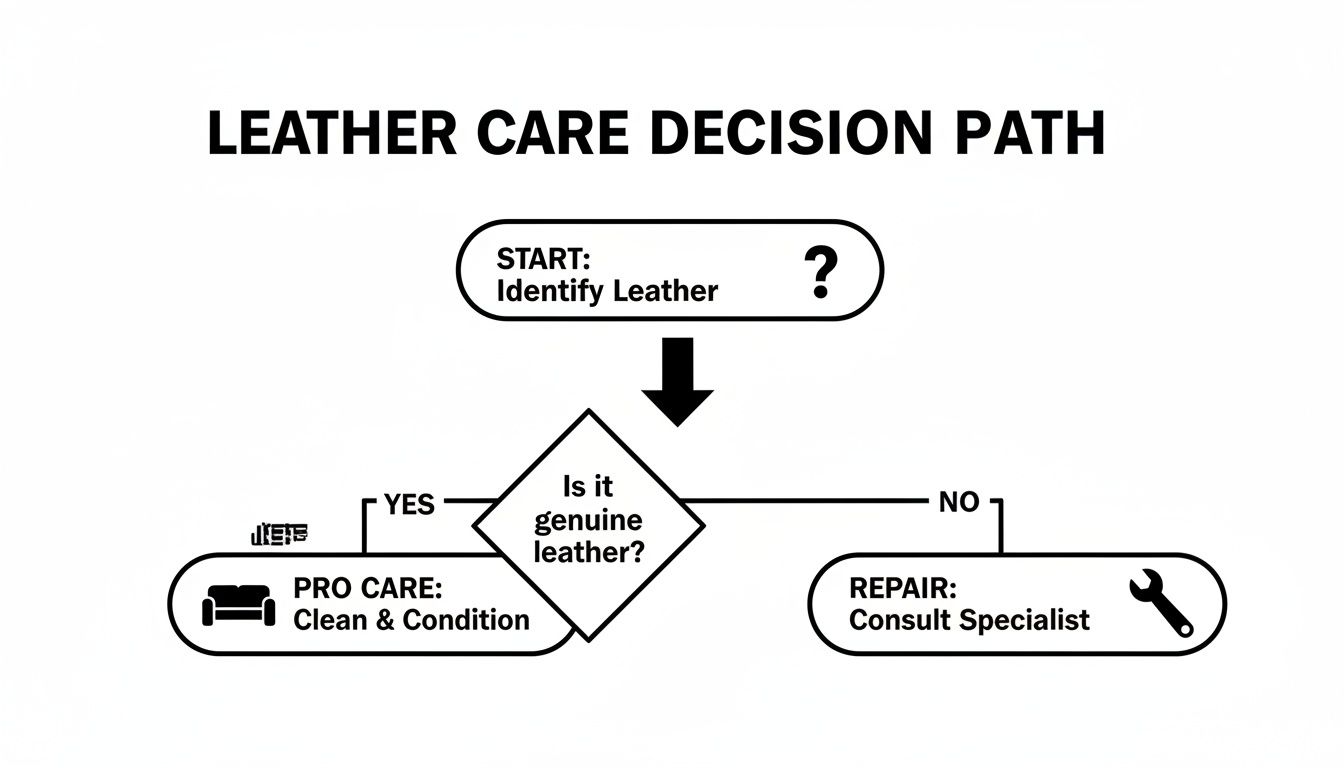
The flowchart drives home the point that identification is everything. It’s what tells you whether you need to call a professional or if a specific repair is the right move.
The best way to understand these differences is to experience them yourself. When you visit our Easton Town Center showroom for a Complimentary Design Consultation, you can feel the buttery softness of an aniline hide and compare it to the tough, reliable finish of pigmented leather. The "sit-test" is invaluable.
If you’re ready to dive even deeper, our guide on everything you need to know about upholstery materials is a fantastic resource. It will leave you feeling confident as you design the perfect furniture for your home.
Creating a Sustainable Cleaning and Conditioning Routine
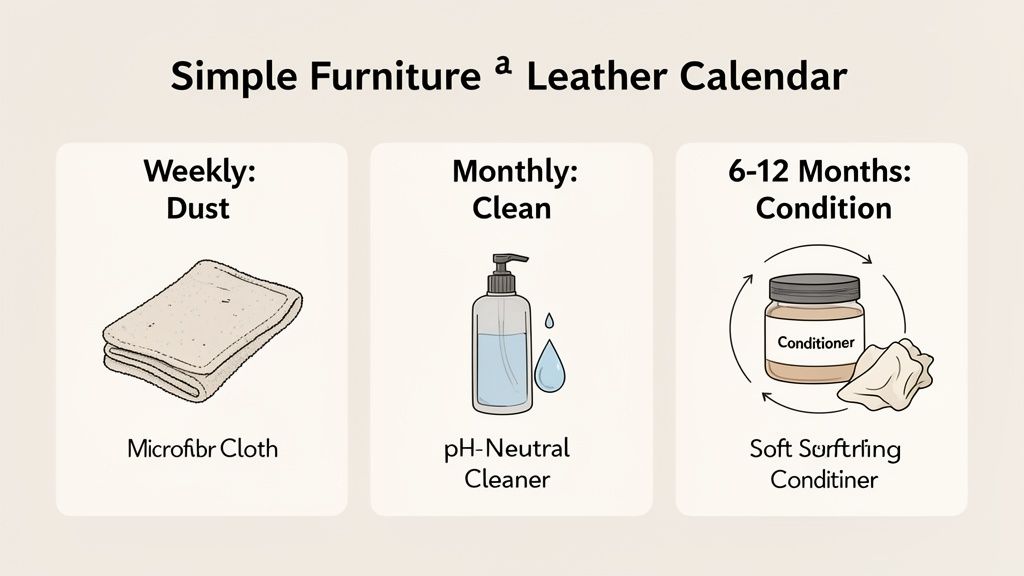
Think of your leather furniture not as just another piece in the room, but as a long-term investment that gets better with age—if you care for it properly. The difference between a sofa that cracks and fades and one that becomes a family heirloom often comes down to a simple, consistent routine. It's not a chore; it's just a few easy habits that will protect its beauty for years to come.
Putting a practical schedule together is far easier than you might imagine. It really just boils down to three main tasks. Once these become second nature, you'll ensure that hand-finished piece you received with our White-Glove In-Home Delivery stays as supple and inviting as day one.
Your Weekly Dusting Ritual
The first and most frequent job is also the simplest: a quick weekly dusting. It might not seem like much, but everyday dust, pollen, and tiny bits of grit act like a very fine sandpaper on your leather's surface. Over time, that friction can dull the finish and create micro-scratches.
Just grab a clean, dry microfiber cloth and give every surface a gentle wipe-down. Make sure to get into the seams and crevices where dust loves to settle. This two-minute task is your best first line of defense.
The Monthly Gentle Clean
About once a month, it's time for a slightly deeper clean. This is where you’ll tackle the light soiling and body oils that a simple dusting leaves behind. Skipping this step allows that buildup to slowly eat away at the leather’s protective topcoat.
Always, always use a cleaner made specifically for upholstery leather. Never spray it directly on the furniture!
- Vacuum First: Start by vacuuming the entire piece with a soft brush attachment. Pay special attention to the seams and any button tufting to get all the loose crumbs and debris out.
- Apply Cleaner to Your Cloth: Lightly dampen a clean microfiber cloth with your leather cleaning solution.
- Wipe Down in Sections: Gently wipe down the furniture one section at a time—maybe one cushion, then an armrest. This keeps the cleaner from drying out before you've had a chance to work it in evenly.
- Wipe Dry: Right after cleaning a section, use a separate, clean, dry cloth to buff away any extra moisture.
This approach cleans effectively without soaking the leather, which is key to preserving its feel and durability.
Deep Conditioning Every 6 to 12 Months
Conditioning is perhaps the most important thing you can do for the long-term health of your leather. It replenishes the essential moisture and oils that keep the material soft and prevent it from getting dry and cracking. Here in Central Ohio, with our distinct seasons and dry winter air, this step is non-negotiable.
You'll want a high-quality, dedicated leather conditioner for this—not one of those all-in-one cleaner/conditioner sprays. Think of it like a good moisturizer for your own skin; its job is to nourish, not just sit on the surface.
This is where smart homeowners are really starting to pay attention. The market for dedicated leather protection cream is projected to grow at a 7.1% rate, a clear sign that informed owners see conditioning as essential maintenance, not just an optional extra.
Here’s how to do it right:
- Apply Sparingly: A little goes a long way. Put a small dab of conditioner on a soft cloth or an applicator pad.
- Work It In: Using gentle, circular motions, massage the conditioner into the leather. Work in small sections to ensure you get even coverage.
- Let It Soak In: Give the conditioner about an hour to really penetrate the leather's pores.
- Buff to a Sheen: With a final clean, dry cloth, buff the entire surface. This picks up any excess product and brings out a beautiful, soft luster—not a greasy shine.
By following this simple schedule, you’re not just cleaning—you’re actively participating in the life of your furniture. You're preserving its feel, its look, and the stories it will tell for generations to come.
Shielding Your Furniture From Daily Life and the Environment
Your leather furniture isn't just there to look pretty; it's meant to be lived on. It’s the spot for family movie nights, afternoon naps, and chats with friends. But all that living means it’s going to face sunlight, humidity, playful pets, and busy kids. The secret isn't to rope it off like a museum piece, but to know a few simple tricks to keep it looking fantastic.
Real protection starts with a little bit of foresight. Just by thinking about where you place your furniture in a room, you can head off a ton of potential wear and tear before it even starts.
Taming the Sun and Managing Humidity
The sun can be your leather's worst enemy. Those same UV rays we protect our skin from can cause the rich, deep color of your sofa to fade and can dry out its natural oils, leading to brittleness and cracking. That beautiful afternoon light streaming into your Columbus home can, over time, leave a permanent, washed-out mark on an unprotected piece.
The fix is surprisingly simple: position your leather furniture away from direct, prolonged sunlight. If your room layout makes that tricky, think about adding some stylish curtains, blinds, or even a UV-blocking film to your windows.
Humidity is the other big environmental factor, especially here in Central Ohio where we swing from hot, sticky summers to dry, cold winters.
- In Winter: When the furnace is running, the dry indoor air can literally pull moisture from your leather, making it stiff and brittle. A simple humidifier, set to keep your home's humidity between 30% and 50%, makes a huge difference.
- In Summer: High humidity can make certain leathers feel a bit damp or tacky. Running a dehumidifier or your air conditioning will help keep the environment balanced.
Living with Pets and Family
One of the biggest questions we get is, "How will a nice leather sofa hold up with my dog and my kids?" The answer is, beautifully! With the right leather choice and a few smart habits, your furniture can absolutely thrive in a busy, active home. It's all about working with your lifestyle.
For pet owners, the number one defense against scratches is keeping your pet's claws trimmed. You can also drape a chic, high-quality throw blanket over your pet's favorite spot on the sofa. It adds a great layer of protection and can introduce a new texture or pop of color to your room.
For families with kids, spills are just a part of life. This is where choosing the right type of leather from the very beginning can give you so much peace of mind.
During a Complimentary Design Consultation at our Easton Town Center showroom, we always talk about lifestyle. Our Custom Order Program is fantastic because it lets you choose from incredible performance leathers designed with extra durability and stain resistance, so you don't have to sacrifice style for practicality.
Threat vs. Protection Strategy for Your Leather Furniture
Knowing what to watch out for is half the battle. This quick guide breaks down the most common household threats to leather and the simple, preventive steps you can take to protect your investment.
| Common Threat | Potential Damage | Preventive Solution |
|---|---|---|
| Direct Sunlight | Fading, discoloration, and drying out. | Position furniture away from windows or use UV-blocking curtains and blinds. |
| Heat Vents/Fireplaces | Causes leather to dry out rapidly and become brittle. | Keep furniture at least two feet away from direct heat sources. |
| Pet Claws | Surface scratches or deep gouges in the leather. | Keep pet nails trimmed and use designated, attractive throws on their favorite spots. |
| Spills (Food & Drink) | Staining and potential damage to the leather's finish. | Blot spills immediately; consider a protected (pigmented) leather for high-traffic areas. |
It's just like protecting a solid wood furniture Ohio piece from water rings—a few simple habits make all the difference. If you're looking for more tips on overall furniture care, check out our ultimate guide to protecting wood furniture from scratches and stains. By making these small adjustments, you're ensuring your heirloom-quality furniture will be around for a lifetime of memories.
Emergency First Aid for Common Stains and Spills
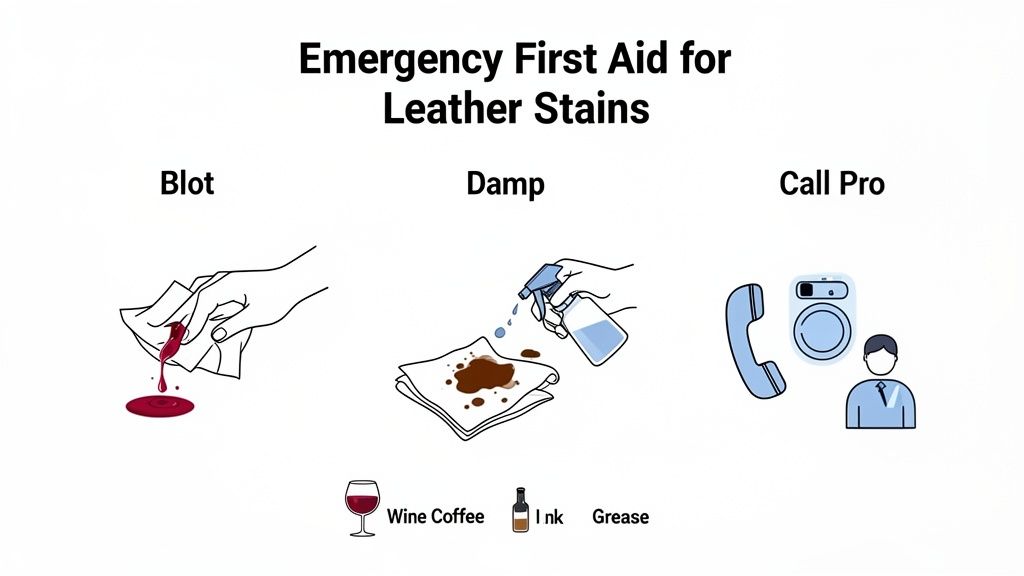
Even with the best intentions, life happens. A guest gets a little too animated with a glass of red wine, a pen slips from your hand, or a buttery piece of popcorn tumbles onto the cushion. In these moments, panic is your worst enemy. A calm, quick response is the best tool you have to protect your beautiful Amish-made furniture or treasured leather sectional.
The golden rule is simple: act immediately. The longer a spill sits, the more time it has to work its way into the leather’s pores and set. You always want to start with the most gentle method possible.
Liquid Spills Like Wine and Coffee
When it comes to liquid spills—the usual suspects—the key is to blot, not rub. Scrubbing just grinds the liquid deeper into the leather and can spread the stain, turning a small mishap into a much bigger problem.
Keep a clean, dry, light-colored microfiber cloth handy. As soon as the spill happens, gently press the cloth onto the liquid to soak it up. Lift the cloth, find a fresh, dry section, and repeat until you're not pulling up any more moisture. For many spills on protected (pigmented) leather, that’s often all it takes.
If a faint mark lingers:
- Lightly dampen a clean cloth with distilled water. Tap water can have minerals that leave their own spots behind.
- Gently blot the area, working from the outside of the stain inward to keep it from spreading.
- Let the spot air dry completely. Never use a hairdryer—the intense heat can make the leather shrink or warp.
Oily and Greasy Stains
Grease from food or even hair products is a different beast. We all know oil and water don’t mix, and trying a water-based approach on a fresh grease stain can actually lock it in.
Your first move here is to absorb that oil. Sprinkle a bit of cornstarch or talcum powder directly on the stain. You'll need to be patient and let it sit for several hours, or even overnight. The powder will slowly pull the oil out of the leather. Once enough time has passed, just brush the powder away with a soft brush.
When these gentle first-aid steps don’t work, it’s time to stop. Using aggressive home remedies can cause permanent, irreversible damage. This is the point where calling a professional is your smartest move.
Ink and Other Tough Stains
Seeing an ink mark on your leather can feel like a complete disaster, but a fast response can often save the day. For a fresh mark from a ballpoint pen, a cotton swab dampened with a little rubbing alcohol can sometimes lift the ink. But be warned, this is a risky move on certain types of leather, especially delicate aniline, so always test it on a hidden spot first.
For tougher stains, set-in ink, or marks from unknown substances, it’s best to put down the cleaning supplies and get some professional advice. Our team at Vinson Fine Furniture has seen it all. We have deep experience with high-quality leathers and can connect you with trusted local specialists.
Your Partner in Long-Term Furniture Care
Now that you've got the essentials down for caring for your leather, you’re well on your way to making it last for decades. We've walked through everything from identifying your specific leather type to building a smart cleaning routine and dealing with surprise spills. Think of this as the foundation for keeping your investment looking its best.
But our relationship doesn't have to end here. At Vinson Fine Furniture, we see ourselves as more than just a place to buy furniture; we want to be your go-to resource for the long haul.
Beyond the Purchase: A Lifelong Resource
Our commitment to you starts the moment you walk into our In-Store Design Studio and continues for years to come. Our team is always here to offer expert, grounded advice, long after your furniture is delivered.
- Complimentary Design Consultations: Our Design Services extend far beyond your initial purchase. Our design experts are always ready to help, whether you have a question about a piece you bought years ago or are dreaming up a new room.
- Customization Expertise: Our Custom Order Program allows you to personalize your seating with hundreds of premium fabrics and performance leathers, ensuring your piece is as unique as your home. We can personally guide you through the options, even using 3D visualizers to bring your vision to life.
Our mission is to be your trusted resource, not just a retailer. We want you to feel confident in every choice you make, from the initial design to long-term care, turning your house into a true home.
We stand by the quality and value we offer. Our Low Price Guarantee isn’t just a promise; it’s backed by a 110% refund to ensure your investment is a wise one. For those looking for remarkable value, our Clearance Gallery is a treasure trove of premium pieces with savings up to 70%.
When you've found the perfect piece, we make bringing it home completely effortless. With Flexible Financing options through Synchrony HOME and our signature White-Glove In-Home Delivery, we handle every last detail.
We’d love to see you in person. Come visit our furniture store in Columbus, Ohio, located at the premier Easton Town Center. You can experience the incredible quality for yourself and let our experts help you find and protect the perfect Amish-made furniture for your home.
Frequently Asked Questions About Leather Protection
When you invest in a gorgeous leather sofa or chair, you naturally want to keep it looking its best. We get a lot of questions about proper care at our furniture store in Columbus, Ohio, so our design consultants have put together some answers to the most common ones we hear.
How Often Should I Really Condition My Leather Sofa?
A good rule of thumb for a climate like ours in Central Ohio is to condition your leather every 6 to 12 months. This is a great baseline for keeping the hide properly moisturized and feeling soft.
However, you have to read the room—literally. If your sofa gets a lot of direct sunlight or sits right next to a heat vent, it will dry out faster. In that case, you might need to condition it more often, maybe every 3 to 4 months. The best way to know for sure? Just touch it. If the leather starts to feel a bit stiff or not as supple as it used to, it's thirsty for a light coat of conditioner.
Are All-In-One Leather Cleaners a Good Idea?
While the idea of a single-step product is certainly appealing, our experts at Vinson strongly advise against them. We recommend using separate products for cleaning and conditioning. Think of it this way: a dedicated cleaner is made to gently lift dirt and oils out of the leather’s pores without harsh chemicals.
A dedicated conditioner, on the other hand, is all about penetrating the hide to restore moisture and flexibility. All-in-one products try to do both and usually don't excel at either. They often fail to clean deeply and can leave a sticky residue that attracts more dirt. A little extra effort with two separate, high-quality products is the best way to protect your investment.
Can I Use Household Cleaners on My Leather?
We have to be blunt here: absolutely not. Please step away from the dish soap, vinegar, and all-purpose sprays. These cleaners are far too harsh for leather upholstery.
Their chemical makeup will strip the natural oils right out of the hide, which leads to drying, cracking, and even color loss. Always, always use a pH-neutral cleaner specifically formulated for leather. It will get the job done safely without causing damage.
Remember, the goal is always to start with the gentlest method. Harsher chemicals can permanently damage the finish, turning a small cleaning task into a costly repair job.
My Pet Lightly Scratched My Leather Chair. Can It Be Fixed?
Light surface scratches, like the ones you get from a cat's curious claws or a dog's nails, can often be fixed right at home. It sounds too simple, but start by gently rubbing the scratch with your fingertip. The warmth and oil from your skin can sometimes be just enough to buff the mark out and help it blend back in.
If that doesn't do the trick, try applying a tiny amount of a quality leather conditioner or a specialized leather recoloring balm with a soft, clean cloth. Work it into the scratch with a gentle circular motion. For deeper gouges that have actually torn the leather, it’s best to call in a professional. Our team can always recommend trusted local furniture repair specialists.
At Vinson Fine Furniture, we believe that owning beautiful, heirloom-quality furniture should be a joy, not a worry. From helping you design the perfect piece in our In-Store Design Studio to providing advice on care for years to come, we are your partners in creating a home you love. To experience the quality and start your design journey, visit us at our Easton Town Center location or explore our collections online at https://vinsonfinefurniture.com.