Is White Glove Delivery Worth It for Fine Furniture


A Columbus homeowner has just approved a custom dining room built around solid walnut and top-grain leather. The pieces are substantial, carefully finished, and intended to stay in the home for decades. On delivery day, the truck arrives, the crate is still sealed, and the question becomes immediate: should the homeowner accept doorstep delivery and manage the rest, or pay for white glove service?
For fine furniture, is white glove delivery worth it isn't a question of luxury alone. It's a calculation involving handling risk, room access, assembly, packaging, claims, and the cost of replacing an item that was difficult to build in the first place. Furniture delivery coverage reports that 7.6% of furniture deliveries arrive damaged, while 51% of customers affected by damage say they wouldn't repurchase from the same retailer. Those figures make specialized handling more than a convenience for high-value pieces. They make it a form of risk control. Furniture delivery damage data

The Delivery Day Dilemma for Investment Furniture
The delivery crew rolls a large crate toward a sloping driveway. The homeowner watches as two movers guide it toward a narrow foyer, aware that the solid-walnut table inside is difficult to replace and the hand-tied leather chairs have been made to order. The invoice includes a white glove surcharge, and the homeowner has to decide whether that charge buys meaningful protection or just a more comfortable experience.
The answer depends on the item, the home, and the delivery path. A solid hardwood dining table can tolerate years of normal use, but a corner impact during unloading can leave a visible mark that requires touch-up or refinishing. Leather seating can also show scuffs, pressure marks, or frame stress when someone tries to pivot it through a tight turn without the right equipment or enough help.
Practical rule: The higher the replacement cost, emotional value, and handling difficulty, the stronger the case for professional in-home delivery.
White glove service also addresses the work that begins after the truck leaves. Someone must open oversized cartons, protect flooring during setup, attach components, position the furniture, dispose of cardboard and protective material, and identify visible exceptions before the crew departs. A buyer who lacks moving experience may spend an entire afternoon solving problems that a trained delivery team handles during one coordinated visit.
Furniture purchases deserve careful planning because they're high-consideration decisions, particularly when the piece is customized or intended to anchor a room. Vinson's guidance on why furniture purchases require thoughtful evaluation reflects that broader reality. The delivery option should be evaluated alongside wood species, finish, upholstery, construction, and room access, not treated as an afterthought at checkout.
For Columbus homeowners furnishing a dining room, living room, or primary bedroom, the practical question is simple: would one handling mistake cost more than the service premium? If the answer is yes, white glove delivery is the responsible choice.
What White Glove Delivery Actually Includes
White glove delivery means a full-service, inside-the-home process, but the exact scope varies by retailer and carrier. The phrase isn't regulated, so buyers should request a written list of inclusions before approving the service. A detailed white glove furniture delivery explanation can help shoppers understand the difference between true room-of-choice service and a basic threshold drop-off.
The service sequence
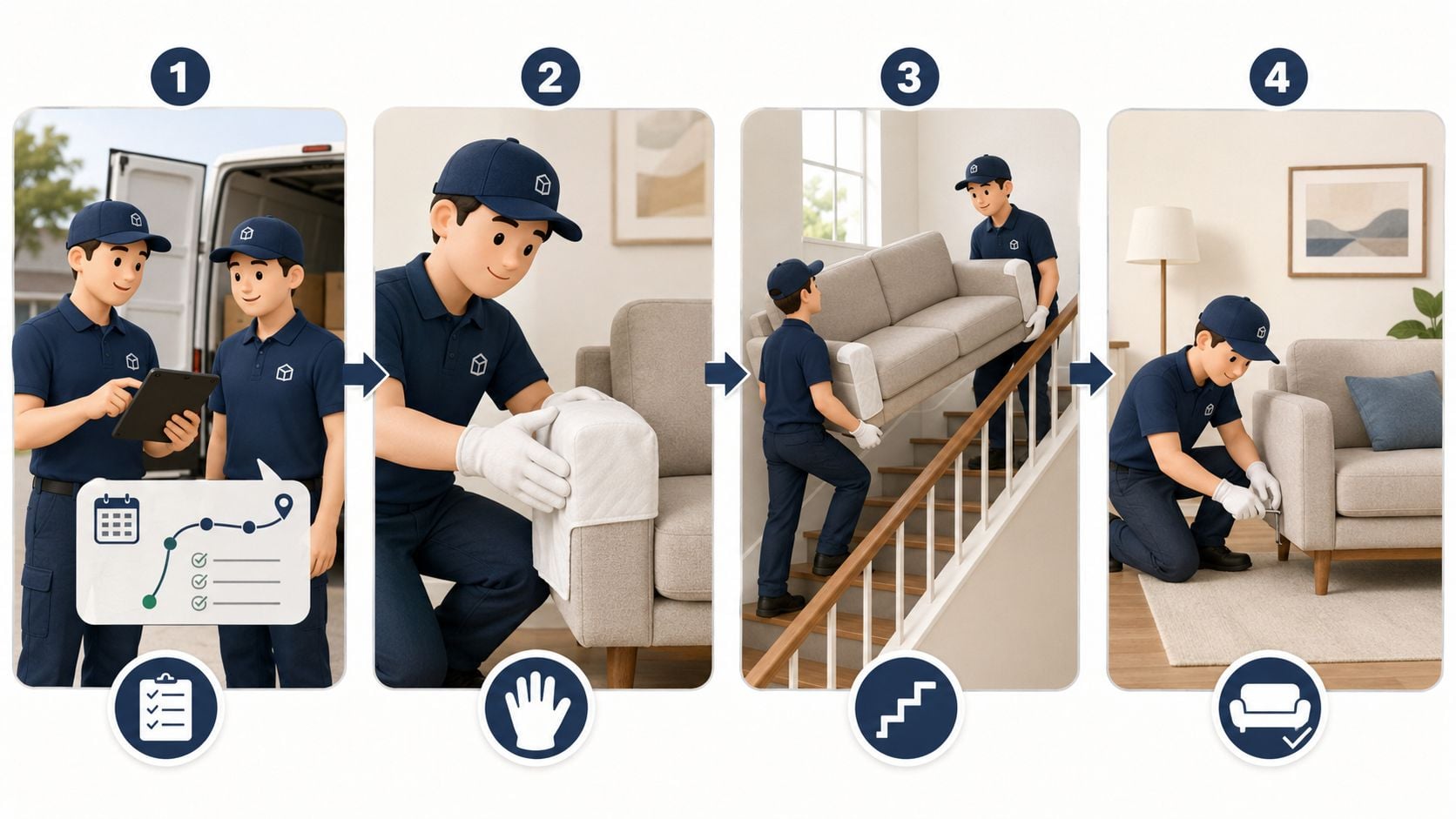
A well-defined appointment typically follows a clear order:
Scheduling comes first. The delivery team confirms the appointment and arrival window. A precise window matters because the homeowner may need to clear a path, protect floors, secure pets, and be present for inspection.
A two-person crew handles the piece. Large dining tables, bedroom case goods, leather sectionals, and motion seating need coordinated lifting and careful turning. The crew should assess stairs, corners, doorways, and clearance before moving the item.
The furniture travels to the room of choice. The service should extend beyond the driveway or entry threshold. The team brings the furniture inside, protects the route where appropriate, and positions it in the intended room.
Unpacking and debris removal follow. Cartons, wrapping, corner protection, and other packaging should leave with the crew when removal is included. That matters for large solid hardwood pieces, which often arrive protected by substantial packaging.
Basic assembly completes the setup. Attaching legs, securing table leaves, assembling bed components, or connecting sectional pieces may be included. Buyers shouldn't assume that complex installation is part of the standard scope.
Placement and inspection finish the visit. The crew levels the item when applicable and gives the homeowner an opportunity to review visible condition, placement, and assembly before signing.
A useful outside reference is this white glove moving service guide, which illustrates how premium handling differs from a simple transport handoff.
What usually falls outside the scope
White glove delivery generally doesn't include plumbing or electrical hookups, wall anchoring, structural changes, or door removal. Old-furniture haul-away may also require advance arrangement, and moving existing furniture is often excluded.
Before checkout, buyers should ask:
- Is assembly included? Confirm whether the service covers only basic attachment or more involved installation.
- Is packaging removed? Some providers include this, while others limit removal to specific materials.
- Is the final room included? “Inside delivery” may mean a threshold, not the room of choice.
- How are exceptions documented? Reputable providers should explain the inspection and damage-report process before delivery day.
White Glove Delivery Versus Standard Curbside Drop-Off
Standard curbside delivery ends where the difficult work often begins. The carrier leaves the item near the driveway or property edge, and the buyer becomes responsible for moving, opening, assembling, positioning, and clearing the packaging. That arrangement can work for manageable pieces, but it creates obvious exposure when the order includes a large solid-oak armoire, a modular sectional, or a power recliner.
| Feature | White Glove Delivery | Standard Curbside Delivery |
|---|---|---|
| Number of movers | A coordinated crew handles the item and its route into the home. | The carrier completes the drop-off, leaving the buyer to arrange further help. |
| Interior transport distance | The furniture travels to the agreed room of choice when included in the scope. | The furniture remains at the curb, driveway, or designated threshold. |
| Unpacking and debris removal | Unpacking and packaging removal are commonly included when listed in writing. | The buyer handles cartons, wrapping, foam, and disposal. |
| Assembly | Basic assembly may be completed during the appointment. | The buyer assembles the item or hires separate help. |
| Damage-liability transfer point | The homeowner can inspect the piece in its final room before signing. | The handoff happens earlier, so later damage disputes can become harder to resolve. |
| Scheduling precision | Appointment coordination supports preparation and homeowner presence. | The delivery may offer less control over the exact handoff experience. |
The difference becomes sharper in a multi-story home. A buyer may need to coordinate helpers, protect floors, rent equipment, or dismantle part of the route before a curbside carton can reach the dining room. A professional crew also knows how to rotate a case piece through a narrow hallway without dragging a finished corner against the wall.
A curbside fee saves money only if the buyer can safely absorb the lifting, risk, and cleanup that follow.
The labor burden isn't limited to carrying. Assembly instructions, missing hardware, awkward positioning, and packaging disposal can turn a straightforward delivery into a long home project. For homeowners who want a clear handoff from truck to finished room, furniture assembly and installation service can be the more practical route.
Curbside delivery still has a place. It can suit smaller items, accessible single-story rooms, and buyers with reliable moving help. For investment furniture, though, the decision should account for the entire delivery path rather than the first price shown.
Cost and Damage Risk Breakdown
The financial case for white glove delivery starts with damage avoidance. Common carrier furniture damage rates are reported in the 5% to 10% range, while better-run white glove operations may reduce damage to about 2% to 5% through fewer touches, protective wrapping, inspection, and controlled placement. Industry damage-rate coverage
That gap matters because furniture damage rarely ends with a simple apology. A damaged dining table may need refinishing, replacement components, return transportation, a new production slot, and another delivery appointment. The homeowner may also spend time documenting the problem, coordinating schedules, and waiting for the room to become usable.
The break-even question
Judge the delivery premium against the likely cost of one failed handoff, not against the curbside price alone.
Include these costs:
- Repair exposure: A scratch, dent, split, or finish problem may require professional attention.
- Replacement exposure: Custom solid hardwood and leather furniture may not be available for immediate replacement.
- Re-delivery exposure: A failed delivery can require another appointment and additional coordination.
- Time exposure: The homeowner may need to take time away from work or arrange extra help.
- Cleanup exposure: Oversized packaging may require separate storage or disposal arrangements.
Retail and logistics coverage reports that white glove handling can reduce damage and return rates by around 30% versus standard shipping when assembly and installation are performed correctly. Furniture delivery service coverage The result is not a guarantee, but it supports the break-even case for high-value orders. If one preventable failure would cost more than the service premium, the premium is financially defensible.
| Cost Factor | Standard Curbside | White Glove Service |
|---|---|---|
| Upfront charge | Lower delivery cost, with more labor shifted to the buyer. | Higher service cost, with handling and setup consolidated. |
| Moving labor | Buyer supplies help or hires it separately. | Delivery crew handles the in-home route when included. |
| Damage exposure | More handoffs and uncontrolled movement after drop-off. | Fewer buyer handoffs and a structured inspection. |
| Assembly burden | Buyer manages tools, instructions, and adjustments. | Basic assembly may be completed on site. |
| Packaging | Buyer stores, breaks down, or disposes of materials. | Removal is included when stated in the service scope. |
| Claims friction | Damage may be discovered after the carrier leaves. | Inspection occurs during the delivery appointment. |
A logistics benchmark reported a 0.81% damage and missing-item rate across 808,574 shipments in a flow-through network designed around fewer touches. White glove logistics guidance That benchmark does not predict every furniture shipment, but it supports the operating principle: fewer transfers create fewer opportunities for impact and pressure damage.
For furniture representing a substantial household investment, review protection plan information separately from delivery terms. White glove service reduces handling risk. It does not replace a clear understanding of coverage, exclusions, inspection rules, and claims procedures.
When White Glove Delivery Is Worth It for Fine Furniture
White glove delivery is worth the premium when the furniture is difficult to move, difficult to replace, or easy to damage. That describes many solid hardwood dining sets, custom bedroom pieces, leather sectionals, and premium mattress systems.
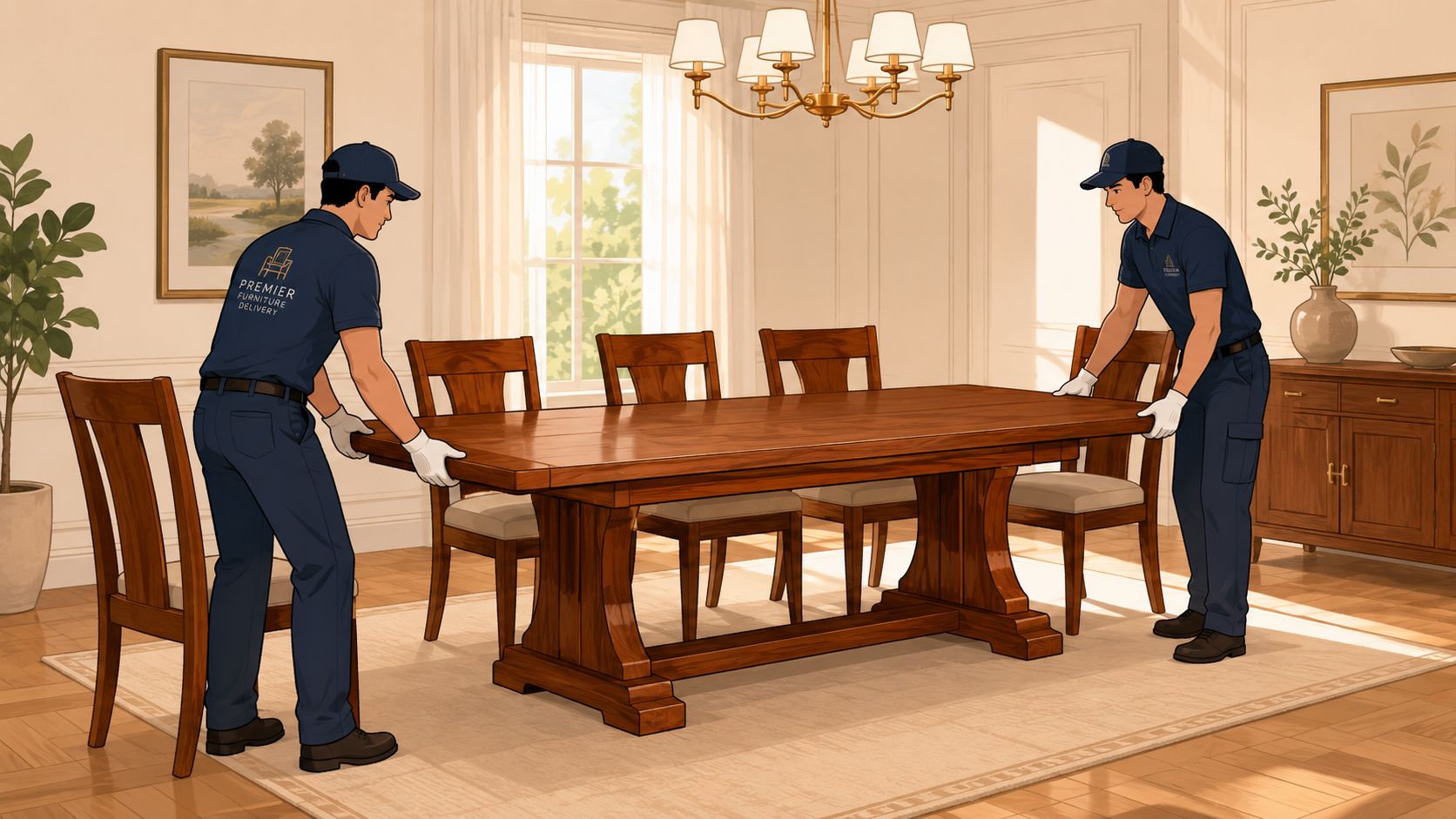
A $6,000 Amish-built hutch moving through a narrow staircase is an obvious candidate. The risk isn't limited to dropping the case piece. Movers can stress joints, scrape a finished side, damage trim, or strike a wall while trying to pivot the furniture into place. A professional delivery crew reduces the number of improvised decisions made in the most vulnerable part of the journey.
Solid hardwood deserves controlled handling
Vinson Fine Furniture focuses on solid hardwood furniture, including solid cherry, oak, maple, and walnut. Those materials support heirloom construction, but their weight and finished surfaces demand respect during delivery. A solid-maple bedroom set or solid-walnut dining table shouldn't be dragged across flooring or forced through an opening that hasn't been measured.
Custom pieces deserve even more caution. The Custom Order Program supports fabrics, finishes, and 3D visualizers for lines including Smith Brothers of Berne, Mavin, and Canadel. Smith Brothers is made in Indiana, Mavin is Amish-made in Ohio, and Canadel is handcrafted in Quebec. A piece with a specific fabric or finish deserves a delivery plan that matches its design investment.
Leather furniture presents a related concern. Top-grain and performance leathers can offer durable seating surfaces, but poor handling can still create scuffs, creasing, or frame misalignment. Power sectionals, reclining furniture, swivel chairs, rockers, and gliders also contain moving mechanisms that benefit from careful placement and correct setup.
When the premium may be optional
White glove service may be unnecessary for a $600 side table going into a ranch home through a wide doorway, especially when the buyer has moving experience and reliable help. Smaller accent pieces with straightforward access create less handling exposure.
The service becomes more compelling when:
- The order contains multiple pieces. Dining sets, bedroom groups, and sectional configurations create more coordination work.
- The furniture is made to order. A problem can interrupt a carefully planned room and delay completion.
- The route includes stairs or tight turns. Each difficult transition increases the chance of contact damage.
- The buyer has mobility limitations. Professional handling removes unsafe lifting from the homeowner's responsibilities.
- The piece has a long production timeline. Replacement or repair may require a substantial wait, making prevention more valuable.
Mattress buyers should confirm whether the service includes room placement, bed-frame positioning, packaging removal, and old-mattress haul-away. Those services can differ, so the written agreement matters.
The broader buying process also matters. Buyers evaluating the furniture journey from initial research to final decision should include delivery access before placing a custom order, not after the piece is already in production.
A Decision Checklist and the Vinson Fine Furniture Approach
A practical decision checklist prevents the delivery fee from becoming an emotional decision at checkout. Each “yes” indicates that the buyer is transferring meaningful labor or risk to the delivery team.
The buyer's checklist
- Does the item exceed $2,000? A higher purchase value raises the cost of a handling mistake.
- Does the route include stairs, tight turns, or low clearance? Difficult access increases the chance of impact or failed placement.
- Is the piece custom or made to order? A replacement may disrupt the entire furnishing plan.
- Does the furniture have a long lead time? Delays matter more when the buyer can't quickly source an equivalent.
- Is moving help unavailable? A buyer shouldn't rely on improvised assistance for heavy finished furniture.
- Are doorways or hallways narrow? The final room may be accessible only after careful route planning.
If three or more answers are yes, white glove delivery is usually the sensible choice. The calculation becomes even stronger for solid hardwood dining sets, leather motion furniture, and premium sleep systems that require positioning or assembly.
Vinson Fine Furniture serves Central Ohio from its Easton Town Center showroom. Its white glove process covers qualifying in-home deliveries with room placement, setup or assembly, packaging removal, and delivery inspection. The local team works with the varied layouts found across Columbus, from older homes in Victorian Village to newer properties in Dublin, where access conditions can differ from one address to the next.
The retailer also documents furniture condition on arrival and handles delivery concerns directly rather than sending the homeowner through an unfamiliar third-party carrier. Buyers should still confirm the precise scope for each order, including stairs, haul-away, assembly limits, and claim procedures.
A transparent quote makes the decision easier. The buyer can compare the full purchase and delivery cost before committing instead of discovering a service surcharge at the final checkout stage.
Frequently Asked Questions About White Glove Service
What happens if damage is found after delivery?
The homeowner should inspect the furniture before the crew leaves and document visible damage with clear photographs and written notes. Claim windows can be short. Some retailer policies require damage notices within 48 hours and may state that white glove fees are non-refundable, so the buyer should read the delivery and claims terms before signing. Example delivery policy details
Is the delivery fee refundable after a cancellation or reschedule?
That depends on the retailer, carrier assignment, and timing. Some providers treat the service fee as non-refundable, while others may adjust it when a service can't be performed. The written order confirmation should control, not a verbal assumption.
How early should the service be booked?
Fine-furniture buyers should arrange delivery as soon as the order is approved and access details are known. Same-day service may not be available for custom, oversized, or multi-piece orders, and a precise appointment requires coordination between the retailer, crew, and homeowner.
Will the crew remove old furniture?
Usually not unless haul-away was specifically arranged. Buyers should ask before delivery, particularly for mattresses and large bedroom pieces.
Can the team handle tight stairs and hallways?
They can often handle complex routes when the furniture and access conditions have been reviewed in advance. Door widths, stair turns, ceiling clearance, railings, and final-room dimensions should be provided before the appointment.
Is tipping required?
Tipping isn't required, but some homeowners choose to recognize careful work involving stairs, heavy solid hardwood, narrow passages, or precise placement. The amount should reflect the difficulty and quality of service.
For a personalized quote and scheduling guidance, Columbus buyers can contact the Vinson Fine Furniture delivery team before placing an order.
Vinson Fine Furniture combines solid hardwood furniture, premium leather and motion seating, custom ordering, and in-home white glove delivery for Central Ohio homeowners. Visit Vinson Fine Furniture to arrange a complimentary design consultation, explore the Easton showroom, compare delivery options, and evaluate pieces in person before making a long-term investment.