Basics of Interior Design: Create a Timeless Home

A lot of homeowners arrive at the same point. The walls are painted, the floors are finished, a few saved photos look promising, and the room still doesn't come together. The sofa feels too bulky, the table feels too small, and nothing relates to the architecture the way it did in their head.
That disconnect is where the basics of interior design matter most. Abstract advice about balance, color, and texture sounds useful until real constraints enter the room, like existing furniture, narrow walkways, awkward windows, and the need to buy pieces that should still feel right years from now. That practical gap is common in beginner design guidance, which often explains principles without showing how they work in rooms with fixed dimensions or furniture already in place, as noted in this discussion of interior design basics and principles.
Homes also rarely need furniture alone. The room has to function as a whole, which is why details like window treatments for luxurious homes often shape the final sense of softness, privacy, and proportion just as much as the case goods and seating do. For homeowners trying to make sense of all those moving parts, a grounded starting point helps. A useful first step is to work through where to begin with home design planning before any major purchase is made.
Table of Contents
- From Blank Canvas to a Cohesive Home
- The 7 Foundational Elements of Enduring Design
- Composing Your Room with Color and Materials
- The Art of Space Planning and Furniture Scale
- Bringing It to Life Room by Room
- Partnering with a Professional Design Consultant
- Your Long-Term Investment in Timeless Style
From Blank Canvas to a Cohesive Home
A well-furnished home rarely starts with a dramatic gesture. It starts with a series of sound decisions. The first one is accepting that a beautiful room is usually planned, not stumbled into.
Many rooms go off course for the same reason. A homeowner buys one appealing piece at a time without establishing the room's visual anchor, circulation, or material direction. By the third or fourth purchase, the room contains attractive objects but no composition. That's why the basics of interior design matter more than style labels.
A room has to solve real problems
A living room might need to accommodate a television, a conversation area, a reading chair, and a walkway that doesn't cut through the seating group. A dining room might need to hold a substantial table without making every chair movement feel tight. A bedroom might already contain a dresser that has to stay.
Good design begins when the room's limits are treated as useful information instead of obstacles.
That practical mindset changes the process. Instead of asking, “What style should this room be?” the better question is, “What must this room do, and which pieces deserve to stay for a long time?”
Quality changes the design conversation
When furniture is chosen as a long-term investment, decisions become sharper. Solid wood carries visual weight differently than lighter, lesser materials. Top-grain leather ages with character, reflects light softly, and asks for cleaner supporting elements around it. A bench-made dining table or a well-proportioned sectional isn't filler. It becomes part of the room's architecture.
That's where design guidance earns its place. The homeowner doesn't need more inspiration alone. The homeowner needs a plan that connects measurements, materials, comfort, and scale so every selection supports the next.
The 7 Foundational Elements of Enduring Design
The basics of interior design aren't decorative trivia. They're the working parts of a room that determine whether it feels calm, awkward, heavy, or resolved. A useful way to read a space is through seven elements: space, line, form, light, color, texture, and pattern.
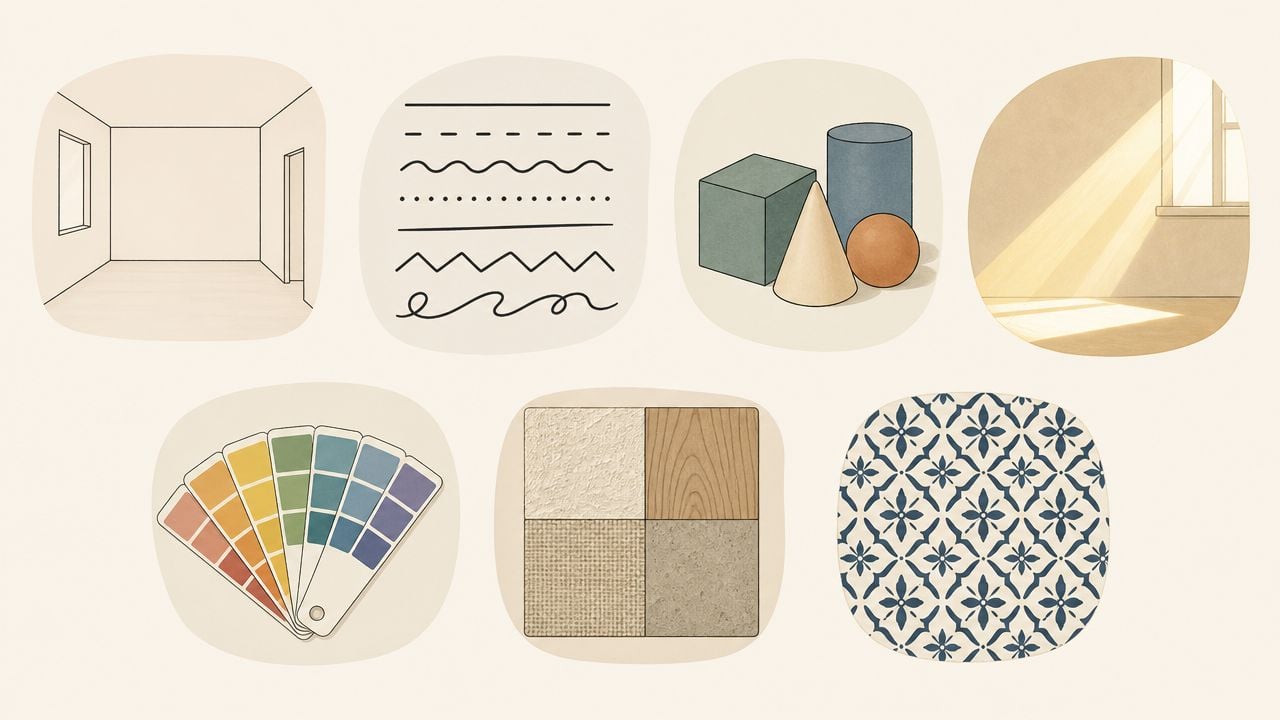
A broader overview of these ideas appears in this guide to the elements of a modern home, but the important thing is how each element shows up in everyday furnishing decisions.
Space sets the rules
Space is the container every other choice must fit. It includes the room's width, height, openings, and negative space. When space is ignored, even fine furniture feels misplaced.
A room also needs hierarchy. Design references note that proportion and focal-point control are foundational, and they recommend choosing one dominant anchor element, then letting surrounding pieces support it so the room doesn't take on a confused look, as explained in this overview of interior design basics.
Line and form create character
Line directs the eye. Vertical lines feel crisp and architectural. Horizontal lines feel grounded. Curved lines soften a room that's become too rigid.
Form is the silhouette of an object. A sofa with a tight back and structured arm reads differently from a deep, rounded profile. The same is true of a dining table with a thick, rectilinear top versus one with gentler contours. Rooms usually improve when their forms relate without matching exactly.
- Space decides what can fit gracefully.
- Line controls movement through the room.
- Form gives each piece its visual personality.
Light color texture and pattern finish the room
Light reveals every material truth. It deepens wood grain, softens leather, and changes how paint reads from morning to evening. Strong natural light can support richer finishes. Dim rooms often need warmer materials and fewer visual interruptions.
Color is rarely the hardest part. Texture is. A room without texture feels flat even when the palette is strong. The open grain of oak, the smoother face of maple, the richer depth of walnut, and the supple hand of top-grain leather all create interest before a single accessory is added.
Pattern works best when it supports the room's anchor rather than competes with it.
Practical rule: If every surface demands attention, none of them gets it.
Composing Your Room with Color and Materials
A polished room usually feels simple, even when the material mix is rich. That sense of ease comes from restraint. Color has to be distributed with intention, and materials have to relate in tone, finish, and weight.
Use the 60 30 10 rule with restraint
One enduring planning tool is the 60/30/10 balance. About 60% of the room should carry the dominant color, 30% a secondary color or material, and 10% an accent. This rule helps manage visual weight so the room feels cohesive rather than crowded, according to this explanation of the 60/30/10 interior design balance.
In practice, that might look like this:
- Dominant layer with wall color, a large rug, or the main upholstered body of the room
- Secondary layer with drapery, side chairs, or a case piece finish
- Accent layer with pillows, art, or a small amount of contrast leather or metal
What usually fails is reversing the ratio. Too many accents create noise. Too many unrelated finishes make the room feel undecided.
Build the palette from the wood outward
Solid hardwood gives a room its deepest sense of permanence. It also provides a natural starting point for the palette. Wood isn't just brown. Each species carries a different visual temperature and grain expression.
A solid cherry dining table often brings warmth and a slightly formal richness. Maple reads cleaner and quieter. Oak offers visible grain and an honest, grounded texture. Walnut adds depth and a darker, more refined mood.
When upholstery is added, the strongest combinations usually rely on contrast in feel rather than sharp contrast in color. Smooth leather beside open grain wood creates balance. Textured fabric beside a polished table edge keeps the room from feeling hard.
For homeowners refining those choices, expert guidance on building the perfect color palette can help narrow finishes and fabrics before ordering.
Solid Hardwood Characteristics at a Glance
| Hardwood | Primary Grain | Natural Color Tone | Best For |
|---|---|---|---|
| Cherry | Smooth to moderately expressive | Warm and deepening over time | Dining rooms, bedrooms, formal anchors |
| Oak | Prominent and tactile | Warm to neutral | Family dining, casual traditional spaces |
| Maple | Fine and subtle | Light to medium, often clean-looking | Transitional rooms, brighter palettes |
| Walnut | Rich and elegant | Deeper brown tones | Statement pieces, tailored interiors |
A custom order process is especially useful here because color and material decisions almost always need to be seen together, not in isolation. Programs that allow finish selection, fabric choices, leather options, and digital visualizers help align the room before the furniture is built.
The Art of Space Planning and Furniture Scale
Most furnishing mistakes aren't style mistakes. They're scale mistakes. The room looked generous when empty, and then a sectional arrives, dining chairs push too far into the walkway, or the bed leaves little room for movement at the sides.
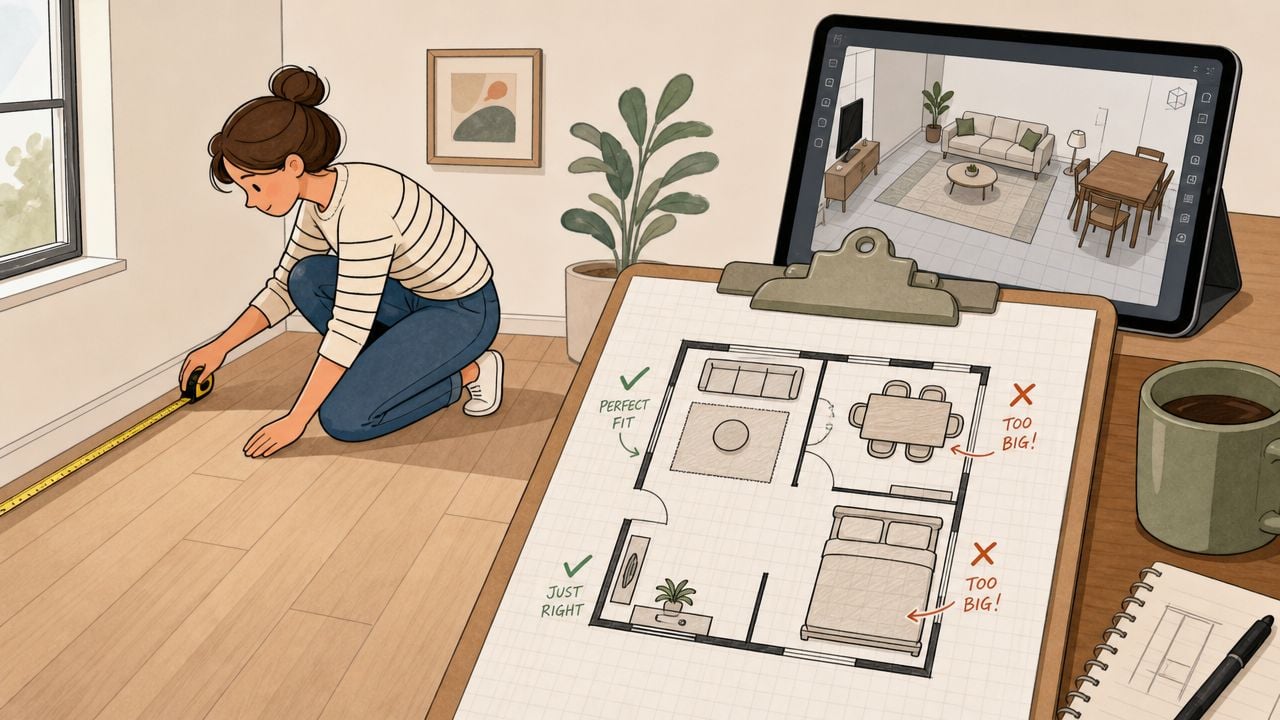
A technically sound first step is to-scale space planning. One design training resource recommends measuring walls, windows, radiators, and room height, then drafting a simple floor plan at 1:25 so furniture can be tested before purchase. That matters because scale errors are one of the most common reasons rooms suffer from poor circulation and an overwhelmed feeling, as described in this resource on interior design basics and scaled planning.
Measure first then judge comfort
Comfort matters, but comfort without dimension leads to expensive corrections. A room plan should include:
- Fixed architecture like doors, windows, vents, and built-ins
- Existing furniture that must stay
- Traffic paths showing how people move through the room
- Sightlines from the main entrance and primary seating positions
This is also where the furniture-to-room relationship becomes practical. A related guideline holds that nearly 60% of a room should be occupied by furniture and about 40% should remain clear. That balance helps rooms feel furnished without becoming cramped, as explained in the earlier source on interior design proportion.
What works and what usually fails
The most successful layouts respect both circulation and visual weight. A large sectional can work beautifully if its mass is balanced by open perimeter space, a properly scaled rug, and secondary seating that doesn't block movement. A dining table can feel substantial without feeling crowded when chair pullback and surrounding clearance are considered before ordering.
What tends not to work:
- Oversized anchors that leave no breathing room around them
- Undersized rugs that make major furniture look adrift
- Wall-hugging layouts that create dead space in the center and awkward conversation zones
- Too many medium-size pieces with no dominant visual anchor
Measure twice, buy once. The most expensive mistake in a room is often the wrong size, not the wrong style.
For homeowners comparing arrangements before purchase, space planning guidance for interior design is often more useful than another round of inspiration photos.
Bringing It to Life Room by Room
Principles become clearer when they're attached to actual rooms. Two spaces usually carry the greatest design weight in a home: the dining room and the living room. One is built around gathering at a table. The other has to hold comfort, conversation, and everyday use without slipping into visual clutter.
Dining rooms need a true anchor
A dining room benefits from a single commanding piece more than almost any other space. An Amish-made dining set does that naturally because the table has substance, visible grain, and the kind of joinery that reads as permanent rather than temporary.
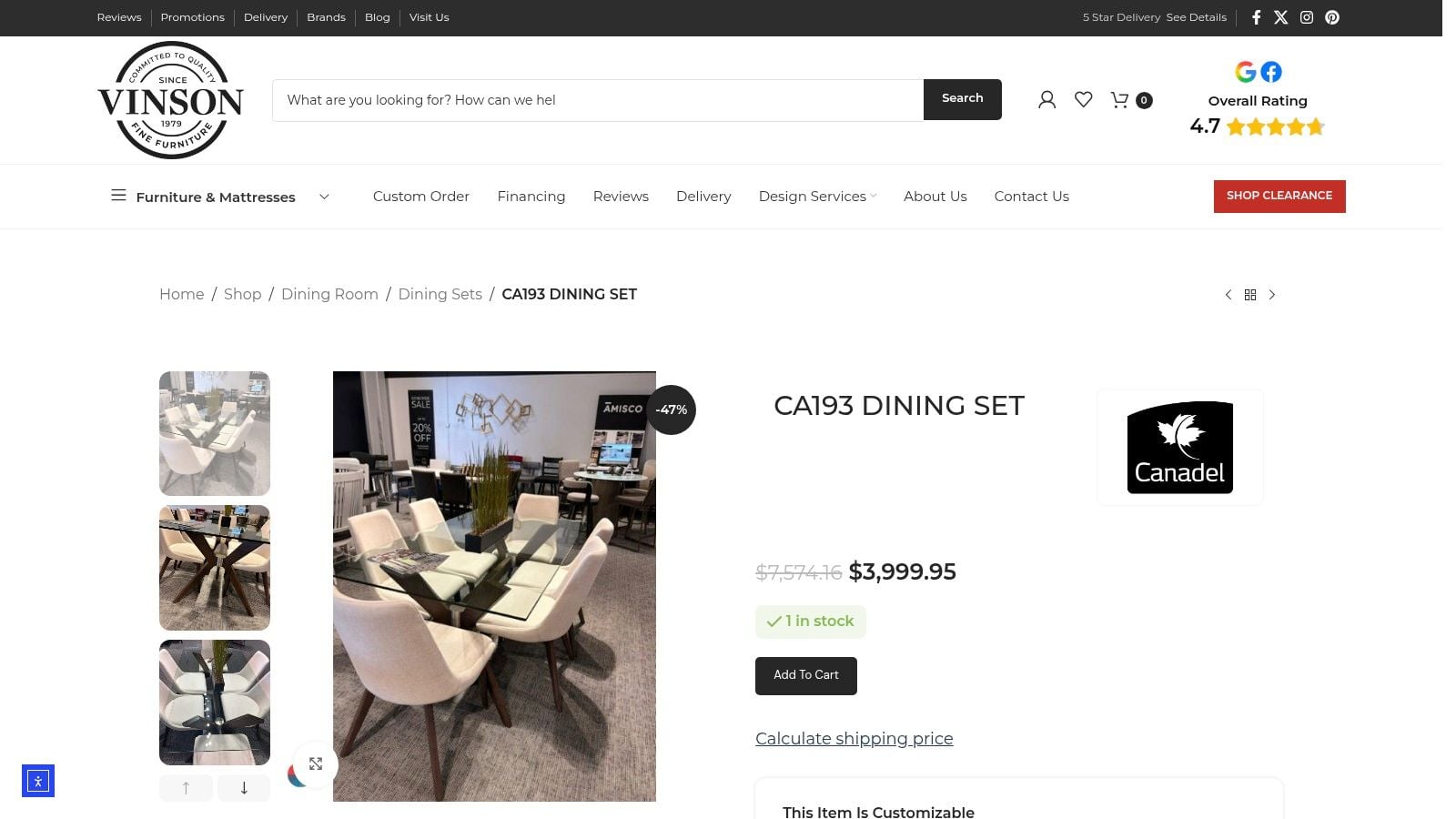
A solid cherry or oak table can carry the room with very little help. Upholstered host chairs add softness. Side chairs in wood keep the composition crisp. A case piece should support the table, not compete with it. That's why Amish-made dining sets often work so well in homes that want warmth without excess ornament.
Mavin bedroom furniture and dining pieces follow the same logic that makes enduring rooms feel settled. The material itself does a large part of the visual work.
Living rooms need comfort without drift
Living rooms are harder because every piece is softer, larger, and more likely to multiply. A sectional often becomes the anchor. When its scale is right, the rest of the room can orbit it calmly. When its scale is wrong, no accent chair or cocktail table will rescue the plan.
A strong arrangement might pair a well-designed sectional with one swivel chair, one accent chair, and a table with enough heft to hold its place visually. If the room leans casual, power reclining features can be integrated without sacrificing composure, provided the profile remains clean and the surrounding pieces stay disciplined.
- For larger rooms a sectional can define the conversation zone
- For multipurpose layouts swivel seating helps the room adapt
- For tactile depth top-grain leather adds softness, sheen, and durability
- For grounded contrast solid maple, oak, cherry, or walnut tables keep upholstered rooms from feeling too soft
Smith Brothers furniture Easton shoppers often gravitate toward silhouettes that balance comfort with structure, especially when planning custom leather sectionals Columbus homeowners can live with for years.
Partnering with a Professional Design Consultant
Professional design help isn't reserved for dramatic remodels or formal homes. It's often most useful when a homeowner wants to avoid one expensive mistake, work around existing pieces, or make custom selections with confidence.
Interior design is also a significant profession, not a decorative afterthought. One industry summary notes that the U.S. interior design industry is projected at $26.5 billion in 2026, and the U.S. Bureau of Labor Statistics reports a median annual wage of $63,490 for interior designers in May 2024, reflecting a field centered on making spaces functional and intentional, as summarized here in these interior design profession facts.
What to bring to the appointment
A productive consultation starts with real information, not vague preferences. The most useful items are simple:
- Room measurements with wall lengths, openings, and ceiling height
- Photos taken from each corner and from adjoining spaces
- A list of keepers showing which pieces must remain
- Material preferences such as top-grain leather, specific wood species, or a finish direction
- Inspiration images that reveal what keeps appearing across saved rooms
A homeowner who brings dimensions and photos will usually get sharper guidance than one who arrives with style words alone.
What a good consultation changes
A design consultant helps translate taste into decisions. That includes identifying the dominant anchor, correcting scale problems before ordering, narrowing finish options, and showing where customization makes sense.
One option for that process is a complimentary interior design consultation, where room planning, finish coordination, and custom order details can be reviewed alongside visual tools. For homeowners considering Smith Brothers, Canadel, or Mavin, that matters because customization introduces more choice, and more choice only helps when it's organized well.
A consultation doesn't remove personal taste. It gives personal taste structure.
That structure is especially valuable when balancing timeless pieces with current preferences, deciding how much leather to introduce, or choosing between a statement wood finish and a quieter supporting palette.
Your Long-Term Investment in Timeless Style
The basics of interior design don't ask a room to be rigid. They ask it to be coherent. A well-designed home respects proportion, uses color with discipline, chooses materials that age gracefully, and gives each room a clear anchor.
That's why timeless interiors tend to feel calm instead of overstyled. They aren't trying to chase every shift in taste. Homeowners who want to stay aware of what's current can still do that selectively, and a thoughtful outside reference like this guide to modern interior trends in 2025 can be useful when deciding which ideas feel adaptable and which ones are too trend-bound for a major furniture purchase.
The lasting value sits in the pieces touched every day. The weight of solid wood across a dining top. The fine grain of cherry or walnut catching afternoon light. The smooth hand of top-grain leather on a sectional arm. The quiet motion of a recliner, swivel, rocker, or glider that feels engineered rather than flimsy.
Good rooms don't happen because everything matches. They happen because every choice belongs.
For homeowners ready to turn ideas into a livable plan, Vinson Fine Furniture offers a place to test scale, comfort, materials, and customization in person at Easton Town Center. The showroom experience makes it easier to compare solid wood furniture Ohio homeowners can live with for decades, review custom options for Canadel, Mavin, and Smith Brothers, explore the Design Studio, and evaluate value through the Clearance Gallery with savings up to 70% and a 110% Low Price Guarantee, as described in the company materials above.