Your Guide to an Oval Pedestal Dining Table for 6


A lot of dining table decisions start the same way. You stand in the room, look at the empty footprint, and try to picture ordinary life there. Weeknight pasta, coffee with a neighbor, a birthday cake, a laptop open at one end while someone else folds school papers at the other. You want enough seating for real use, but you don’t want the room to feel blocked or overfilled.
That’s where an oval pedestal dining table for 6 often earns a serious look. It softens the room, seats people in a more relaxed way than a hard-cornered rectangle, and keeps the center open below so no one has to negotiate around corner legs. For many homeowners, it lands in the sweet spot between everyday practicality and a more polished, long-term design choice.
The tricky part is that this category can be misleading. Two tables may look similar online and perform very differently in your home. One feels steady, comfortable, and easy to live with. Another may feel cramped at the sides, awkward at the base, or less stable over time. If you’re making a major furniture investment, those differences matter.
Envisioning Your Ideal Gathering Space
A couple often comes in with the same problem. Their old table worked when the house was busier and more temporary, but now they want something that feels settled. They’re hosting more often, the room is finally being used the way they imagined, and they want the table to anchor it instead of apologizing for it.
An oval shape tends to solve several issues at once. It keeps the room moving smoothly because there are no sharp corners interrupting the path around it. It also feels more conversational. Everyone sits in a shared curve instead of at rigid edges, so dinners feel less formal without losing structure.
If your dining room is narrow, or if it opens into a kitchen or family room, that softer outline can make the whole layout feel calmer. The shape reads as intentional rather than bulky. A pedestal base adds to that effect because the visual weight stays centered instead of spreading to four corners.
For homeowners comparing shapes, this is often the turning point. A rectangular table may look efficient on paper, and a round table may feel inviting, but the oval frequently does both jobs well. If you’re still sorting out shape options, this guide to table shapes and seating arrangements is a helpful starting point.
A dining table shouldn’t just fit the room. It should make the room easier to use every day.
That’s why the decision deserves more than a quick style match. You’re choosing where people gather, how they sit, how they move, and how the room will feel for years.
The Unique Advantages of an Oval Pedestal Design
The appeal of an oval pedestal table isn’t only visual. Its strengths show up in daily use, especially in homes where the dining area has to work hard and still look refined.
Why oval often feels easier to live with
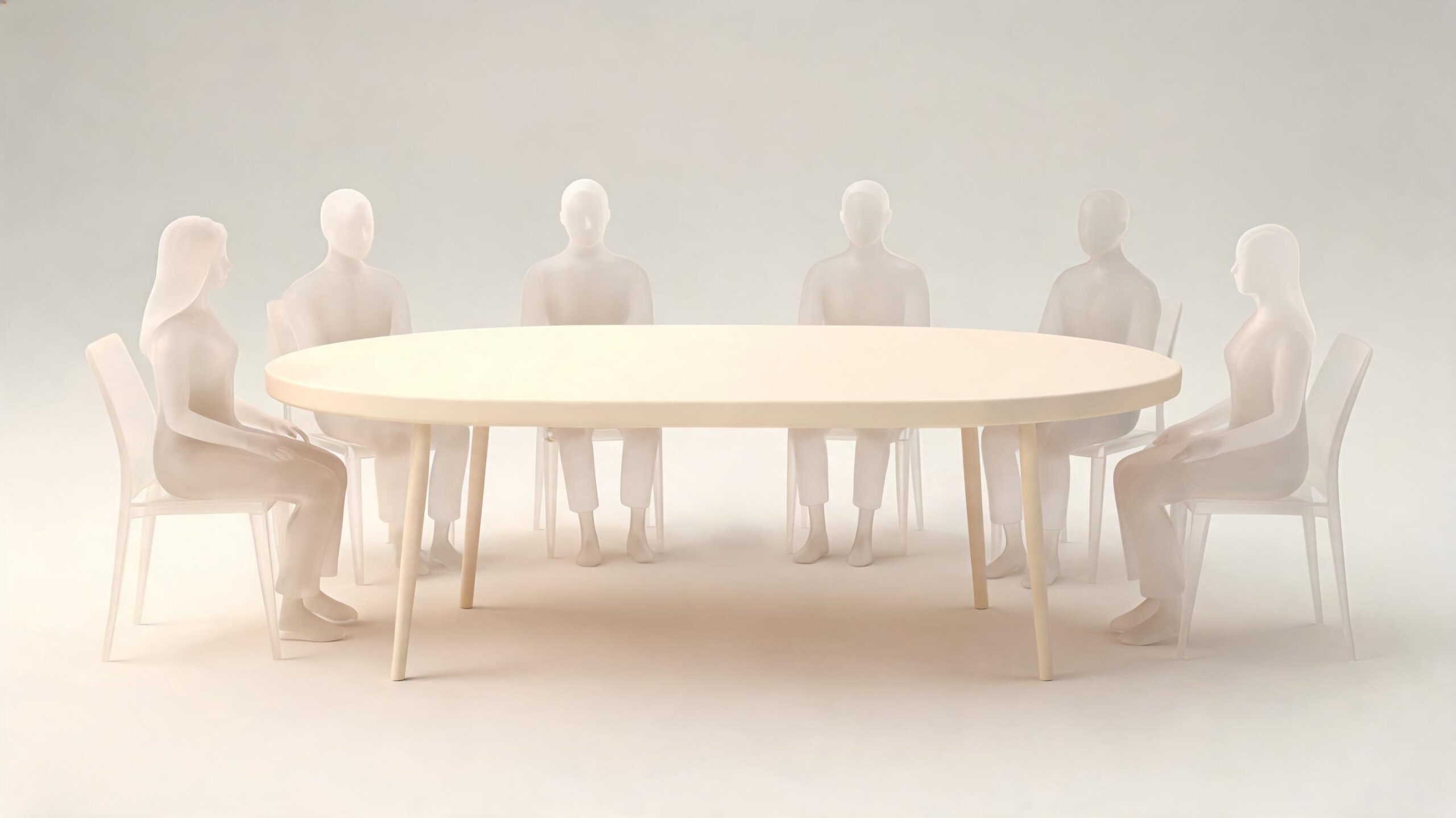
A six-seat oval table gives you the sociability of a round table with a longer serving surface. That matters when you’re placing bowls, platters, candles, or everyday clutter that accumulates there between meals.
It also handles traffic well. In tighter dining rooms, the curved ends reduce the sense of obstruction. You don’t brush past a hard corner. You move around a softened edge, which can make the room feel less compressed.
Pedestal construction changes the seating experience too. With no outer legs at the corners, chairs can shift more freely. That’s useful if one guest likes more elbow room or if you want a slightly different chair mix at the ends.
The comfort advantages people notice first
Most buyers notice these benefits quickly:
- Cleaner legroom: A centered base removes the four-corner conflict that often limits chair placement.
- Better flow: The oval outline can be gentler in walkways and open-plan spaces.
- A more communal feel: Curved seating tends to encourage conversation across the table, not just straight down it.
- Flexible styling: Oval tops work comfortably with both traditional and more pared-back interiors.
If you like the openness of pedestal construction but want to compare silhouettes, these round dining room table ideas can help clarify what shape will feel most natural in your room.
The part big-box listings rarely explain
Many retail listings focus on finish, color, and seat count. They rarely say much about how pedestal tables age structurally. Yet that’s one of the most important distinctions in this category.
According to the retail-content gap described in the verified research, major retailer search results tend to prioritize aesthetics over structural longevity, even though pedestal tables can be prone to wobbling over 5 to 10 years due to concentrated weight on a single base. The same verified source notes that quality solid-wood joinery is engineered to counteract those forces more effectively than mass-market veneered bases, which is why construction matters so much in this style of table. That point appears in the verified data tied to this retailer category reference.
What to ask in a showroom: Is the base solid wood or veneered? How is the top fastened? Is the table designed to resist twisting at the ends?
Those questions matter because a pedestal table carries weight differently from a four-leg table. The load is more centralized. If the engineering is weak, movement shows up sooner. If the joinery is thoughtful, the table stays composed and dependable, which is exactly what you want from a long-term piece.
Perfect Sizing for Six a Practical Measurement Guide
Most sizing mistakes happen because people shop by label instead of by actual use. “Seats six” can mean six adults fit at the table. It doesn’t always mean they’ll sit comfortably for a full meal.
For an oval pedestal dining table for 6, ergonomic design guidance recommends a minimum length of about 72 inches and a width of at least 36 inches so each diner can have the needed frontage for a comfortable place setting. The same guidance also notes that the inner edge of chairs should be at least 15 to 18 inches from the table edge to maintain thigh clearance around the pedestal base, especially where the base projects into knee space, as outlined in this oval dining table measurement guide.

The numbers that matter most
The most useful way to think about sizing is this:
- Overall length: About 72 inches is the reliable comfort target for six.
- Overall width: At least 36 inches helps the table feel balanced and usable.
- Per-person frontage: Roughly 24 inches lets each setting breathe.
- Chair-to-base comfort: Keep that chair position in the 15 to 18 inch range from the table edge so knees and thighs don’t fight the pedestal.
These aren’t decorative details. They shape the meal. If any one of them is too tight, diners start negotiating space instead of relaxing into it.
Why some six-seat tables still feel cramped
This confuses buyers all the time. They see a table marketed for six and assume it will perform like a comfortable six-seat table. Not always.
Some manufacturer tables in this category cluster around slightly narrower dimensions, which can trade ideal comfort for a smaller footprint. That can work in certain homes, especially with tighter seating expectations or bench use, but it changes the experience. Adults may fit. They just may not feel settled for a longer dinner.
Practical rule: Don’t ask only whether six chairs fit. Ask whether six place settings, six bodies, and normal chair movement fit without negotiation.
How to measure your room with confidence
Before you shop, measure the room in a way that reflects actual living.
- Mark the table footprint on the floor. Use painter’s tape to outline the tabletop.
- Add chair space around it. Pull an actual dining chair into place if you can.
- Walk the room. Test the path to doors, cabinets, and nearby rooms.
- Check the ends carefully. Oval tables soften corners, but the ends still need breathing room.
If you want a more detailed planning reference, this sizing article on dining room tables and room fit is worth reviewing before your showroom visit.
A simple room-planning example
Here’s a plain-language way to think about layout. In a modest dining room, a table that meets the comfort dimensions above usually feels more composed if the room still allows chairs to move without scraping into walls or nearby furniture. In an open-concept home, the same table may feel larger because the eye reads it from multiple angles, but circulation is often easier.
A quick comparison helps:
| Room situation | What usually works well | What to watch for |
|---|---|---|
| Narrow dining room | Oval shape helps soften traffic flow | Base placement must still allow chair comfort |
| Open-concept area | Oval top creates a softer visual zone | Scale can feel different from every angle |
| Multipurpose room | Pedestal base improves seating flexibility | Avoid undersized tops marketed as “for six” |
The key is matching the table to how you dine. If your household lingers, serves family-style meals, or uses the table for more than eating, comfort dimensions matter even more.
Choosing Your Forever Material and Finish
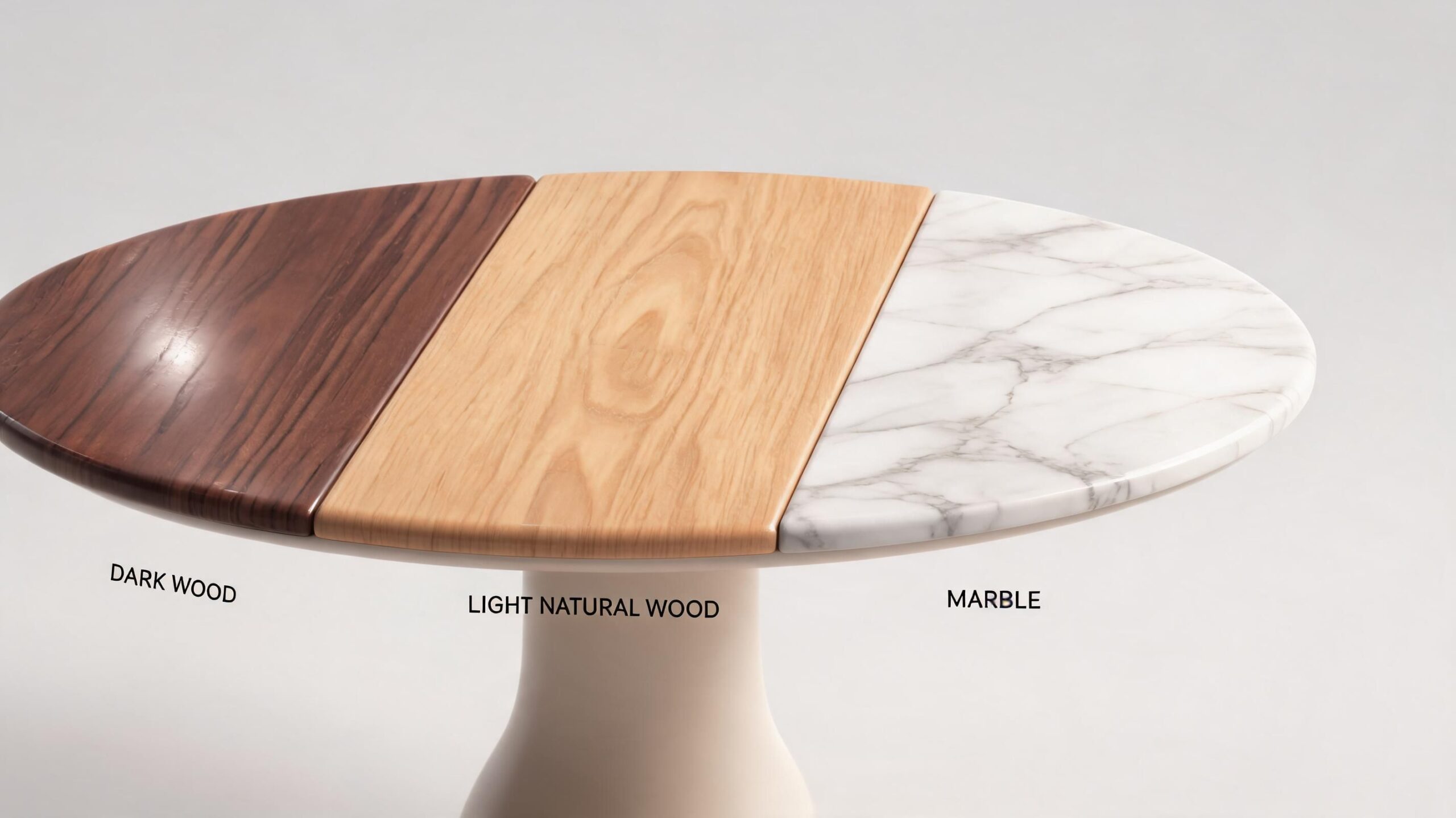
A table earns heirloom status through material, construction, and how well it ages in your home. Style matters, of course, but style sits on top of substance. If the core material is weak, the table won’t improve with time. It will show wear faster.
That’s why solid wood remains the benchmark for many investment homeowners. It has depth, visible grain, repair potential, and a presence that doesn’t depend on trends. In a category like pedestal dining tables, that material choice matters even more because the base and top are both doing structural work.
How common wood choices feel in real rooms
Different woods bring different personalities.
| Material choice | What homeowners often like about it | Design feel |
|---|---|---|
| Oak | Strong grain, grounded character | Classic, versatile, sturdy |
| Maple | Smoother, cleaner appearance | Tailored, lighter, understated |
| Cherry | Richens beautifully over time | Warm, traditional, refined |
| Walnut | Deeper tone and dramatic grain | Sophisticated, architectural |
None of these is universally right. The best choice depends on your flooring, cabinetry, light levels, and whether you want the dining space to feel crisp, relaxed, formal, or collected over time.
Solid wood versus veneer in an investment piece
Veneer has its place. It can produce a controlled appearance and works well in some designs. But if your priority is a table that feels substantial, can age gracefully, and supports the long-term structural expectations that come with a pedestal base, solid wood has a persuasive advantage.
That’s especially true when buyers care about Solid wood furniture Ohio shoppers often seek, or are exploring Amish-made furniture and other North American craftsmanship traditions. A solid-wood table tends to invite maintenance and preservation. A lower-grade veneered base tends to be treated as disposable once wear becomes visible.
For inspiration, this roundup of solid wood dining tables is useful if you’re comparing grain character and overall finish direction.
The table you live with for years should look better with familiarity, not just acceptable under showroom lighting.
Finish is protection, not just color
Finish controls more than appearance. It affects how the table responds to fingerprints, routine wiping, shifting light, and the small abrasions of daily life.
When I guide clients, I encourage them to think about finish in three ways:
- Surface mood: Do you want a hand-finished, low-sheen look or a smoother, more formal surface?
- Household rhythm: Are there children, frequent guests, or heavy daily use?
- Aging pattern: Do you prefer a finish that disguises character marks or one that develops visible patina?
A good finish should support the way the room is used. The prettiest sample isn’t always the right long-term answer.
Perfect Pairings Finding the Right Dining Chairs
A beautiful table can still disappoint if the chairs are wrong. Most discomfort at a dining set doesn’t come from the tabletop. It comes from seat scale, back support, arm height, and how awkwardly the chairs tuck under the apron or around the pedestal.
With an oval pedestal table, chair selection becomes more flexible, but it also becomes more visible. Because the base is centered, the chairs play a larger role in the look of the whole set. Their shape, fabric, wood tone, and spacing all stand out.
Start with comfort before style matching
If you host long meals, choose chairs that invite people to stay seated. That often means a supportive back, a seat depth that feels natural, and enough room between diners that shoulders don’t touch.
When comparing chair types, think practically:
- Side chairs: Usually the easiest fit for six. They keep the perimeter light and tuck in neatly.
- Arm chairs: Better used selectively, often at the ends, if the tabletop and base allow enough clearance.
- Upholstered chairs: Softer and quieter in use. They can warm up a wood-heavy room.
- Solid wood chairs: Crisp, durable, and often visually lighter if the room already has texture elsewhere.
This collection of dining room chairs is a useful reference when you want to compare silhouettes before trying them in person.
Watch scale, not just style
A common mistake is choosing chairs that look beautiful alone but feel oversized once six are gathered around the table. Broad backs can crowd the curve of the oval. Thick arms can limit the number of usable seats. Tall chair backs can overpower a lower-profile pedestal table.
I usually suggest a quick chair checklist:
- Seat width: Wide enough for comfort, but not so wide that six chairs fight for perimeter space
- Back profile: Supportive without becoming bulky
- Tuck-in ability: Important if the room needs to feel orderly between meals
- Material mix: Coordinated, not necessarily identical
Mixed seating can work beautifully when one element repeats. Often that’s wood tone, fabric family, or silhouette softness.
This is one of those decisions that benefits from a real sit-test. A chair may look elegant online and still feel too upright, too hard, or too deep once you’re in it for more than a few minutes.
The Vinson Advantage Custom Dining Sets and Design Expertise
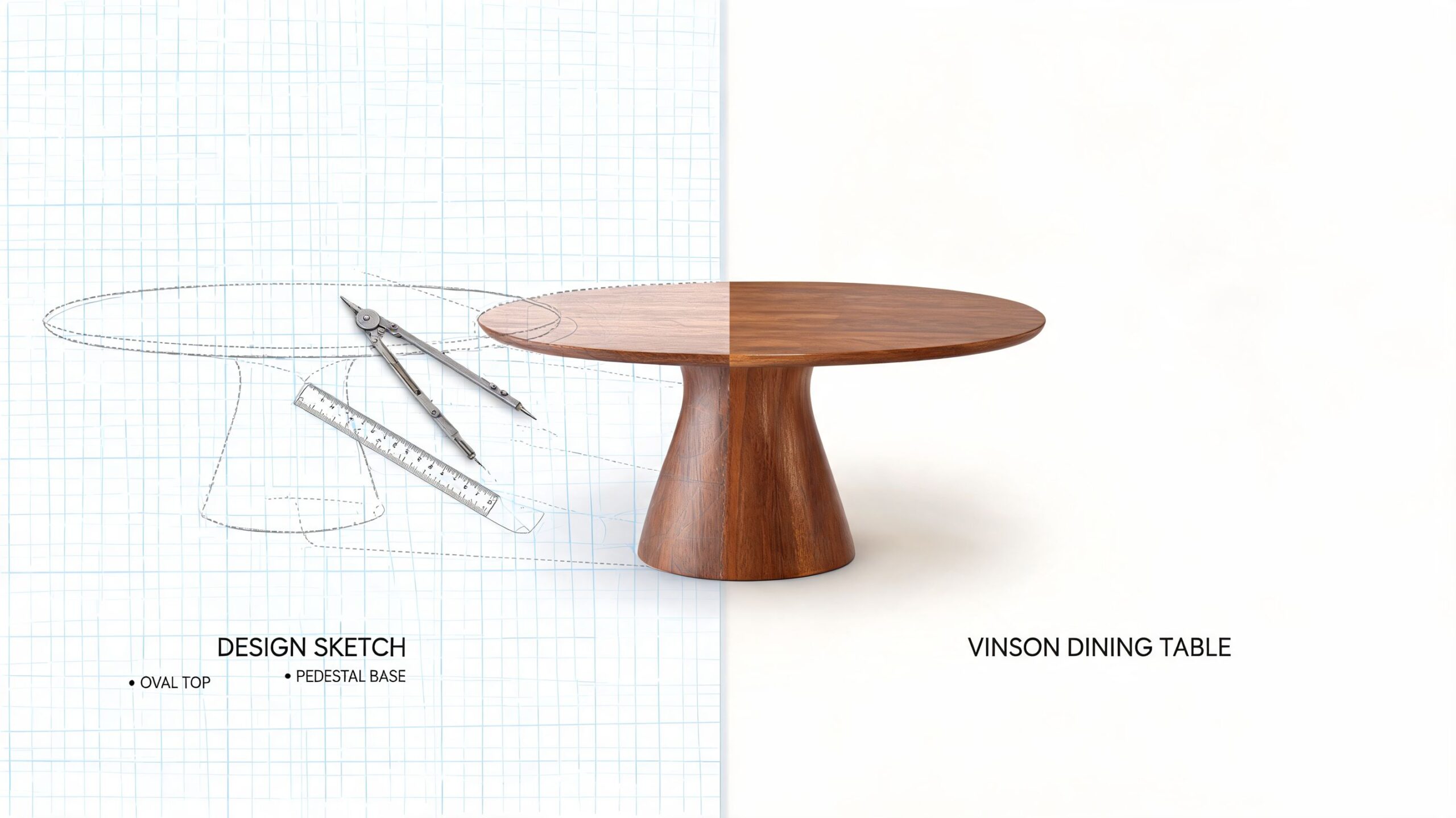
Buying an oval pedestal dining table for six often feels simple until the actual decisions stack up. You are not only choosing a shape. You are choosing how the table carries weight, how chairs move around the base, how the finish will age in your room, and whether the piece will still feel solid ten or twenty years from now.
Why customization matters in this category
Pedestal tables reward good planning and expose shortcuts. A top that extends too far beyond its support can develop movement over time. A pedestal that looks graceful in a photo may crowd chair knees in person. A stain sample that seemed warm under showroom lighting can read much redder beside your flooring at home.
Custom ordering helps solve those connected problems before they become expensive regrets. Instead of accepting a fixed combination, you can choose the top shape, base format, wood species, and finish with the room's proportions and your daily use in mind. That is especially important with pedestal construction, because the beauty of the form depends on hidden engineering as much as visible style.
The Vinson Fine Furniture showroom at Easton Town Center offers a Custom Order Program, an In-Store Design Studio, and Complimentary Design Consultations, along with digital visualizers that let shoppers compare finishes, fabrics, and table configurations before ordering. For homeowners comparing Custom dining sets or reviewing Furniture store Columbus Ohio options, that process can make the purchase feel far more informed.
The structural guidance that protects your investment
This is the point many big-box displays skip. A pedestal base has to do more work than four corner legs, because it concentrates support in the center and must resist side-to-side stress over a wider span.
For longer solid wood oval tops, experienced designers often recommend a double-pedestal base instead of a single pedestal. The reason is straightforward. As table length increases, the structure has more opportunity to flex, rack, or feel less steady when people lean on the edge, set down heavy serving pieces, or slide chairs in and out over many years. Guidance like this appears in this solid wood pedestal table construction reference, which notes the added stability and twist resistance engineered into double-pedestal designs.
That is the heirloom conversation. A well-made pedestal table is not only attractive from across the room. It stays level, keeps joints tighter, and handles family use with less strain on the base-to-top connection. Standard four-leg tables spread weight differently. Pedestal tables can be just as durable, but only when the scale of the top and the construction of the base are matched correctly.
What a guided buying process helps you resolve
A good design consultation brings those hidden decisions into focus.
- Table proportion: Whether your room calls for a narrower oval or one with more visual weight
- Base engineering: Whether a single pedestal or double pedestal better suits the size and expected use
- Finish coordination: How the wood tone will sit with flooring, cabinetry, and nearby upholstery over time
- Chair clearance: Which silhouettes fit the curve, tuck properly, and leave enough legroom around the pedestal
That kind of guidance matters most when this is your first major dining purchase. The goal is not to leave with a table that merely looks right on day one. The goal is to choose one that still feels steady, comfortable, and worth passing down after years of real gatherings.
Making Your Investment Accessible and Secure
A high-quality dining table is a serious purchase, but the buying experience shouldn’t feel risky or opaque. Homeowners usually need reassurance in three areas. Price, flexibility, and delivery.
The price question is straightforward. If you’re comparing better-made furniture across local authorized dealers, you want confidence that you’re not overpaying. The Low Price Guarantee addresses that concern with a 110% refund of the difference if you find a lower local authorized-dealer price within the stated window. That matters because custom and premium furniture often involve more variables than an online cart suggests.
Where value can show up without compromising standards
Some buyers want a custom order. Others want immediate value. Both approaches can make sense.
A few practical routes include:
- Clearance Gallery shopping: Floor samples, overstocks, and closeouts can offer meaningful value, with savings up to 70% on select pieces.
- Flexible financing: Synchrony HOME financing can make a larger purchase more manageable for qualified buyers.
- White-Glove In-Home Delivery: Professional placement and assembly reduce the chance of avoidable damage or setup frustration.
Why delivery matters more than people expect
Dining tables are awkward, weighty pieces. A pedestal base adds another layer of complexity because proper assembly and placement affect how the table sits and performs.
White-glove service is useful for more than convenience. It means the table is inspected, brought into the room carefully, assembled correctly, and positioned where it belongs without leaving cartons and packing behind. That’s especially important in homes with finished floors, tight turns, or open-concept layouts where placement needs to be precise.
Good delivery protects the purchase. It also protects your confidence that the table is starting life in your home the right way.
When a purchase includes value safeguards, flexible payment options, and careful in-home setup, it feels more like a planned investment and less like a gamble.
Frequently Asked Questions About Oval Pedestal Tables
Some questions always come up after the main decisions are made. They’re practical, and they matter. Here are the ones I hear most often from homeowners narrowing in on an oval pedestal table.
Quick answers that clear up common concerns
| Question | Vinson's Expert Answer |
|---|---|
| Can an oval pedestal table seat more than six sometimes? | Yes, depending on the specific design and chair width. For everyday comfort, though, it’s wise to evaluate it based on its intended six-seat use rather than occasional squeeze-in seating. |
| Is a pedestal table always better than a four-leg table? | Not always. A pedestal table usually offers better legroom and a softer visual footprint, but it needs strong construction to stay stable over time. |
| Should I choose a single pedestal or double pedestal base? | It depends on the table’s span, width, and construction. Longer solid-wood tops often benefit from more supportive base engineering. |
| Do oval tables work in small dining rooms? | Often, yes. Their curved ends can improve flow, and the absence of sharp corners makes movement feel easier. The room still needs careful measuring. |
| Can I mix chair styles with an oval table? | Yes. Mixed seating often looks collected and thoughtful when there’s one repeating element, such as wood tone, upholstery family, or overall shape. |
| Are upholstered dining chairs a mistake for everyday use? | Not if the fabric suits your household. Many buyers prefer them because they encourage longer, more comfortable meals. |
| How do I protect a solid-wood table day to day? | Wipe spills promptly, use protective pads where needed, and follow the maker’s care guidance. Good habits preserve both the finish and the feel of the surface. |
A few final buying notes
If you’re between two sizes, choose based on how you live. Daily comfort matters more than the occasional extra seat. If your room is tight, a slightly better fit often outperforms a larger table that looks impressive but interrupts movement.
If you’re torn between two finishes, compare them against your flooring and the light in the room. Wood changes character depending on what surrounds it. That’s one reason showroom comparisons are so helpful.
And if you’re worried about whether a pedestal table will hold up, focus less on trend language and more on construction questions. Ask how the top is supported, how the base is built, and what kind of long-term use the table is meant to handle.
If you’re ready to compare an oval pedestal dining table for 6 in person, Vinson Fine Furniture at Easton Town Center is worth a visit. You can explore custom dining sets, use the design studio tools, review finish and chair options side by side, ask detailed construction questions, and see whether the table you’re considering feels right for your room and your routine.