Custom Dining Table Chairs for Columbus Homes


A Columbus homeowner can spend weeks choosing the right table, then undermine the whole room with chairs that don't fit. A seat can sit too high beneath the apron, an arm can catch on the table edge, or a handsome back can crowd a farmhouse trestle. Custom dining table chairs deserve the same measured attention as the table itself.
At Vinson Fine Furniture's Easton Town Center showroom, the sit-test settles questions that photographs can't. The right order is simple: measure the table, understand the room, choose the frame and upholstery, then approve the finish and delivery details. That sequence protects an heirloom-quality purchase from an avoidable fit problem.
Why a Custom Dining Chair Is Worth Getting Right
A Columbus couple learned the fit problem after ordering six custom chairs online. The seats left three inches of unused space beneath the table apron, while the tall backs competed with their farmhouse trestle. Each chair looked attractive alone. Around the table, the set felt wrong.
That result is common because buyers often judge a dining chair as an isolated object. Upholstery, wood tone, and back shape matter, but the chair also has to slide under the table, support the body through a full meal, leave elbow room, and suit the room from every angle. The right specification depends on the table, available circulation, and how your family uses the dining space.
Check these points before approving a custom order:
- Fit problems: Seat height and depth must work with the table apron, leg placement, and the diners who will use them.
- Style conflict: A heavy chair can overpower a restrained table, while a narrow frame can vanish beside a substantial base.
- Finish mismatch: Similar wood colors may differ in grain, undertone, and sheen.
- Delivery complications: Custom pieces require careful approval because correcting an order involves more handling and coordination than choosing a standard chair.
A well-made chair is part of the dining room's structure, not a disposable accessory. From Thonet's No. 14 in 1859 to later molded, bentwood, and cantilever designs, the lesson remains consistent: construction and fit must be judged together. The frame affects how a chair carries weight, how visually large it appears, and how naturally it works with the table.
Practical rule: Approve a chair beside the table it serves, not only on a showroom floor or product page.
At Vinson Fine Furniture's Easton Town Center showroom, a sit-test can expose problems that photographs hide. Bring the table's measurements, note the room's walking paths, and test the chair at the table height. Check knee clearance, arm placement, seat depth, and whether the back crowds nearby walls or furniture. Those checks matter more than choosing a silhouette first.
A custom furniture order deserves deliberate consideration, particularly when it includes dimensions, upholstery, and finish choices. Vinson's guidance on high-consideration furniture purchases explains why this decision should be treated as a long-term investment rather than a quick styling exercise.
Choosing Styles and Materials That Match Your Table
A chair can look excellent in a showroom and still feel wrong at home. In a Columbus dining room, the table, room layout, and daily habits should drive the order. Start with the table's wood species, base, edge profile, and visual weight. Then choose a chair that fits those conditions instead of forcing the room to accommodate a favorite silhouette.
Match the frame before choosing the fabric
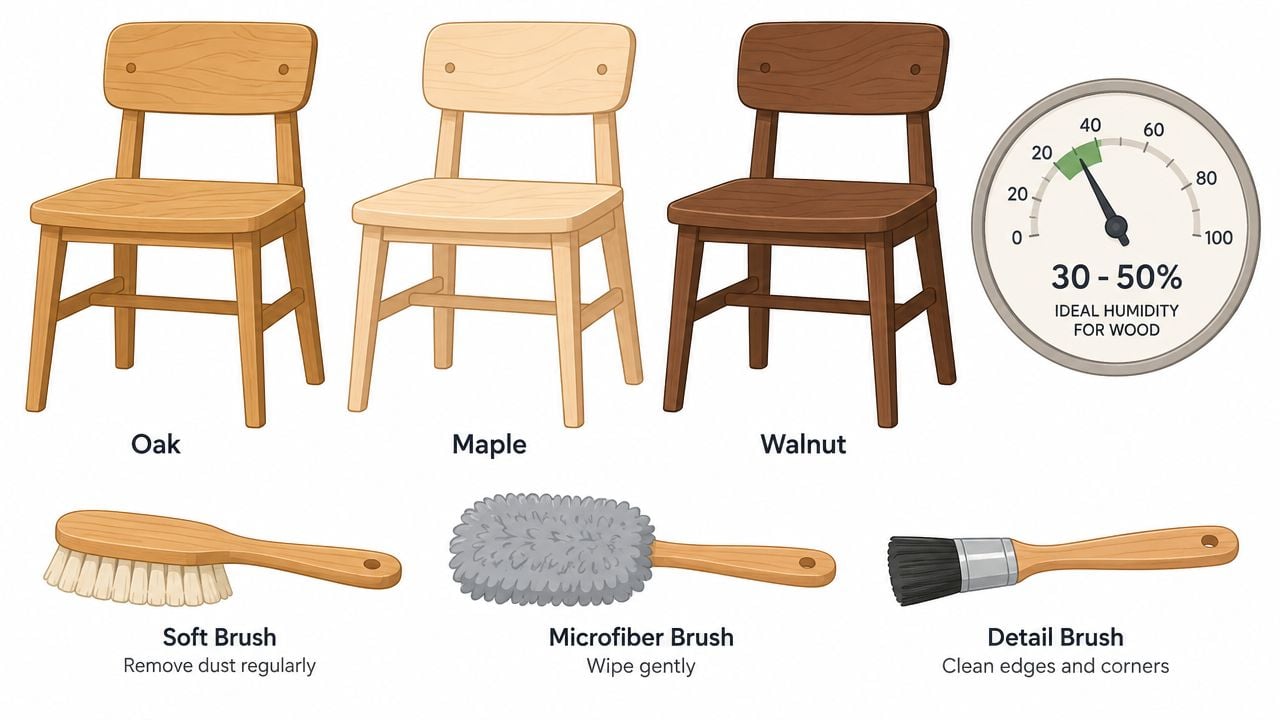
For chairs expected to serve for decades, specify solid hardwood. Vinson's hardwood offering centers on solid cherry, oak, maple, and walnut, without engineered wood, MDF, laminate, or particle board. Solid hardwood can be repaired, sanded, refinished, and maintained over a long service life, making it a sound choice for an investment dining room.
Joinery deserves more attention than decorative detail. In mortise-and-tenon construction, the tenon fits into the mortise and creates a broad connection between the frame members. That connection helps the legs stay aligned with the seat rails, so the chair resists sideways racking, the movement that leaves cheaper frames feeling loose after repeated use.
Choose related wood character, then coordinate the finish deliberately. An oak table usually works well with an oak chair that follows a similar grain direction. Walnut pairs naturally with walnut, while a painted base can complement a solid maple or cherry seat when the colors are intentionally coordinated. A slat-back or Shaker chair suits a restrained trestle or Mission table. A Parsons chair gives a contemporary rectangular table a clean upholstered profile. A heavily carved chair can compete with a table that already has a pronounced edge or elaborate base.
| Table Style | Recommended Chair Silhouette | Wood Species Match | Finish Sheen |
|---|---|---|---|
| Farmhouse trestle | Slat-back or Shaker | Oak or maple | Matte or satin |
| Mission dining table | Mission or ladder-back | Oak or cherry | Satin |
| Contemporary rectangular table | Parsons or clean upholstered armchair | Walnut or maple | Matte |
| Traditional cherry table | Shaped solid-wood back | Cherry | Satin |
| Round pedestal table | Curved back or compact upholstered chair | Walnut, oak, or cherry | Satin or low gloss |
Upholstery should support the frame, not hide its proportions. A lighter cover can make a substantial chair appear less visually heavy. Use this reference on white leather dining chairs when evaluating how pale upholstery changes the room's balance and maintenance demands.
Settle the finish sheen beside the table. Matte reduces glare and feels relaxed, satin gives furniture a balanced sheen, and gloss emphasizes surface variation. A glossy chair beside a matte tabletop can look mismatched even when the stain color is close. After selecting the frame and finish, use Vinson's upholstery materials guide to compare suitable textile and leather options.
Getting the Sizing and Clearance Exactly Right
A chair can look right in a showroom and still fail at your table. Measure before ordering, especially if the table has a thick apron, trestle supports, drawers, or a curved edge. These details determine where knees, chair arms, and chair backs can go.
Start with the apron, the horizontal structure beneath the tabletop. Measure from the floor to its lowest point, then account for the sitter's space between the seat and underside. Plan for 10 to 12 inches of knee clearance under the table. From our measuring experience, adult dining chairs commonly run 16 to 20 inches wide and 15 to 18 inches deep.
A useful measurement worksheet
Record these figures before visiting the showroom:
- Floor to table apron: Measure at the tightest point, not only at the table edge.
- Desired seat height: Standard dining seats commonly fall around 17 to 19 inches, but the apron and household determine the final choice.
- Seat depth: A deeper seat may feel generous, yet it can stop a chair from tucking beneath a trestle or narrow breakfast table.
- Chair width: Allow roughly 24 to 28 inches of table edge per chair for comfortable spacing. Treat this as a room-planning guideline, not a structural rule.
- Arm height and width: Measure the apron's underside and the distance between supports before choosing an armed chair.
- Back height: Tall backs add presence, while lower backs preserve sightlines across the room.
Bring the way your family uses the room into the measurement. A chair that fits one adult may crowd another, and a chair that clears the tabletop may still block a walkway when pulled out. Measure the open space behind each position, particularly in a breakfast nook or compact dining area.
Armed chairs need extra scrutiny. They work well at the heads of a table or in a generous dining room, but they can crowd a nook and often cannot slide beneath the apron. Round tables create another fit issue. Chair width and the table's corner radius must work together, or place settings will bunch near the curve.
Measure the table where the chair will actually live. The center of an apron, trestle, or pedestal can be more restrictive than the edge.
Take a photo with a tape measure beside the table. It helps a design consultant understand the geometry, but it cannot replace physical testing. Use Vinson's furniture-measuring guide to document the dimensions before your showroom appointment, then test the chair at the table whenever possible.
Comfort, Ergonomics, and Upholstery That Lasts
A chair can clear the table and still feel wrong after twenty minutes. Seat height, seat depth, back pitch, front-edge shape, and arm position determine whether your family settles in for dinner or shifts constantly to get comfortable.
A typical adult dining chair seat is around 406 to 432 millimeters high, with a seat depth around 406 to 419 millimeters. The front edge should have a slight waterfall shape to reduce pressure beneath the thighs. These measurements provide a useful starting point, not a universal prescription. The upholstery and seating specification guide explains why a structurally sound chair can still perform poorly in daily use.
Seat shape changes the experience. A saddle seat gives the sitter a defined center and often supports a longer meal. A scooped seat feels more enveloping, yet excessive depth can leave shorter adults perched forward instead of supported. In a household ranging from 5'2" to 6'3", test more than one seat height and sit in each chair at the actual table. A side profile cannot reveal pressure behind the knees or whether your feet rest comfortably on the floor.
Compare the upholstery choices
| Material | Durability | Care Level | Best For |
|---|---|---|---|
| Top-grain leather | Develops character with use and can be maintained with appropriate care | Moderate | Formal dining rooms and households wanting a natural, premium surface |
| Performance leather | Designed for active use with a practical maintenance routine | Moderate | Frequent hosting and high-use dining areas |
| Performance fabric | Contract upholstery is commonly specified at 40,000 Martindale cycles, while domestic use often begins around 15,000 to 25,000 cycles, according to the Ron Group seating specification guide | Low to moderate | Families, pets, and everyday meals |
| Crypton-style protective fabric | Stain resistance depends on the specific textile and care instructions | Low to moderate | Homes where spills are a regular concern |
Specify foam density instead of accepting an unspecified cushion. Foam around 35 kg/m³ is typical for standard seating, while 45 kg/m³ or higher suits heavier commercial use, according to the same upholstery guidance. High-resilience foam provides a firmer, consistent sit. A down wrap feels softer and more relaxed, but it needs regular reshaping.
For upholstered chairs, insist on sound corner reinforcement, a supported deck, and carefully tensioned suspension. Frequent hosts should choose resilient foam with a durable textile or performance leather. For casual daily meals, an all-wood saddle seat or moderately cushioned solid-hardwood chair may offer the better balance of support, upkeep, and longevity.
Ordering at Vinson From Visualizer to White-Glove Delivery
A custom order works best when the room's constraints are settled before a chair is chosen. Columbus buyers can start at Vinson's In-Store Design Studio, where a complimentary consultation covers the table, room dimensions, traffic flow, fabric coordination, finish selection, and the fit between chair and table.
Bring the room to the appointment
Arrive with details that let the designer test the specification against real conditions:
- Table dimensions: Record length, width, apron height, leg placement, and extension-leaf measurements. These figures determine knee clearance, arm placement, and how many chairs fit comfortably.
- Room photographs: Take views from several corners and capture how daylight changes the table and floor finishes.
- Adjacent finishes: Bring upholstery or paint swatches from nearby rooms so the chairs coordinate without matching every surface.
- Traffic information: Mark the routes between the dining room, kitchen, entry, and living areas. A chair that fits the table can still obstruct a main walkway.
- Household needs: Note whether arms, wipeable upholstery, lower backs, or extra seat support will affect daily use.
Vinson's Custom Order Program includes fabrics, finishes, seating options, and 3D visualizers for Smith Brothers of Berne, Canadel, and Mavin. Smith Brothers is made in Indiana, Mavin is Amish-made in Ohio, and Canadel is handcrafted in Quebec. These choices give Columbus buyers distinct North American options while keeping the specification tied to the room.
The 3D visualizer lets you rotate the rendered chair beside your table configuration, compare fabrics and leg styles from every angle, and lock the specification before production begins. Use it to check the chair's visual scale, not only its color. A wide arm, tall back, or heavy leg profile can make a dining set feel crowded even when the measurements technically work.
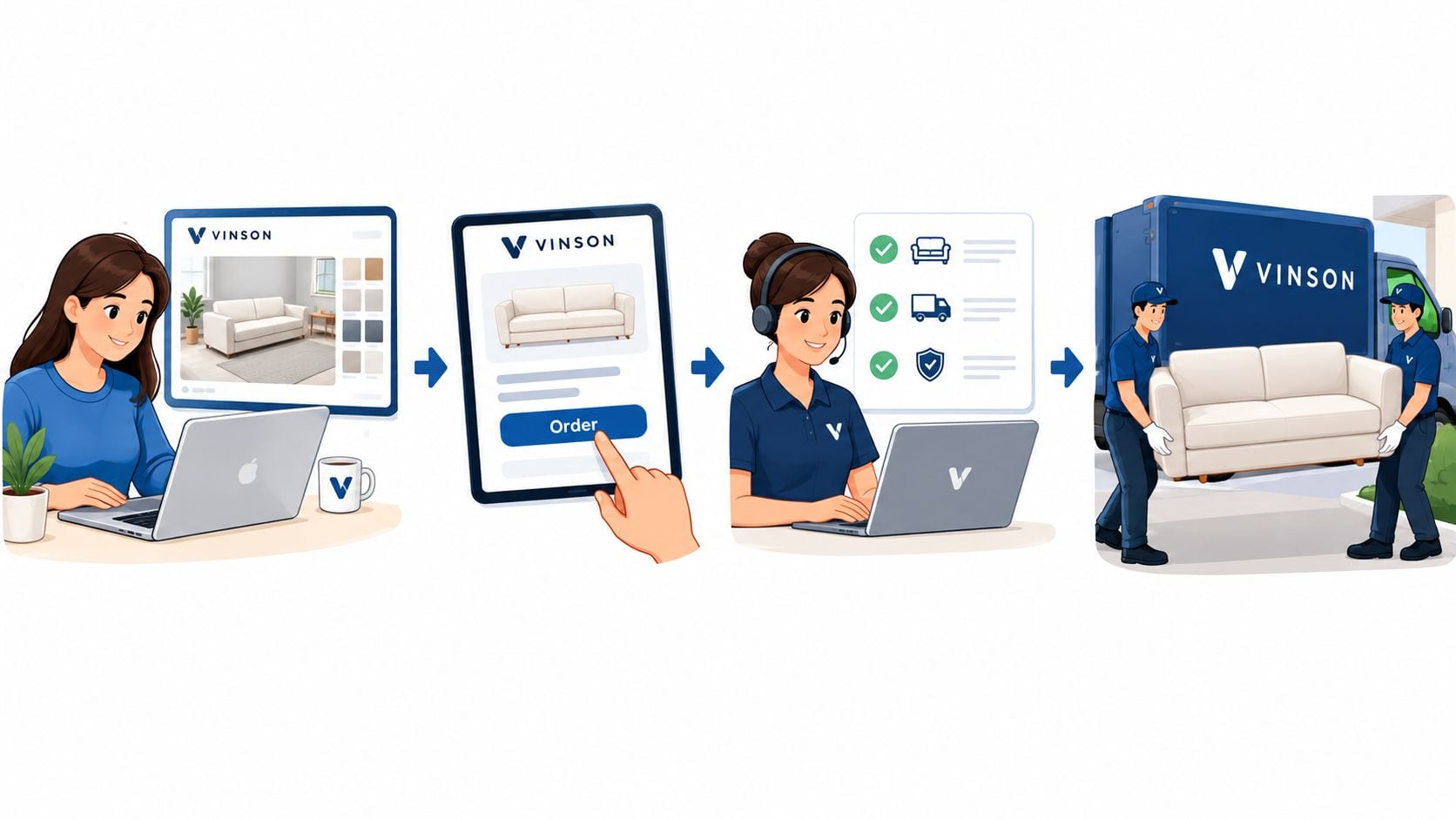
Before approval, require a formal quote and signed drawings or renderings. Record every change to dimensions, upholstery, or finish before production starts. Vinson's custom-order process explains why clear specifications should come before the order.
White-glove delivery completes the order. The team brings the chairs inside, places them in the selected room, handles light assembly, checks visible condition, removes packaging, and confirms that each piece sits properly. On uneven Columbus-area floors, careful placement and leveling matter far more than a curbside drop-off.
Pricing, Financing, and Lead Times You Should Expect
A custom chair quote is useful only when it reflects the finished specification. Construction, dimensions, upholstery, finish, and quantity all affect the total. A solid-hardwood side chair belongs in a different price tier from a fully upholstered armchair in premium leather. Ask the showroom to price the exact chair you can fit around your table, rather than relying on a broad headline figure.
Vinson permits solid cherry, oak, maple, and walnut. Choose the species with the table and room in mind. Walnut brings a richer visual presence, cherry gains warmth over time, oak has pronounced grain, and maple presents a cleaner, quieter surface. The best match is the one that supports the existing finish and keeps the room visually balanced.
Upholstery changes both material use and labor. Top-grain leather and performance leather provide a tactile surface, while performance fabrics offer wider color flexibility and practical care options. Armchairs require more material and need a careful check of apron clearance, table-leg interference, and the space needed to pull the chair out comfortably.
A realistic budgeting method
No universal chair price applies to every configuration, so request a formal Vinson quote instead of using an invented range. The worksheet below identifies the categories that should be priced and scheduled.
| Configuration | Price Range per Chair | Typical Lead Time |
|---|---|---|
| Solid-hardwood side chair | Confirm by quote | Confirm by quote |
| Upholstered side chair | Confirm by quote | Confirm by quote |
| Solid-hardwood armchair | Confirm by quote | Confirm by quote |
| Premium leather armchair | Confirm by quote | Confirm by quote |
| Matched custom set | Confirm by quote | Confirm by quote |
Request these line items in writing:
- Chair quantity: Apply the approved per-chair price to the final count.
- Sales tax: Ask for the current Columbus-area tax calculation.
- Delivery: Confirm white-glove placement, assembly, inspection, and packaging removal.
- Customization: Separate standard options from dimensional or structural changes.
- Financing: Review available terms and qualification requirements directly with the showroom.
Vinson's Low Price Guarantee provides a 110% refund of the difference when its stated conditions are met. The Clearance Gallery offers savings of up to 70% on qualifying floor samples, overstocks, and seasonal closeouts. These serve different buyers. Clearance works when a finished chair already fits your table, while a custom order makes more sense when seat width, arm clearance, upholstery, or finish must match a specific room.
Confirm production timing in writing. Fully upholstered chairs, dimensional modifications, and matched sets may follow different schedules from standard hardwood seating. Plan around holidays and family events early enough to approve the final drawings, quote, and fabric choice without rushing decisions.
Care, Maintenance, and Your Next Step
Solid hardwood rewards consistent care. Oak, maple, cherry, and walnut frames should be dusted with a soft cloth and protected from standing moisture, direct heat, and harsh household cleaners. A stable indoor environment matters more than a complicated routine, and furniture guidance commonly places household humidity around 30% to 50% for solid wood care.
Wax or oil should follow the manufacturer's finish instructions rather than a generic calendar. Overapplication can leave buildup, while the wrong product can change the sheen. A touch-up marker can address a small surface mark, but deep damage or a loose joint deserves professional attention.
Upholstery needs an equally disciplined approach. Blot spills instead of rubbing them, test any cleaner in an inconspicuous area, and follow the textile manufacturer's instructions. Leather requires its own conditioning routine, while performance fabric may tolerate a more active cleaning approach. Professional cleaning makes sense when staining has spread, odor persists, or routine spot treatment no longer restores the surface.
The white-glove team can provide care kits and touch-up markers during installation when those items are included with the order. Vinson's chair-care guidance gives owners a reference for maintaining the finish and upholstery after delivery.

Before placing an order, a homeowner should have these decisions ready:
- Confirm the table: Record apron height, seat clearance, width per setting, and any corner or trestle restrictions.
- Select the structure: Choose solid cherry, oak, maple, or walnut, then confirm the joinery and finish.
- Approve the comfort details: Test seat height, depth, back pitch, arms, cushion construction, and upholstery.
- Review the visualization: Check the rendered chair beside the table and inspect the finish in different lighting.
- Request the quote: Ask for the complete price, delivery service, production timing, and financing options.
- Schedule the sit-test: Visit the Easton Town Center showroom before final approval.
The same showroom can also help with related rooms, from Smith Brothers furniture Easton shoppers seeking American-made seating to customers considering Mavin bedroom furniture, North American-crafted dining from Canadel, or premium motion pieces such as motorized reclining sectionals, swivel chairs, rockers, and gliders. The focus should remain consistent: solid hardwood construction, durable materials, and a configuration that fits the way the household lives.
Vinson Fine Furniture offers an Easton Town Center Design Studio, complimentary consultations, custom fabrics and finishes, 3D visualizers, solid hardwood dining seating, and white-glove delivery for Columbus homeowners. Visit Vinson Fine Furniture with the table measurements and room photographs, then schedule a sit-test to start a custom dining chair order that fits correctly from the first meal.