Furniture Stores Financing Bad Credit Explained Simply

A Columbus homeowner may need a new dining table before the next family gathering, a supportive bed after a move, or a sectional that can handle everyday use. The budget is real, the room is ready, but a past hardship has left the homeowner wondering whether furniture financing with bad credit is possible. Approval matters, yet it's only the first question.
The more useful question is what the furniture will cost, when ownership begins, and whether the payment remains comfortable after a promotional period ends. That approach fits an investment home, especially when the purchase involves solid hardwood, top-grain leather, or a custom piece intended to serve for years.
How Furniture Store Financing Works When Your Credit Is Weak
A homeowner searching for furniture stores financing bad credit may encounter several different arrangements under one broad label. A store card can be issued through a major lender, an in-house plan can be managed through the retailer or a lending partner, and a point-of-sale application can connect the purchase to a separate financing provider. These options don't use identical approval rules, so a denial from one path doesn't automatically settle the question.
Retail financing is established retail credit, not a passing trend. Historical Canadian consumer-credit tables separately tracked furniture, television and radio, and household-appliance retailers as early as the 1961 to 1973 period, while an archived 1962 volume described consumer credit for household goods such as furniture and appliances. (Historical furniture retail credit data)
Why approval can differ by lender
The U.S. Consumer Financial Protection Bureau reports more than 160 million open store-card accounts in 2024, with roughly one in four credit card accounts overall being a store card. The share is closer to one in three among consumers with subprime scores, and approval rates for retail cards are about 20 percentage points higher than general-purpose cards for consumers with scores between 620 and 720. (Furniture financing credit-score guidance)
Those figures explain why store financing remains visible to shoppers who may struggle with a traditional credit card. The same CFPB discussion cites a Federal Reserve estimate that more than 60% of store-card balances are held by consumers with scores below 720. Subprime borrowers therefore appear prominently in this market, but that access can come with stricter terms, higher charges, or closer affordability review.
A lender may assess income, housing expense, employment stability, existing obligations, requested amount, and payment history alongside a credit score. A soft prequalification check can help an applicant see whether an offer may be available without creating the same type of visible hard inquiry associated with a completed application. The exact process depends on the lender, so the applicant should ask whether the initial check affects the credit file.
Practical rule: An approval is an invitation to inspect the contract, not proof that the contract is affordable.
Store financing also serves the retailer's sales process. Recent research reports that 44% of credit-challenged U.S. consumers rely on financing for major purchases, and nearly half won't transact with a store that lacks financing options. (Research on financing and credit-challenged shoppers) That makes financing a way to support purchasing decisions, not merely a fallback for a rejected cash budget.
For a Columbus homeowner, the calm sequence is simple: determine the amount the household can repay, request prequalification where available, read the full offer, and compare total cost before selecting a table, bed, sectional, or dining set. Anyone managing a formal repayment case should also seek legal guidance on protecting furniture in Chapter 13 Georgia, because financing obligations and purchased household goods can raise questions that general shopping advice can't answer. A retailer's available process can be reviewed through Vinson's in-house furniture financing information, but no financing path guarantees approval.
Comparing Your Main Financing Paths With Bad Credit
A homeowner may find a dining table that fits the room, then face three separate questions at checkout: Can the application be approved, when will the furniture become theirs, and what will the full contract cost? Those questions are related, but they are not interchangeable. A low monthly payment can stretch the obligation, while a higher approval likelihood can carry a much larger repayment total.
Common paths include store credit cards, in-house installment plans, lease-to-own arrangements, partner financing, co-signer applications, and personal or secured loans. Approval standards differ by provider. Some programs accept applicants with limited or damaged credit, while promotional terms may later become high APRs. The furniture financing options for bad credit guide provides general examples, but the signed agreement controls the actual cost.
Furniture Financing Options Compared for Bad Credit
| Financing Path | Approval Approach | Ownership Timing | Cost Watchouts |
|---|---|---|---|
| Store credit card | An issuer reviews credit history and affordability under its retail-card criteria | The buyer generally purchases the furniture immediately, subject to the account agreement | Promotional terms, deferred interest, ongoing APR, and minimum payments require close reading |
| In-house financing | The retailer or lending partner may use broader criteria than a conventional general-purpose card | Ownership depends on the installment contract | Fees, deposits, short repayment windows, and late-payment consequences can change the total |
| Rent-to-own or lease-to-own | Approval may emphasize current affordability and alternative underwriting rather than a traditional score alone | Ownership may occur only after required payments or an early-purchase arrangement | The total can greatly exceed the sticker price, and ownership may be delayed. Review consumer guidance on furniture loans before choosing this structure |
| Subprime or partner retail financing | A specialized lender evaluates the application with its own risk model | Use is often immediate, with ownership governed by the loan or installment agreement | Higher approval access may come with higher APRs, fees, or expensive post-promotion terms |
| Co-signer arrangement | A second applicant shares responsibility and may strengthen the application | The purchase is usually immediate under the signed agreement | The co-signer's credit and finances are exposed if payments are missed |
| Personal or secured loan | An unsecured lender assesses repayment risk, while collateral can reduce the lender's exposure | The borrower buys the furniture and owns it under the purchase transaction | Bad-credit pricing may be high, and pledged assets are at risk with secured borrowing |
The table separates access from ownership. Lease-to-own can put furniture in the room quickly, but the buyer may not own it until required payments or an early-purchase amount are completed. A secured loan may make approval more attainable, yet the collateral adds a consequence beyond a late fee. That distinction matters for solid-hardwood furniture intended to serve a home for years.
A traditional installment plan can fit better when the household expects to keep the piece and can maintain stable payments. A co-signer may improve qualification, but both people become responsible for the debt. Before applying, they should agree on who pays, when payments are due, and what happens after a missed payment.
Early payoff also needs a direct answer. Some contracts reduce interest when the balance is paid sooner, while others include fees or calculate charges differently. Ask whether the agreement is a loan, credit card, or lease; whether ownership begins immediately; whether promotional interest is deferred; and whether a final purchase amount remains.
For broader questions about household goods loan obligations, buyers should review the contract with their own financial or legal adviser. Qualified applicants can also examine Vinson's no-interest furniture financing information to understand the available store-based process. The practical test is simple: match the financing type to how long the homeowner expects to keep the furniture, then confirm that the payment remains comfortable through an ordinary month.
How to Prepare Before You Apply and Improve Approval Chances
Preparation won't guarantee approval, but it can prevent avoidable errors and help a homeowner compare offers without rushing. The process starts before the showroom visit, ideally with a clear room plan and a firm payment limit.
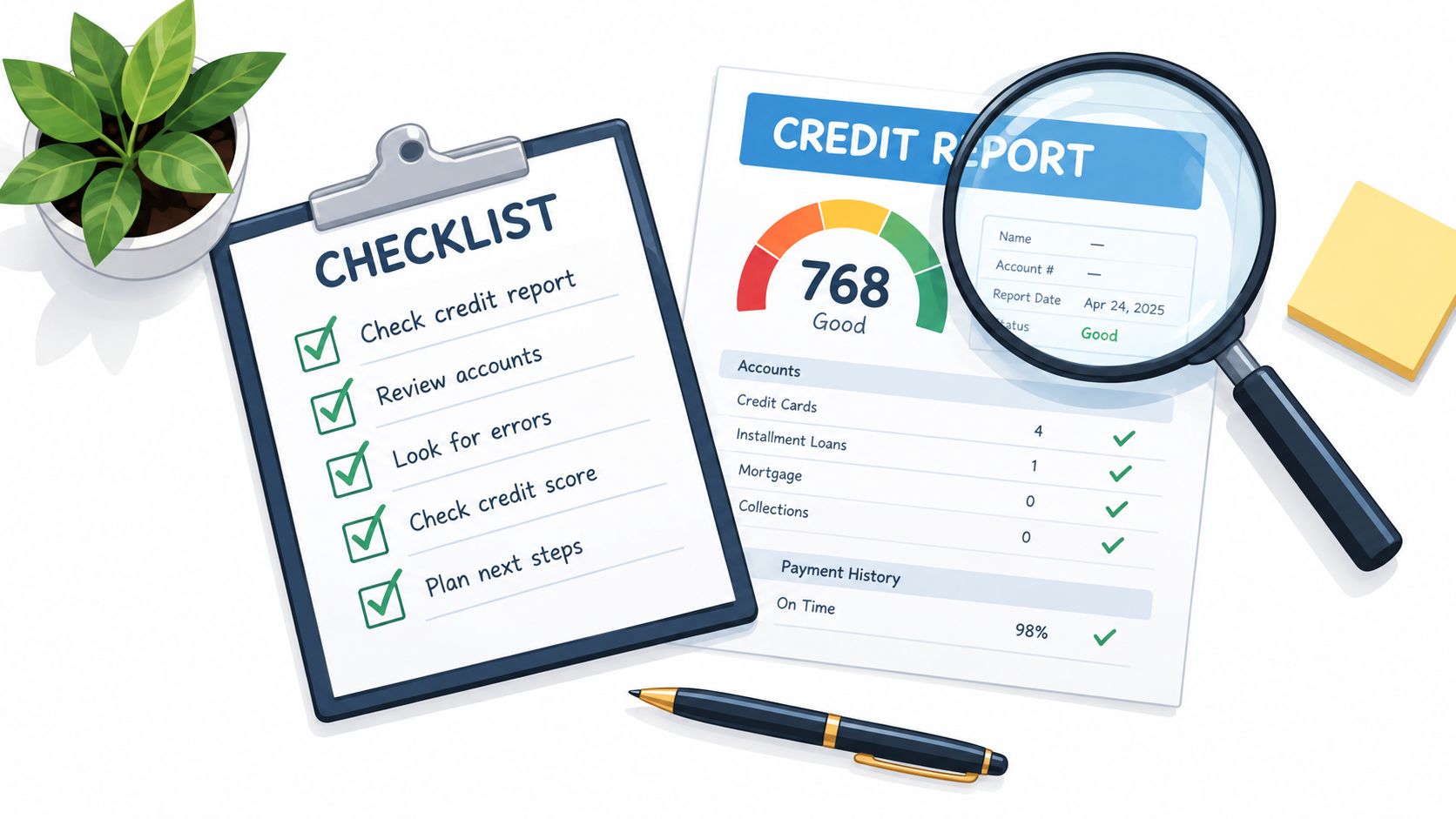
A practical preparation sequence
Review the credit file. Check personal information, account status, reported balances, and payment history. Errors won't automatically disappear during a furniture application, so identifying them early gives the applicant time to address questions with the relevant reporting party.
Set a payment ceiling. The household should calculate a monthly amount that remains comfortable after housing, utilities, insurance, food, transportation, and existing debt. The amount should reflect ordinary cash flow, not an unusually strong month.
Gather application details. Lenders may ask for identity information, residence details, income, employment, and current obligations. Having accurate information available reduces incomplete applications and makes the offer easier to evaluate.
Ask about prequalification. A lender should explain whether an initial eligibility check is a soft inquiry and whether proceeding later creates a hard inquiry. A soft check can help the shopper compare possible paths before accepting a commitment.
Consider the second applicant carefully. A co-signer may strengthen an application, but the arrangement affects another person's finances. The applicant should use this option only after both parties understand the contract and can discuss payment responsibility openly.
Match the purchase to the room. A measured plan can prevent financing more furniture than the home needs. Vinson's In-Store Design Studio and Complimentary Design Consultations can help a Columbus homeowner evaluate scale, seating layout, fabric, finish, and room priorities before an application is submitted.
Improve the application without distorting the budget
A strong application isn't one that stretches income to secure a larger purchase. It's one supported by accurate information and a realistic repayment plan. A consumer-facing guide on how to improve your credit approval odds can provide additional preparation context, but no general checklist replaces the lender's underwriting criteria.
The design stage matters because solid hardwood dining furniture, a custom bedroom piece, and a top-grain leather sectional don't serve the same purpose or carry the same practical requirements. The shopper should decide whether the priority is a dining table, a bedroom foundation, a living-room sectional, or a motion chair, then finance only the combination that fits the household's cash flow.
Applicants can also ask whether a prequalification is tied to a particular purchase amount, whether the quoted terms change after a full application, and how long the offer remains available. Those answers help separate a useful estimate from a commitment made under showroom pressure. The Synchrony HOME Credit Card information can be reviewed as part of that process, with qualification and terms determined by the financing provider.
How to Evaluate Any Offer and Calculate True Total Cost
A $2,400 dining table can fit a monthly budget and still cost far more than its showroom price. Approval answers whether the purchase can proceed. Total-cost math answers whether the agreement suits the household's plans.
Write down these figures before signing:
- Total of scheduled payments, calculated from the regular payment and full number of payments.
- Finance charges and fees, including interest, account fees, financed delivery charges, and required add-ons.
- Payoff amount under specific scenarios, such as early repayment, a missed payment, or the end of a promotional period.

Read the promotion past the headline
“0% financing” can describe different contract structures. A true no-interest arrangement may avoid interest when the borrower meets the stated conditions. Deferred interest may add accumulated charges if the balance is not cleared under the promotional rules. The signed contract, rather than the showroom sign, determines which arrangement applies.
Use a worked example. Suppose a $2,400 table is financed at a stated 18% APR for 24 months, with no added fees. The monthly payment would be about $120, making the total of payments about $2,880. The financing therefore adds about $480 to the table's price. The exact lender calculation may vary, so request the provider's written payment schedule and total repayment figure.
That same worksheet should show what happens if the buyer pays early. Ask for the balance after several payments, the interest that would be avoided, and any payoff fee. If the provider cannot show those figures clearly, the offer is difficult to evaluate.
Use the early-payoff test
An investment homeowner may receive a bonus, sell another piece, or want to clear the balance sooner. The agreement should state whether early payment reduces future interest, whether a fee applies, and whether the account requires a particular payoff procedure.
Test one difficult month as well. Ask whether a late charge applies, whether a promotional rate disappears, whether deferred interest becomes due, and whether the furniture remains subject to a lease or security interest. These answers reveal how the contract behaves when the budget changes.
Match the financing structure to the ownership timeline. A homeowner planning to keep a solid-hardwood table for years may value predictable payments and a clear payoff path. A buyer whose income may fluctuate should avoid a structure whose lowest payment depends on a later lump sum or changing rate. The furniture should remain useful after the balance is gone, not become a reminder of an agreement that exceeded the household's stability.
Delivery belongs in the same calculation. Large solid-hardwood tables, bedroom pieces, and leather sectionals require careful handling, placement, and setup. Vinson's guide to white-glove delivery cost helps identify those charges before the final purchase amount is set.
A sound comparison uses the same furniture price, the same payment horizon, and the same payoff assumptions for every offer.
Red Flags Fees and Costly Traps to Avoid
A homeowner in Easton may finally receive an approval after a difficult credit history and feel ready to place the order. Pause before treating approval as a bargain. The useful question is not only whether the payment fits today, but how much ownership will cost after interest, fees, optional products, and delivery are included.
A transparent offer should list the amount financed, APR or equivalent cost, payment schedule, total repayment, fees, ownership terms, and early-payoff rules. Compare the payoff amount with the furniture's cash price. If the difference is unclear, the contract is not ready for a signature.

Warning signs in the paperwork
- Deferred-interest language: A promotion may describe the period as interest-free, while the agreement states that interest accumulated during that period becomes due if the balance is not paid under the stated conditions. Look for wording such as, “If the promotional balance is not paid in full by the expiration date, accrued interest will be charged from the purchase date.” The exact trigger matters.
- Unclear early payoff: The agreement may mention paying early without explaining whether future finance charges disappear or an administrative fee applies. Ask for the payoff calculation in writing.
- Required protection products: Optional warranties, insurance, service plans, and accessories can be added to the financed balance. Request separate prices so the furniture cost and borrowing cost remain visible.
- Lease-to-own structure: Compare the full scheduled payments with the cash price and confirm when ownership transfers. A low recurring payment can conceal a longer path to ownership.
- Payment-only presentation: A representative who focuses on the monthly amount but avoids the term, total paid, or post-promotion rate is leaving out the figures needed for comparison.
- Pressure to sign immediately: A homeowner should be able to take the agreement home, ask questions, and compare alternatives. Urgency reduces the chance to catch an unfavorable clause.
Protect the furniture budget
The construction deserves scrutiny too. Solid cherry, oak, maple, or walnut with properly fitted mortise-and-tenon joinery uses a projecting tenon fitted into a matching mortise. The broad wood-to-wood contact helps resist pulling, twisting, and racking forces.
That structure can support a long ownership timeline, yet durable furniture does not make unstable financing safe. Delay the order if payments require skipped necessities, uncertain income, or a contract that leaves ownership unclear.
The same test applies to leather sectionals, reclining seating, swivel chairs, rockers, and gliders. Motorized features may add comfort, while top-grain and performance leathers require clear care, warranty, and delivery terms. Vinson's store policies outline operational details such as delivery, returns, custom orders, and service expectations before the purchase is finalized.
Your Next Steps at Vinson Fine Furniture in Easton Town Center
A financing decision becomes clearer when the homeowner separates design needs from borrowing limits. The Easton Town Center showroom gives Columbus-area shoppers a place to sit, measure, inspect joinery, feel upholstery, test recline and swivel motion, and compare proportions before committing to a contract.
The Custom Order Program supports choices for Smith Brothers of Berne, made in Indiana, Mavin, Amish-made in Ohio, and Canadel, handcrafted in Quebec. A shopper can explore fabrics, finishes, and solid hardwood species with 3D visualizers for brands such as Smith Brothers, Canadel, and Mavin. Smith Brothers can suit a custom leather sectional or motion piece, Mavin offers an Ohio-made route for bedroom and dining furniture, and Canadel provides a North American option for handcrafted dining design.
Build the purchase around the room
Vinson's In-Store Design Studio and Complimentary Design Consultations can help a homeowner right-size a living room, dining room, or bedroom purchase before financing. The showroom experience supports a practical sit-test, especially for custom leather sectionals, motorized reclining furniture, swivel chairs, rockers, and gliders.
The retailer focuses on solid hardwood furniture and doesn't sell or promote engineered wood, MDF, laminate, or particle board. Its family-owned history, formerly as Kitchen Tables & More, connects Central Ohio service with North American manufacturing in Ohio, the broader United States, and Canada.
Value options can also change the financing amount. The Low Price Guarantee provides a 110% refund of the difference when its stated conditions are met, while the Clearance Gallery offers savings of up to 70% on eligible floor samples, overstocks, and seasonal closeouts. Lowering the purchase price before applying can be more useful than securing a larger approval.
Qualified buyers may have access to flexible financing through the Synchrony HOME Credit Card, including no-interest plans when offered under the account terms. Approval, promotional eligibility, APR, and repayment conditions come from the financing provider and aren't guaranteed by the showroom.
White-glove delivery completes the investment with in-home placement, assembly, and packaging removal. That service is especially relevant for heavy solid hardwood tables, bedroom furniture, and large sectionals that need careful final-mile handling.
Vinson Fine Furniture offers solid hardwood dining, living-room, and bedroom furniture, custom options through its Design Studio, and financing information for qualified shoppers considering a purchase with bad credit. Visit Vinson Fine Furniture at Easton Town Center for a hands-on sit-test, a complimentary design consultation, and a clear review of total cost before signing.