
How to Care for Top Grain Leather the Right Way


A Sunday evening often reveals exactly why a leather sofa earns its place in a home. A homeowner settles into a well-used chair or sectional, and the top-grain surface gives slightly under the body, smooth but not sterile, supple without feeling fragile. That comfort doesn't come from constant treatment. It comes from choosing the right leather, placing it thoughtfully, and resisting the urge to clean or condition it every time it looks a little tired.
The most reliable answer to how to care for top grain leather is simple: remove dry debris regularly, respond to spills without rubbing, use minimal moisture, and condition on a measured schedule. Finished top-grain leather has a protective surface, but aggressive scrubbing, excess product, heat, and unsuitable household cleaners can damage that finish faster than normal daily use. The same restraint that protects a solid hardwood dining table protects a premium leather sectional.
Why Top Grain Leather Rewards Restraint
Top-grain leather retains the hide's upper layer, then receives finishing treatments that create a more consistent appearance and help the surface handle ordinary household use. That finish is useful, but it isn't indestructible. A homeowner who repeatedly saturates a cushion, works cleaner into a seam, or polishes the surface until it feels oily may create the very wear the routine was meant to prevent.
A leather chair doesn't need to look untouched to be well cared for. Small changes in sheen and softness can give a properly used piece character, while neglect shows up as dryness, grime in the creases, fading, or a finish that feels brittle. The practical distinction is between natural wear and damage caused by unnecessary intervention.
Practical rule: The leather that receives the least product, applied with the most control, usually remains easier to live with.
The disciplined homeowner starts with dry care. Dust and crumbs are removed before they can work against the finish, spills are blotted instead of spread, and conditioner is used only when the surface needs it. Leather-care guidance commonly supports light cleaning followed by conditioning every 3 to 6 months, with thin applications and complete drying between steps. A detailed leather-care guide also cautions that over-conditioning can weaken the structure and attract dirt.
That principle matters when selecting furniture as well as maintaining it. A custom leather sectional should suit the room's traffic, sunlight, and seating habits before it arrives. In Columbus and around Easton Town Center, shoppers can use the guide to choosing leather furniture to consider leather type, seating configuration, and the practical demands of a family room.
Vinson Fine Furniture builds its broader furniture offering around heirloom-quality construction, including solid cherry, oak, maple, and walnut. Its leather seating options include sectionals, reclining pieces, swivel chairs, rockers, and gliders, including premium motion choices for households that want comfort without treating upholstery as disposable.
Weekly Dusting and Surface Care
Weekly dusting is the foundation of the entire routine. Dry debris can settle into seams, under cushions, and along the front edge of a seat. If it stays there, movement creates gradual abrasion against the finished surface.
Use the lightest effective touch
Start with a soft, lint-free microfiber cloth. Work in straight, overlapping strokes, using light pressure rather than vigorous circles. Straight strokes lift dust and keep the cloth moving across a controlled area, while circular rubbing can redistribute fine debris over the same patch.
For seams and crevices, use a vacuum with a brush attachment and low suction. Keep the nozzle from dragging directly across the leather, especially around piping and stitched edges. Lift removable cushions if the construction allows it, then check the space beneath them. That hidden strip often holds the most crumbs and grit.
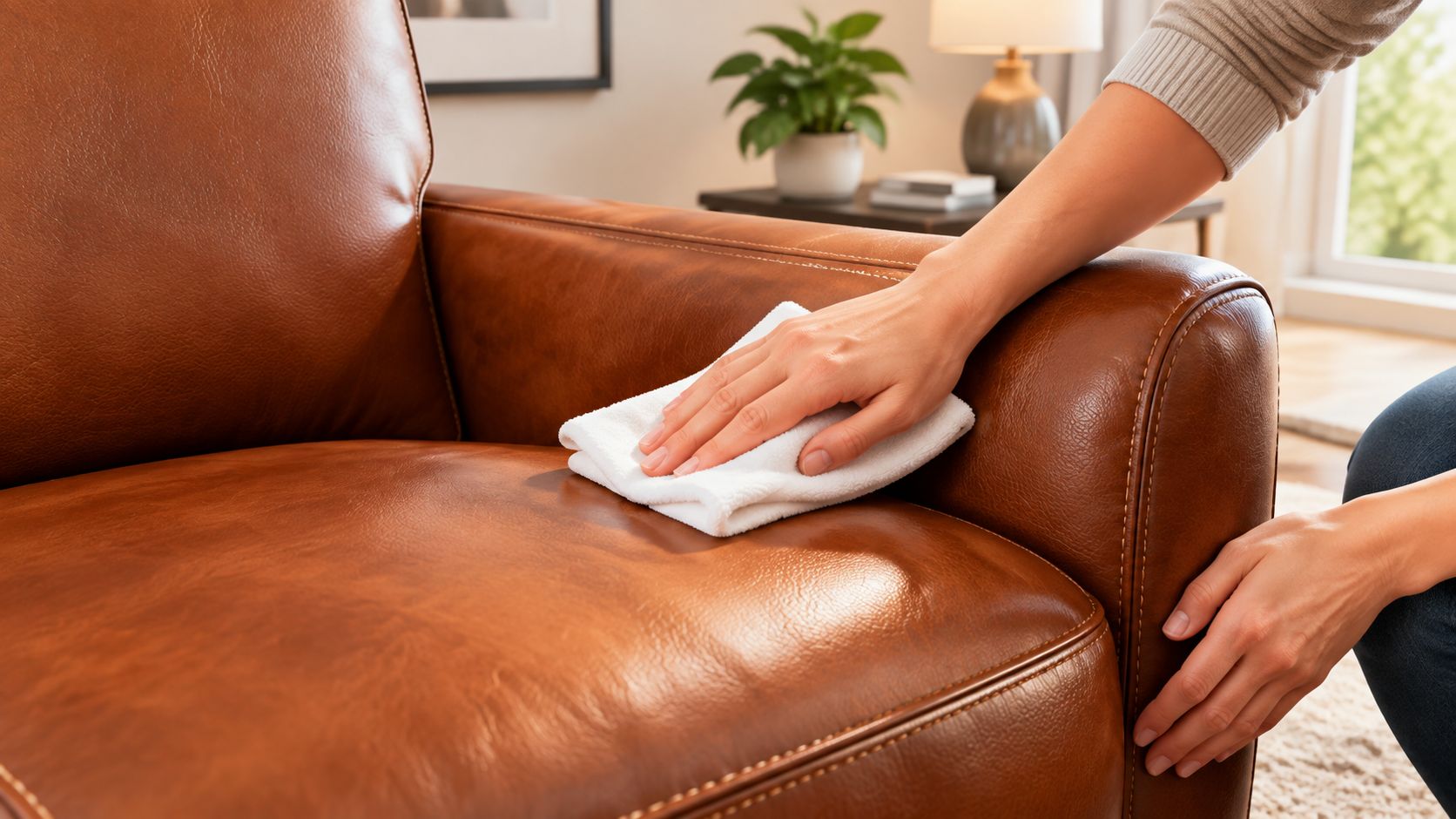
A soft-bristle upholstery brush can help lift settled dust from textured sections, but it should glide rather than scratch. The goal isn't to make the leather feel scrubbed. The goal is to remove dry contamination before moisture or conditioner locks residue onto the surface.
A repeatable weekly sequence
- Clear the seating area. Remove throws, cushions, and loose objects so the cloth can reach the full panel.
- Dust broad panels first. Use overlapping strokes from the upper back toward the seat.
- Clean the margins. Follow arms, piping, folds, and the spaces between cushions.
- Vacuum the hidden areas. Use low suction and a brush attachment for crumbs and grit.
- Inspect the finish. Look for sticky residue, dye transfer, or dry patches before applying any product.
A barely damp cloth may be appropriate for minor residue, but dry dusting should remain the default. Guidance for finished top-grain leather recommends removing loose dust first, blotting spills promptly, and keeping water away from direct heat and sunlight during drying. The leather protection guide from Vinson offers a useful companion reference for homeowners building a consistent care routine.
How Often to Condition Top Grain Leather
Conditioning schedules vary because leather furniture doesn't live in the same environment from home to home. A lightly used chair in a stable, shaded room has different needs from a family-room sectional exposed to daily contact and afternoon sun. Care guidance commonly places conditioning somewhere between 3 and 6 months for regularly used pieces, while lower-wear furniture may need attention every 6 to 12 months. One care guide specifically warns that excess conditioner can leave residue on the finish and attract grime.
The useful answer isn't to follow the shortest interval automatically. It's to inspect the leather before reaching for the bottle. The back-of-the-wrist check is practical: run clean skin lightly over a dry-looking area and compare it with a healthy section. If the surface feels unusually dry, looks dull in a way that cleaning doesn't resolve, or seems less supple in high-contact zones, a light conditioning session may be appropriate. If it feels tacky, greasy, or coated, it needs less product, not more.
Conditioning frequency by use and environment
| Situation | Conditioning Interval |
|---|---|
| Lightly used formal chair in a climate-controlled, shaded room | About every 6 months, guided by surface feel |
| Regularly used sofa with moderate household traffic | About every 3 to 6 months |
| Family-room sectional with daily use and afternoon sunlight | Often closer to 3 to 4 months, with frequent inspection |
| Lower-wear seating in a protected room | About every 6 to 12 months |
The application technique matters as much as the calendar. Clean the surface first, place a small amount of suitable conditioner on a cloth, and spread it in a thin, even layer. Work in manageable sections, avoiding saturation around seams and pores. Some guidance recommends allowing roughly 10 to 20 minutes for absorption before buffing, while another source advises approximately 15 to 30 minutes, depending on the product and leather response. This conditioning guide from Leather Advice also cautions against thick layers left overnight because they can create sticky residue and clog pores.
A homeowner comparing furniture care approaches may also find The Sofa Cover Crafter's guide to brown leather couches useful for thinking through placement, color, and everyday protection. The central discipline remains unchanged: apply less than seems necessary, let the leather absorb what it can, then buff away excess.
Spot Cleaning and Stain Response Done Right
Fresh spills need speed, but not force. Place a clean microfiber cloth over the liquid and press straight down. Lift the cloth, move to a dry section, and repeat until the surface no longer transfers moisture. Rubbing spreads the spill and can push liquid deeper into the grain, a risk emphasized in guidance for finished top-grain leather. This practical seat-cleaning resource also provides useful context for working carefully across leather, cloth, and vinyl surfaces.
Clean from seam to seam
A stain shouldn't automatically dictate the cleaning boundary. On a large sofa panel, treating only the visible mark can create a clean halo, where the corrected patch contrasts with surrounding leather that has accumulated ordinary oils and dust. Independent leather-care guidance recommends wiping one complete panel at a time, seam to seam, with a barely damp microfiber cloth and without pouring cleaner directly onto the hide.
For water-based residue, use lukewarm water with a mild, pH-neutral soap solution. The cloth should be damp, never wet. Wring it thoroughly, test an inconspicuous area, and then wipe the entire affected panel with even passes. Don't stop at the exact outline of the spill.

Match the response to the stain
- Ink: Stop after careful blotting and avoid aggressive solvents. Ink can penetrate or alter the finish, so a professional assessment is safer than experimenting on a visible panel.
- Oil: Lift surface residue without grinding it into the leather. If the mark remains, leave the panel to a specialist rather than adding household powders or degreasers without confirming compatibility.
- Denim or pillow dye transfer: Address fresh transfer gently with a suitable leather cleaner, but don't chase a set mark with abrasives.
- Raised debris: A fingernail used very lightly or a soft toothbrush may lift a dry particle from the surface. Neither should scrape pigment or stitched areas.
- Unknown stains: Treat them as unknown. Layering several products makes it harder to identify what caused a change in color or sheen.
Pat the area dry and allow air to circulate naturally. Never use a hair dryer or concentrated heat. Once the panel is fully dry to the touch, a light conditioning application may restore an even feel, but only if the leather feels dry.
For furniture with broader upholstery concerns, Vinson's upholstery stain-removal guidance provides another practical reference. Large stains, spreading discoloration, and anything near a seam deserve caution because the visible mark may not show the full extent of the affected area.
Products and Chemicals That Ruin the Finish
A household cleaner can look harmless on a countertop and still be wrong for finished leather. Products containing alcohol, ammonia, acetone, bleach, or hydrogen peroxide may strip pigment, dry the hide, or alter the protective finish. Care guidance also identifies wax-heavy polish, petroleum distillates, and unsuitable saddle soap as risks for top-grain leather surfaces. This top-grain leather care guide specifically warns against harsh products that can strip the finish.
The same caution applies to products marketed as quick shine solutions. Silicone-containing conditioners may leave a slick surface and can damage leather over time, according to independent furniture-care guidance. Household oils such as coconut or olive oil are also poor substitutes for a formulated leather conditioner. They can oxidize, darken the surface, or leave a residue that attracts grime.
What should stay away from the sofa
- All-purpose wipes: Detergents and solvents can build cumulative damage even when one pass looks successful.
- Magic erasers: Their abrasive action can dull or remove the finish.
- Baby wipes: Some contain alcohol or cleaning agents that aren't designed for pigmented upholstery.
- Saddle soap: Products intended for other leather applications may be too aggressive or leave residue.
- Furniture polish sprays: Wax and silicone can coat the finish rather than nourish the leather.
- Unverified home remedies: Oils and strong stain treatments can create a darker, larger problem.
A pH-balanced leather cleaner and a conditioner formulated for the specific finished leather are safer starting points. Every new product should receive a patch test on a hidden underside or the back of a cushion. For a clearer explanation of the material itself, the top-grain leather sofa guide helps homeowners distinguish surface protection from assumptions about all leather being interchangeable.
Your Year-Round Leather Maintenance Calendar
A good leather routine becomes easier when each task has a place on the calendar. Monthly inspection catches changes before they become restoration work, while weekly dusting keeps dry debris from collecting in seams and contact zones. Conditioning then becomes a measured seasonal decision rather than a reaction to a dull-looking armrest.
Spring is a useful time for a full inspection after indoor heating season. Check seat fronts, arms, headrests, piping, and areas near windows. If the leather feels dry and the last conditioning session is no longer recent, apply a thin coat after cleaning. Summer calls for closer attention to dust and sunlight, especially when a sectional sits near a bright south-facing window.
Year-round top-grain leather maintenance schedule
| Season | Monthly Task | Seasonal Task |
|---|---|---|
| Spring | Wipe broad surfaces with a dry microfiber cloth and inspect contact zones | Deep inspection, seam check, and first conditioning if the leather needs it |
| Summer | Dust more attentively around open windows and high-use seating | Review UV exposure, curtains, furniture placement, and cushion rotation |
| Fall | Check for residue, dye transfer, and dryness before heating season | Stain review and second conditioning when the surface calls for it |
| Winter | Keep dust out of seams and monitor how indoor heat affects the room | Reduce unnecessary cleaning and avoid placing leather near direct heat |
The weekly task is straightforward: brush-vacuum crevices and cushions, then dust the exposed panels. A monthly task is broader, checking for uneven sheen, tackiness, fading, or a new transfer mark. A seasonal task should never become an excuse to saturate the furniture.
For homeowners coordinating leather with fabric seating, this guide to leather and fabric detail options offers useful perspective on how different upholstery materials call for different handling. The same principle applies across a living room: care should match the material, not the homeowner's preferred cleaning habit.
When to Call in a Professional
DIY care has a clear boundary. Light dust, a fresh spill, and routine conditioning belong in a homeowner's maintenance routine. Persistent discoloration, damaged finish, mildew, and structural upholstery problems require assessment before another product touches the leather.
Warning signs that need specialist attention
- Persistent discoloration: If a mark remains after careful cleaning and two conditioning cycles, repeated treatment can enlarge the affected area.
- Set dye transfer: Denim or cushion dye that has entered the clear coat may need controlled recoloring rather than stronger cleaner.
- Cracked or peeling finish: Once the surface exposes the hide beneath, conditioner won't rebuild the missing finish.
- Mildew in cushions or seams: Additional conditioner can feed residue and complicate the problem.
- Structural seam separation: A separating seam is an upholstery failure, not a cleaning issue.
Amateur dye matching often creates blotchy patches. Store-bought repair kits can leave visible ridges, and aggressive rubbing may disturb surrounding pigment while chasing a single mark. A technician can assess whether a panel needs recoloring, whether cushion fill should be replaced, or whether a seam can be re-stitched without disturbing adjacent leather.
Vinson Fine Furniture is a family-owned business serving Central Ohio, formerly known as Kitchen Tables & More, with a focus on North American manufacturing and Amish-made excellence. Its In-Store Design Studio provides Complimentary Design Consultations, and the Custom Order Program supports fabrics, finishes, and 3D visualizers for lines including Smith Brothers of Berne, made in Indiana, Mavin, Amish-made in Ohio, and Canadel, handcrafted in Quebec. Homeowners considering custom leather sectionals Columbus can also compare power motion, reclining, swivel, rocker, and glider options in person.
The showroom's furniture standard centers on solid hardwood construction, including solid cherry, oak, maple, and walnut. Value options include a Low Price Guarantee with a 110% refund and a Clearance Gallery with savings of up to 70%. For a damaged piece, bringing clear photos, panel measurements, and notes about prior products to the design team can make an initial remote evaluation more useful. Details about made-to-order upholstery and material selection are available through Vinson's custom upholstery services.
Visit Vinson Fine Furniture at Easton Town Center for a hands-on sit-test of top-grain leather sectionals, reclining seating, swivel chairs, rockers, and gliders. The In-Store Design Studio can help match leather, solid hardwood finishes, fabrics, and room dimensions, while White-Glove Delivery supports the final placement of a carefully chosen investment piece.