Dark Walnut Dining Table: A Complete Guide for 2026


Most advice about a dark walnut dining table starts with the wrong assumption: if it looks dark online, it must be solid walnut. That's exactly how buyers end up comparing a real hardwood piece to veneer, stain, or a walnut-effect finish that only borrows the color. The better question is simpler and more useful, what is the table made of, and how will it hold up in a real dining room?
Walnut has earned its reputation. It has a long documented role in dining-table history, from medieval Europe to the “Age of Walnut” in the late 17th and early 18th centuries, when it became the most valued furniture wood in England and Europe, and a supply shock after the severe winter of 1709 reshaped trade and scarcity (Canonbury Antiques reference). That history explains why the best walnut tables still feel different from trendy stained lookalikes. They carry weight, visual depth, and a kind of permanence that cheapens quickly when the construction is wrong.
What Dark Walnut Really Means
A dark walnut dining table can be real walnut, walnut veneer over another core, a stain on a different hardwood, or a finish that only mimics walnut. The color alone tells you almost nothing. The key question is what sits under the finish, because that decides how the table wears, repairs, and ages in an actual dining room.
The color name is not the whole story
Black walnut is a species native to eastern and central North America, and its dark heartwood gives walnut furniture its familiar look. Its sapwood is much lighter, so even genuine walnut shows natural variation from board to board, and the dark amber-brown tone does not need artificial staining to look rich (Wood Capitol reference). That variation is part of the appeal. Two authentic tables can still look different because walnut is a natural material, not a printed surface.
Retailers often use dark walnut as a style label instead of a material label. A dark stain on oak, maple, or another hardwood can look excellent in photos, especially under warm lighting, but that appearance does not prove anything about authenticity or long-term performance. Online images flatten grain, hide edge details, and make real walnut, walnut veneer, and walnut-effect finishes seem much closer than they are.
Practical rule: If a listing says dark walnut, check the wood species, the top construction, and the finish description before you care about the color tone.
What to ask before buying
Ask direct questions. Is the top solid walnut, walnut veneer, or another hardwood with a walnut finish? Does the dark color come from the wood itself, a stain, or a factory-applied effect? Are the photos taken in consistent lighting, or do they rely on a dark room to make the table look richer?
A smart buyer also asks for samples or finish boards. Lighting changes everything, and a finish that looks warm in a showroom can read almost black in a low-light dining nook. For a closer look at walnut color range, what color is walnut wood is a useful reference point.
Understanding Solid Walnut Construction
American black walnut earns its place in dining rooms because it combines beauty with real furniture-grade performance. One source places its Janka hardness at about 1,010, which puts it in the durable hardwood category while still leaving room for fine joinery and shaping (Edward Martin reference). That balance is part of the appeal, walnut is strong enough for daily use, but it also works well in crafted forms instead of looking overly bulky.
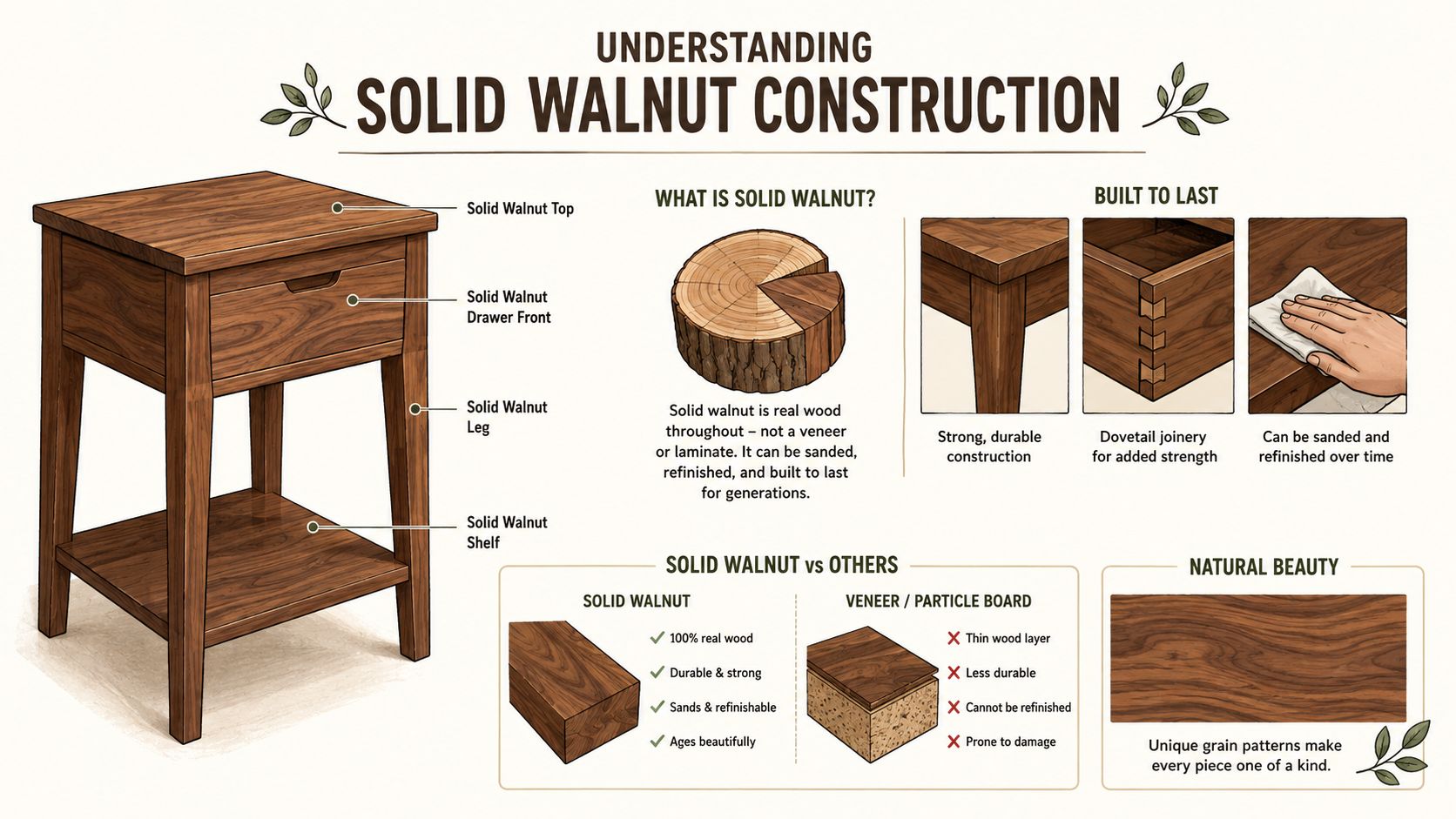
What solid walnut actually signals
Solid walnut means the visible wood is walnut all the way through the major structural parts, not just the surface. That matters for long-term wear, because scratches, dents, and edge wear are far less forgiving on a fake surface than on a real hardwood face. It also means the table can age with visible character instead of revealing a different core underneath.
Walnut's natural look is a major part of the value proposition. Its color runs from deep chocolate to purplish espresso, and its grain gives each piece a distinct identity rather than a uniform factory pattern (Wondrwood reference). That natural variation is exactly why walnut feels premium in a dining room. It reads as material, not just decoration.
Why price follows the wood
Walnut typically costs more than oak because it grows more slowly and supply is limited. That premium is not marketing fluff, it reflects the actual cost of the raw material and the higher expectation buyers place on the finished piece. In other words, the money goes into the wood, the joinery, and the finish, not just the label.
Good walnut should feel substantial, show honest grain variation, and avoid the flat sameness that usually signals a surface treatment rather than true hardwood.
A solid walnut table also tells the truth in the hand. The top should feel dense, the edges should look clean, and the underside should show careful support rather than shortcuts. The guide to best solid wood dining tables is worth reviewing before narrowing the field.
Comparing Construction Methods and Materials
Not every dark walnut dining table deserves the same buyer. Some pieces are built for heirloom longevity, others for visual consistency, and some for budget control. The mistake is pretending those goals are interchangeable. They aren't.
The real trade-offs
A solid walnut slab gives the strongest sense of authenticity, but it also demands better joinery and more careful design to manage movement. Veneer over a stable substrate can be a very good solution for large tables, because the structure resists seasonal shifting while the top still delivers the walnut look. Stained alternative woods can be fine when the budget is tight, but they don't deliver the same material honesty.
The right choice depends on how the table will be used. A family table that sees constant dinners, homework, and serving platters benefits from stability and repairability. A statement piece in a formal room may justify thicker stock and heavier construction because the table is meant to anchor the space.
| Dark Walnut Dining Table Construction Comparison | Durability | Stability | Weight | Repairability | Price Range |
|---|---|---|---|---|---|
| Solid walnut slab | High | Moderate, depends on build | Heavy | Strong, because the wood is real through the major surface | Premium |
| Veneer over stable substrate | Good | High | Moderate | Limited on the top layer, stronger on structure | Mid-range to premium |
| Stained alternative hardwood | Varies by base wood | Varies by base wood | Varies | Depends on the underlying material and finish | Lower to mid-range |
Where veneer makes sense
Veneer deserves more respect than it usually gets. On a large top, it can reduce the risk of visible movement while preserving the walnut appearance buyers want. That makes sense in dining rooms where a wide panel would otherwise be more vulnerable to seasonal swelling and shrinking.
Still, veneer is a surface strategy, not the same thing as solid walnut. It's a good answer when the goal is visual consistency and dimensional control. It is not the answer when the buyer wants the feel of a true hardwood investment piece with long-term repair flexibility.
The contrast with solid construction is spelled out clearly in solid wood vs engineered wood, and it's the right place to draw the line before price becomes the only filter.
Sizing Your Table for Real Spaces
Dark walnut carries real visual weight, so sizing matters more than it does with lighter woods. A table that looks refined in a showroom can overwhelm a room if the proportions are wrong, especially in an open-plan layout where the dining area shares sightlines with the kitchen or living room. The answer is not to avoid walnut, it is to measure carefully and choose with restraint.
Measure the room before shopping
Start with the dining footprint, not the furniture catalog. Measure the full length and width of the room, then leave enough clearance for chairs to pull out and for people to pass behind them without brushing the table edge. If the table has an apron, pedestal, leaves, or a thick top, account for that before you get fixed on the finish.
The easiest mistake is buying too much table for the room. Dark wood reads denser than light wood, so a table that barely fits on paper often feels too heavy in person. That effect is stronger in rooms with mixed flooring or limited natural light.
Match height, thickness, and weight to the use case
Standard dining height sits around 30" to 31", and premium walnut tables commonly use top thicknesses around 40 mm to 47 mm (L'Atelier Mata reference). Those numbers matter because they shape both comfort and presence. A thicker top looks anchored, but it also requires stronger supports and careful leveling.
Weight matters too. A 66.9" by 43.3" walnut table is listed at 66 lb, a larger 77.6" by 47.2" version at 77 lb, and a 79" x 32" oval walnut-and-iron table at 124 lb (L'Atelier Mata reference). Heavier tables usually feel more solid in use, but they also demand better joinery and easier delivery access.
For room planning, use dining room tables sizing as a practical check before you order. If the numbers feel tight on paper, they will feel tighter once the table arrives. The right walnut table fits the room with room to breathe, and that is the standard worth holding.
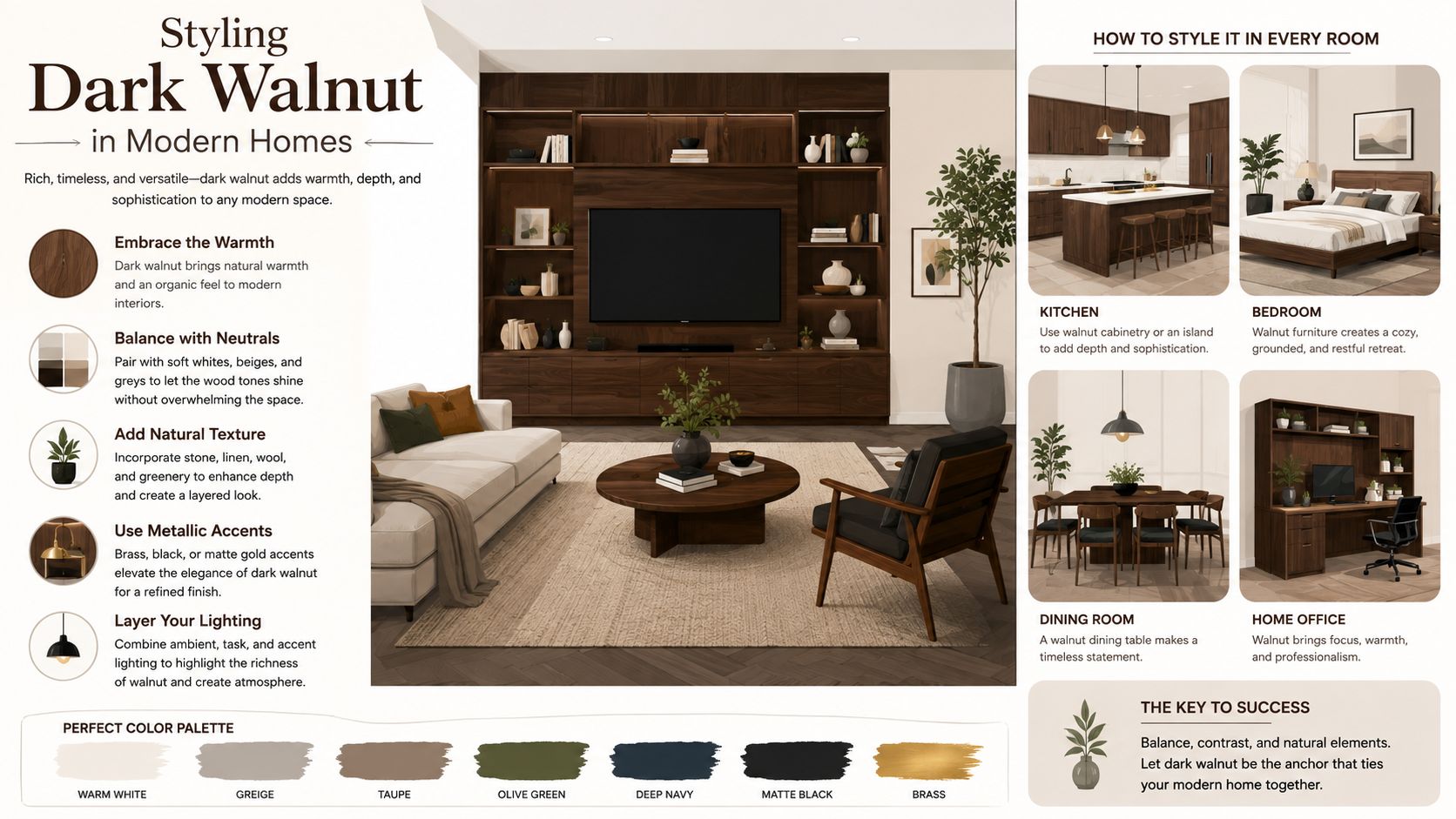
Styling Dark Walnut in Modern Homes
A dark walnut table can look expensive and contemporary in the right room, and severe in the wrong one. The difference usually comes down to light, contrast, and what surrounds the table. A successful dining room doesn't hide the darkness of the wood. It controls it.
A room that works with the wood
In a compact dining area with low natural light, a dark walnut table needs breathing room. Pale or textured chairs keep the composition from looking like one heavy block, and metal or light-toned accents help break up the mass. Warm 2700 to 3000K lighting is the smarter choice because it keeps the wood rich without making the room feel cold or cave-like, which is exactly the concern in smaller-space planning guidance (Coohom reference).
A family that uses the table every day can push contrast a little further. Upholstered chairs in a lighter fabric, a simple runner, and open base lines make the walnut top feel intentional rather than heavy. In open-plan homes, the room should repeat one or two lighter elements from the nearby living area so the dining zone doesn't turn into a visual anchor that drags the whole floor plan down.
Use texture instead of more darkness
The best dark walnut rooms don't pile on more dark finishes. They add texture. Linen, woven seating, brushed metal, and matte ceramic pieces all soften the visual weight of the table without diluting its character.
For seasonal styling, one good resource for tabletop inspiration is creative holiday table decor. That kind of layered decorating works best when the base table already has enough presence to carry the room.
Caring for Your Walnut Investment
Dark walnut keeps its value when you treat it as finished hardwood, not as a surface that can take anything. The goal is simple: protect the finish, control moisture, and let the wood age evenly. Walnut's color variation is part of its appeal, so good care preserves that character instead of trying to make every board look identical.
Clean it like a real hardwood, not a countertop
Use a soft, damp cloth for routine cleaning, then dry the surface right away. That removes dust, crumbs, and spills before they sit in the finish and dull the depth that makes walnut worth buying. Strong cleaners are a poor choice because they break down protection long before the wood itself shows wear.
If you want to verify the material before you buy, start by looking for evidence of solid construction and consistent grain, not just dark photos online. The same eye that spots a well-built table should also spot a fake finish job. Care advice for walnut dining tables usually calls for refreshing oil or finish as needed based on use, which is why a table in a busy family room will need attention sooner than one used only for formal meals. For a more detailed maintenance approach, how to care for wood furniture is the right follow-up.
Water rings, heat marks, and sun exposure cause more regret than daily use ever does. Protect the surface first, then worry about appearance.
Keep the finish alive
A smart routine includes coasters, trivets, and quick wipe-downs after meals. That is not fussy. It keeps a walnut table looking finished instead of worn down by small avoidable marks.
Use protective habits before damage shows up. For broader care principles that apply to wood surfaces in general, protecting wooden kitchen boards reinforces the same rule, treat the wood early, not after the finish has already failed.
Investing in Custom Craftsmanship
Mass-produced walnut tables can look acceptable in photos, but custom work is where the quality difference shows up. A buyer can choose grain direction, edge profile, finish tone, and the exact size the room needs instead of settling for a close enough match. That matters in a premium dining room because the table is not disposable furniture, it is the piece that holds the room together for years.
Why custom wins for long-term value
A handcrafted table is easier to specify with confidence. The buyer can request a darker or lighter walnut look, verify whether the build is solid hardwood, and choose proportions that work with the actual chairs and circulation path in the home. For families who want a table that feels personal, that control is worth the cost.
The bigger advantage is honesty about what is being built. Online photos can hide veneer, stain-heavy surfaces, and weak construction details that only show up in person. A custom order lets you ask direct questions about the top, the base, the joinery, and the finish before you commit. That is the difference between a table that looks right and a table that is right.
What serious buyers should ask
- What is the top made from? Solid walnut, veneer, or a finish over another hardwood.
- How is the base joined? Tight joinery matters more than a dramatic profile.
- Can the finish be seen in person? Samples beat photos every time.
- What service comes after delivery? White-glove setup and clear support matter when the table is heavy and valuable.
A well-made walnut table is a lifetime purchase, not a seasonal refresh. Buyers who treat it that way usually end up happier with the result, because the piece fits the room, the build, and the way the home lives.
The best custom order is the one that leaves no surprises. If a seller cannot explain the wood, the finish, and the structure in plain language, walk away. Real craftsmanship should hold up under questions, not hide behind polished photography.