Eco Friendly Furniture Materials: A Homeowner’s Guide

A dining table looks beautiful under showroom lights. The harder question comes later, after a Columbus winter, a humid summer, a family dinner, and a few inevitable scratches. Homeowners choosing eco friendly furniture materials should judge the piece by what it can become over decades, not by a leaf symbol on a product page.
For an investment home, sustainability starts with longevity. A solid hardwood table that can be repaired, refinished, and passed along usually makes a stronger environmental and financial decision than a fashionable piece that needs replacement after a short service life. The right choice also affects indoor air quality, daily comfort, and how well furniture handles Central Ohio's seasonal changes.
What Eco Friendly Furniture Materials Actually Mean for Your Home
A new table may look responsible on delivery day. Its real value appears after years of heating, humidity, sunlight, family use, and repair. Eco friendly furniture materials should therefore be judged as a long-term investment in durability, indoor air quality, and future refinishing, not as a label or virtue signal.
Four tests for a responsible material
Sourcing is the first test. Renewable fibers, reclaimed timber, recycled inputs, and responsibly managed forests can reduce impact, but material origin does not excuse weak construction. Wood remains the dominant furniture material in the European Union. In 2011, 56% of furniture pieces produced in the EU-27 were wood-based, representing 56% of production value, while metal accounted for 12% of pieces and 17% of value, and plastic represented 6% of pieces and 1% of value, according to the EU furniture ecolabel technical review.
Manufacturing shapes the result through milling, drying, adhesives, upholstery, packaging, and transport. A well-built domestic hardwood bookcase from a certified mill can make a stronger long-term choice than furniture marketed as green but difficult to repair. For a Central Ohio home, repairability matters because seasonal moisture changes, heating, sunlight, and relocation all test furniture over time.
Indoor air quality depends on coatings and adhesives as much as the visible material. The reviewed criteria treat formaldehyde control in wood-based panels as an important benchmark, with supplied panels expected below half of the E1 threshold and MDF held to 65% of E1, as detailed in the technical furniture criteria. Ask for emissions documentation. “Natural” alone proves little.
End-of-life planning finishes the evaluation. Furniture that can be repaired, refinished, reupholstered, or responsibly recycled gives a homeowner more useful years and more choices than disposable furniture.

Families comparing finishes and emissions can use this guide to safe wood furniture for families as a practical checklist. Choose materials and construction that remain serviceable for thirty years or more. That is the standard that turns sustainability into value for a Columbus home.
Solid Hardwood Done Right
At Vinson Fine Furniture, solid hardwood is the starting point. The company sells solid hardwood furniture and does not sell or promote engineered wood, MDF, laminate, or particle board. That choice matters over a thirty-year lifespan, but the material alone does not guarantee lasting value. Seasoning, joinery, finish, and repairability matter just as much for a Central Ohio home exposed to heating cycles, humidity changes, and daily use.
Choose the species for both performance and character. Cherry has a warm grain that grows richer with age. White oak provides pronounced grain and strong everyday resilience. Hard maple offers a clean, restrained appearance with a dense surface suited to busy dining and living spaces. Walnut brings deep color, expressive figure, and a refined presence to statement bedroom and dining pieces.
A responsible species choice also requires a clear sourcing story. Certification labels describe different levels of certified or recycled content, so ask the maker what the claim covers instead of treating every label as equivalent. Documentation for domestic sourcing, chain of custody, and the selected lumber gives you a more useful basis for comparison than color alone.
Construction determines the outcome
A stable top, properly acclimated lumber, and strong mortise-and-tenon or comparable bench-made joinery allow solid wood to move without losing its shape. Quarter-sawn boards can improve dimensional stability, while carefully selected flat-sawn boards show more dramatic grain. Ask how the lumber was dried, stored, and prepared before purchase.
Janka hardness helps compare resistance to dents, but it is not a complete quality score. A well-built cherry table can outlast a harder species assembled carelessly. The right choice balances expected use, repair options, appearance, and the maker's construction standards.
| Species | Janka Hardness | Sourcing Notes | Best Use |
|---|---|---|---|
| Cherry | Verify with the maker for the selected board and grade | Favor documented domestic sourcing and certification | Dining tables, bedroom case goods |
| White oak | Verify with the maker for the selected board and grade | Domestic certified timber is a strong choice | Dining, living room, cabinetry-style storage |
| Hard maple | Verify with the maker for the selected board and grade | Ask about regional sourcing and acclimation | Dining chairs, tables, bedroom furniture |
| Walnut | Verify with the maker for the selected board and grade | Certification and responsible domestic sourcing matter | Statement tables, beds, dressers |
Woodworking readers considering exterior applications can consult the TimberLodge365 cedar cladding guide for context on species, grain, and weather exposure. For furniture decisions, Vinson's guide to choosing hardwood for longevity and style helps match hardwood character with expected use.
Reclaimed Wood, Bamboo, Cork, and Recycled Materials
Alternative materials deserve a fair assessment, not automatic praise. Reclaimed wood, bamboo, cork, recycled metal, recycled glass, and recycled plastic can all make sense, but each belongs in the right application.
Reclaimed wood offers genuine character because its knots, nail marks, saw cuts, and color variation come from prior use. That history also creates practical limits. Boards may vary in species and dimensions, old fasteners may need removal, and the maker must design around irregular stock. Reclaimed wood works beautifully for a distinctive dining top or vanity, especially when the homeowner accepts variation as part of the material's identity.
Bamboo renews quickly and remains light, but the finished product may contain adhesive systems that affect emissions. Independent guidance stresses that bamboo furniture still needs low-VOC finishes and appropriate formaldehyde compliance or emissions verification, as discussed in this sustainable furniture material guide. Bamboo can be a sound option when the supplier documents the finish and adhesive system.
Cork brings warmth, softness, and acoustic comfort. It suits lighter bedroom applications and select surfaces, but it isn't the first choice for a heavily loaded dining structure. It can dent and requires protection from sharp impacts and excessive moisture.
Match the material to the room
Recycled metal belongs naturally in table bases, occasional tables, and durable outdoor pieces. Recycled glass suits tabletops and shelving where easy cleaning matters. Recycled plastic can work for outdoor furniture when its content and end-of-life pathway are clearly documented.
| Material | Renewability | Durability | Maintenance Reality |
|---|---|---|---|
| Reclaimed wood | Reuses existing timber | Strong when properly inspected and joined | Accepts variation, dents, and visible history |
| Bamboo | Fast-renewable plant material | Good when construction and adhesives are sound | Protect from moisture and verify the finish |
| Cork | Renewable bark-based material | Better for lighter-use applications | Protect from punctures, water, and heavy loads |
| Recycled metal | Reuses durable industrial material | Very strong for bases and outdoor pieces | Watch for finish wear and corrosion exposure |
| Recycled glass | Reuses glass feedstock | Hard surface, vulnerable to impact | Simple cleaning, careful handling |
| Recycled plastic | Diverts plastic into a new use | Practical outdoors | Confirm recycled content and clean with mild products |
For a bathroom or bedroom application, Vinson's reclaimed wood vanity shows how reclaimed character can become a deliberate design feature rather than a generic rustic treatment.
Finishes, Textiles, and Leather Alternatives
A furniture frame can be responsibly sourced and still fall short if its finish or upholstery brings unnecessary chemical loading into the room. Buyers should evaluate the complete material system, including stain, topcoat, foam, fabric, thread, and adhesive.
Water-based finishes generally offer a lower-VOC route than traditional solvent-heavy coatings, while hardwax oils can provide a tactile surface that's easier to spot-repair. Neither option eliminates the need for proper curing and ventilation. The showroom or maker should explain the product, expected cure behavior, and maintenance routine instead of using “non-toxic” as a substitute for documentation.
Upholstery should fit the household
Wool, linen, and organic cotton offer breathable, natural-feeling surfaces. They suit homeowners who value texture and graceful aging, particularly in lower-contact accent chairs or carefully maintained living spaces. Certified performance fabrics can be the more practical decision for a family room, pets, or a motorized sectional that receives daily use.
Leather remains a strong long-life upholstery choice when the hide, tanning, dye, and finish are clearly identified. Vinson's premium options include top-grain and performance leathers for sectionals, reclining furniture, swivel chairs, rockers, and gliders. Vegetable-tanned leather can develop a visible patina, while mushroom mycelium and recycled leather composites may suit accent applications where the buyer accepts different aging and repair characteristics.

Care principle: The most sustainable upholstery choice is the one that matches the household's actual traffic, not the one that sounds most virtuous on a label.
Leather needs regular dusting, prompt attention to spills, and protection from direct heat. Homeowners comparing maintenance routines can use these steps to protect leather furniture before selecting a hide. A detailed upholstery materials guide can also help narrow the decision between natural textiles, performance fabrics, and leather.
Certifications That Actually Matter
Furniture labels often bundle separate claims into one reassuring phrase. Read each certification against the material and construction detail it evaluates. A label can support a long-term investment decision, but it cannot replace an inspection of the piece.
FSC tracks the wood story
FSC covers forest management and chain of custody. It helps verify that timber claims connect to a documented supply chain, rather than stopping with showroom language. The certification applies most directly to solid wood, wood components, and paper-based packaging.
FSC claims also differ. FSC Recycled indicates recycled content, FSC Mix combines certified wood with other controlled or recycled sources, and FSC 100% identifies products made entirely from certified forest material. Ask which claim applies to the specific piece, not whether it carries an FSC mark.
Emissions labels address the room
GREENGUARD and GREENGUARD Gold evaluate emissions from finished products and their effect on indoor air quality. They matter most for upholstered furniture, coatings, composite panels, and adhesive-heavy construction. In a Central Ohio home that stays closed through humid summers and cold winters, lower-emission materials can make the room more comfortable. These labels do not verify forest management or promise decades of service.
GOTS applies to organic textiles and follows the textile supply chain from fiber through finished product. Use it when assessing upholstery or bedding, not as a general certification for an entire wood table.
OEKO-TEX provides chemical-safety screening for textiles and related components. It can inform fabric selection, but it does not answer questions about frame construction, wood sourcing, repair, or refinishing.
| Certification | Best applied to | What it helps clarify |
|---|---|---|
| FSC | Wood and forest products | Forest sourcing and chain of custody |
| GREENGUARD | Finished furniture | VOC and emissions performance |
| GREENGUARD Gold | Finished furniture for stricter indoor environments | Lower-emission criteria |
| GOTS | Organic textiles | Fiber-to-finished textile practices |
| OEKO-TEX | Textiles | Chemical-safety screening |
Treat certification as a starting point. Ask about joinery, finish chemistry, replacement parts, and future service. For furniture expected to remain in the home for decades, a credible emissions label paired with repairable construction carries more weight than a long list of logos.
Comparing Durability, Cost, and Care
A material matrix is helpful only when it reflects real household use. A formal dining table faces different demands from a bedroom bench, and a family-room sectional needs a different upholstery strategy from an occasional chair.
Solid hardwood usually carries the strongest long-term case because it can be repaired and refinished. Independent buyer guidance commonly places well-maintained solid hardwood furniture in the 25 to 50-plus year range, with many pieces refinished rather than replaced when wear appears, as described in this durable furniture material guide.
| Material | Expected Lifespan | Relative Cost | Care Level |
|---|---|---|---|
| Solid cherry, oak, maple, or walnut | Decades with repair and refinishing | Premium | Moderate, protect from standing moisture and heat |
| Reclaimed wood | Long when inspected and well joined | Premium to highly customized | Moderate, accept visible marks and variation |
| Bamboo | Long with sound construction and finish | Mid to premium | Moderate, manage moisture and surface wear |
| Cork | Better for lighter-use pieces | Mid | Moderate to high, protect from dents and water |
| Recycled metal | Long, especially for bases and outdoor use | Mid to premium | Low to moderate, maintain the finish |
| Upholstered furniture | Long when the frame is sound and fabric is serviceable | Mid to premium | Moderate to high, vacuum and follow fabric care instructions |
| Leather alternatives | Varies by composition and finish | Mid to premium | Moderate, inspect aging and repair options |
For Columbus living rooms, a solid hardwood frame with serviceable upholstery generally offers a more dependable ownership path than a piece selected only for a low initial price. For dining rooms, a refinishable hardwood top earns its premium through daily resilience. Bedrooms permit more flexibility, but the frame still deserves careful scrutiny.
The Vinson furniture materials guide can help buyers organize material questions before a showroom visit. The most useful questions concern finish repair, replacement cushions, hardware, and whether the maker supports the piece after delivery.
Buying and Customizing for a Columbus Climate
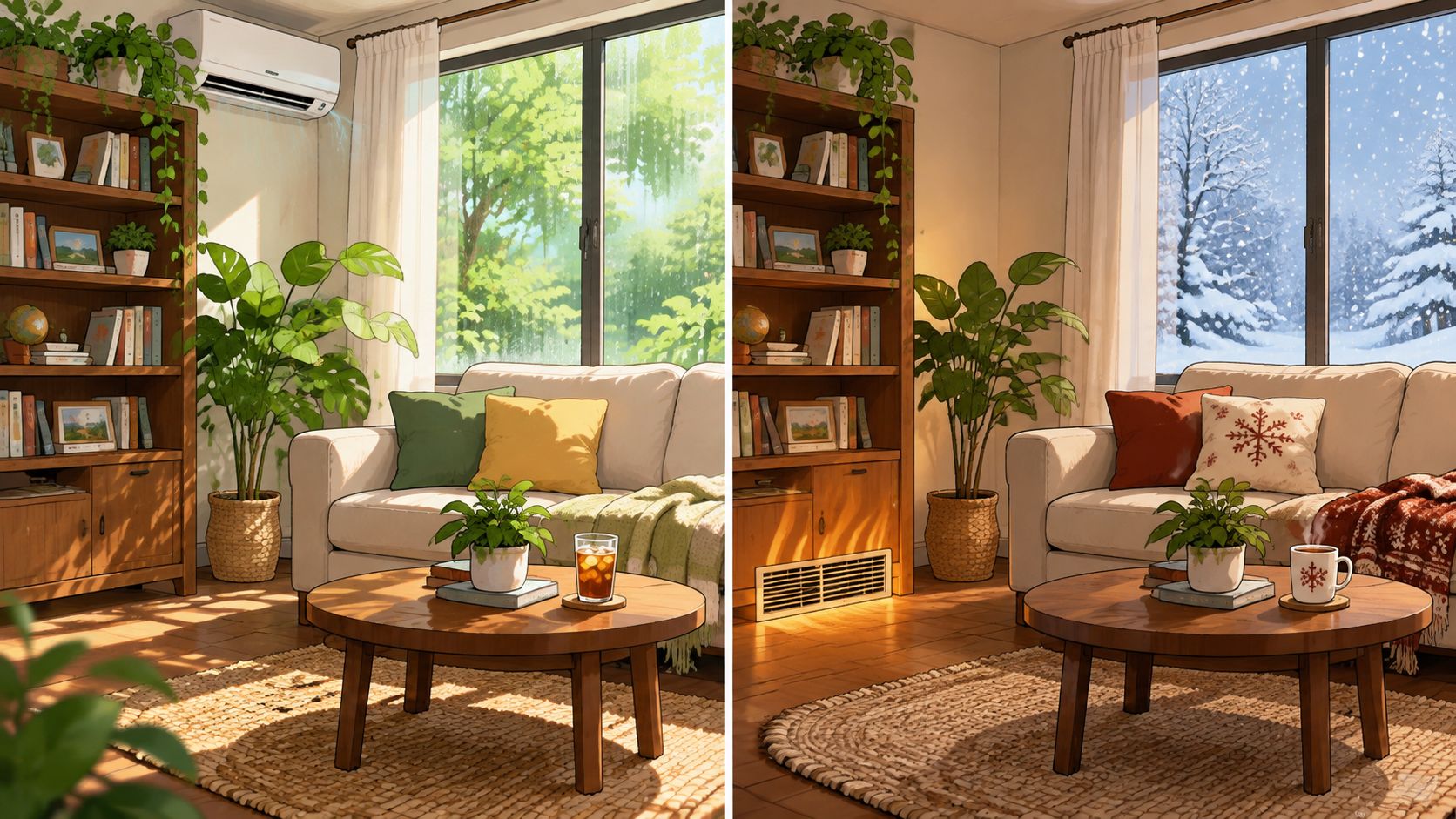
Central Ohio furniture lives through seasonal contrast. Summers bring humidity, while winter heating dries the air. That repeated change challenges poorly prepared wood, weak joinery, unstable panels, and finishes that can't accommodate normal movement.
The solution isn't to fear solid wood. It's to buy solid wood that has been properly dried, constructed, and finished for interior use. A professional retailer should explain how the lumber was acclimated, how the top is attached, which joinery holds the frame together, and what care the finish requires.
Questions worth asking before ordering
- Construction: Is the item solid cherry, oak, maple, or walnut throughout the structural components?
- Joinery: Are the joints designed to handle seasonal wood movement?
- Acclimation: Has the lumber been dried and conditioned for indoor furniture?
- Finish: What coating was used, and how can the owner repair or renew it?
- Placement: Should the piece sit away from radiators, strong vents, exterior doors, or direct afternoon sun?
- Service: Can cushions, upholstery, hardware, or finish work be addressed later?
Custom ordering makes these decisions more precise. Vinson's Custom Order Program allows homeowners to select fabrics and finishes and use 3D visualizers for brands including Smith Brothers of Berne, Canadel, and Mavin. Smith Brothers is made in Indiana, Mavin is Amish-made in Ohio, and Canadel is handcrafted in Quebec. Together, they offer American-made and North American-crafted options without forcing every room into the same style.
For a Central Ohio home: Choose the material and finish after considering room orientation, heat sources, moisture, traffic, and the intended service life.
The In-Store Design Studio and Complimentary Design Consultations add practical value because a designer can evaluate scale, placement, fabric performance, and finish coordination before an order is placed. Homeowners can also explore solid hardwood dining sets, Amish-made dining sets, Mavin bedroom furniture, Smith Brothers furniture in Easton, and premium motion pieces with motorized reclining, swivel, rocker, or glider functions.
Vinson Fine Furniture is family-owned, formerly known as Kitchen Tables & More, and serves Central Ohio through an Easton Town Center showroom. Its focus on Ohio, USA, Canadian, and broader North American manufacturing gives local buyers a place to examine construction in person rather than judging material claims from a photograph.
A 30 Year View of Furniture You Will Actually Keep
A sustainable furniture choice earns its place over decades. Ask whether the piece will remain useful through moves, changing household needs, and daily contact, not whether its material sounds responsible.
Solid cherry deepens in tone. Walnut develops a softer patina. White oak and maple retain their structural strength while gathering the marks of a lived-in Central Ohio home. Reclaimed wood shows its history immediately. Bamboo and cork offer a different visual character, while recycled metal can remain stable when its finish receives proper care.
A long ownership horizon changes the price calculation. The purchase cost matters, but so do replacement, disposal, refinishing, reupholstery, and repair. Choose construction that supports those services. A well-made dining table can move to another room, and a frame that accepts new upholstery can keep serving the household as needs change.
The life-cycle case for wood is strong. An assessment of 25 furniture pieces found that pre-production created the largest environmental burden, averaging 76% of total impact, with results ranging from 42.25% to 99.98%. It concluded that wood furniture was the most environmentally friendly option compared with metal and plastic, according to the published furniture life-cycle market research summary. The practical lesson is clear: evaluate the material and construction before the furniture enters your home.
That same market research projects the US sustainable furniture market at USD 13.39 billion in 2026, rising to USD 17.31 billion by 2031. It estimates reclaimed wood held 34.60% market share in 2025, while bamboo and rapidly renewable grasses are projected to grow at a 6.66% CAGR through 2031. These figures are market estimates and projections, not a substitute for inspecting a specific piece.
For a 25-to-50-year ownership arc, a showroom sit-test beats another product description. Open a drawer, feel top-grain leather, inspect a solid-maple edge, test a power sectional, and judge the proportions of bedroom or seating furniture in person. Guidance on how long furniture should last turns that inspection into a deliberate buying standard.
Visit Vinson Fine Furniture at Easton Town Center to examine solid hardwood construction, premium leather and motion seating, and customizable North American-made pieces. The showroom includes an In-Store Design Studio, Complimentary Design Consultations, a 110% Low Price Guarantee, and a Clearance Gallery with savings up to 70%. White-Glove Delivery brings furniture inside, places it in the room, assembles it when needed, and removes the packaging.