Interior Design Consultation at Vinson’s Design Studio

A homeowner can spend weeks saving room photos, comparing fabrics, and measuring walls, then discover that the chosen sectional blocks the doorway or the dining table overwhelms the room. That's the cost of treating furniture selection as isolated shopping instead of a coordinated design decision.
An interior design consultation turns that uncertainty into a working plan. At Vinson's Easton Town Center studio, the conversation connects room function, solid hardwood construction, upholstery, finishes, customization, delivery, and budget before a significant order is placed. For an investment-minded homeowner in Columbus, that connection matters. Furniture should look right in the showroom, feel right during the sit-test, fit the room, and remain useful for years.
Walking Into the Easton Design Studio
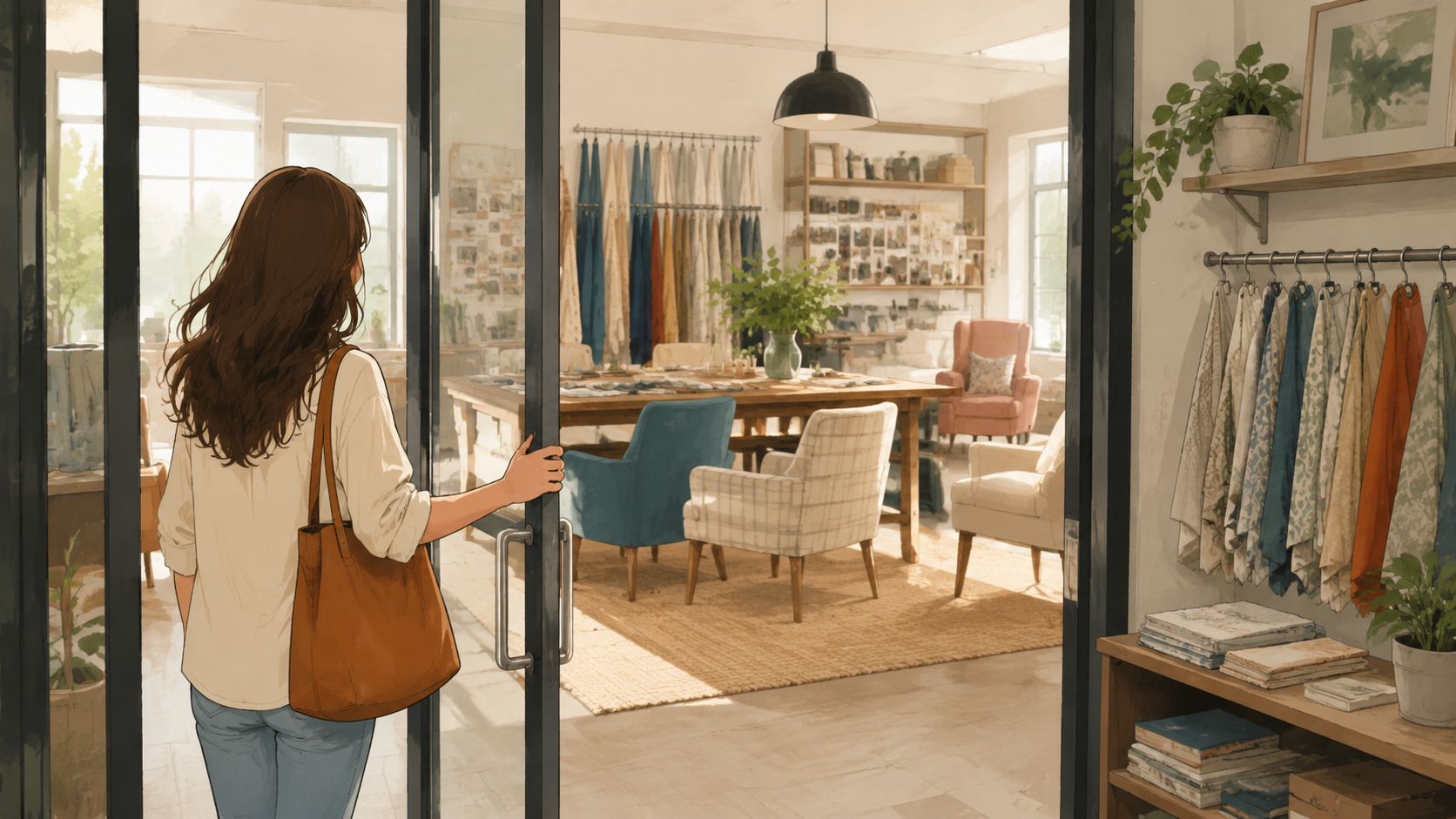
The first impression at the Easton studio isn't a warehouse of disconnected displays. It's a working design environment. A homeowner passes upholstered sofas, top-grain leather seating, and solid hardwood dining sets before reaching a layout table where room dimensions can be sketched and revised.
The appointment changes the pace immediately. Instead of drifting from one attractive piece to another, the homeowner can discuss how the living room is used, whether the dining table needs to accommodate daily meals or larger gatherings, and which bedroom pieces must coordinate with existing floors and trim. Nearby, fabric books and finish samples make the decisions tactile rather than theoretical.
From browsing to decisions
A screen may show a three-dimensional room preview while the designer tests a sectional configuration or adjusts a dining table finish. That visual feedback helps a homeowner judge proportion, material relationships, and overall atmosphere before committing to an order. High-quality visualization is particularly useful because it lets clients evaluate a proposed space without translating technical drawings into a mental picture, as explained in guidance on 3D presentation for interior design projects.
Vinson's In-Store Design Studio supports that guided process. The consultation defines the needs brief, layout, materials, visualization, purchasing sequence, and delivery expectations. It also clarifies where solid oak, maple, cherry, or walnut belongs in the home, which upholstery makes sense for daily use, and whether a stock piece or custom order better fits the room.
What an Interior Design Consultation Actually Is
An interior design consultation is a structured working session. It converts broad preferences such as “warm,” “comfortable,” or “more formal” into measurable decisions about furniture scale, circulation, colors, fabrics, finishes, and order priorities.
The process should begin with needs analysis, not a furniture-first recommendation. Practitioners advise identifying every user group, separating stated wants from genuine needs, mapping tasks within the room, and testing alternative layouts before finalizing the scheme. That approach reduces redesign risk because the arrangement reflects behavior, budget, and circulation rather than appearance alone, as outlined in this needs-analysis framework for interior design planning.
At Vinson, the complimentary consultation can take place in-store, with a hybrid process available when project details need to be reviewed remotely. The useful question isn't whether the meeting sounds inspiring. It's whether the homeowner leaves with materials and decisions that can guide an actual purchase.

What the appointment should produce
A productive consultation can include:
- A documented needs brief: Household routines, required seating, room priorities, and pieces that must remain.
- A room layout: Furniture placement, focal points, circulation, and scale are considered together.
- Coordinated materials: Fabric, top-grain leather, performance leather, hardwood species, and stain choices are reviewed as a complete palette.
- A digital mood board: Colors, textures, silhouettes, and finishes are gathered in one reference point.
- A 3D preview: The proposed room can be evaluated before the order is finalized.
- A prioritized purchase list: Stock items and custom orders are sequenced according to the project's needs.
Lighting belongs in that conversation because it changes how finishes and upholstery appear throughout the day. A homeowner looking beyond furniture selection can use these lighting ideas for Georgia St House as a useful reference when considering ambient, task, and accent illumination.
The service suits a homeowner furnishing one living room, coordinating a dining room and bedroom, replacing a single major piece, or specifying a custom program. The complimentary interior design consultation has the most value when it ends in a usable brief rather than a pleasant but forgettable conversation.
Five Benefits You Walk Away With
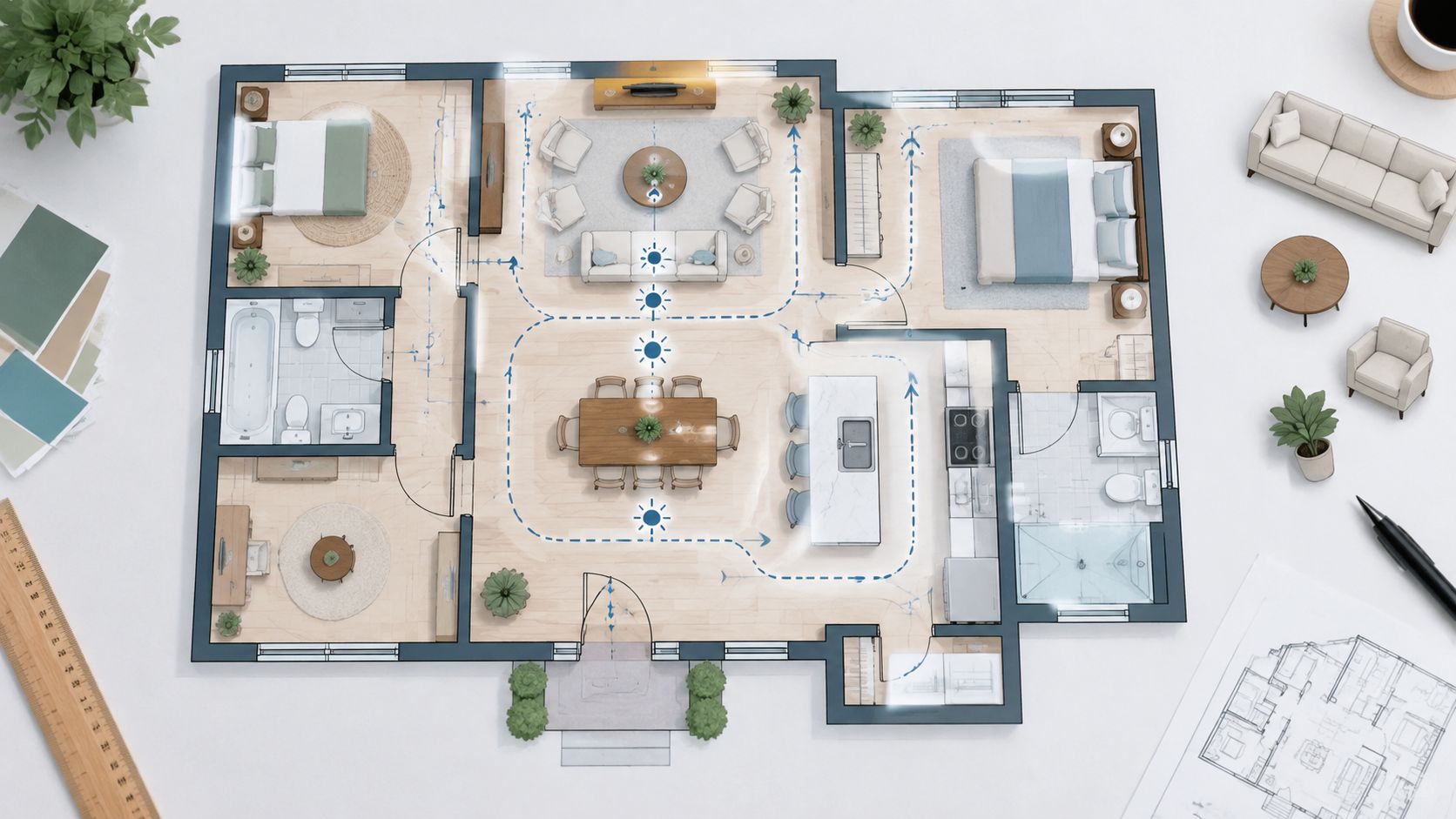
A consultation should give you purchase confidence, not just attractive ideas. The value comes from connecting room use, solid hardwood quality, custom-order decisions, and showroom testing into one end-to-end workflow. Each decision should support the next, from the room's circulation to the final item placed on order.
1. Space planning that respects movement
A scaled plan exposes problems a showroom conversation can miss. If a living room sectional faces the television but tightens the entrance, the designer can change its angle, revise the configuration, or select a smaller footprint before delivery.
The plan also clarifies focal points and usable pathways. That matters in Columbus homes where one room may handle conversation, entertainment, reading, and access to adjacent spaces. You should leave knowing how the furniture will function, not only how it looks in isolation.
2. Fabric coordination with a purpose
Upholstery should respond to daily use, natural light, pets, children, and existing materials. A substantial sofa may call for performance fabric that balances durability with nearby drapery, rug texture, and hardwood flooring.
Top-grain leather creates a different tactile and visual direction. Comparing leather and performance fabric in person gives you a more reliable basis for an order than judging color on a screen.
3. Hardwood finishes that belong together
A new dining table should relate to the floor, trim, and furniture already in the room. Solid oak, maple, cherry, and walnut each bring distinct grain character and respond differently to stain and natural light.
Place finish samples beside room photographs, then decide whether the project needs contrast, continuity, or a deliberate connection between existing pieces and new furniture. That decision protects the value of a custom order.
4. Visualization before commitment
Mood boards organize color, texture, and silhouette. Three-dimensional previews add practical judgment by showing how a sofa, table, bed, or sectional occupies the available volume.
Parametric modeling also makes revisions more efficient because changes can carry through the live model, reducing repeated explanations. Review the earlier 3D visualization guidance for the role of presentation quality in evaluating a proposed design.
5. Purchase confidence
The strongest result is alignment. Room dimensions, materials, configuration, solid hardwood choices, and budget should point toward the same purchase decision.
Practical rule: A consultation earns its keep when you can explain what you are ordering, why it fits the room, how the materials support daily use, and what decision comes next.
How the Appointment Works From Start to Finish
A productive appointment follows a clear sequence. Each stage reduces a different purchase risk, from daily-use requirements to final custom specifications.
1. The studio welcome
At the Easton studio, the homeowner enters a focused design area with fabric books, solid hardwood samples, leather options, and finish references. The team uses the Design Quiz responses to prepare relevant choices instead of presenting an unfocused collection.
2. The needs analysis
The designer asks how the room operates. Who uses the sofa? Does the dining table need extension capability? Which pieces remain? Where do people walk, read, gather, or place everyday items?
Those answers establish the brief. They keep attractive furniture from becoming an impractical purchase.
3. Layout and sit-testing
Room measurements become a digital or sketched plan. The homeowner then tests scale and comfort on the showroom floor, comparing sectional, reclining, swivel, rocker, and glider options.
Test movement, too. Power reclining should operate smoothly. Swivel chairs and rockers should support the posture, traffic pattern, and daily habits the room requires.
4. Fabric and finish coordination
The designer places upholstery beside the homeowner's lighting, rug, wall color, and existing hardwood. Side-by-side samples clarify the difference between a muted performance fabric and richer top-grain leather, as well as between solid maple and solid cherry.
The goal is coordination that still looks intentional outside the showroom.
5. The visual preview
A three-dimensional rendering or augmented visualization shows how the selected furniture, materials, and proportions work together. A modern 3D furniture configurator can preview pieces in a room and show material changes, including wood, fabric, and leather, before the final model is produced. The 3D furniture configurator overview explains this type of visualization.
6. The written close
End the appointment with a written recap, recommended order list, and a defined custom-order path. Confirm dimensions, configuration, materials, finish, and any unresolved decisions before approving the order.
Smith Brothers of Berne is made in Indiana, Mavin is Amish-made in Ohio, and Canadel is handcrafted in Quebec, Canada. Those origins give the homeowner useful context for evaluating North American craftsmanship and production timing. A strong consultation leaves you knowing exactly what you are buying, why it fits, and what happens next.
How to Prepare Before You Arrive
Preparation doesn't require professional drafting. It requires useful information. A homeowner who arrives with dimensions, photographs, and priorities gives the designer something concrete to solve.
The preparation checklist
- Measure the room: Record wall-to-wall dimensions, ceiling height, doorway widths, and the route from the entry to the intended furniture location.
- Photograph the existing space: Include floors, walls, windows, lighting, outlets, and any furniture that must remain.
- Save inspiration images: Two or three references can communicate preferred silhouettes, color temperature, upholstery, and formality more clearly than abstract style labels.
- Set a budget range: A range gives the designer room to balance configuration, fabric or leather grade, hardwood species, and custom features without hiding the project's financial limits.
- Choose a flexible timeline: The project may involve an immediate stock purchase or a custom order with manufacturer-specific production timing.
- List retained pieces: Note dimensions, finishes, and condition for every item that needs to coordinate with the new furniture.
- Describe daily use: Explain what happens in the room in the morning, afternoon, and evening. Traffic patterns often reveal more than a style board.
- Complete the Design Quiz: The online quiz helps the studio prepare relevant fabrics, finishes, and silhouettes before the appointment.
The homeowner should also bring questions about cushion firmness, motion features, leather care, finish maintenance, and delivery access. For a more detailed starting point, Vinson provides interior design initial consultation questions.
A defined budget and clear measurements protect the homeowner from paying for advice that cannot become a usable plan. The consultation becomes more efficient when the designer can revisit the original brief during ordering and procurement.
Why Hardwood and Customization Change the Conversation
Color and shape only start the decision. Material integrity determines how the furniture behaves over time, how it can be maintained, and whether it remains worth repairing or refinishing.
Vinson's hardwood standard centers on solid cherry, oak, maple, and walnut. Solid wood can often be repaired, refinished, and reused, while engineered wood products are made from wood elements, veneers, or fibers bonded with adhesives, according to this U.S. Forest Service publication on wood products.
Solid Hardwood vs Engineered Wood at a Glance
| Quality Factor | Solid Hardwood | Engineered Wood |
|---|---|---|
| Material character | A continuous hardwood material with visible species-specific grain | Wood elements, veneers, or fibers bonded into a manufactured product |
| Maintenance | Can often be repaired and refinished | Refinishing potential varies by product and surface layer |
| Long-term ownership | Supports repair, reuse, and continued service | More vulnerable to moisture and edge damage depending on construction |
| Vinson standard | Solid cherry, oak, maple, and walnut only | Not sold or promoted by Vinson |
The distinction is practical, not decorative. Hardwood furniture can be evaluated through touch, grain, joinery, finish depth, and the way the frame responds during a sit-test. Upholstery decisions receive the same scrutiny, including top-grain and performance leathers, cushion construction, and motion hardware.
Custom order as a design decision
The Custom Order Program extends beyond choosing a color. Smith Brothers, Mavin, and Canadel programs can support decisions around fabrics, finishes, dimensions, cushion fills, nailhead patterns, arm profiles, and configuration. Three-dimensional visualizers help the homeowner preview furniture and room fit before an order is built or released.
That flexibility makes the consultation especially important. The designer can coordinate a Smith Brothers leather sectional with power motion, a Mavin bedroom group in solid maple or cherry, or a Canadel dining collection in a finish that relates to the room's existing palette. More background on species and longevity appears in Vinson's guide to choosing the right hardwood for longevity and style.
Pricing, Guarantees, and White-Glove Delivery
A clear specification turns furniture pricing into a usable purchase decision. Size, configuration, fabric or leather grade, hardwood species, finish, cushion choices, motion features, and custom details all shape the final figure.
The complimentary in-store consultation defines those variables before commitment. At-home consultations are available for a fee that can be credited toward a purchase. For immediate options, the Clearance Gallery includes floor samples, overstocks, and seasonal closeouts, with savings of up to 70% while inventory remains.
Consultation Value Stack at Vinson's Design Studio
| Layer | What It Covers | Homeowner Benefit |
|---|---|---|
| Design consultation | Layout, materials, finishes, visualization, and order priorities | Fewer disconnected purchases |
| Custom Order Program | Fabrics, finishes, configurations, and selected construction details | A more precise fit for the room and lifestyle |
| Low Price Guarantee | A 110% refund of the difference when the stated qualifying conditions are met | Added confidence in the purchase value |
| Clearance Gallery | Floor samples, overstocks, and seasonal closeouts | Access to clearance savings while inventory is available |
| Synchrony HOME financing | Financing options subject to account terms and qualification | Ability to stage purchases by room |
| White-Glove Delivery | In-home placement, assembly, and packaging removal | A more controlled handoff with less homeowner effort |
The 110% Low Price Guarantee belongs in the consultation because design quality still has to fit the budget. Review the recommendation against both the room plan and the complete quote before approving an order.
White-Glove Delivery completes the purchase workflow. The Vinson team handles professional in-room placement, assembly, requested positioning, and packaging removal. Confirm access conditions, floor protection, wall clearance, and the placement plan before delivery day. These details protect the furniture and prevent avoidable delays at the handoff.
Your Next Steps After the Consultation
A productive consultation should leave you with decisions, not another list of open questions. Use the Easton studio visit as a purchase-confidence workflow.
- Book the consultation: Reserve a 60 to 90 minute appointment by phone or online.
- Complete the Design Quiz: Share preferences before arrival so the consultant can prepare suitable fabrics, finishes, and furniture profiles.
- Bring the project file: Include room measurements, photographs, inspiration images, retained-piece dimensions, swatches, and budget notes.
- Return for the sit-test: Test frame support, cushion firmness, recline, swivel, rocker movement, and glider comfort in person.
- Finalize custom specifications: Confirm fabric or leather, hardwood species, stain, nail trim, arm profile, cushion fill, and configuration for Smith Brothers, Mavin, or Canadel pieces.
- Approve the visual and quote: Review the three-dimensional room render and itemized pricing before production begins.
- Schedule delivery: Confirm access details and White-Glove Delivery after approving the order.
Phone or email follow-up gives you a final checkpoint before production. Use it to resolve any specification, measurement, or access question that could be difficult to change later.
For homeowners evaluating solid wood furniture Ohio, Amish-made dining sets, Custom leather sectionals Columbus, Smith Brothers furniture Easton, or Mavin bedroom furniture, the showroom should function as a working design resource. A screen shows proportion. The sit-test reveals cushion support, leather feel, motion, finish depth, and the confidence of a well-built solid hardwood frame.
Vinson Fine Furniture offers complimentary design consultations, an In-Store Design Studio, custom ordering through Smith Brothers, Mavin, and Canadel, solid hardwood furniture, and White-Glove Delivery for living room, dining room, and bedroom projects. Visit the free interior design consultation page to bring your measurements, complete the Design Quiz, and establish a plan based on fit, quality, and long-term value.