
Best Wood Oil for Furniture: The Expert Comparison


Pure tung oil is the strongest all-around choice for heirloom durability, while boiled linseed oil wins on speed and ease of use. Pure tung oil typically becomes touch-dry in 24 to 48 hours per coat, whereas boiled linseed oil may be touch-dry in about 6 to 12 hours or 8 to 12 hours, depending on the formulation and conditions.
A homeowner refinishing a solid cherry table in Columbus may want a warm, hand-rubbed surface that highlights the grain. A family using that table every day may need something more demanding, but better suited to spills, damp glasses, and repeated wiping. That tension explains why the best wood oil for furniture isn't one universal product. The right choice depends on whether the priority is restoration character, application speed, water resistance, or simple long-term care.
For solid hardwood furniture, the decision deserves care. Pieces made from solid cherry, oak, maple, or walnut can often be sanded, repaired, and refinished multiple times over their lives, and solid hardwood furniture is commonly described as lasting 50 to 100 years, compared with roughly 10 to 20 years for mass-produced furniture, according to this discussion of solid hardwood construction. The finish should support that investment, not hide the wood or create unnecessary maintenance.
Choosing Between Penetrating Oils and Finishing Oils
A homeowner brings home an older solid oak dining table with a dry, tired surface. The instinct is understandable: wipe on an oil, watch the grain darken, and expect the furniture to look renewed. But two products labeled as “wood oil” can behave very differently once they meet the timber.
Penetrating oils move into the wood's open structure. They enrich the color and leave a tactile surface that still feels like wood. Finishing oils cure more substantially, creating a protective layer closer to a shield than a conditioner. The distinction matters because a finish that looks beautiful during application may not provide the moisture resistance needed for a busy dining room.
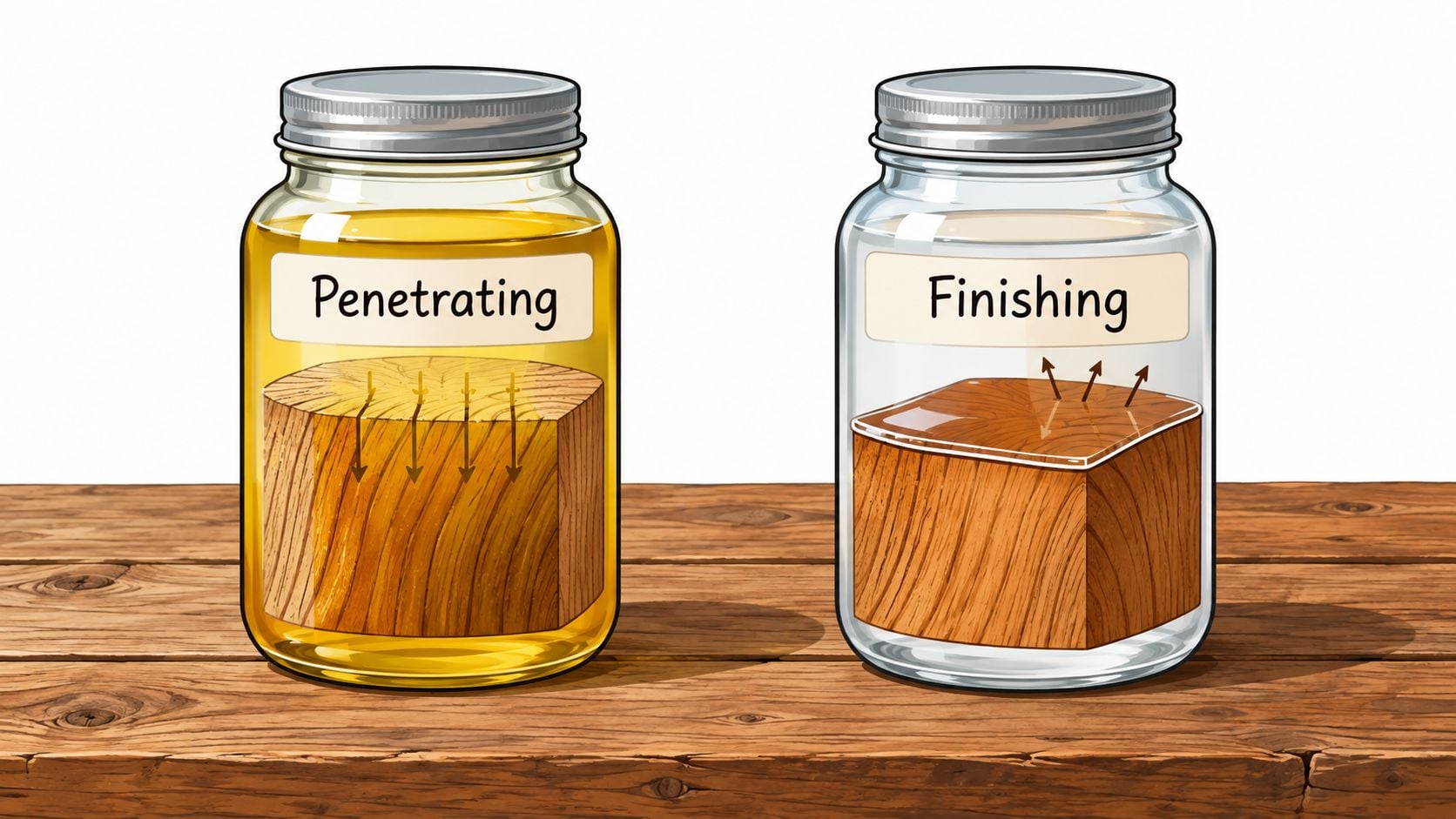
How solid hardwood species respond
Oak has a prominent, open grain that accepts penetrating products readily. A careful application can deepen the rays and pores without making the surface look artificial. Maple is denser and more uniform, so it may absorb less evenly and show lap marks if excess oil remains on top. Cherry often gains a richer appearance as it ages, while walnut already carries substantial visual depth and usually benefits from a restrained finish that doesn't muddy its figure.
The goal isn't to “feed” wood indefinitely. Wood is no longer living once it has become furniture, and oil doesn't replace structural care. Instead, the product interacts with the surface, either remaining primarily within the pores or curing into a more stable protective network.
A solid hardwood dining set from Vinson's natural wood finish guide illustrates why the finish needs to match the furniture's intended character. A low-sheen oil may suit a restored bedroom dresser, while a harder curing finish makes more sense for a tabletop that sees regular meals and cleanup.
Why the wrong category causes trouble
A surface-heavy product can look uneven when applied over wood that was prepared for a penetrating treatment. Too much material may remain tacky, attract dust, or obscure the grain. The opposite problem occurs when a light conditioning oil is used where the owner expects a durable barrier. It may improve color without offering enough resistance to standing moisture or repeated abrasion.
Practical rule: Choose the finish according to the furniture's work, not just the color it produces on the first day.
That principle helps explain the appeal of solid hardwood construction at a Columbus or Easton Town Center showroom. A bench-made oak dining table, a solid maple bedroom case, or a walnut occasional piece deserves a finish that preserves repairability and touch while respecting the species beneath it.
The Main Contenders Tung Oil Versus Linseed Oil
Tung oil and boiled linseed oil are the classic benchmark oils for furniture. Historically, drying oils, especially linseed and tung oil, were established in ancient China, while tung oil later spread into Western furniture making around 1900. Linseed oil became especially important in 18th-century furniture work because flax was widely grown for cloth, making the oil accessible and inexpensive. At that time, oil, wax, and varnish formed the main finish categories available to cabinetmakers, as documented in this history of wood finishes.
Their differences become clear during curing. Boiled linseed oil dries sooner and brings a noticeable amber warmth, but pure tung oil cures more slowly into a tougher, more flexible, and more water-resistant film. Traditional raw linseed oil is slower still, sometimes taking a week per coat to cure, and historical finishing research distinguishes it from oils that properly dry into a stable finish, as detailed in this technical review of furniture oils.
What the two oils do differently
Pure tung oil is usually selected when the surface must tolerate moisture and long-term household use. Its cured structure is denser and more hydrophobic, so a tabletop can better resist the dulling and beading failure that follow repeated spills. The tradeoff is patience. Each coat needs time to dry, and full curing can take from 7 to 30 days, depending on film build, temperature, and humidity, according to this comparison of food-safe wood oils.
Boiled linseed oil suits a different project. It applies easily, dries faster, and gives cherry, oak, and maple a traditional amber cast. That color can be attractive on a decorative piece or older interior furniture, but it may become darker and yellower over time. Its water resistance is moderate at best, which makes it less appropriate for a high-use dining surface where moisture and stains matter.
The word “boiled” also deserves attention. It doesn't mean the oil was heated in a kitchen pot. Commercial boiled linseed oil is formulated to dry more readily than raw linseed oil, and the performance varies by formulation. A label should be read carefully before use, particularly when the piece will contact food or when odor and ventilation are concerns.
A practical reading of color and grain
On light solid maple, boiled linseed oil can create a visibly warmer appearance. On cherry, it may reinforce the wood's natural reddish-brown character, while on walnut it can deepen the surface but may reduce the crisp separation between dark grain and lighter areas. Tung oil generally offers a clearer, less aggressively ambered look, although the final appearance still depends on the wood, sanding, number of coats, and application technique.
For homeowners considering linseed oil for a restoration, Vinson's linseed oil paint resource provides useful context about traditional application. The central decision remains straightforward: boiled linseed oil favors speed and warmth, while pure tung oil favors moisture performance and a more durable cured surface.
Performance Factors Durability and Water Resistance
A dining table near the kitchen faces condensation, spills, and frequent wiping. A living room table mainly handles hands, drinks, and seasonal humidity. In Central Ohio, those changing indoor conditions make surface protection a practical part of choosing an oil for solid hardwood.
Pure tung oil is the stronger choice when moisture resistance leads the decision. After curing, it forms a denser, water-repelling surface that helps droplets bead instead of quickly dulling or entering the wood. Boiled linseed oil suits restoration work where a warmer traditional appearance and quicker handling matter, but it provides less moisture protection. The best wood oil for furniture depends on whether the priority is preserving appearance or handling repeated exposure.

The tradeoff at a glance
| Finish | Typical touch-dry time | Full cure | Water resistance | Best fit |
|---|---|---|---|---|
| Pure tung oil | 24 to 48 hours per coat | 7 to 30 days | Strong | Tabletops, kitchen-adjacent furniture, heirloom surfaces |
| Boiled linseed oil | 6 to 12 hours, or 8 to 24 hours depending on formulation | About 3 to 7 days up to 2 to 4 weeks | Moderate at best | Decorative, low-moisture interior pieces |
Manufacturer technical data sheets commonly list touch-dry ranges of 24 to 48 hours for pure tung oil and 6 to 12 hours for boiled linseed oil under standard conditions. Temperature, humidity, coat thickness, and ventilation can change those results. A surface that feels dry is not necessarily ready for stacked dishes, heavy use, or a full load of household activity.
Why resistance is not invulnerability
No penetrating oil makes furniture indestructible. Promptly wipe spills, use coasters, and clean with products appropriate for the finish. Standing water can still reach an edge, joint, end grain, or damaged spot, even when the broad surface sheds droplets well.
Food contact requires a separate check. For a table or kitchen surface used with food, choose an oil whose label and technical documentation clearly support that application. Vinson's food-safe wood finish guide provides useful guidance, while the product instructions remain the final authority.
Boiled linseed oil's ambering can suit older oak or cherry when the goal is a historically warm appearance. On premium maple or walnut, the same color shift may disappoint an owner who wants the original tone preserved. Judge appearance and performance together. A restoration finish may win on character, while a high-use surface may justify giving greater weight to moisture resistance and cured protection.
How to Apply Wood Oil to Solid Hardwood Furniture
Application determines whether a good oil becomes a smooth, hand-rubbed finish or a sticky, uneven film. The same care applies to a newly made solid maple table and an older walnut dresser, although an existing coating may require removal before oil can reach the wood.
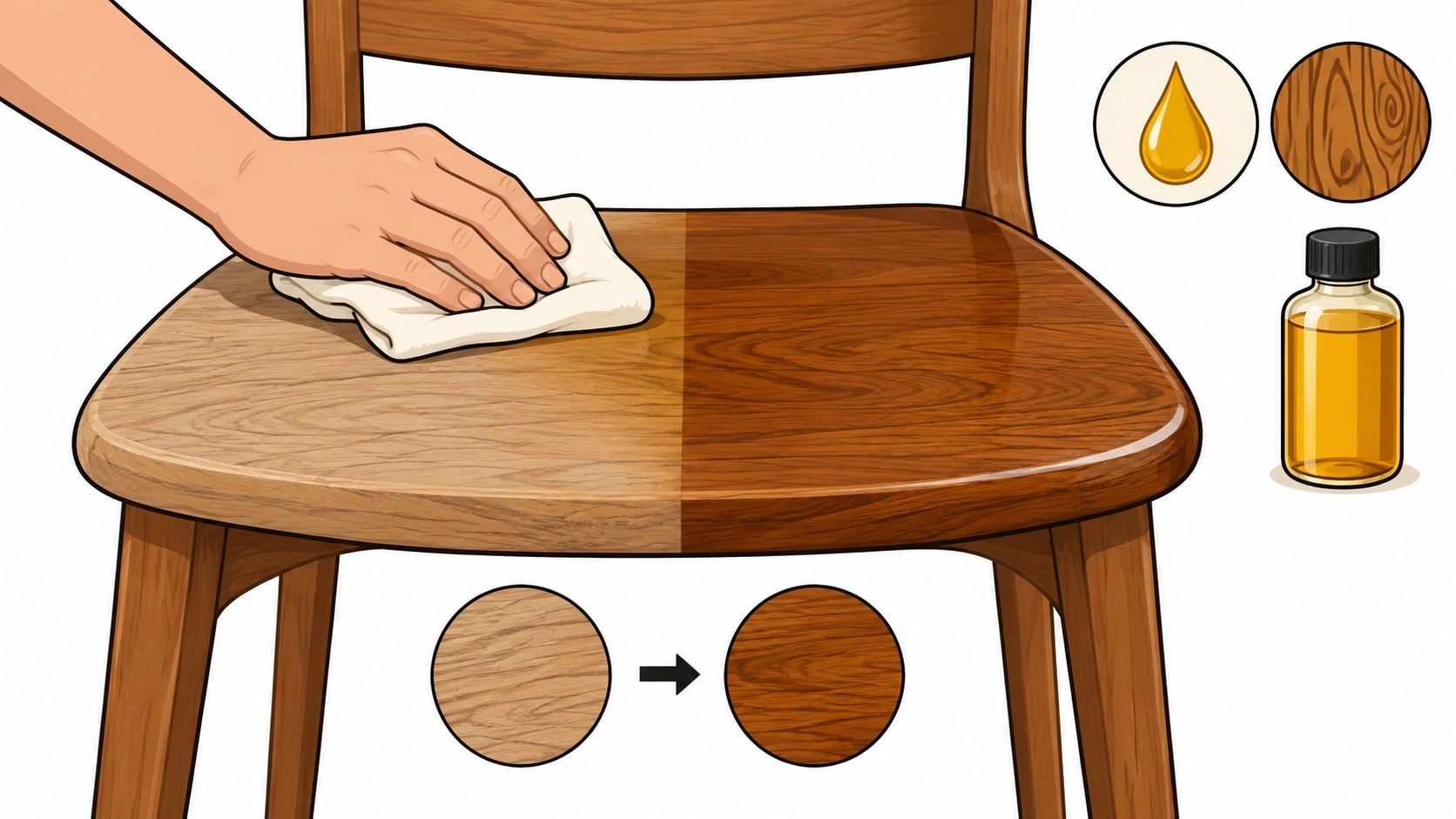
Prepare the surface first
Identify the existing finish. Oil needs contact with bare wood or a compatible oiled surface. A sealed, waxed, or varnished piece may need careful stripping or sanding before a new oil can bond or absorb properly.
Clean without saturating. Remove dust, grease, and residue. Use a barely damp cloth when appropriate, then allow the timber to dry completely. Guidance on how to clean wood furniture helps prevent the common mistake of applying oil over embedded grime.
Sand with control. Sand along the grain and stop when the surface feels consistently smooth. Excessively fine sanding can close dense grain and reduce absorption, particularly on maple or walnut.
Test an unseen area. Oil changes color and sheen. A hidden spot can reveal whether the result will be too amber, too dark, or uneven before the whole surface is treated.
Apply thinly and remove excess
Spread a modest amount with a clean cloth or suitable brush, working with the grain. The surface should look evenly damp, not flooded. Allow the product to penetrate for the time stated on its label, then wipe away every trace of excess before it begins to set.
A thin coat is safer than a heavy one. Thick applications can remain sticky, wrinkle, or cure unevenly because the outer layer hardens before the material beneath it stabilizes. Buffing with a fresh cloth helps level the sheen and leaves the grain clear rather than greasy.
For older furniture with a yellowed coating, the preparation challenge comes first. A resource on how to tackle yellowed varnish on wood can help a homeowner understand why the old layer may need attention before an oil treatment begins.
Allow the finish to cure
Boiled linseed oil may become touch-dry within the same day, but it still needs adequate curing before demanding use. Pure tung oil takes longer, and impatience can create fingerprints, dull spots, or trapped residue. Keep the piece ventilated, protected from dust, and away from heavy handling until the finish has hardened according to the product instructions.
Oil-soaked cloths require careful disposal because they can self-ignite when left bunched together. Lay them flat to dry safely, wash them promptly, or follow the product's safety instructions for storage and disposal.
Selecting the Right Finish for Your Specific Needs
The best wood oil for furniture depends on four questions: what wood is present, how the piece is used, what appearance the owner wants, and how much maintenance feels reasonable. A decorative solid walnut bedroom piece has a different job from a solid oak dining table. Treating them identically creates avoidable compromises.
Match the oil to the furniture's work
For interior heirloom surfaces, pure tung oil is the strongest technical choice when moisture resistance matters. It suits stripped or bare solid cherry, oak, maple, or walnut furniture where the owner accepts slower curing in exchange for a tougher cured finish.
For decorative, low-moisture pieces, boiled linseed oil can be a practical choice. Its faster handling and ambering work well when the desired result is traditional warmth rather than maximum resistance to spills.
For outdoor teak furniture, teak oil is commonly favored for a traditional refresh. Exterior exposure demands a product designed for weather, and maintenance intervals can range from 6 to 18 months depending on exposure, according to this furniture oil use-case guide.
When oil isn't the right category
Oil emphasizes touchability and natural grain, but it isn't automatically the strongest protection. The U.S. Forest Service's long-running finishing research identifies high-quality opaque film finishes and paint as providing the best overall protection, a point summarized in the same furniture finish guidance.
That matters when a family needs maximum resistance to moisture, stains, and wear. A solid hardwood table with a suitable film finish may better match a demanding household than an oil finish that requires more frequent refreshing. The decision isn't about choosing the most natural-sounding label. It's about selecting a surface system that fits the furniture's workload.
A beautiful finish is successful only when its maintenance demands fit the household using the piece.
Already-sealed furniture creates another fork in the road. An oil generally won't solve problems caused by a failing varnish or an incompatible coating, and adding a new product without testing can leave the surface cloudy or sticky. For a major restoration, homeowners may find professional surface staining worth it when color matching, stripping, or broad repairs exceed the scope of a weekend project.
Choose the furniture before choosing the finish
At an Easton showroom, the sit-test and touch-test reveal details that a product label cannot. A homeowner comparing a Mavin bedroom piece, a Smith Brothers living room frame, or a Canadel dining set can evaluate grain, sheen, edge feel, and the practical relationship between finish and daily use.
Vinson's Custom Order Program supports that decision for brands such as Smith Brothers of Berne, Mavin, and Canadel. Shoppers can explore fabrics, finishes, dimensions, and colors with 3D visualizers that display material textures and photorealistic finish options in real time, as described by furniture configurator guidance. Smith Brothers is made in Indiana, Mavin is Amish-made in Ohio, and Canadel is handcrafted in Quebec, Canada, giving Central Ohio homeowners North American options across living, dining, and bedroom furniture.
Maintaining Heirloom Quality Through Proper Care
The finish is only the beginning of ownership. Dust, grit, and spilled liquids gradually test the surface, while neglect makes every later refresh more involved. Regular dusting with a soft cloth and prompt spill cleanup protect the oil layer before moisture or residue has time to work into vulnerable areas.
A worn finish usually announces itself through a dry-looking patch, roughness, reduced sheen, or liquid that no longer beads as it once did. Localized refreshing may be enough when the underlying wood remains sound, but deep stains, damaged coating, or uneven color can require a broader refinish.
Solid hardwood gives that work a practical foundation. Quality joinery, including mortise-and-tenon construction, creates broad wood-to-wood contact that helps resist twisting, wobble, and racking. This joinery summary reports that properly fitted mortise-and-tenon joints can support over 1,000 pounds, while controlled testing cited there exceeded 26 kN before elastic failure.
For homeowners furnishing a long-term Columbus residence, finish selection belongs alongside upholstery, motion, and room planning. The Vinson In-Store Design Studio provides Complimentary Design Consultations for finish selection and space planning, including premium top-grain and performance leather, motorized power-motion sectionals, reclining seating, swivel chairs, rockers, and gliders. The broader wood furniture care guide can help establish a routine that respects the piece's construction.
Visit Vinson Fine Furniture at Easton Town Center to compare solid hardwood finishes, sit-test living and dining furniture, and discuss the right care approach with the In-Store Design Studio. The Custom Order Program, 110% Low Price Guarantee, Clearance Gallery savings of up to 70%, and White-Glove Delivery make it practical to plan an heirloom-quality room with confidence.

