What To Look For When Buying A Sofa: Expert Guide 2026

You’re probably standing in one of two places right now. Either you’re staring at a sofa online, toggling between fabric swatches and dimensions, wondering if it will feel as good as it looks. Or you’ve already sat on a few and discovered that “comfortable” means wildly different things from one piece to the next.
That uncertainty is normal. A sofa asks a lot of you. It takes a large share of the room, it sets the tone for how the space feels, and once it arrives, it tends to stay for years. That’s why knowing what to look for when buying a sofa isn’t really about chasing a trend. It’s about learning how to judge comfort, structure, scale, and finish the way a seasoned buyer would.
The most satisfied homeowners usually don’t shop for a sofa as a quick purchase. They shop for it the way they would choose hardwood flooring, a dining table, or a mattress. They think about daily use, not just first impressions. They think about the seat at the end of a long workday, the upholstery under a child’s hand, the way the arm height feels when reading, and whether the frame will still feel steady years from now.
The Sofa Is More Than Furniture It Is an Investment
It is 9:30 on a Sunday night. The dishes are done, the lights are low, and the whole household drifts to one place without thinking about it. Someone curls into the corner with a book. Someone else stretches out for a film. A guest settles in and stays longer than planned because the room feels good. The sofa holds all of it.
That is why a sofa deserves to be judged differently from an occasional chair or a decorative accent. It carries the visual weight of the room, but it also carries bodies, habits, routines, and years of use. In a well-designed home, the sofa is less like an accessory and more like the floor beneath your feet or the mattress you rely on each night. You feel its quality repeatedly, not just on delivery day.
Buyers often begin with the outline. They notice the graceful arm, the neatly finished bench seat, the handsome fabric, the color that works with the rug. Those details matter. Yet the wiser question is what that same piece will feel like after hundreds of evenings, family gatherings, naps, and quiet mornings. A sofa that photographs beautifully but loses its shape early is expensive in the wrong way.
A strong buying mindset starts with time horizon. Instead of asking, "Do I love this today?" ask, "Will I respect this choice years from now?" That shift changes everything. You begin to look for steadiness, comfort, recoverability, and materials that age with dignity.
Good furniture rewards informed attention.
Experienced buyers also know that technical specifications mean very little if they are not tied to lived experience. Kiln-dried hardwood, eight-way hand-tied springs, high-resiliency foam, performance fabric. These phrases only matter if you know what they become in daily life. A better frame feels quiet and planted after years of sitting down hard day after day. Better suspension keeps the seat from feeling tired and collapsed. Better cushion construction determines whether the sofa still invites you in, rather than asking you to tolerate it.
If you want a useful benchmark for longevity, the guide on how long furniture should last helps connect construction choices to the years you can reasonably expect from a piece.
What investment value actually looks like
Investment value is not the same as buying the most expensive sofa on the floor. It means paying for the qualities that continue to serve you after the novelty fades.
Look for value in four places:
- Comfort that suits real life: The seat should support how you sit. Upright for conversation, tucked in with your legs up, or stretched out for relaxation.
- Construction you can feel: When you sit down or shift position, the sofa should feel composed, stable, and quiet.
- Style with staying power: Strong proportions and restrained detailing usually outlast trend-driven shapes that date a room quickly.
- Materials that justify the price: Fabric, cushion fill, and frame quality should all make sense together, rather than relying on a beautiful exterior to distract from weaker construction.
One more point deserves emphasis. Online research is helpful, but a sofa is still a piece that should be experienced in person before you commit. Sit in it for longer than a quick perch. Rest your arm where it usually rests. Notice the seat depth, the pitch of the back, the resistance of the cushion, and how easily you rise from it. In a showroom, a design consultant can often spot mismatches between your room, your habits, and your first choice before they become costly regrets. That guidance is part of buying well.
The best sofa purchase rarely feels impulsive. It feels clear, considered, and calm.
Measure Twice Buy Once Sizing and Scaling Your Sofa
Most sofa regrets begin before anyone talks about wood, springs, or fabric. They begin with a tape measure that came out too late.
A sofa can be beautifully made and still be wrong for the room. It may fit the wall but block the walkway. It may clear the front door but not the stair turn. It may technically fit the living room but feel so bulky that the entire space tightens around it.
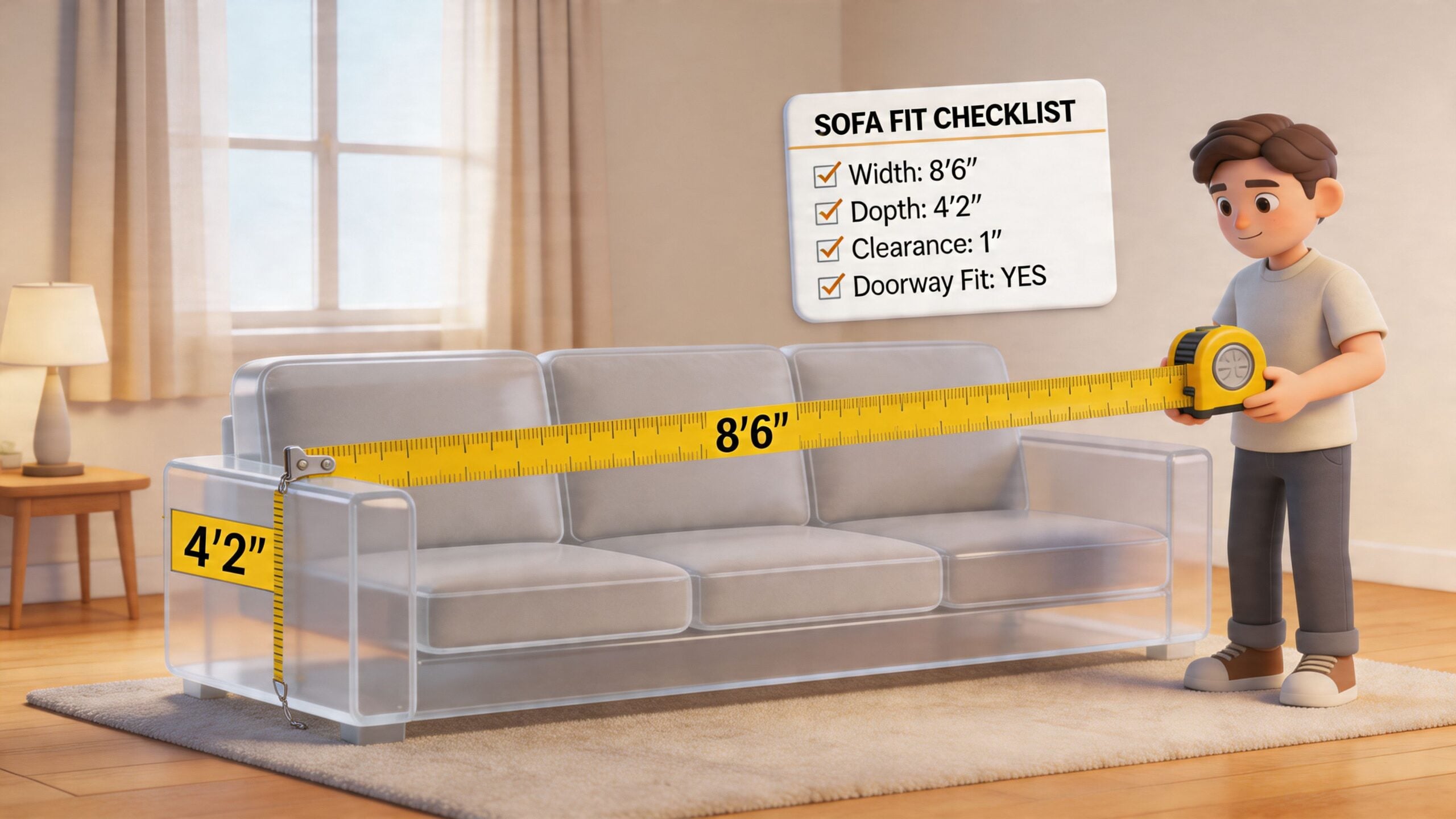
Measure the room and the route
Buyers often stop at overall width. That isn’t enough. You need to measure both the destination and the path.
Use this checklist before you fall in love with any sofa:
- Wall length: Measure the wall where the sofa will sit, then subtract breathing room for side tables, lamps, or visual space.
- Room depth: Check how much space remains in front of the sofa for circulation and coffee table clearance.
- Doorways and entry doors: Measure width and height, and note whether doors open fully.
- Hallways and stairwells: Watch for tight turns, low ceilings, and railing interference.
- Elevators or apartment entries: Confirm interior dimensions if you’re in a multi-story building.
The most common confusion is this: buyers think “fits in the room” and “can be delivered into the room” are the same question. They aren’t.
For a practical walkthrough, this furniture measuring guide helps you map both dimensions clearly before delivery day.
Scale matters as much as size
A sofa’s footprint is only part of the story. Its visual weight changes how the room feels.
A tight-back sofa on exposed legs often reads lighter than a deep, skirted sofa with broad arms, even when their measurements are similar. In a smaller room, that difference can decide whether the space feels calm or crowded.
Watch these proportion cues:
- Arm width: Wide arms consume useful seat space and add visual bulk.
- Back height: Higher backs can feel supportive, but they also read taller and heavier.
- Seat depth: Deep seats invite lounging but can dominate a compact room.
- Leg exposure: More visible floor beneath the sofa usually creates a lighter appearance.
Practical rule: If a sofa fits numerically but makes every other piece feel squeezed, it’s too large for the room.
The angled sofa mistake
Many people assume angling a sofa will solve a tight layout. Often it does the opposite.
An often-overlooked design issue is how angled placement can make nearby floor space harder to use. Standard sofa advice tends to focus on doorways and wall measurements, but it rarely addresses room flow. A guide discussing this problem notes that straight placement is better for 70% of small rooms under 150 sq ft, and that angling a sofa can make surrounding space less usable, per this discussion of layout planning and sofa placement.
That’s one reason design consultation matters. One option available to local shoppers is an in-store studio that uses digital visualizers to test layouts before ordering, which can help compare straight and angled placement without guesswork.
The Unseen Foundation Frame and Suspension Quality
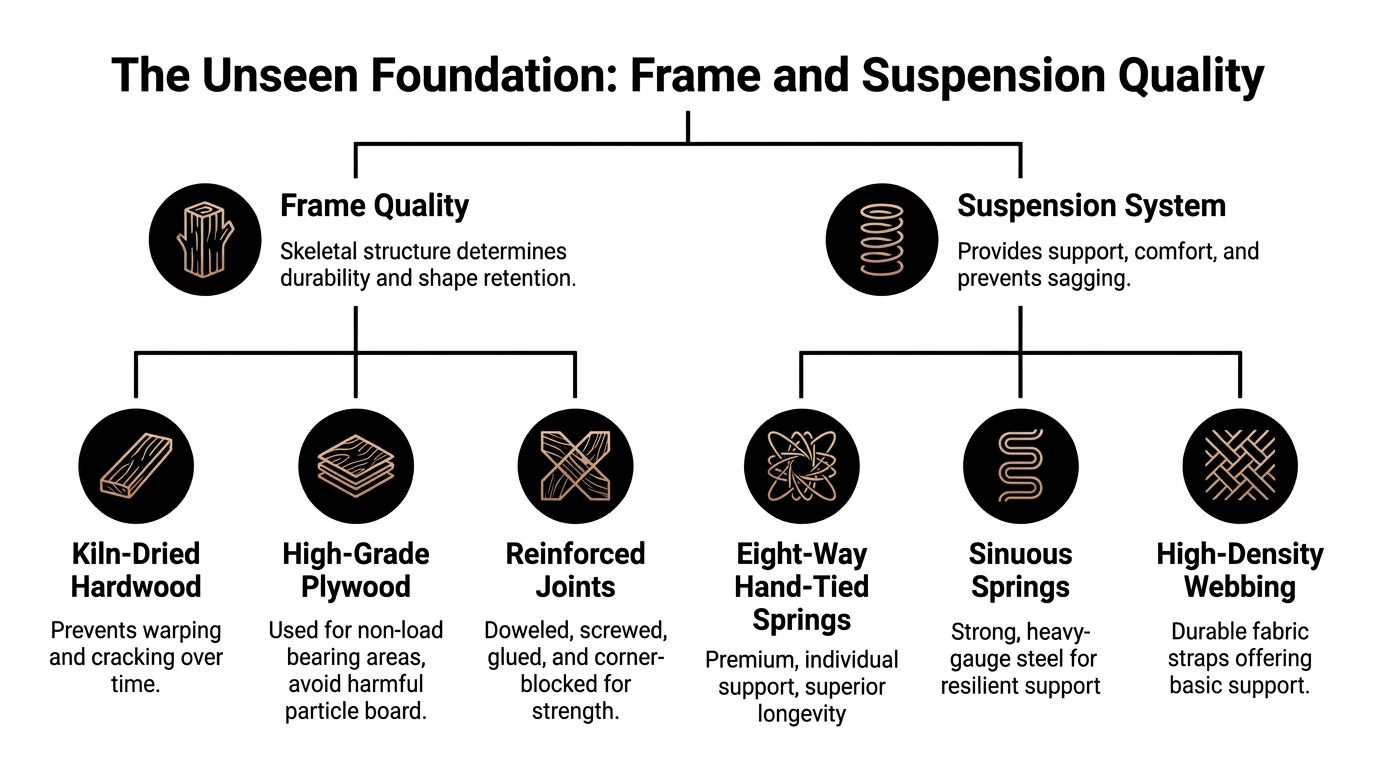
If upholstery is what you notice first, the frame is what you live with longest. It’s the hidden structure that decides whether the sofa stays quiet, level, and supportive or begins to wobble and sag years too soon.
An attractive sofa falls into two very different categories. One is built to hold shape under repeated daily use. The other is built to look convincing on the sales floor.
Why kiln-dried hardwood matters
When you evaluate frame quality, kiln-dried hardwood should move to the top of your checklist. Oak and maple are common examples. Kiln-drying removes moisture from the wood so it’s less likely to warp, shift, or loosen over time.
According to guidance on sofa construction, kiln-dried hardwood frames can endure 15 to 25 years of daily use, while non-kiln-dried alternatives may last 5 to 10 years. The same source recommends looking for reinforced dowels and corner blocks, and suggests a showroom test: lift one corner and see whether the opposite corner rises 4 to 6 inches off the floor. If it does, the frame is likely strong and balanced, as described in this frame construction overview.
That single comparison tells you a great deal. A frame isn’t just a technical specification. It’s the difference between a sofa that holds its shape through years of use and one that starts telegraphing wear much earlier.
Joinery tells you how the sofa was built to behave
The best frames rely on more than decent lumber. They depend on how the pieces are joined.
Look for signs of careful assembly:
- Corner blocks: These reinforce stress points and help the frame resist racking.
- Dowels and screws: These create stronger connections than staple-heavy construction.
- Stable panel materials: Better makers avoid obvious particleboard in critical structural areas.
If you’d like to understand why certain connections feel stronger over time, this short guide to various wood joints is useful background. It gives language to what many buyers sense instinctively when a piece feels solid.
Suspension affects both comfort and durability
Suspension is the support system beneath the cushions. Buyers often focus on the top cushion because that’s what they touch first, but suspension does a large share of the long-term work.
You’ll often hear two terms in better upholstery conversations:
- Eight-way hand-tied springs
- Sinuous springs
A well-made version of either can provide good support. What matters is that the system feels resilient, not hollow or brittle. When the suspension is weak, even decent cushions won’t save the seat from feeling tired.
If the frame is the skeleton, the suspension is the posture.
A quick showroom test
You don’t need to be a craftsperson to inspect a sofa intelligently. In person, try this sequence:
- Sit normally: Notice whether the base feels steady under you.
- Shift your weight: Listen for creaks or excessive movement.
- Press at the arms and back: They should feel firm, not flimsy.
- Try the corner-lift test: Ask a sales associate before doing it.
A quality sofa often reveals itself through composure. It doesn’t shudder when used. It feels settled.
The Science of Comfort Deciphering Cushion Fills
Comfort is where shoppers get tripped up most often because comfort is personal. One person wants a structured seat that helps them rise easily. Another wants a deep, relaxed perch that invites an evening of reading. Both can be right.
That’s why cushion construction deserves careful attention. A sofa can be handsome, correctly scaled, and well framed, yet still disappoint if the seat feel doesn’t match your habits.
The three common comfort directions
Most sofas fall into one of these broad comfort categories.
- Foam-forward cushions: These usually feel more structured and supportive. They keep a cleaner shape and often suit buyers who prefer a seat with definition.
- Down or feather blends: These feel softer and more relaxed. They can be inviting, but they usually require more maintenance to keep them looking even.
- Hybrid cushions: These combine a foam core with a softer wrap, aiming to balance support with a gentler, more luxurious hand.
The point of this comparison isn’t to crown a winner. It’s to match the cushion to the way you live.
What buyers often misunderstand
People often assume a softer seat is the more comfortable one. Not necessarily.
A very soft cushion can feel wonderful for a minute and exhausting over a long evening if it lacks support. On the other hand, a very firm cushion may feel unimpressive at first sit but become the better daily seat if it holds your posture comfortably.
Watch for these lived-in outcomes:
- Too soft: You sink quickly, the front edge collapses, and getting up takes effort.
- Too firm: The seat feels perched, not supportive, and never seems to relax.
- Well balanced: You settle in, but you’re still supported through the thighs and lower back.
The sit-test is not optional
Photos can’t tell you how a seat breaks under weight, how the back cushions respond, or whether the arm height suits the way you lounge. That’s why the in-person sit-test matters so much.
Try the sofa the way you’ll use it at home:
- Sit upright with your feet on the floor.
- Lean back as you would during conversation.
- Tuck one leg under if that’s your habit.
- Stretch along the cushions if you expect to nap there.
For extra guidance on seating details that influence everyday use, these sofa and sectional features are worth reviewing before you shop.
A sofa should support your real posture, not your showroom posture.
Match cushion feel to your household
If the room is more formal, you may prefer a cleaner, more structured seat. If it’s the family landing place at the end of each day, a softer hybrid comfort often feels more natural.
The key is honesty. Don’t choose a crisp, formal cushion if your household sprawls. Don’t choose a cloud-soft seat if you know you dislike constant fluffing. Comfort becomes satisfying when it aligns with behavior.
Your Sofa's Signature Choosing Upholstery and Fabrics
Upholstery is where emotion enters the room. It’s what your hand notices first. It shapes the color story, the light in the room, and the overall mood of the piece.
But this is also where buyers can become too appearance-driven. A beautiful fabric that doesn’t suit your household can become a source of low-grade frustration. A practical fabric in the wrong texture can leave the room feeling flat. The right choice balances touch, endurance, and style.

Style matters, but it isn’t enough
The sofa market is growing as buyers place more weight on home aesthetics, comfort, and sustainability. Key buying considerations include style, material, and durability, and buyers are investing more readily in quality and designer pieces. At the same time, higher pricing doesn’t automatically guarantee better quality, so construction still needs scrutiny, according to this sofa market report.
That’s the right way to think about upholstery. The cover should be beautiful, yes. It should also suit your room’s level of wear and the kind of maintenance you’ll keep up with.
Sofa upholstery comparison
| Material Type | Best For | Durability | Maintenance |
|---|---|---|---|
| Fabric weave | Family rooms, layered interiors, softer visual texture | Varies by weave and construction | Usually straightforward, but depends on fiber and finish |
| Performance fabric | Homes with frequent daily use, entertaining, pets, or children | Designed for resilience in active spaces | Generally easier to live with and clean |
| Velvet | Formal rooms, dramatic color, rich hand-feel | Can wear beautifully when well chosen | Needs thoughtful care and attention to pile |
| Top-grain leather | Classic interiors, patina lovers, buyers who want a refined natural surface | Strong for long-term use when maintained well | Wipeable, but benefits from routine conditioning |
| Full-grain leather | Buyers who want character and a more natural look | Excellent long-term potential | Requires care and acceptance of visible variation |
| Bonded leather | Budget-focused look of leather | Usually less enduring than better leather grades | Can be harder to age gracefully |
How to choose with clarity
If you have children, pets, or frequent guests, don’t choose only with your eyes. Choose with your calendar. Ask yourself what the sofa will face in a normal month.
A few useful pairings:
- For active households: Performance fabrics tend to be the easiest place to start.
- For a room with mood and depth: Velvet can be elegant and tactile.
- For traditional warmth: Top-grain or full-grain leather often gives a room richness that improves with time.
- For relaxed, airy interiors: Textured woven fabrics can soften the room beautifully.
Material education helps, but touch matters just as much. The hand of the fabric, the visual depth of the weave, and the way the color shifts in light are hard to judge online.
If you’re comparing durable textile options, this overview of a performance fabric sectional offers a practical starting point for understanding how that category behaves in everyday use.
From Style to Statement The Power of Customization
Most shoppers begin with a style name. They say they want something mid-century, classic, modern, or relaxed. That’s helpful, but it’s only a starting language.
A Chesterfield may be too formal in one room and striking in another. A sectional may be ideal for a family room but oversized for a narrower city living area. A slim track-arm sofa may feel architectural and refined, yet still need a deeper seat or softer cushion package to become livable.
Style categories are only the frame of the conversation
These common sofa types each carry a different personality:
- Chesterfield: Button-tufted, structured, and often more formal.
- Mid-century inspired: Cleaner lines, visible legs, lighter visual weight.
- Track-arm contemporary: Crisp, versatile, and adaptable to many rooms.
- Roll-arm traditional: Softer, familiar, and welcoming.
- Sectional: Built for lounge living, conversation, and flexible seating.
Still, no label can tell you if the seat depth is right, whether the arm height suits reading, or if the overall scale honors your room. That’s where customization becomes more than a luxury. It becomes a practical design tool.
What customization actually changes
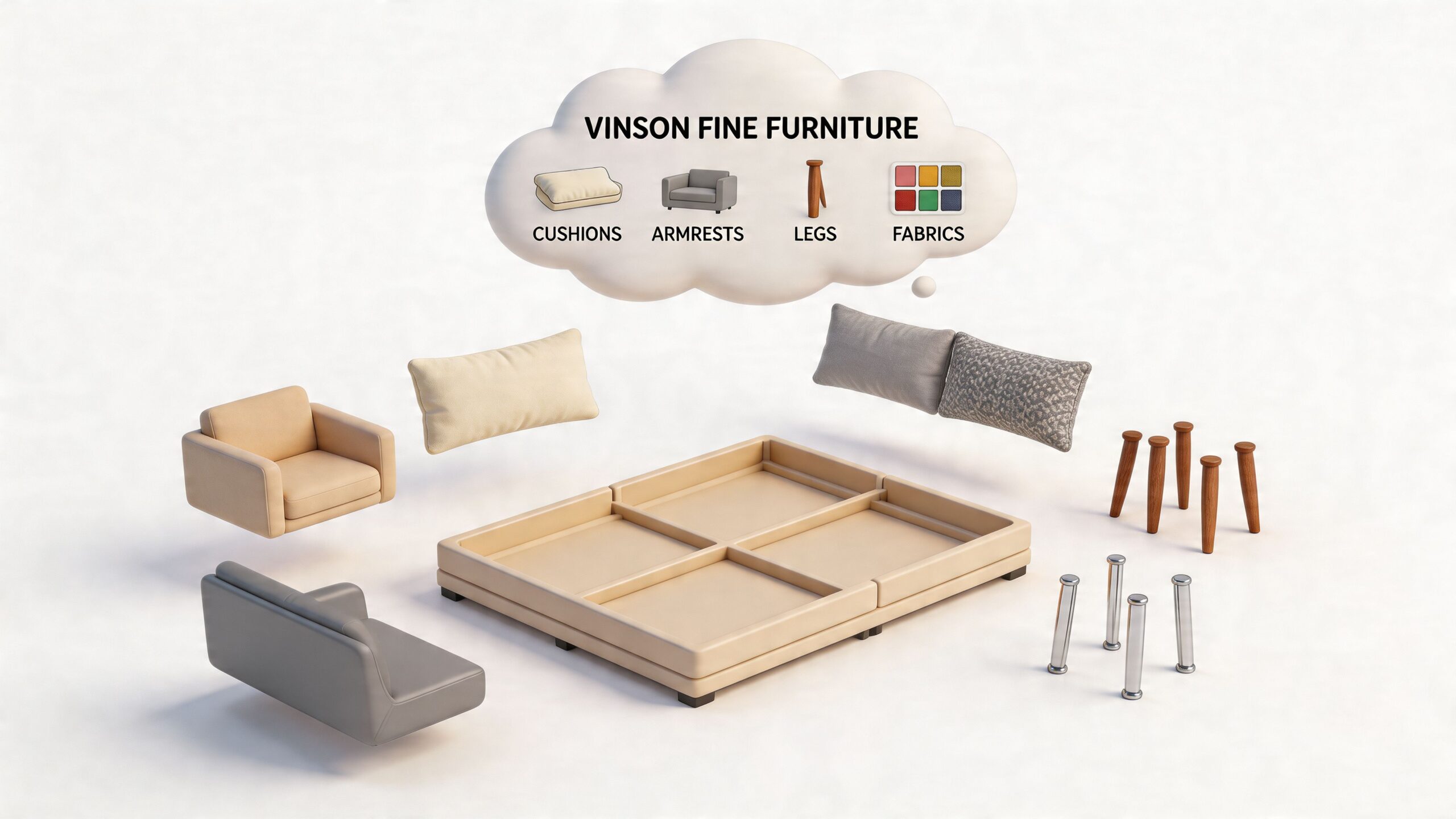
A thoughtful custom order can adjust much more than color. Depending on the maker, buyers may be able to select:
- Fabric or leather
- Wood finish
- Configuration
- Seat firmness
- Leg style
- Trim details
- Overall dimensions
Those choices matter because they let you solve competing needs. You might want the clean profile of a modern sofa with a warmer wood finish. Or the structured shape of a formal frame with a family-friendly performance fabric.
Why visualizing the piece matters
Many people struggle to imagine those choices together. A fabric swatch alone can look very different once stretched across a full frame. A dark leg may feel grounding on one silhouette and heavy on another.
That’s why digital visualization tools have become so useful in custom furniture planning. They help buyers see combinations before production, which removes much of the uncertainty from bespoke decisions.
The result is a sofa that doesn’t just match a catalog image. It reflects the architecture of the room, the habits of the household, and your own sense of proportion.
Investing Wisely Your Budget and the Promise of Value
A sofa purchase often feels simple until you live with the result for a few years. The seat that seemed comfortable for ten minutes can start to feel flat. The frame that looked polished on the sales floor can begin to creak. What you are really buying is not a photograph or a showroom first impression. You are buying how the piece will support your evenings, your guests, and your routine over time.
That is why budget deserves a calmer, more disciplined lens. A well-bought sofa should be judged the way you would judge any lasting household investment. Look at lifespan, daily performance, repair risk, and how long the piece will still feel right in the room. The lower price tag is not always the lower cost.
A bargain sofa often asks you to pay the difference later in comfort, shape retention, or replacement. A better-made sofa usually costs more upfront because better materials, stronger joinery, denser cushions, and cleaner tailoring cost more to produce. The important question is whether those upgrades change your lived experience in a meaningful way. In a good sofa, they do.
What different budget levels usually mean
Price ranges are useful only if you know what tends to change from one tier to the next.
- Lower price points: These pieces can work for short-term needs, first apartments, or low-use rooms, but they often show wear sooner in the seat deck, cushions, and arms.
- Mid-range pricing: This is often where many households begin to find the balance between daily comfort, respectable construction, and a look that still feels current several years later.
- Higher price points: Buyers are often paying for stronger frames, better suspension systems, more consistent tailoring, longer-lasting upholstery options, and greater customization.
Those categories are not guarantees. A high ticket does not excuse weak construction, and a modestly priced sofa can still be a smart choice in the right setting. Price should direct your questions, not end them.
A useful way to judge value is cost per year. If one sofa lasts five comfortable years and another lasts twelve while holding its shape, the math changes quickly. So does the feeling of the room. A worn-out sofa pulls down the entire space, even if every other piece around it is thoughtfully chosen.
Why the sit-test protects your budget
This is one of the costliest mistakes buyers make online. They compare dimensions, fabric names, and sale pricing, yet never test the seat with their own body. That leaves too much to chance.
An in-store sit-test gives you information no specification sheet can supply. You learn whether the pitch of the back supports your posture, whether the cushion pushes back or swallows you, and whether the seat depth suits how you lounge, read, or host. It is the furniture version of trying on a fitted jacket. Close measurements help, but fit decides whether it earns a place in your life.
Professional design guidance protects the budget in a different way. A good consultant can spot when a buyer is overpaying for details that will not matter in daily use, or underbuying in a household that needs stronger performance. That kind of advice helps direct money to the parts of the sofa that matter most.
Spend with intention, not urgency
Promotions, clearance pricing, and financing can all be useful tools if they help you buy better quality, not merely buy faster. Some retailers also offer price protection or maintain clearance inventory that opens access to stronger pieces at a more comfortable spend. The principle is simple. Use discounts to move up in quality, not to lower your standards.
A value-minded buyer usually does three things well:
- Sets a budget around expected years of use, not the lowest visible price.
- Tests comfort in person before making a final decision.
- Uses a design consultation to separate meaningful upgrades from decorative extras.
That is how an investor thinks. The goal is not merely to spend less today. The goal is to bring home a sofa that still feels supportive, beautiful, and worth the space it commands years from now.
The Vinson Experience From Our Showroom to Your Home
A sofa often feels very different in person than it does on a screen. The photo may be beautiful, the dimensions may look right, and the fabric swatch may seem promising, yet the true test begins the moment you sit down. Your body notices what a product page cannot explain. The seat may feel too shallow for a long evening of reading, the arm may sit too high for an afternoon nap, or the back may miss the mark in the exact place your posture needs support.
That is why the showroom matters. It gives shape to all the decisions you have been making. You can compare seat depths side by side, study tailoring from a few inches away, and see how one silhouette feels crisp and architectural while another softens the entire room. A good showroom visit also slows the process to the right pace. Instead of buying on momentum, you buy with judgment.
Design guidance adds another layer of confidence. In a well-run appointment, a consultant helps translate technical details into daily life. A frame choice becomes a question of how the sofa will feel years from now. A fabric choice becomes a question of how gracefully it will live with sunlight, children, guests, or a dog who claims the corner cushion. The conversation often extends beyond one category, especially for shoppers visiting a furniture store in Columbus, Ohio, who may also be comparing solid wood furniture in Ohio for the dining room, custom dining sets for entertaining, or Amish-made furniture for its lasting craftsmanship. For those already spending the day around Easton Town Center, it can even include nearby mattress shopping, the kind of search often phrased as the best mattresses near Easton Town Center. The value is not in seeing more products. The value is in seeing how the home comes together as a whole.
Service after the sale matters just as much.
Flexible financing through Synchrony HOME can make a higher-quality purchase easier to space out over time. White-glove in-home delivery protects the experience at the final step. The sofa is brought in carefully, placed where it belongs, assembled if needed, and the packaging is removed, so delivery day feels orderly instead of disruptive.
At Vinson Fine Furniture, that full process, from in-store sit-testing to design consultation to careful delivery, helps turn a major purchase into a considered one. It supports the investor's mindset this guide has argued for all along. You are not just choosing a sofa that looks good this season. You are choosing how comfort, craftsmanship, and service will live in your home for years.
If you’re ready to move from browsing to a more confident decision, visit Vinson Fine Furniture to explore seating, compare materials in person, and plan your room with expert guidance before you buy.