Bookshelf Styling Ideas: 9 Curated Looks for 2026

A bookshelf is easy to fill and hard to finish well. In a Columbus home, the difference shows up fast. Solid cherry, walnut, or maple shelving can either look like a storage run or a deliberate part of the room, and the right bookshelf styling ideas turn it into the latter. That's the standard worth aiming for at Easton Town Center, where heirloom-grade furniture, custom dimensions, and a polished sit-test in person matter more than quick décor tricks.
The strongest displays start with the furniture itself. A solid hardwood bookcase carries weight, shows grain, and gives every book and object a better backdrop than thin, disposable shelving ever will. Vinson Fine Furniture's In-Store Design Studio, Complimentary Design Consultations, Custom Order Program, Low Price Guarantee, Clearance Gallery, and White-Glove Delivery make that kind of long-term setup practical for homeowners who want style that lasts. For anyone comparing Solid wood furniture Ohio, Amish-made dining sets, Custom leather sectionals Columbus, Smith Brothers furniture Easton, or Mavin bedroom furniture, the same principle applies, furniture should support daily life and still look refined years later.
1. The Curated Collection Approach
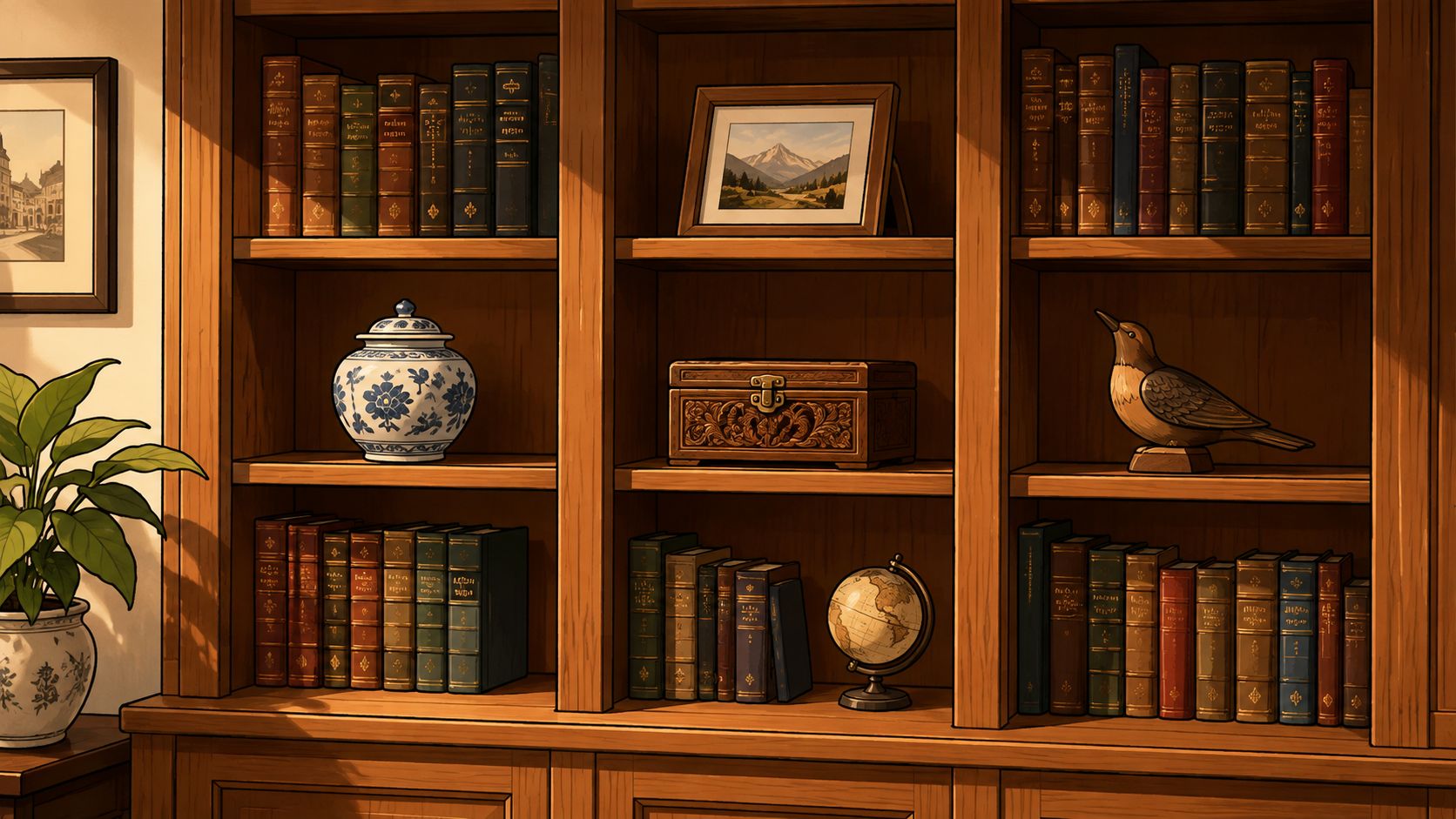
Start with a solid hardwood bookcase, then treat each shelf like a small personal gallery. A Mavin bookcase in solid cherry, walnut, or maple gives the display real depth because the grain and joinery stay visible instead of disappearing behind decoration. On that kind of frame, leather-bound volumes, framed family photos, and inherited porcelain read as intentional, not crowded.
Build the shelf around heirloom presence
This approach works best when the books stay dominant and the objects support the story. Place taller stacks beside small sculptures, then leave enough open room for the eye to settle. Keep the shelf edited, not busy. A practical benchmark in design guidance is the 60/30/10 shelf rule, about 60% books, 30% decorative objects, and 10% empty space. That balance keeps the display from feeling crowded while still giving the objects enough presence to matter.
The same thinking applies to a room built around craftsmanship. Solid hardwood furniture gives the books a deeper visual base, and custom sizing keeps the case aligned with the architecture instead of looking forced into place. Vinson's custom built bookshelf program helps match dimensions, finish, and backing to the room, which matters beside trim, windows, or a fireplace wall. Heirloom pieces do the talking when the shelf is made to fit them.
Practical rule: let one or two meaningful objects carry the shelf, then stop. A bookcase feels richer when it has breathing room, not when every inch is filled.
2. The Monochromatic Spine Strategy
Color discipline gives a bookshelf calm. Group spines by tone, then let the shelf read like an abstract composition rather than a random stack. In a walnut room, warm earth tones look grounded. On maple, lighter spines and soft neutrals feel clean and controlled.
Use the wood finish as the backdrop
That pairing matters because the bookcase finish sets the mood before a single object is added. Darker cherry works beautifully with jewel tones. Lighter maple supports pastels, creams, and muted blues. If the room already has strong textiles or a patterned rug, keep the shelves quieter so the bookcase doesn't fight the rest of the space. Vinson's guide to decorating shelves in any room is useful here because the same principles that work on open shelving carry over to bookcases.
This style also rewards restraint. Keep decorative objects sparse and let the spine colors do the heavy lifting. A single face-out art book can break a long run of one tone without interrupting the overall calm. In a Columbus great room, that kind of organization feels polished without looking rigid, which is exactly the balance an investment homeowner wants.
3. The Literary Anchor with Bookends
Bookends do more than hold books upright. They set clear edges, break up a long shelf run, and give the eye a place to pause. On solid cherry or walnut shelving, carved wood bookends bring warmth. Brass or stone adds contrast without making the shelf feel crowded.
Position the anchor with intention
Start with function. A heavy pair of bookends on a long shelf keeps the collection from sagging visually and stops books from drifting across the surface. Frame a run of titles with them, then change the arrangement on nearby shelves so the whole unit doesn't feel mechanical. The rhythm matters as much as the object itself.
Books should look gathered, not lined up like inventory.
That idea fits traditional rooms naturally. In a more modern space, sculptural bookends act like small architectural forms against the grain of the wood. A walnut case with brass ends or a maple case with natural stone keeps the shelf grounded while still giving it shape. Solid hardwood furniture makes that kind of display feel permanent, and Vinson's customization services let the bookcase, finish, and proportions support the collection instead of competing with it. This blend of utility and craft is also part of creating the perfect reading nook, as shown in Vinson's guide to creating the perfect reading nook. For homeowners near Easton Town Center who want a polished reading corner, that is the point.
4. The Mixed Media Display
A bookshelf needs depth, not just tidy order. Books, framed art, leather accessories, and a few tactile objects build a display that feels collected over time. On a substantial hardwood case, that layered look feels natural because the frame can carry the visual weight without appearing thin or temporary.
Keep the base layer readable
Start with books, then add the rest with discipline. Use one leather box, one framed piece, and one natural object, such as a bowl or vase, on a shelf, then repeat those materials elsewhere so the arrangement feels connected. The 60/30/10 shelf rule still works here, and the related advice to mix upright and horizontal books keeps the composition from going flat. If the shelf includes leather storage boxes or leather-bound volumes, let those textures sit with the furniture instead of fighting it. For ideas on incorporating plants, see this guide by Little Green Leaf.
Choose materials that age well
Solid hardwood earns its place in this kind of display. Cherry, oak, maple, and walnut have enough warmth to hold layered objects without disappearing into the background. A living room shelf can carry art books, a small framed print, and a leather tray without losing its calm if the case itself is well made. That same judgment applies to shoppers considering Smith Brothers furniture Easton or Custom leather sectionals Columbus, choose materials that improve as they're used and keep their presence over time.
The Vinson guide on how to choose leather furniture fits naturally beside this approach because leather details belong in a room where the shelf styling already values touch, patina, and long-term use. Customization matters here too. A customized finish, the right shelf depth, and a hardwood tone that suits the room turn mixed objects into a coherent display instead of a crowded one.
5. The Symmetrical Balance Method
Symmetry gives a bookshelf formality. It works especially well on solid hardwood because the furniture already has enough presence to support a mirrored composition. A centered sculpture, framed photograph, or stack of books can anchor the middle, while matching objects on either side hold the line.
Mirror the weight, not every object
Perfect sameness isn't the goal. The better version uses matched visual weight, not identical clutter. Put a book stack on one side and a similar-height vessel on the other, then repeat the logic shelf by shelf. That makes the whole unit feel orderly without turning it into a showroom display.
An Oxford bookcase from Mavin fits this kind of arrangement well because the structure itself feels architectural. Oxford bookcase by Mavin Furniture gives the symmetry a proper frame, especially when the shelf is part of a formal living room or study. Use a limited palette, keep the spacing even, and let the grain of the wood act as the quiet backdrop.
6. The Theme-Based Shelf Organization
The best thematic shelves feel personal, not decorative. A travel shelf, a design shelf, or a family-history shelf turns a bookcase into a visual autobiography. The structure matters, but the story matters more.
Group by chapter, not by category alone
Pick a few themes that reflect how the home is lived in. A shelf of design books can include color swatches, a small model, and a framed print. A travel section can hold maps, postcards, and a few souvenirs. This approach is especially effective on solid hardwood because the shelf itself looks stable enough to hold different weights and textures without becoming visually noisy.
Choose themes that deserve a place in the room, not themes that only look good in a photo.
Keep the distribution even across the unit. Dark books shouldn't cluster in one corner while light spines dominate the other. Instead, spread visual weight across the case so the entire display feels steady. In a Columbus home with walnut shelving, that can mean one section for art, one for family history, and one for literature. The result is a bookcase that feels curated by a real household, not staged by habit.
7. The Low-Impact Minimal Aesthetic
Minimal shelves look simple, but they require stronger editing than full ones. Leave more open space, display only meaningful books, and let the bookcase itself become the feature. Solid maple or cherry helps here because the wood grain and joinery become part of the composition.
Edit hard, then edit again
Keep only the books that still matter. Move the rest into closed storage, and use the open shelves for a smaller set of volumes that deserve daily attention. A few art books, a single ceramic vessel, and a clean horizontal stack are enough. That restraint makes the room feel calmer and prevents the shelves from turning into visual noise.
The most useful mindset is that empty space isn't wasted space. It gives the wood room to breathe and keeps the room from feeling overfurnished. For an Easton home with strong natural light, minimal shelving can show off the finish on a well-made hardwood case better than a dense arrangement ever could. It also keeps the display easy to dust and easy to live with.
8. The Leather and Binding Appreciation
Books can be beautiful objects, not just containers of text. Leather bindings, gilt edges, and strong typography deserve the same visual respect as the furniture they sit on. On solid hardwood shelving, those tactile details feel especially refined.
Let patina do the work
Use genuine leather-bound volumes where they make sense, then place them where their surfaces catch light. Mix in inherited books when they've aged well, since patina tells its own story. A shelf of fine-art books, design monographs, or heritage editions looks strongest when the bindings are visible and the arrangement isn't overstuffed. Books displayed this way belong with furniture made to last, not with temporary shelving that flattens the whole effect.
Keep leather accessories nearby, but don't overload the shelf with matching pieces. One leather box or bookmark holder is enough to echo the bindings. The point is to create continuity between what's on the shelf and the wood underneath it, especially in rooms where the homeowner values craftsmanship over trends.
9. The Seasonal Rotation Strategy
A bookshelf stays alive when it reflects the household's rhythm. Rotate the display with the seasons, then store the rest elsewhere so the shelves keep changing without drifting into clutter. That approach fits family rooms, libraries, and hall-adjacent cases that need to feel current without looking temporary.
Make rotation part of the routine
Set a steady schedule and clean the shelves before each change. Swap in new objects alongside the books, and keep a photo record so the strongest arrangements are easy to repeat. Search interest and design commentary have already made bookshelf styling a mainstream concern, not a niche hobby, and books as art and creative display commentary notes growing attention around creative bookshelf ideas and books as a focal point in home décor. That makes seasonal rotation less of a novelty and more of a practical habit for people who want shelves that feel considered year-round.
Keep the furniture constant and let the objects change. Walnut in winter, maple in spring, cherry in fall, the shelf does not need to be rebuilt every time. It needs new material, disciplined editing, and solid hardwood furniture that can handle the turnover without losing its presence. Vinson's customization services make that easier, because a well-made case can be sized and finished to support the way your collection changes over time.
Bookshelf Styling: 9 Approaches Compared
| Approach | Implementation complexity | Resource requirements | Expected outcomes | Ideal use cases | Key advantages |
|---|---|---|---|---|---|
| The Curated Collection Approach: Mixing Hardwood Furniture with Literary Treasures | Medium, thoughtful curation and upkeep | Quality hardwood bookcase, decorative heirlooms, time | Personalized, layered gallery-like shelving | Homes showcasing family history and heirlooms | Tells personal story; visual variety; highlights furniture |
| The Monochromatic Spine Strategy: Creating Visual Calm Through Color Coordination | Medium–High, reorganization and maintenance | Substantial book collection, time to catalog/photograph, clean shelving | Calm, cohesive color-blocked installation | Design-forward, minimalist interiors with large collections | Serene, design-forward look; emphasizes book design |
| The Literary Anchor with Bookends: Framing Knowledge with Intentional Boundaries | Low–Medium, sourcing and placement of bookends | Weighted bookends, sturdy hardwood shelves | Clear visual zones, structural support for books | Traditional libraries or anyone needing shelf segmentation | Functional art; creates rhythm; works with any system |
| The Mixed Media Display: Integrating Books with Curated Objects and Leather Details | High, careful balancing of many elements | Variety of decorative objects, plants, quality shelving, time | Rich, textured, gallery-like three‑dimensional displays | High-end interiors and collectors wanting layered styling | Sophisticated, exploratory displays; highly personal |
| The Symmetrical Balance Method: Creating Order Through Intentional Mirroring | Medium, planning and ongoing discipline | Matching objects/bookends, balanced shelf space | Formal, calming, highly ordered presentation | Traditional or transitional rooms seeking formality | Timeless symmetry; easy visual consistency |
| The Theme-Based Shelf Organization: Curating Collections Around Shared Stories | Medium–High, defined themes and curation | Supporting artifacts, labeling tools, durable bookcases | Narrative mini‑exhibitions that invite exploration | Collectors, storytellers, museum‑style home libraries | Meaningful organization; conversational displays |
| The Low-Impact Minimal Aesthetic: Strategic Spacing and Intentional Emptiness | Medium, high restraint and selective editing | High‑quality furniture, few curated books/objects | Serene, uncluttered focus on objects and furniture | Minimalist, Scandinavian, or modern homes | Low maintenance; emphasizes craftsmanship and calm |
| The Leather and Binding Appreciation: Celebrating the Tactile Beauty of Books as Objects | Medium, sourcing and preservation care | Investment editions, climate control, solid shelving | Luxurious, tactile display celebrating bookcraft | Rare book collectors and heirloom-focused interiors | Showcases craftsmanship; tactile and visual richness |
| The Seasonal Rotation Strategy: Keeping Display Fresh and Intentional Year-Round | High, regular planning, storage, and tracking | Dedicated storage, time for rotations, durable bookcases | Ever-changing, refreshed displays; rediscovery of titles | Homes wanting evolving displays and frequent updates | Prevents shelf fatigue; highlights different collection parts |
Bring Your Shelves to Life at the Easton Showroom
A well-styled bookshelf does more than hold reading material. It gives a room structure, shows restraint, and makes heirloom pieces feel at home. That's why the strongest bookshelf styling ideas always begin with the case itself, a solid hardwood foundation that can support meaningful books, lived-in objects, and the kind of display that doesn't feel dated after one season.
Vinson Fine Furniture gives Columbus homeowners a practical way to build that foundation. The In-Store Design Studio helps with space planning, finish selection, and layout decisions, while Complimentary Design Consultations make it easier to tailor a shelf to the room instead of forcing a one-size-fits-all solution. For homeowners who want a specific look, the Custom Order Program supports fabrics, finishes, and visualizers across brands like Smith Brothers, Canadel, and Mavin, so the bookcase or surrounding furniture can match the rest of the home with precision.
For anyone evaluating long-term value, the details matter. Vinson's Low Price Guarantee offers a 110% refund of the difference if a lower price is found at a local authorized dealer within 30 days, and the Clearance Gallery can deliver savings up to 70% on floor samples, overstocks, and seasonal closeouts. Those options make it easier to invest in solid hardwood without compromising on quality, especially for a room that needs to work hard every day.
The Easton Town Center showroom is the right place to compare finishes, feel the weight of solid wood, and see how a bookcase sits in real light. White-glove delivery keeps the process clean and controlled once the piece is chosen. For a shelf display that looks as enduring as the books it holds, the next step is simple.
Bring your bookshelf concept to Easton Town Center and see how solid hardwood, custom dimensions, and careful finish selection change the whole room. Visit Vinson Fine Furniture to explore the design studio, compare bookcases in person, and start a shelf display that feels built for the long term.