
How to Change Sofa Fabric Without Losing What You Love

A Columbus homeowner can know the moment a sofa has crossed from tired to troublesome. The chenille looks crushed where the family sits, the arm caps have pilled, and one cushion stays visibly sunken even after everyone leaves the room. The silhouette still suits the house, but the fabric no longer supports the way the household lives.
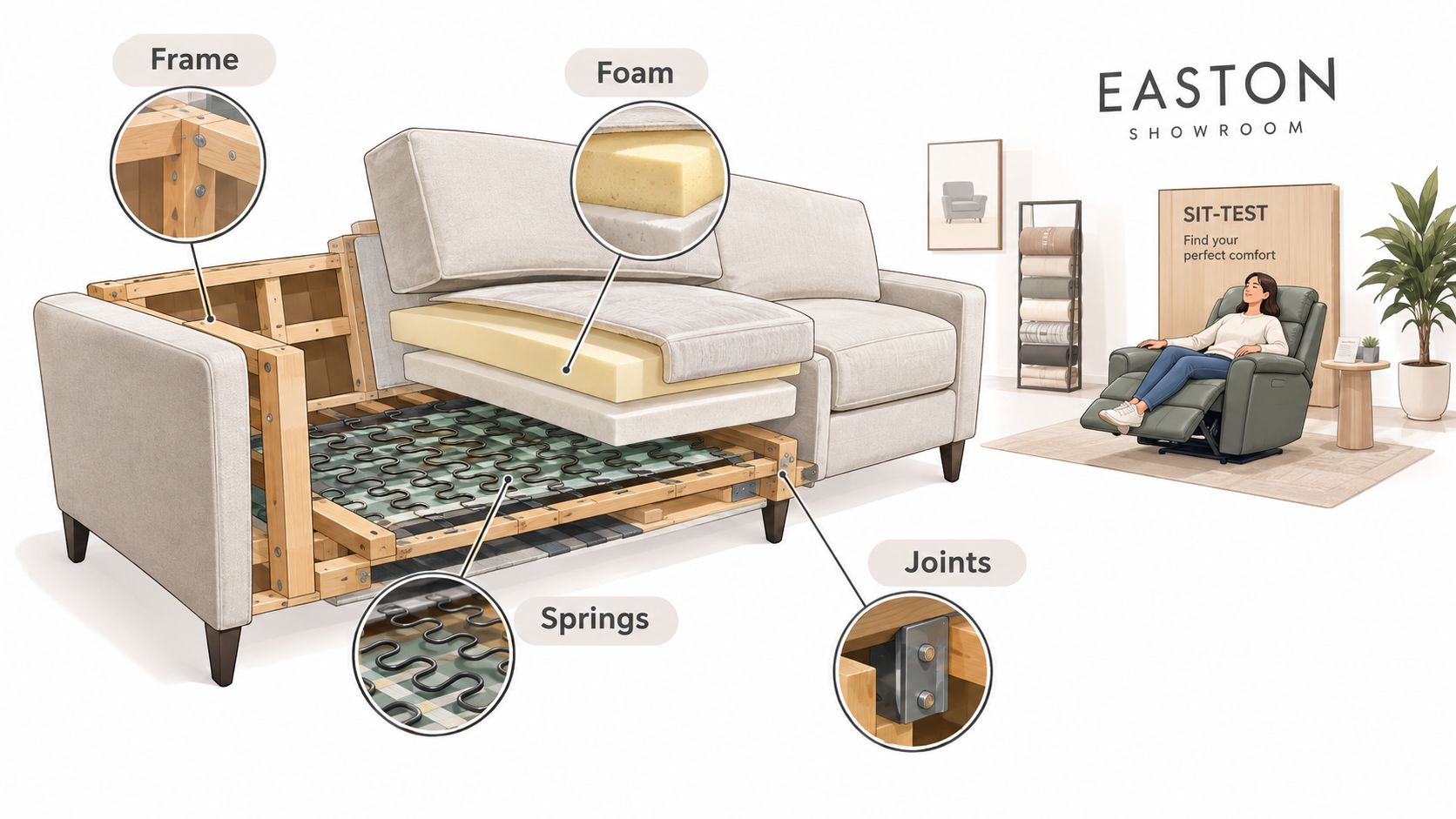
That's when the wrong question is often asked. “What fabric should replace this?” comes after the more important question: what condition is the sofa in underneath? A removable slipcover, professional reupholstery, and a new custom sofa can all change the look, but they solve very different problems. The right choice begins with the frame, springs, foam, and joints.
Standing in Front of the Same Old Sofa
A homeowner standing in a Columbus living room may see a beloved shape beneath years of use. The rolled arms still balance the room. The seat depth still feels comfortable. The dog has claimed one corner, children have worked the cushions hard, and weekend football has left a familiar impression in the middle seat. A premium throw, such as these premium cashmere throw ideas, can soften the presentation, but it can't repair a failing sofa.
The fabric is the visible evidence, not always the root problem. A sofa with a sound frame, resilient cushions, and properly supported seating may only need a new outer layer. A sofa with cracked joints, collapsed foam, or sagging support can look improved for a short time and still feel wrong every evening.
The silhouette test
The first useful test is visual. Stand several feet away and ask whether the sofa's proportion, arm shape, seat height, and depth still work in the room. If the answer is yes, preserving the existing piece may make sense. A sofa with a strong silhouette and good internal structure can be a rewarding reupholstery candidate.
Then sit in every position. Pay attention to whether the seat supports the body evenly, whether the back cushion recovers, and whether the frame feels quiet. Guidance on sofa construction consistently points to structural repairs before new upholstery, because hidden failures can shorten the life of the replacement fabric and create fit problems during installation. The guide to what to look for when buying a sofa offers a useful reference for evaluating those fundamentals.
The practical distinction: new fabric changes the surface. A sound structure makes that surface worth changing.
A slipcover is sensible when the structure is healthy and the household needs a removable, washable layer in a new color or texture. Full reupholstery suits a well-built sofa with sentimental value, a solid frame, and cushions that still perform. Custom replacement becomes the more honest answer when the existing structure has aged out or the room needs a different scale, depth, or configuration.
The decision isn't about dressing up an old sofa at the lowest possible price. It's about matching the remedy to the condition below the cloth.
The Three Real Ways to Change Sofa Fabric
Changing sofa fabric usually falls into four practical categories. Each one has a place, but none should be chosen before the furniture's structure and the household's habits are understood.
Slipcovers for a sound sofa
A slipcover works best when the sofa has good bones, removable cushions, and a relatively straightforward shape. It gives a household a washable outer layer and makes seasonal color changes easier. It's also the least disruptive option for a rental, a temporary room refresh, or a family that expects spills and pet hair to continue.
The trade-off is fit. A ready-made cover may look relaxed rather than shaped, especially around rolled arms, tapered backs, and deep corners. A custom-sewn cover can improve the line, but accurate measuring and pattern work matter. A loose cover that shifts across the deck can create friction, wrinkles, and premature wear.
For homes with animals, the material needs as much attention as the color. A tightly woven, medium-weight fabric with modest stretch is generally easier to keep taut than a delicate or highly elastic textile. For broader upholstery inspiration, homeowners can browse Seoul Bag fabric options, then confirm that any selected textile is rated for furniture use rather than assuming a decorative fabric will perform on a sofa. More guidance on selecting pet-friendly furniture fabrics can help narrow the field.
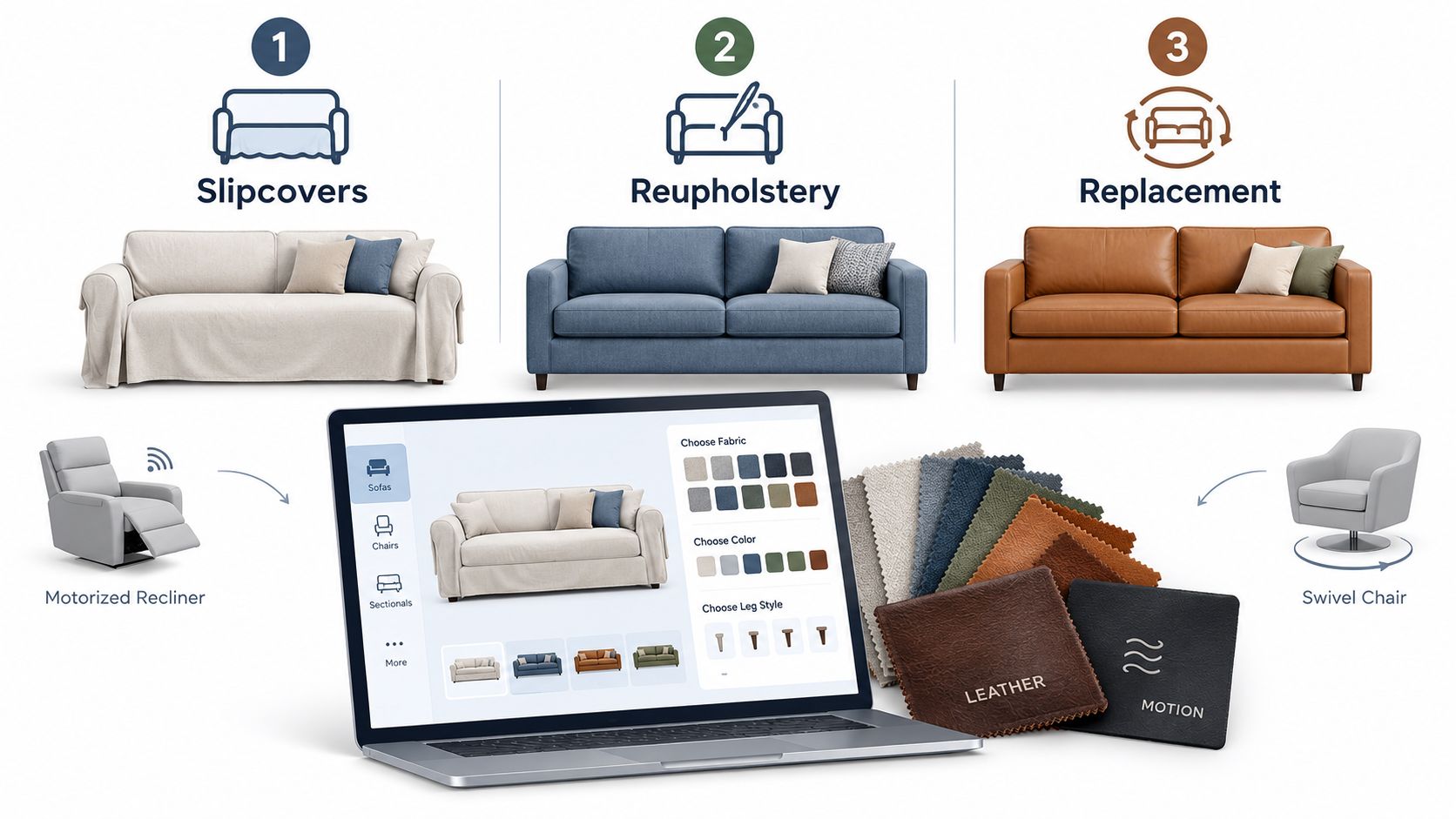
Reupholstery when the frame earns it
Reupholstery makes sense when the frame is stable, the joints are repairable, and the cushions or support system still justify preservation. A solid hardwood frame, properly restored springs, and renewed foam or batting can give an established sofa a substantially better future than a surface-only refresh.
A proper upholsterer does not pull new cloth over old problems. The fabric, dust cover, staples, padding, and damaged internal components need to be assessed in sequence. The replacement fabric is then cut and installed to suit the frame, with attention to tension, pattern direction, and seam placement.
Custom replacement when the room has changed
A custom-built sofa is the stronger path when the old frame is warped, the internal support is failing, or the dimensions no longer suit the household. It also solves problems that fabric alone can't touch, such as an overly deep seat, an awkward arm height, or a configuration that blocks circulation through the room.
Replacement cushions can serve as a middle path when the frame is sound but down-wrapped or foam seats have collapsed. That option preserves the existing silhouette while addressing the part of the sofa the body directly feels.
How Durable Does the New Fabric Actually Need to Be
The right durability rating depends on how the sofa's frame and support system will be used. A sturdy sofa that still carries weight evenly can justify a higher-quality fabric refresh. A frame that twists, sags, or stresses its seams may wear through new fabric quickly, regardless of the rating. Choose the textile after judging the sofa's structure, not by comparing price tags alone.
“Double rubs” become useful when translated into daily routines. The Martindale and Wyzenbeek tests measure abrasion resistance through different systems, so their figures are not perfectly interchangeable. Both indicate whether a textile is intended for light, moderate, or heavy wear. The furniture fabric durability guide explains how to read these specifications in relation to household use.
For a regular living-area sofa, a practical target is usually 15,000 to 30,000 double rubs. The upper end suits family rooms and homes with children or pets. Residential guidance commonly places sofa fabrics around 10,000 to 25,000 double rubs, with 15,000 double rubs often used as a sensible daily-use threshold. Commercial upholstery may begin around 35,000 double rubs and reach 250,000, which is more performance than an occasional residential sofa generally needs.
Fabric Durability at a Glance
| Double Rubs (Wyzenbeek) | Best For | Watch Out For |
|---|---|---|
| Under 10,000 | Decorative seating and occasional use | Usually unsuitable for a primary living-area sofa |
| 9,000 to 15,000 | Moderate use and lighter household traffic | Repeated daily seating may shorten its service life |
| 15,000 to 20,000 | Regular home seating | Check the weave, care requirements, and household exposure |
| 20,000 to 30,000 | Family-room sofas and active households | A high rating cannot correct weak structure or poor installation |
| 30,000 and above | High-traffic seating and demanding rooms | Unnecessary for a sofa used only occasionally |
A commonly cited working benchmark treats 3,000 double rubs as roughly one year of use, although laboratory results cannot predict every household. Under that framework, 15,000-plus is generally considered heavy-duty for seating used several times per day, while 30,000 suits especially active rooms. Treat those figures as a starting point, not a guarantee.
Read the weave, not only the number. A tightly woven, medium-weight polyester or performance blend can conceal minor tension errors better than loose velvet or a large-pattern textile with a similar rating.
Fabric weight, weave density, stretch, and nap affect installation and wear. Low-stretch cloth is easier to cut and tension evenly. Velvet requires consistent nap direction, while stripes and large florals demand deliberate matching at seams. Homeowners comparing textile families can shop quilting fabric at QuiltKit.com, but upholstery still requires furniture-grade construction and an abrasion rating suited to the sofa's frame, support, and daily use.
DIY Slipcover and Reupholstery Versus Hiring a Pro
A sofa with removable cushions, straight lines, and a sound frame is a reasonable DIY candidate. A homeowner can achieve a useful refresh with patience, accurate measuring, and some tolerance for a relaxed fit. Tufted backs, curved arms, attached cushions, patterned textiles, and leather-to-fabric conversions require far more control. The frame and internal structure should decide the fabric path before price does.
A ready-made slipcover works when the goal is a temporary color change, rental refresh, or basic protection. It does not correct sagging support, damaged padding, loose joints, or an uneven frame. A custom-sewn slipcover improves the fit, but still leaves the underlying sofa untouched.
Professional reupholstery involves more than removing old fabric and using a staple gun. The upholsterer strips the sofa, studies its original construction, checks the frame and support, repairs damage, rebuilds padding where necessary, creates patterns, matches repeats, controls tension, and finishes the underside cleanly. Sofa reupholstery can range from about $600 to $4,000, while fabric may add roughly $18 to $35 per yard, according to independent upholstery cost and condition guidance. These figures are broad. Size, shape, fabric choice, and internal repairs determine the actual proposal.
DIY vs Pro Fabric Change Cost, Time, Skill, Lifespan
| Method | Typical Cost | Time | Skill Level | Expected Lifespan |
|---|---|---|---|---|
| Ready-made slipcover | Low initial outlay | Short | Basic measuring and fitting | Temporary to moderate |
| Custom-sewn slipcover | Moderate | Moderate | Accurate measuring and pattern work | Moderate, depending on fabric and care |
| DIY reupholstery | Material-dependent | Substantial | Advanced sewing, stripping, and tension control | Good only when construction and installation are sound |
| Professional reupholstery | Project-dependent | Longer shop schedule | Handled by an experienced upholsterer | Strong when the frame and support are restored |
| Full custom replacement | Investment-level | Built to order | Design consultation replaces home fabrication | Long-term, based on construction and care |
DIY reupholstery suits a modern, uncomplicated frame when the household values the process as much as the finished result. The work becomes a poor bargain when mistakes waste expensive fabric or leave uneven tension around arms, corners, and cushions.
A sentimental sofa with a durable frame usually merits professional work, particularly when it has fixed upholstery or complex curves. Inspect a sofa that has already been reupholstered once with extra care. Multiple fabric layers and earlier repairs can conceal deterioration, weakened joints, or compromised support.
Custom upholstery services through a design-oriented furniture showroom provide another route. Fabric selection, fit, comfort, structural decisions, and finishing can be handled as one coordinated project instead of assembled piecemeal at home.
Measuring, Templating, and Getting the Fit Right
Accurate upholstery patterns come from the sofa itself, not from a handful of optimistic tape-measure readings. An upholsterer typically documents the piece before stripping it, removes the old material carefully, and saves each panel as a labeled template. The new fabric is then cut from those shapes and installed in the reverse order of removal.
Measure the frame before the covers
The outside back height and arm height establish the sofa's overall envelope. Next come seat depth, inside seat width, cushion length, and cushion thickness. The skirt drop, seam allowances, pillow backs, and welt requirements follow. Every measurement should identify the exact surface being measured, because a frame may taper from the front rail toward the back or narrow beneath a rolled arm.
A practical worksheet should include:
- Outside back: Record the full upholstered height and width, including the contour at the top.
- Arms: Measure both outside and inside arms, noting taper, roll, and any change in depth.
- Seat deck: Capture inside width, front-to-back depth, and the transition into the back.
- Cushions: Record length, width, thickness, boxing height, closures, and welt placement.
- Back pillows: Note the shape, loft, casing, and attachment points.
- Skirt and trim: Mark drop, pleat positions, corner turns, and seam allowances.
- Pattern direction: Identify the top, nap, grain, repeat, and centerline on every saved panel.
Builder's paper or another flexible pattern material is more reliable than a tape measure on curved arms and camelback profiles. It records the contour directly and shows where a seam must turn. A pattern-maker earns the fee on a skirted sofa with a single pleat, a rolled arm, or a shaped back because those details magnify small errors.
Grain and nap control the finish
The fabric grain should follow the sofa's structural lines wherever possible. Stripes that drift across a front rail make the whole piece look crooked. A floral repeat that fails to meet across a T-cushion seam can make a carefully made sofa feel improvised. Velvet and microfiber also have a nap direction that changes how the surface reflects light, so every panel should be marked before cutting.
The old cover may have stretched, shrunk, or been altered by previous work. It can still serve as a valuable template, but it shouldn't be treated as an unquestionable blueprint. The furniture measuring guide helps organize dimensions before fabric is ordered.
A good checklist ends with a second measurement pass. Confirm left and right sides, compare matching panels, verify the pattern repeat, and reserve enough material for mistakes, directional cutting, and future repairs. Precision at this stage costs less than discovering that the final arm panel is short.
The Hidden Condition Check Most Homeowners Skip
A sofa can look ready for a fabric refresh while its frame, support, or cushions are already failing. That hidden condition should decide the project before the fabric does. New upholstery cannot stabilize a weak frame, restore broken support, or make crumbling foam perform like a durable cushion.
A short inspection can prevent an expensive cosmetic mistake. The sofa does not need to be dismantled completely, but anyone evaluating it should look beneath the visible fabric and test how the structure responds.
What to inspect before spending on cloth
Start underneath. Check the deck for sagging webbing, displaced support, or broken springs. Sit on each cushion separately and notice whether the foam bottoms out, tilts, or recovers slowly. Lift one front corner slightly, then lower it carefully. A sharp creak, uneven movement, or visible twist needs attention before fabric selection.
Run a hand along the joints where each arm meets the front rail and where the back meets the seat deck. Loose movement, split timber, or a joint that opens under pressure indicates structural work. Solid hardwood construction can often be repaired when the damage is limited. Brittle or extensively compromised components may make preservation difficult to justify, even if the silhouette still suits the room.
The frame is the decision point. A sofa with sound joints and dependable support may be a strong candidate for reupholstery. A sofa with widespread structural failure may need rebuilding or replacement, regardless of how attractive the new cloth looks.
If a back cushion has a zipper, inspect the inner casing. A blown-out casing, displaced fill, or collapsed insert can leave the new exterior cover looking lumpy from its first day. Yellowed, crumbly, or dust-like foam shows that fabric-only work will not resolve the cushion's failure. General upholstery guidance on when old furniture is worth reupholstering emphasizes the same principle: internal condition determines whether the investment has a future.
Match the finding to the fabric path
A quiet, stable frame with recoverable cushions can justify professional reupholstery. Sagging springs or widespread support failure usually point toward replacement, especially when the repair requires extensive stripping and rebuilding. Cracked joints and brittle wood make any fabric spend questionable.
The most expensive mistake in the room is paying for beautiful new fabric on a sofa that can't support it.
The condition check also exposes the false economy of covering old fabric. An added layer can slide, wear unevenly, and let old soiling migrate into the new material. Good upholstery work starts by exposing the problems, then matching the fabric path to what the sofa can actually support.
When a Custom Built Sofa Makes More Sense Than Recovering
Recovering preserves a sofa's existing proportions. That's valuable when the silhouette fits the room and the frame deserves another life. It becomes less compelling when the frame has aged out, the dimensions fight the floor plan, or the household now needs a different seat depth, arm height, configuration, or support level.
A custom sofa solves those issues at their source. The design begins with the room and the way people sit, then moves through frame construction, cushion comfort, fabric performance, and finish details. A household that needs a compact apartment-scale sofa, a generous sectional, or a particular arrangement of motion seating may spend more wisely on a new build than on rebuilding an unsuitable frame.
Compare the whole investment
A reupholstery quote should be compared with more than the visible fabric price. Ask whether it includes frame repairs, spring or webbing work, foam, batting, pattern-making, removal, delivery, and finishing. A lower quote may represent surface work only, while a higher proposal may include the components that determine whether the sofa remains comfortable.
Custom ordering also allows the homeowner to compare fabric performance with appearance rather than accepting the original sofa's limitations. Top-grain and performance leathers offer a different tactile and maintenance profile from performance fabric. Sectionals can include motorized or power motion features, while swivel chairs, rockers, and gliders address occasional seating needs without forcing the main sofa to do every job.
For Columbus homeowners, the Easton showroom's In-Store Design Studio and Complimentary Design Consultations provide a setting for testing seat depth, cushion feel, fabric hand, and motion. The Custom Order Program includes fabrics, finishes, and 3D visualizers for lines such as Smith Brothers of Berne, made in Indiana, Mavin, Amish-made in Ohio, and Canadel, handcrafted in Quebec. Those options keep American-made and broader North American craftsmanship distinct while giving the homeowner a clearer view of the finished piece.
The showroom focuses on solid hardwood construction, including solid cherry, oak, maple, and walnut, rather than promoting lesser structural materials. It also offers premium motion and leather options alongside living-room, dining-room, and bedroom furniture. For value-conscious buyers, the 110% Low Price Guarantee and a Clearance Gallery with savings up to 70% create two different ways to approach the investment. White-glove delivery commonly includes room-of-choice placement, unpacking, light assembly, inspection, and packaging removal, so the new sofa arrives as a finished part of the room rather than a project left at the doorway.
The next step is practical. Bring room dimensions, a few photographs, and the sofa's measurements to a complimentary consultation, then compare a fabric refresh, a rebuilt frame, and a custom replacement side by side.
Visit Vinson Fine Furniture at Easton Town Center for a sit-test, fabric consultation, and a clear comparison between reupholstering the sofa you own and ordering a custom piece built for the room you have now. Bring a cushion measurement or room photo, and the design team can help identify the right path before any fabric or labor is purchased.