Unlock the Charm of a Vintage Buffet Hutch


You spot it at a weekend market just after sunrise. The wood has that mellow glow only age can give, the upper doors still hold their old wavy glass, and for a moment you can already see it in your dining room.
Then the practical questions arrive all at once. Will it fit, is it sound, and are you buying a treasure or adopting a project?
The Timeless Allure of a Vintage Buffet Hutch
A vintage buffet hutch has a special kind of pull because it does two jobs at once. It stores real things you use, and it also changes the mood of a room. Few pieces can do that with the same authority.

I’ve watched many homeowners fall for one the same way. They’re not looking for a trend piece. They’re looking for something with weight, presence, and memory. A good hutch can hold serving pieces, linens, platters, barware, family china, cookbooks, or even the everyday items that otherwise drift across counters and tables.
What makes the attraction stronger is that no two vintage examples feel exactly alike. One may have carved doors and a stately crown. Another may be plainer, built with simple lines and handsome wood grain. Both can be right. The difference is whether the piece suits your home and whether your home can support the piece.
Practical rule: Buy the piece you can live with, not just admire. Beauty matters, but function keeps the romance alive.
People often get confused because they think the decision is mostly aesthetic. It isn’t. The best vintage purchases happen when emotion and evaluation meet in the middle. You need enough feeling to recognize character, and enough discipline to check structure, dimensions, finish, and fit.
That’s also why these pieces tend to stay in families. A vintage buffet hutch isn’t usually an impulse object that gets replaced the next season. It becomes the place where holiday serving pieces live, where candles and linens are tucked away, where guests set down a drink, where a room starts to feel settled.
Why this piece still matters
A strong hutch gives you qualities many modern rooms are missing:
- Visual grounding that anchors open dining or living spaces
- Closed storage for practical household items that don’t need to stay visible
- Display space that lets meaningful objects breathe instead of cluttering shelves
- Material depth that often feels richer than mass-market case goods
That balance is its primary charm. A vintage buffet hutch has soul, but it also has obligations. It must stand level, open smoothly, and fit your everyday life.
The Soul of the Home What Defines a Vintage Buffet Hutch
The name sounds simple until you start shopping. A Columbus homeowner might save a listing for a “sideboard,” visit the store and call it a “buffet,” then realize the top cabinet is what many people mean by “hutch.” The words overlap in everyday use, but the distinctions matter because each term tells you something about function, scale, and how the piece will live in your home.
Fundamentally, a buffet or sideboard is the lower storage cabinet. The hutch is the upper section with shelves, small cabinets, or glass-front doors. Together, they form the two-part piece many buyers picture when they hear vintage buffet hutch.
That two-part design is a large part of its appeal. The bottom half does the hard work. It carries weight, hides practical clutter, and provides serving surface. The upper half does the social work. It displays dishes, books, barware, pottery, or family pieces you want to see and use.
More than a pretty antique
A vintage buffet hutch has always been tied to daily life. Earlier versions began as storage furniture and gradually developed into a more architectural form with a base and an upper display section. Over time, makers added doors, shelves, and more decorative detail as homes and dining rituals changed.
That history still shows up in the way the piece functions now. It works like a built-in cabinet that can move with you. In an older dining room, it may hold china and linens. In a newer open-plan house, it may become the place for board games, chargers, cookbooks, or the things modern families need close by but not always in sight.
This is the point many style-first articles miss. A vintage hutch is not successful just because it looks charming against a painted wall. It succeeds when the structure is sound, the storage matches your habits, and the proportions fit the room without crowding circulation or blocking light.
That practical view shapes how we guide clients at Vinson. Columbus homeowners often fall in love with the crown, glass, or patina first. Then the actual questions begin. Will it fit under an eight-foot ceiling? Can the floor handle the weight comfortably? Do the doors clear nearby trim? Should the finish be preserved, cleaned, or refinished so it works with newer dining chairs and lighting? Good design starts with those questions, not after them.
Common terms that trip people up
If you are sorting through estate sale notes or online listings, these distinctions help:
- Buffet usually means a lower dining storage cabinet with a serving surface
- Sideboard is closely related, often longer and designed to sit against a wall
- Credenza usually suggests a lower cabinet with a cleaner, lower profile
- Hutch refers to the upper shelving or cabinet section
- Buffet hutch describes the combined upper and lower unit working as one piece
Materials matter too. A true vintage piece often earns its long life from solid wood construction, practical joinery, and repairable parts. If you are unsure what you are seeing, this guide on how to tell if furniture is real wood will help you read past finish color and decorative details.
Once the language becomes clear, buyers make better decisions. You stop shopping by silhouette alone and start judging the piece the way a furniture maker or designer would. What was it built to hold, how was it built to last, and how will it serve a modern home for the next twenty years?
Anatomy of an Heirloom Identifying Styles Materials and Age
Families often walk into our Columbus showroom with a photo saved on their phone and a simple question: “Is this one old, or just made to look old?” The answer rarely sits in one detail. You read a vintage buffet hutch the way you read a house. Roofline, trim, floorboards, and hardware each tell part of the story. Furniture works the same way.
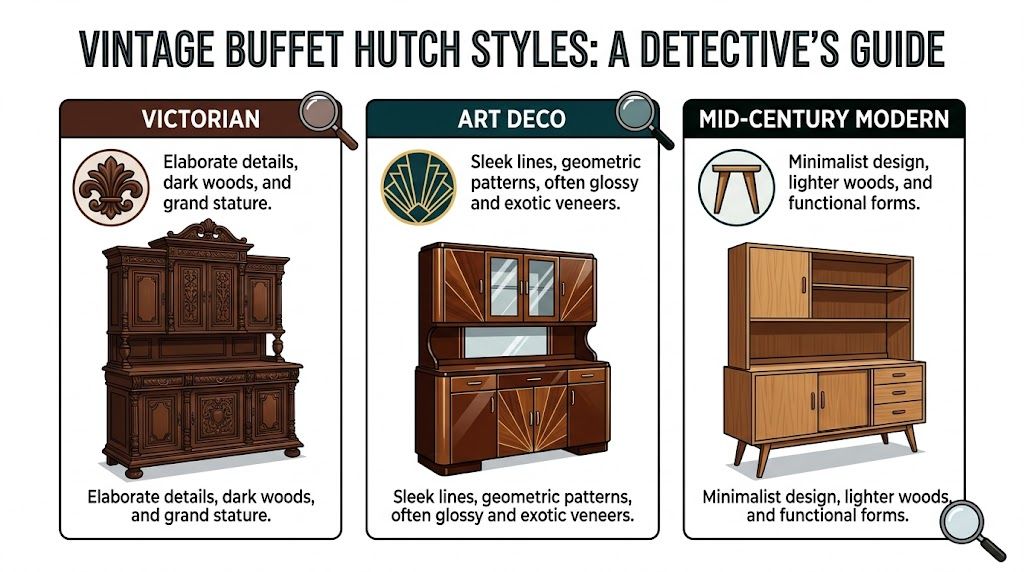
A useful identification starts with three questions. What style language is the piece speaking? What materials were used to build it? How was it put together? Once those answers line up, age becomes easier to estimate, and you can judge whether the piece is a sound candidate for daily life in a modern dining room.
Reading the major style signals
Style gives you the first layer of evidence, but it should never be your only evidence.
Victorian buffet hutches usually present themselves with confidence. You will often see darker woods, stronger visual weight, curved profiles, carved ornament, turned supports, and a top section that feels architectural. These pieces were meant to be seen. In a current home, that can be beautiful, but it also means you need to account for visual bulk. A heavily carved crown that looks graceful in a large old dining room can feel crowded under lower ceilings or beside recessed lighting.
Art Deco pieces shift toward order and geometry. Fronts become flatter, symmetry becomes more pronounced, and decoration tends to come through shape, veneer pattern, and finish rather than carving. If Victorian is formal in a ceremonial way, Deco is formal in a structured way. That distinction matters when you are pairing an older hutch with newer seating or cleaner light fixtures.
Mid-century examples usually simplify the form even further. You may find a lower case with a modest upper cabinet, open shelving, or no hutch at all. Hardware often gets smaller, lines get straighter, and the piece begins to prioritize efficient storage over display. For homeowners who love vintage furniture but do not want the room to feel period-specific, this era often offers the easiest blend with contemporary interiors.
One caution from years in the trade. Ornament can mislead. Some later reproduction pieces borrow Victorian details without the construction quality of an older original, while some genuinely early pieces look restrained and plain.
What the materials tell you
Wood choice affects appearance, durability, repair options, and cost. It also shapes how forgiving the piece will be in everyday use.
Oak tends to show a bold, open grain and a sturdy visual presence. It shows its age gracefully and usually tolerates family life well. Cherry reads finer and warmer, with a smoother grain and a more formal character that deepens over time. Pine is softer, often more rustic, and more likely to collect dents, though many people love that lived-in quality. Many vintage buffet hutches also combine species, with a more decorative wood on visible surfaces and secondary woods inside drawers, backs, or hidden structural parts.
That mix is normal.
If you want help distinguishing solid lumber from veneer, plywood, or later composite materials, this guide to telling if furniture is real wood will sharpen your eye quickly.
Here is a practical reference point:
| Wood Type | What You’ll Notice | Where You Often See It |
|---|---|---|
| Oak | Pronounced grain, sturdy look, ages with visible character | Victorian pieces, farmhouse forms, utility-minded dining furniture |
| Cherry | Warm tone, finer grain, more polished appearance | Formal traditional styles, higher-end case goods |
| Pine | Lighter weight, softer surface, knots or rustic variation | Country pieces, cottage styles, practical household furniture |
| Mixed hardwoods | Different grain patterns inside and out, secondary woods in hidden areas | Regional builds and many honest older cabinets |
Construction reveals more than decoration
If style is the accent, joinery is the grammar. It tells you whether the piece was well made and whether it is likely to keep serving your home.
Look inside the drawers. Older drawers often show dovetail joinery, wear consistent with use, and bottom panels set into grooves rather than being stapled in place. Open the doors and study the interior. Shelf pin holes, replacement screws, newer hinges, and backing boards can all suggest later alterations. None of those automatically rule a piece out, but they do affect value and restoration choices.
Hardware deserves the same careful look. Pulls and hinges are changed all the time. A buffet hutch can still be a wonderful buy with replaced hardware, yet mismatched screw holes or shiny new fittings on a heavily aged case tell you part of the history has been edited. We tell clients to look for consistency rather than perfection. Honest age usually feels coherent.
Signs of age that read as genuine
Real age tends to settle into a piece gradually, in the places use would naturally touch.
You may see a soft sheen around drawer pulls where hands polished the finish over decades. Interior shelves may show slight tone changes from stored china. Sun-facing surfaces may mellow differently than protected interior wood. Veneer, if present, may lift slightly at edges or corners, especially on older pieces that have lived through seasonal humidity changes.
Useful signs include:
- Wear in logical places, such as handles, drawer edges, and serving surfaces
- Repairs that match the piece’s age, not hurried patches with modern materials that stand out sharply
- Finish depth, where old layers reflect light with variation instead of a flat, plastic look
- Minor irregularities from handwork, especially in older case construction
A piece that looks uniformly glossy from top to bottom deserves a closer inspection. Fresh refinishing can be done well, but it can also conceal patched veneer, filled cracks, or replaced sections that affect long-term stability.
Why this matters beyond dating the piece
Identifying style, materials, and age is not just an academic exercise. It helps you decide how the hutch should live in your home. A heavily carved Victorian example may need selective restoration and quieter surrounding furniture. A Deco piece may accept a cleaner refinishing approach. A mixed-wood country hutch may be best preserved with its wear intact because that patina is part of its value.
That practical bridge is the part many buyers miss. They fall in love with the face of the piece without understanding the bones. At Vinson, our design team helps Columbus homeowners make those calls before a purchase becomes an expensive mistake. We look at whether the piece is historically interesting, structurally promising, and visually compatible with the way you live now. That is how a beautiful vintage buffet hutch becomes an heirloom candidate instead of a difficult project.
Assessing Your Find A Practical Guide to Condition and Fit
A buffet hutch can stop you in your tracks. Then reality enters the room. Will it clear the ceiling fan, sit flat on old hardwood, and hold everyday dishes without a door drifting open every time someone walks by?
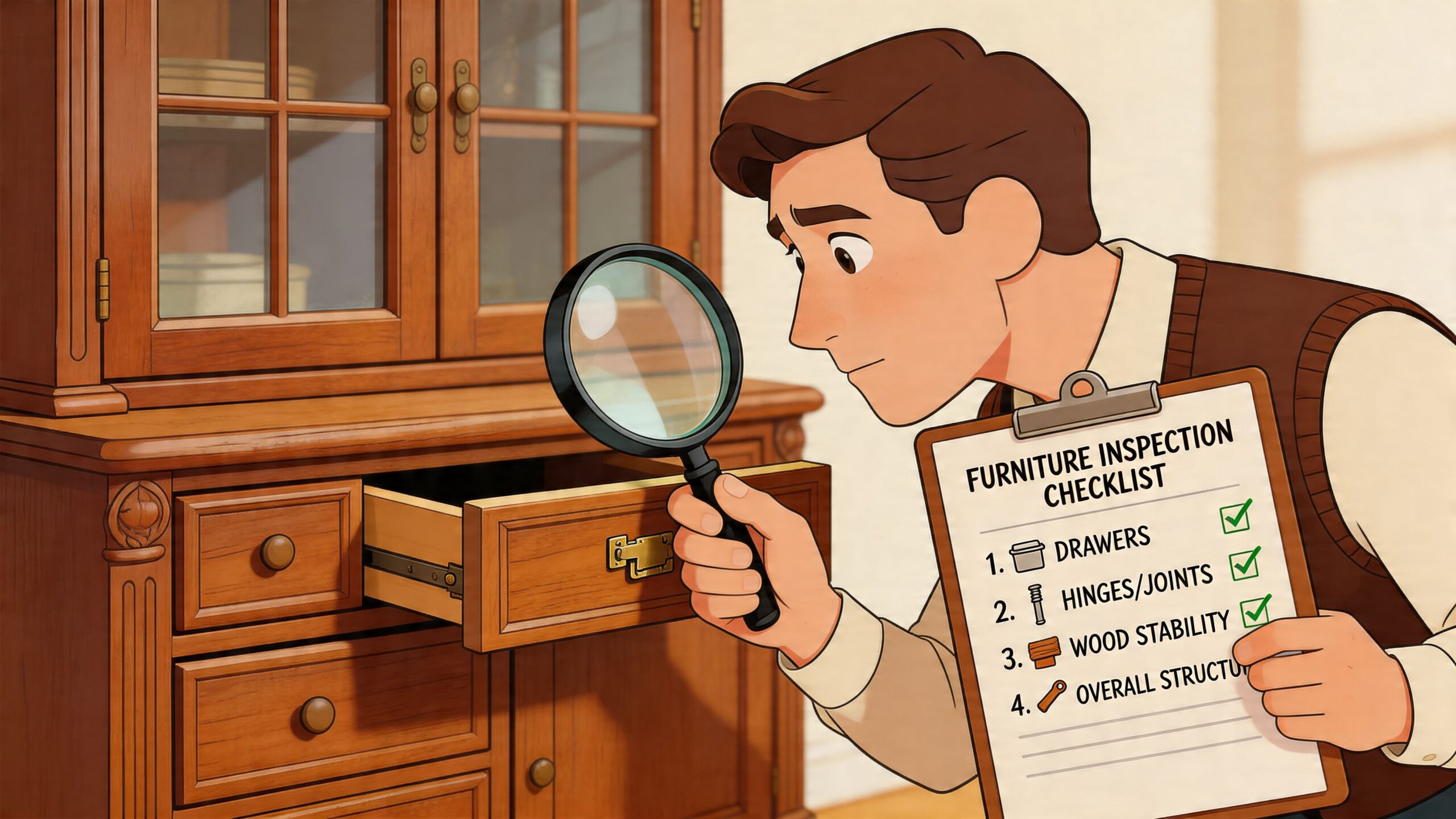
That is the point where admiration has to meet planning. In our family business, we have seen Columbus homeowners fall for a piece in a showroom or estate sale, only to learn later that the crown molding hits the soffit, the depth crowds a walkway, or the upper case feels less secure than it looked. A vintage hutch has to do more than charm you. It has to live well in your house.
Start with the room, not the romance
Measure the wall first. Then measure the room around the wall.
A buffet hutch often reads smaller in an open warehouse than it will in a dining room with chairs pulled back, a light fixture overhead, and traffic passing through. Width matters, but depth is often the primary problem in modern homes. An extra few inches can turn a comfortable path into a tight squeeze.
Check these dimensions before you shop:
- Wall width
- Ceiling height
- Distance to windows and casings
- Door swing clearance
- Walking space around the dining table
- Depth available once chairs are in use
For many homes, painter's tape on the floor and wall gives the clearest answer. It works like a full-scale outline, and it reveals problems a paper measurement can hide. If you want a good companion checklist for case goods, what to look for when buying chests, dressers, and cabinets covers the same practical habits that protect buyers from expensive surprises.
Then read the structure like a craftsperson
Once the piece fits the room, inspect how it is built and how it has aged. Beauty on the front can distract from trouble underneath, so slow yourself down and examine it in a set order.
Bring a flashlight. Open every drawer. Touch the back. Look underneath.
Start with the case itself. Stand at one front corner and gently test for movement. A little unevenness may come from the floor. A pronounced wobble usually points to loose joinery, frame shift, or stress in the base.
Then move upward. On a two-part hutch, the top and bottom should relate like stacked architecture, not like two pieces that happened to meet that day. The upper section should sit securely, with attachment points that feel intentional and sound.
Doors and drawers tell their own story. Doors should hang evenly and close without force. Drawers should slide with some resistance, especially in older wood-on-wood construction, but they should not grind, rack, or tip sharply. One sticky drawer may be a minor adjustment. Several usually suggest swelling, interior wear, or a cabinet that is no longer square.
Trouble usually hides in the quiet places
The front of a vintage hutch gets the attention. The back, underside, and shelf supports tell the truth.
Look closely for:
Back panel separation
Gaps, fresh fasteners, or replacement boards can signal movement over time.Veneer lifting or bubbling
This often points to moisture exposure, old glue failure, or poor past repair.Shelf sag
Long-term bowing suggests weight stress and weak support points.Loose hardware or misaligned catches
These can be simple fixes, or they can reflect bigger movement in the cabinet.Old repairs that interrupt the grain or finish
A good repair respects the piece. A clumsy one often creates the next problem.
Painted surfaces deserve special care. If the piece is old enough, do not assume you can sand first and ask questions later. Older finishes call for caution, especially if you are considering refinishing for family use.
Character shows up as age, wear, and patina. Structural trouble shows up as movement, failure, and repairs waiting to happen.
Ask whether the piece suits the way you actually live
This step gets skipped in many vintage buying guides, and it is often the most important one.
A stunning hutch may still be wrong for a household that needs concealed storage for serving pieces, easy-access drawers for table linens, or stable shelving for heavy stoneware. A deep lower buffet can dominate a narrow breakfast room. A tall, dark top can make a dining space with low ceilings feel compressed even if the measurements technically work.
That is where design judgment matters. Vinson helps Columbus homeowners assess more than age and appearance. We look at whether a piece can be restored sensibly, whether it suits the room's proportions, and whether it will blend with the cleaner lines and daily routines of a modern home. Those decisions are what turn a vintage purchase into a lasting investment instead of a project that never quite settles in.
A practical in-person checklist
Before you commit, confirm these points:
- The room measurements are written down and with you
- The piece sits with reasonable stability
- The top section feels secure on the base
- Every door, drawer, latch, and shelf has been tested
- The back and underside have been inspected
- Signs of moisture, pests, or careless storage have been checked
- You know what must be repaired now and what can wait
A good vintage buffet hutch should ask for respect, not rescue. When fit and condition are both right, you can bring it home knowing it will serve the room as well as it serves the eye.
Breathing New Life Restoration Care and Maintenance
Most vintage furniture doesn’t need heroic restoration. It needs restraint. Owners often do too much too quickly, and once original character is stripped away, it’s gone for good.
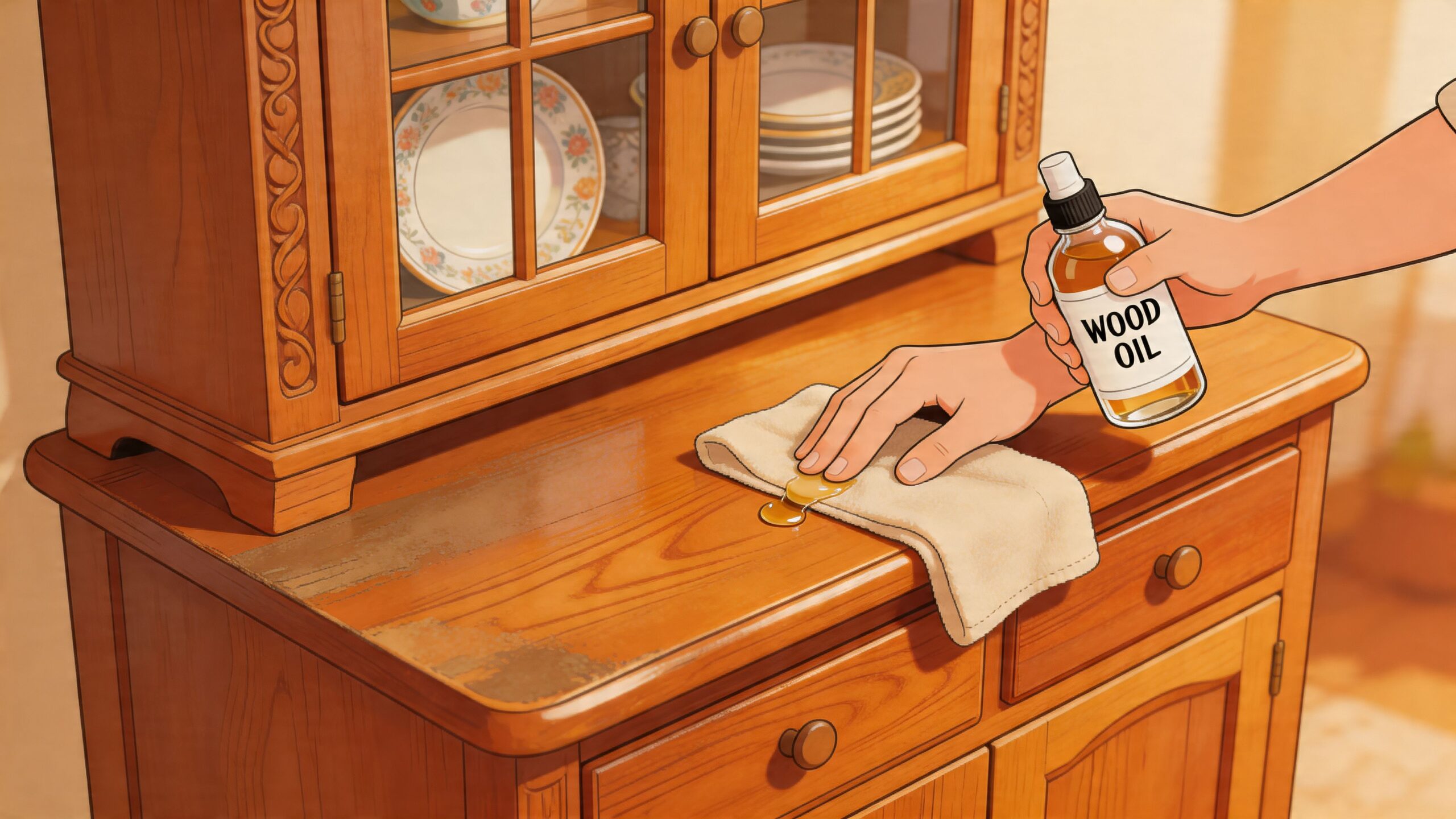
A thoughtful approach begins with one question. Are you preserving age, or correcting failure? Those are not the same task.
Preserve what still works
If the finish is stable, the drawers function, and the piece has only surface wear, preservation usually beats refinishing. Gentle cleaning, wax or finish-appropriate maintenance, and minor hardware attention often do more good than sanding and stain.
Construction matters here. Solid wood hutches can function for 50+ years, painted finishes are the most durable finish option among those listed, and traditional dovetail drawers can withstand 5,000+ open-close cycles, according to Online Amish Furniture’s product guidance. Those details are a reminder that old furniture often has more life left than people assume.
Refinish only when function demands it
A full refinish makes sense when the existing surface is failing badly, when water damage has broken the finish beyond simple repair, or when old paint is not stable enough to live with safely. It can also be justified when the piece has already been refinished poorly in the past and needs a cleaner second life.
That said, refinishing changes the personality of a piece. It can sharpen details that age once softened. It can erase evidence of use that gave the hutch warmth. It can also lower appeal for buyers who value original surfaces.
The best restoration keeps the piece recognizable to itself.
Care habits that help in real homes
Vintage pieces suffer most from neglect at the extremes. Too much water, too much sun, too much dryness, too much polishing, too much heat from vents, and too much weight on weak shelves all create problems.
A practical care rhythm looks like this:
- Dust gently with a soft cloth instead of grinding grit into the finish
- Clean glass carefully so overspray doesn’t sit on surrounding wood
- Use the right finish care because waxed, stained, and painted surfaces don’t all want the same treatment
- Watch seasonal movement especially in homes with strong heating or humidity swings
- Lubricate judgment, not hardware because forcing sticky drawers often causes more damage than solving it
For ongoing upkeep, this wood furniture care guide offers good general habits.
Know when to call a professional
Some jobs are worth handing over. Structural joint failure, active veneer loss, unstable upper sections, finish testing on older painted surfaces, and major drawer reconstruction are usually not weekend tasks.
Simple cosmetic work is different. Light cleaning, interior lining, reversible hardware swaps, and modest touch-up can often be done carefully at home. The key is reversibility. If your first instinct requires stripping, sanding, or power tools, stop and reassess.
A vintage buffet hutch should age with dignity in your house. Good care doesn’t make it look new. It helps it remain itself, only steadier and better protected.
Styling a Classic Integrating a Vintage Buffet Hutch in Modern Homes
A vintage buffet hutch doesn’t need a formal dining room with heavy drapery and inherited china. In modern homes, it often works best when the styling is edited and the surrounding pieces are simpler.
The strongest rooms don’t treat the hutch like a museum object. They let it participate in daily life.
In the dining room
In a dining space, the hutch can do what it was born to do. The lower cabinet hides serving platters, table linens, candles, and seasonal pieces. The upper section gives structure to a wall that might otherwise feel flat.
A handsome mix usually works better than a matched suite. Pair an older hutch with a simpler solid-wood table, cleaner dining chairs, and quieter lighting. The contrast lets the hutch keep its authority without making the room feel heavy.
If the piece is dark and carved, keep the tabletop styling light. A ceramic bowl, a pair of candlesticks, and open space are enough. Overfilling a hutch is the fastest way to make a beautiful room feel crowded.
In the living room
Many homeowners often find this surprising. A vintage buffet hutch can become a refined living room storage piece, especially in homes that need concealed organization without built-ins.
The base can hold games, media accessories, throws, or office supplies. The upper section can display books, framed art, pottery, or collected objects with more warmth than a standard bookcase. If the hutch has glass doors, it also gives a room visual depth because you see layers instead of a single flat surface.
The pairing strategy matters. Let the hutch bring history, then let the sofa, rug, or occasional chairs bring ease. If every item in the room competes for attention, the room tightens up.
A room feels collected when one piece carries the story and the others support it.
In the entry or transition space
An entryway hutch can be striking because it turns a pass-through area into a place with identity. The lower cabinet handles the practical mess. The upper shelves create a composed first impression.
This use works especially well for homes that need a command center without looking like one. Baskets, trays, mail storage, and a lamp can live in the lower half. The upper section can hold artwork, a mirror layered behind objects, or a small rotation of meaningful pieces.
When mixing old and new, scale is the thing people most often miss. A large hutch needs breathing room around it. It shouldn’t be pinched between undersized accessories or tiny art.
If you’re trying to balance traditional and current pieces in the same room, this guide to mixing furniture styles is a helpful reference.
Three styling habits that keep it current
- Edit the display so the upper section feels curated, not packed
- Repeat one finish or tone elsewhere in the room so the hutch doesn’t feel isolated
- Use contrast intentionally by pairing vintage detail with cleaner contemporary shapes
That’s the practical bridge many aesthetic-only articles miss. A vintage buffet hutch looks best in a modern home when it isn’t trying to recreate the past. It should add depth to the present.
Finding Your Perfect Piece in Central Ohio
A Columbus couple once brought us photos of a beautiful hutch they had almost purchased from an estate sale. In the pictures, it had everything people fall for. Wavy old glass, carved trim, a mellow finish that looked richer with age. Then they measured their dining wall, checked the floor plan, and noticed the upper crown would crowd an HVAC return and block a nearby sconce. A day later, they saw a close-up of the base and found a repaired split near one leg. The piece was lovely. It was also wrong for their house.
That is the main challenge in Central Ohio. Good vintage pieces do show up. The harder part is finding one that fits your room, functions well, and will not ask for more repair than you want to take on.
Estate sales, antique markets, auctions, and online listings can all be fruitful. They can also put the burden on the homeowner. You are often judging joinery from a phone screen, trying to estimate depth from one angled photo, and making decisions before someone else buys it. A buffet hutch is not like buying a lamp. It is closer to buying an older house. Character matters, but so do structure, proportion, and the cost of putting it right.
A stronger search process usually includes three kinds of judgment:
- Room judgment, so the height, width, and depth work with door swings, traffic flow, and ceiling lines
- Construction judgment, so worn charm is not hiding loose joints, warped shelves, or failing drawer runners
- Design judgment, so the piece has a relationship to the furniture you already own
This is why many homeowners benefit from guidance before they buy. A good hutch should settle into the rhythm of daily life. It should store what you need, suit the scale of the room, and still feel right after the excitement of the hunt wears off.
For Columbus homeowners, one useful place to begin is with furniture stores in Columbus, Ohio that offer design guidance as well as inventory. The difference matters. A knowledgeable team can help you compare a true vintage find against a newly made piece with vintage character, review dimensions against your floor plan, and speak frankly about finish, function, and long-term upkeep.
That practical comparison is often missing from aesthetic-first advice.
Some families want an older hutch because they value original materials and patina. Others love the look of a vintage buffet hutch but need smoother drawers, more reliable shelving, or dimensions that suit an open-concept home. Both are reasonable goals. The wiser choice depends on how you live.
In many modern households, a custom or bench-made piece can solve problems an antique cannot. You may need shallower depth for a tighter dining area, stronger interior storage for heavier serveware, or a finish color that works with white oak floors and a newer table. A well-made new piece can carry the visual weight of an heirloom while fitting present-day use much better.
That is where Vinson’s design services are especially helpful for Columbus homeowners. Their team can look beyond the romance of the piece and address the questions that affect daily life. Will the scale feel grounded or top-heavy in your room? Does the finish belong with your cabinets, flooring, and adjoining furniture? Is restoration of an older piece sensible, or will a new solid-wood cabinet give you the same warmth with fewer compromises?
Showroom visits still matter for those decisions.
Photos flatten wood tone, disguise depth, and hide smaller repairs. In person, you can open doors, test drawers, study the grain, and see whether the upper case feels airy or bulky. You can also compare a vintage-inspired new piece with an actual older one, which often clarifies what you are responding to. Sometimes it is age. Sometimes it is scale, craftsmanship, or the quiet dignity of real wood.
A good buying experience should lower uncertainty, not add to it. For some households, the right answer will be an antique worth restoring. For others, it will be a custom heirloom that borrows the best ideas from the past and leaves behind the common frustrations.
If you are trying to bridge that gap between admiration and everyday practicality, Vinson’s family team can help you assess fit, finish, and function before you commit. That kind of conversation is especially useful when you want a piece with old-house character that still lives comfortably in a modern Columbus home.