Glass Topped Dining Room Tables: A Buyer’s Guide

You may be standing in your dining room right now, looking at a space that feels heavier than you want. Maybe your current table is solid and dependable, but it visually fills the room. Maybe you're renovating, moving, or replacing a set that never quite fit your style. Then you see a glass top and pause. It looks bright, open, elegant. But the practical questions arrive just as fast. Will it hold up to weeknight dinners? Will every fingerprint show? Is it the right choice if kids, pets, or frequent guests are part of daily life?
Those are good questions. A dining table isn't a short-term purchase. It's one of the hardest-working pieces in the home, and for many homeowners, it's also the visual center of the room.
Glass topped dining room tables can be a smart long-term investment when you know what separates a decorative piece from a well-built one. The details matter. So does the base, the finish, the edge treatment, and the way the table fits your room and routines. From our perspective in the Easton showroom, the right answer isn't always glass or wood. Sometimes it's a careful blend of both.
Introduction
A lot of homeowners are drawn to glass for the same reason. It gives a room breathing space.
In a dining area with natural light, a glass top lets the eye travel through the room instead of stopping at a heavy visual block. That can make a smaller space feel calmer, and it can keep an open-concept floor plan from feeling crowded. Still, beautiful isn't enough. If a table doesn't suit the way you live, it won't feel like a good investment six months from now.
That matters in Columbus homes, especially for people furnishing a new build, updating an older layout, or trying to balance a clean modern look with real everyday use. Glass topped dining room tables work best when the decision goes beyond surface appeal and into construction, safety, upkeep, and customization.
A thoughtful buyer usually asks a different question than "Does this look good?" They ask, "Will this still feel right years from now?"
Glass can be refined without being delicate. The key is knowing what kind of glass you're buying and what kind of household you're buying it for.
The Enduring Allure of Glass Dining Tables
Glass has a longer design history than many people expect.

From royal luxury to modern staple
Glass tabletops were first introduced as a luxury material in the 1780s by Empress Catherine the Great. The material changed dramatically in reach after the float glass production method arrived in the late 1950s, which transformed glass from a bespoke luxury into an accessible design staple for modern homes, according to this history of architectural and decorative glass.
That history helps explain why glass still feels premium today. It carries a sense of refinement, but it no longer belongs only in formal spaces or grand interiors. It now works in city condos, suburban dining rooms, renovated farmhouses, and transitional homes that mix old and new.
Why people keep returning to it
Glass has held its place in dining design because it solves both visual and stylistic problems.
A solid top can be beautiful, but it also creates visual weight. Glass does the opposite. It lightens the room, reveals the shape of the base, and gives dining chairs more presence. If you've invested in sculptural host chairs, a hand-finished pedestal, or a warm wood base, a glass top lets those elements stay visible.
That flexibility is part of why homeowners don't have to treat glass as a narrow modern-only choice. It can feel sleek with steel, soft with upholstered seating, or grounded when paired with wood.
Some of the most useful design strengths are simple:
- Light flow: Glass allows daylight and chandelier light to move more freely through the room.
- Style range: It works with contemporary, transitional, and even more classic interiors when the base is chosen carefully.
- Base visibility: A dramatic pedestal or hand-crafted wood base isn't hidden.
- Visual balance: In smaller rooms, it often feels less bulky than a thick solid top.
For homeowners exploring new glass top table designs, that flexibility is often the primary appeal. You aren't locked into one decorating lane.
A design classic, not a trend
People sometimes worry that glass will date quickly because it feels crisp and modern. In practice, the opposite can happen. A well-proportioned glass table often ages better than trend-driven finishes because the material itself is visually quiet.
It doesn't compete with changing wall colors, new flooring, or updated lighting. It adapts.
Designer perspective: If you like to refresh chairs, rugs, or lighting over time, glass is one of the easiest tabletop materials to live with because it doesn't force every other choice in the room.
That's why I often encourage clients to think of glass the same way they think about high-quality wood. Not as a fad, but as a foundational material. The personality comes from the silhouette, edge, base, and surrounding seating.
Understanding Glass Durability and Safety
Most hesitation around glass starts with one fear. People assume it will be fragile.
A quality dining table doesn't use ordinary window-style glass. It uses tempered safety glass, and that difference changes the conversation completely.

What tempered glass means
Tempered glass is the industry standard for quality dining tables. It goes through a process of extreme heating and rapid cooling that creates high compressive stress on the surface. That makes it about four to five times stronger than standard annealed glass, and if it does break, it shatters into small, dull "popcorn" fragments instead of dangerous shards, as explained in this tempered glass manufacturing overview.
If that sounds familiar, it should. The easiest comparison is automotive safety glass. The point isn't that glass becomes unbreakable. The point is that it's engineered to behave more safely under stress.
For a family dining room, that's a major distinction.
Strength is only part of the story
Durability isn't just about whether the top can take an impact. It also depends on thickness, edge finishing, support, and fit.
The verified guidance for dining applications points to common thicknesses such as 10 mm and 12 mm, with thicker tops often preferred for larger, high-use tables. The same source notes that quality pieces should also have polished edges and accurate measurements for proper support and fit, especially on custom bases.
That matters because a dining table doesn't experience stress in one dramatic event. It sees years of daily use. Plates slide. chairs bump. serving dishes land. people lean. children push. pets jump.
A strong top with a weak base is still a weak table.
What buyers often miss in the showroom
A table can look substantial and still be poorly matched to its base.
When you're evaluating glass topped dining room tables, check these details:
- Glass type: Ask directly whether the top is tempered.
- Thickness: Larger tops generally benefit from thicker glass for rigidity and a more substantial feel.
- Edge finish: Polished edges feel smoother and more refined, and they signal better finishing quality.
- Base support: The base should support the shape and span of the top without wobble.
- Fit and proportion: Custom glass should be measured carefully so overhang doesn't create stress points.
For households with children or pets, there's another layer to the decision. The issue usually isn't dramatic breakage. It's long-term wear, edge contact, and how the material ages under busy daily use. If that's your home, it helps to also think through the broader room strategy, including rugs, chair spacing, and durable upholstery. A practical starting point is this guide to kid-friendly and pet-friendly furniture choices.
Realistic expectations for family use
Tempered glass is strong, but it still deserves informed use.
The verified data notes that thinner glass can carry more risk in demanding applications, and that higher-quality tempered tops are built to better handle impact and temperature changes. That doesn't mean a dining table should be treated roughly. It means a properly specified one is designed for normal life.
Practical rule: Don't judge glass by the flimsy patio table you owned years ago. Judge it by the quality of the glass, the thickness, the edge work, and the engineering of the base underneath.
If you're buying for long-term use, don't focus only on how the top looks under showroom lights. Put your hands on the edge. Gently test the stability. Look at how the base meets the glass. Ask what happens if you place hot serving pieces down regularly. That's where confidence comes from.
Glass vs Solid Wood A Practical Comparison
Most homeowners don't choose between glass and wood in the abstract. They choose between two different ways of living with a table.
One feels visually open and architectural. The other feels grounded, tactile, and familiar. Both can be excellent long-term choices. The better option depends on your room, your habits, and how much visible wear bothers you.

How they differ in daily life
The biggest practical difference often shows up in what each material reveals.
Glass tends to show fingerprints, smudges, and dust more quickly. Wood tends to hide those better, but it's more vulnerable to water marks, finish wear, dents, and heat-related surface issues depending on the species and finish. The trade-off isn't good versus bad. It's visible mess versus material wear.
Verified guidance also notes that while tempered glass is highly durable, households with children or pets should be aware of long-term wear. Consumer forums report that glass can accumulate micro-abrasions over time, while solid wood is prone to dents but can often be repaired or refinished. That creates two different maintenance paths for the investment homeowner, as summarized in this glass table product category context.
Decision Guide Glass Top vs Solid Wood
| Attribute | Glass Tabletop | Solid Wood Tabletop |
|---|---|---|
| Visual effect | Light, open, airy | Warm, grounded, substantial |
| Daily appearance | Shows fingerprints and dust more readily | Hides smudges better, but may show rings or finish wear |
| Long-term wear | Can develop micro-abrasions over time | Can dent or scratch, but may be repairable or refinishable |
| Room feel | Crisp, clean, modern or transitional | Cozy, classic, traditional or transitional |
| Base visibility | Highlights sculptural bases and chair lines | Top surface dominates the look more strongly |
| Maintenance style | Frequent light wiping | Less wiping, but more finish-related care over the long run |
| Best fit | Smaller rooms, open layouts, lighter visual goals | Homes wanting warmth, texture, and a more classic centerpiece |
The feel of the room matters too
A dining table changes the atmosphere before anyone sits down.
Glass often feels precise and clean. It reflects light. It sharpens the lines in a room. In an open-concept home, that can be a real advantage because the dining area doesn't interrupt the flow.
Wood changes the mood in another direction. It absorbs more visual attention and usually adds softness and warmth. If your flooring, cabinetry, and trim already lean cool, wood can bring balance quickly.
Many homeowners shopping for solid wood dining tables in Ohio sometimes end up considering a hybrid. They love the honesty of wood, but they don't want the room to feel heavy.
When a hybrid approach makes sense
One of the smartest compromises is a glass top paired with a solid wood base.
That combination gives you the openness of glass and the craftsmanship of wood in one piece. It also lets the base do more design work. If the base has turned legs, a geometric pedestal, or an Amish-made profile with visible joinery, the glass keeps it in view.
A hybrid works especially well when:
- Your room is modest in size: The glass helps preserve visual space.
- You value craftsmanship: A wood base still brings character and hand-finished warmth.
- You want flexibility: The table can bridge modern chairs, classic side chairs, or mixed seating.
- You worry about a heavy look: The base grounds the room without making the whole table feel bulky.
Wood tends to age through character. Glass tends to age through clarity. Choosing between them means deciding which kind of change you want to live with.
Neither option wins every category. If you love texture and don't mind the occasional refinishing conversation, wood may be right. If you want a lighter silhouette and low-maintenance surface care, glass may fit better. If you want both, the hybrid route deserves serious attention.
Sizing Styling and Customizing Your Perfect Table
A glass table can be beautifully made and still feel wrong if the size or shape misses the room.
Many homeowners get stuck at this point. They focus on the tabletop material first, then try to force a shape into a layout that needs something else.
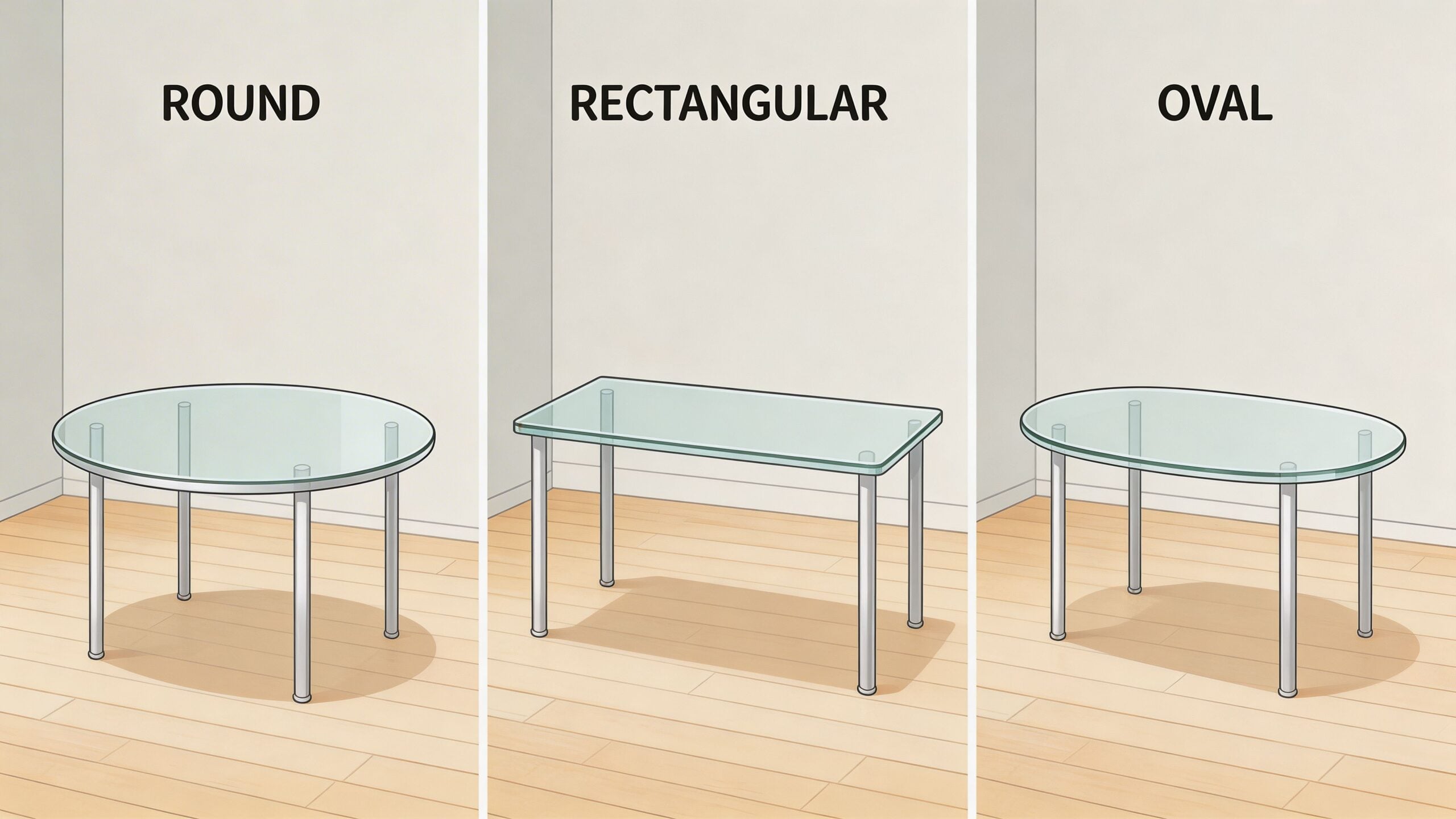
Start with shape, not finish
Each shape solves a different problem.
A round glass top is often the easiest way to soften a square room or create a more conversational seating arrangement. A rectangular top usually works best for longer rooms and larger gatherings. An oval shape can split the difference by keeping the generous seating of a rectangle while softening the edges visually.
If you're working through room flow, chair count, and clearance, this guide to table shapes and seating arrangements is a useful planning tool.
Before you choose a shape, think about these practical questions:
- How you eat: Quiet dinners for two need a different scale than holiday hosting.
- How people move: The table should support traffic flow, not interrupt it.
- What the room already has: Strong angles may benefit from curves. A soft room may benefit from a cleaner rectangle.
- How the chairs sit: Armchairs and fully upholstered seats take more room than slim side chairs.
Then choose the personality of the base
The base changes everything.
The same clear top can feel industrial on black metal, sculptural on brushed steel, organic on a solid wood pedestal, or almost formal on a polished base. Customization becomes far more valuable than buying a one-note table off a screen here.
A few common pairings illustrate the difference:
- Clear glass with metal base: Crisp, urban, often ideal for contemporary interiors.
- Clear glass with wood pedestal: Balanced and inviting. Good for transitional homes.
- Etched or frosted glass with wood: Softer light, less glare, more forgiving daily appearance.
- Oval glass with statement pedestal: Strong focal point without visual heaviness.
Frosted and etched options deserve more attention
Not every glass top has to be fully clear.
Distinctive finishes like etched or frosted glass offer both aesthetic and functional advantages. They diffuse light for a soft, matte texture that resists fingerprints and smudges, making them especially useful for busy family dining areas in sunlit homes, according to this etched glass product demonstration.
That's a strong option for homeowners who love the openness of glass but don't want a surface that constantly announces every touch.
If clear glass feels a little too formal or too revealing for your lifestyle, frosted or etched glass often lands in the sweet spot.
Customization is where the right table emerges
Custom dining sets are also worth considering here.
A made-to-order piece lets you solve several design issues at once. You can choose the shape that fits your room, the base material that matches your home, and the finish that supports your routines. In practical terms, that might mean pairing a tempered glass top with an Amish-made wood base, selecting chair upholstery that softens the look, and coordinating the finish with nearby cabinetry or flooring.
The custom kitchen and dining table options at Vinson Fine Furniture include glass-top and wood-base combinations, along with finish and configuration choices that can be previewed through digital visualizers during the design process.
That kind of customization matters because the right solution is rarely just "buy a glass table." It's usually closer to "buy the right shape, with the right top, on the right base, for the way your household lives."
Everyday Care for Lifelong Beauty
A good glass table shouldn't feel high-maintenance.
In fact, one of the strongest arguments for high-quality glass is ownership over time. Verified guidance notes that the cost-per-year-of-use often compares favorably with other materials because glass requires minimal maintenance and avoids the future refinishing, sealing, or surface repair expenses common with some wood furniture, as discussed in this practical guide to glass dining tables.
Daily care is simple
Most of the time, routine care comes down to consistency rather than effort.
Use a soft microfiber cloth for regular wiping. For deeper cleaning, use a glass-safe cleaner sparingly and avoid overly abrasive products or rough paper materials that can leave fine marks over time. If your table has a wood or metal base, clean each material appropriately instead of treating the whole piece the same way.
A simple rhythm works well:
- After meals: Wipe away crumbs, fingerprints, and moisture.
- Weekly: Clean the full top, including edges and underside if visible.
- Seasonally: Check the base, pads, and connections for stability and level support.
Small habits prevent most problems
Protection doesn't need to be complicated.
Use placemats for regular meals if you want to reduce plate movement and daily friction. Use trivets or heat-safe layers for very hot serving pieces. Lift heavy decor instead of dragging it. If the table sits in a high-activity household, keep an eye on the edge area because that's where incidental contact usually happens.
These habits are especially helpful:
- Choose microfiber over rough cloths: Softer materials reduce the chance of fine surface wear.
- Lift, don't slide: Decor, serving bowls, and ceramics can all leave marks if dragged.
- Use coasters and trivets: They create an easy buffer between active use and the tabletop.
- Clean the chairs too: Dust or grit on chair backs and arms can transfer during everyday movement.
What to expect over the years
No table stays identical forever.
Wood develops dents, finish variation, and wear patterns. Glass may show smudges more quickly and can collect fine signs of use in a busy household. The question isn't whether a table will age. It's how it ages, and whether that aging fits your tolerance and lifestyle.
A well-made glass table rewards people who want a refined look without signing up for refinishing projects down the road.
For many homeowners, that's the appeal. The upkeep is straightforward. The surface stays visually crisp with regular care. And the table remains adaptable as the room around it changes.
Design Your Custom Dining Set at Vinson Fine Furniture
Online research helps you narrow the field. It doesn't replace sitting at the table.
That final step matters more with glass than many buyers expect, because proportion, edge detail, base scale, and chair fit are hard to judge from photos alone. A top can look airy online and feel underbuilt in person. Another can look simple online and reveal excellent balance, thickness, and craftsmanship once you see it up close.
Why the showroom experience matters
At Easton Town Center, the showroom experience gives homeowners a way to compare materials in real light and at real scale.
That matters when you're weighing glass against solid wood furniture in Ohio, or trying to decide whether a frosted top feels better in your space than a clear one. It also matters if you're building a full room around the table and need chairs, finishes, and layout decisions to work together instead of as isolated purchases.
The in-store design process is useful for several reasons:
- Complimentary Design Consultations: A designer can help with room balance, chair pairing, and finish coordination.
- Custom Order Program: You can personalize fabrics, finishes, and configurations, then review options through 3D visualizers.
- Material comparison in person: Glass clarity, edge polish, wood tone, and base scale all read differently in real life.
- A full-room approach: The dining table can be chosen with nearby casegoods, lighting direction, and traffic flow in mind.
Value and purchase support matter too
An investment purchase still has to make sense financially and logistically.
For shoppers comparing options across Central Ohio, the store's pricing structure includes a Low Price Guarantee with a 110% refund of the difference if a lower local authorized dealer price is found within 30 days, and the Clearance Gallery offers savings of up to 70% on select floor samples, overstocks, and closeouts. Flexible financing is also available through Synchrony HOME, and White-Glove In-Home Delivery includes placement, assembly, and packaging removal.
Those details don't replace quality. They support it. A long-term purchase is easier to make when delivery, installation, and budgeting are handled thoughtfully.
The right outcome is a customized one
Some households need a clear tempered top on a sculptural metal base. Others need a frosted glass surface over a warm wood pedestal that can bridge modern architecture with a more traditional home. Others still may discover that solid wood is the better fit after comparing both side by side.
That's the value of a showroom visit. You're not picking from isolated images. You're testing a solution against your actual life.
If you're furnishing a primary home, upgrading a builder-grade dining set, or looking for custom dining sets that can last, the Easton showroom gives you a way to make the decision with more confidence and less guesswork.
Conclusion
Glass topped dining room tables aren't just about appearance. When they're well made, properly specified, and thoughtfully matched to your home, they offer durability, safety, flexibility, and lasting style. The right one can brighten a room, support everyday use, and still feel relevant years from now.
If you're deciding between glass, wood, or a hybrid of both, trust the process of seeing materials in person and asking better questions. That's usually where the right answer becomes clear.
If you're ready to compare finishes, test table shapes, and build a dining set that fits your home for the long term, visit Vinson Fine Furniture at Easton Town Center. A complimentary design consultation can help you sort through custom options, pricing, delivery, and the material choices that make the most sense for the way you live.