Solid Wood Table Desk: A Columbus Buyer’s Guide for 2026

A Columbus homeowner often reaches the same moment. The spare room is finished, the dining nook has become a weekday workstation, and the desk in use already shifts a little when a laptop is opened or a stack of papers lands near the edge. The surface may still look fine from across the room, but the experience feels temporary.
That's usually when the search changes. It stops being about a quick furniture purchase and becomes a search for permanence. A solid wood table desk answers that need in a way lighter pieces cannot. The weight is steadier. The grain has depth. The corners feel carved rather than assembled. The whole piece carries a sense that it belongs to the home, not just to the next season.
For Columbus buyers, that difference matters most in person. A table desk often has to do double duty. It may serve as a writing desk in the morning, a household planning station in the afternoon, and a place for shared meals or projects at night. The piece has to work hard, age well, and still look right years from now. That's why so many investment-minded homeowners begin looking for something more like an heirloom than a stopgap.
One local detail matters from the start. According to Vinson Fine Furniture's Columbus listing, the store strictly sells only solid hardwood furniture for its table desks and doesn't promote, sell, or feature engineered wood, MDF, or particle board. That standard shapes the entire conversation. It places the focus on solid cherry, oak, maple, and walnut, on bench-made character, and on the long view of ownership.
Table of Contents
- Beyond the Disposable Desk An Introduction
- Understanding The Solid Hardwood Standard
- Choosing Your Hardwood Character and Performance
- The Markers of Amish Craftsmanship and Quality
- Designing Your Custom Solid Wood Desk
- Understanding Value and The Lifetime Investment
- Lifetime Care and The Vinson Experience in Columbus
Beyond the Disposable Desk An Introduction
A disposable desk usually gives itself away in small ways first. One leg needs a folded paper shim. A drawer starts rubbing. The top sounds hollow when a hand taps it. Nothing has failed dramatically, yet the piece never quite feels settled.
A solid wood table desk creates the opposite feeling. It enters a room with presence. The top has substance under the hand. The grain isn't a printed pattern repeating itself from corner to corner. Light moves across it differently in the morning than it does at night, because natural wood has variation, pores, and figure that change with the cut of the board.
For many Columbus households, that matters because a desk is rarely just a desk anymore. One family may need a generous table for bills, laptops, schoolwork, and occasional meals. Another may want a writing surface that belongs in an open living area without looking utilitarian. In both cases, the better question isn't, “What fits the room?” It's, “What deserves to stay in the room for years?”
Why permanence feels different
Heirloom furniture doesn't ask for attention with gimmicks. It earns trust through materials and construction. A well-made hardwood top feels dense and calm. A drawer or apron sits square. The piece doesn't seem to apologize for itself.
A desk that feels grounded changes how a room is used. People lean on it, write on it, and live around it without wondering whether it can handle ordinary life.
That shift also carries an environmental and cultural dimension. The broader furniture market continues to move toward better materials and more lasting pieces. The global solid wood furniture market is projected at US$ 6.03 Billion in 2026 and is expected to reach US$ 8.36 Billion by 2035, growing at a 4.8% CAGR, with over 70% of buyers prioritizing eco-friendly furniture and sustainably sourced wood, and 65% willing to pay a premium for those attributes, according to Business Research Insights on the solid wood furniture market.
What Columbus buyers usually want
The investment homeowner often looks for a few things at once:
- A true furniture piece: Something that belongs with the dining room, library, or great room.
- A durable working surface: A top that can handle daily use without feeling fragile.
- Regional craftsmanship: A connection to Ohio, USA, and Canadian makers, especially Amish-made work with a heritage of careful joinery.
- A guided process: Not guesswork, but informed help with scale, finish, and function.
That's why Easton Town Center remains such a natural starting point. The buyer who wants weight, grain, and longevity usually wants to see those qualities up close before making a decision.
Understanding The Solid Hardwood Standard
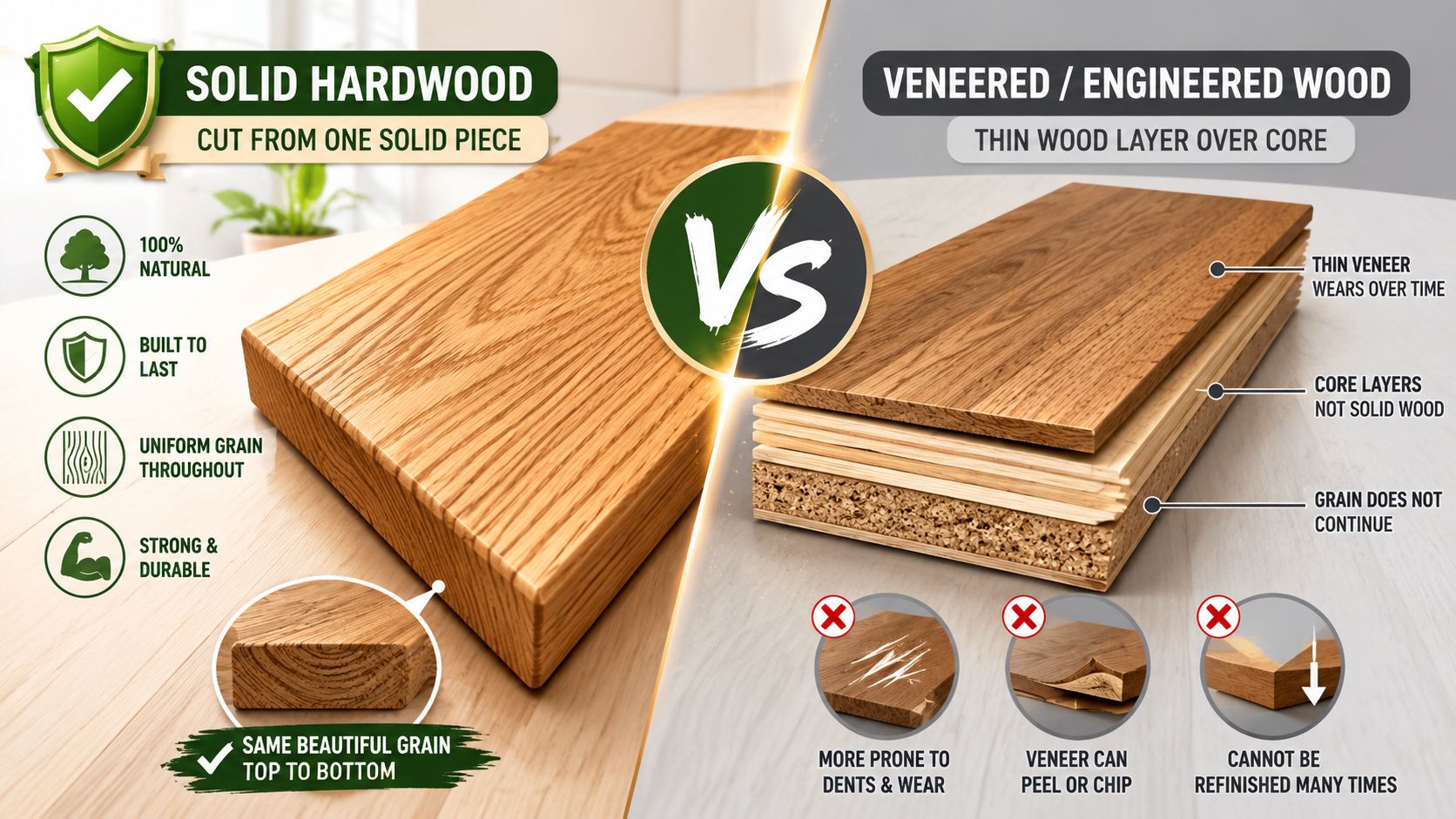
The phrase solid hardwood gets used loosely, and that's where shoppers often get tripped up. In the workshop, the term has a simple meaning. The desk top and structural parts are made from genuine hardwood through their full thickness, not just dressed to look that way on the surface.
What solid hardwood actually means
A proper hardwood desk has continuity. The wood fiber runs through the piece, so what the eye sees on the edge relates to what's happening across the face. That matters because the whole board behaves as wood behaves. It can be shaped, sanded, and refinished over time.
A quality solid wood desk also lasts far longer than short-term alternatives. According to Ashwood's discussion of solid wood desk longevity, a quality solid wood desk has a lifespan of 20 to 50+ years, while particleboard desks typically last 3 to 5 years. The same source notes that solid hardwood stands up better to scratches, dents, and everyday surface wear.
That long life isn't accidental. Dense hardwood fibers hold together under regular use. The top keeps its integrity because the material itself has integrity. That's the core reason many homeowners start with a close look at solid wood versus engineered wood furniture before they commit to a piece.
How to read the wood with your eyes and hands
A buyer doesn't need destructive testing to become sharper in the showroom. A few plain checks reveal a lot.
- Check the edge grain: On a true solid wood top, the edge should look like the same material continues through the board. It shouldn't feel visually disconnected from the face.
- Look for end-grain truth: Where visible, end grain gives the game away. Natural growth lines and pore structure don't fake themselves well.
- Notice the weight and feel: Solid hardwood carries a steadier heft. It tends to feel denser, quieter, and more composed when touched.
- Watch the pattern repeat: Real grain varies. If a surface looks too perfectly repeated, caution makes sense.
Recent buying conditions have made this skill more important. The market has seen a 45% increase in consumer confusion over “solid wood” labeling in online furniture sales, as noted in Oakywood's discussion of solid wood versus veneer desks. That confusion is exactly why physical inspection still matters.
Practical rule: If the eye, the hand, and the edge all tell the same story, the buyer is usually looking at honest material.
Choosing Your Hardwood Character and Performance
Not all hardwoods speak with the same voice. A solid wood table desk in cherry feels very different from one in oak, even before a hand touches the finish. The grain, color movement, and visual rhythm shape the room as much as the desk itself.
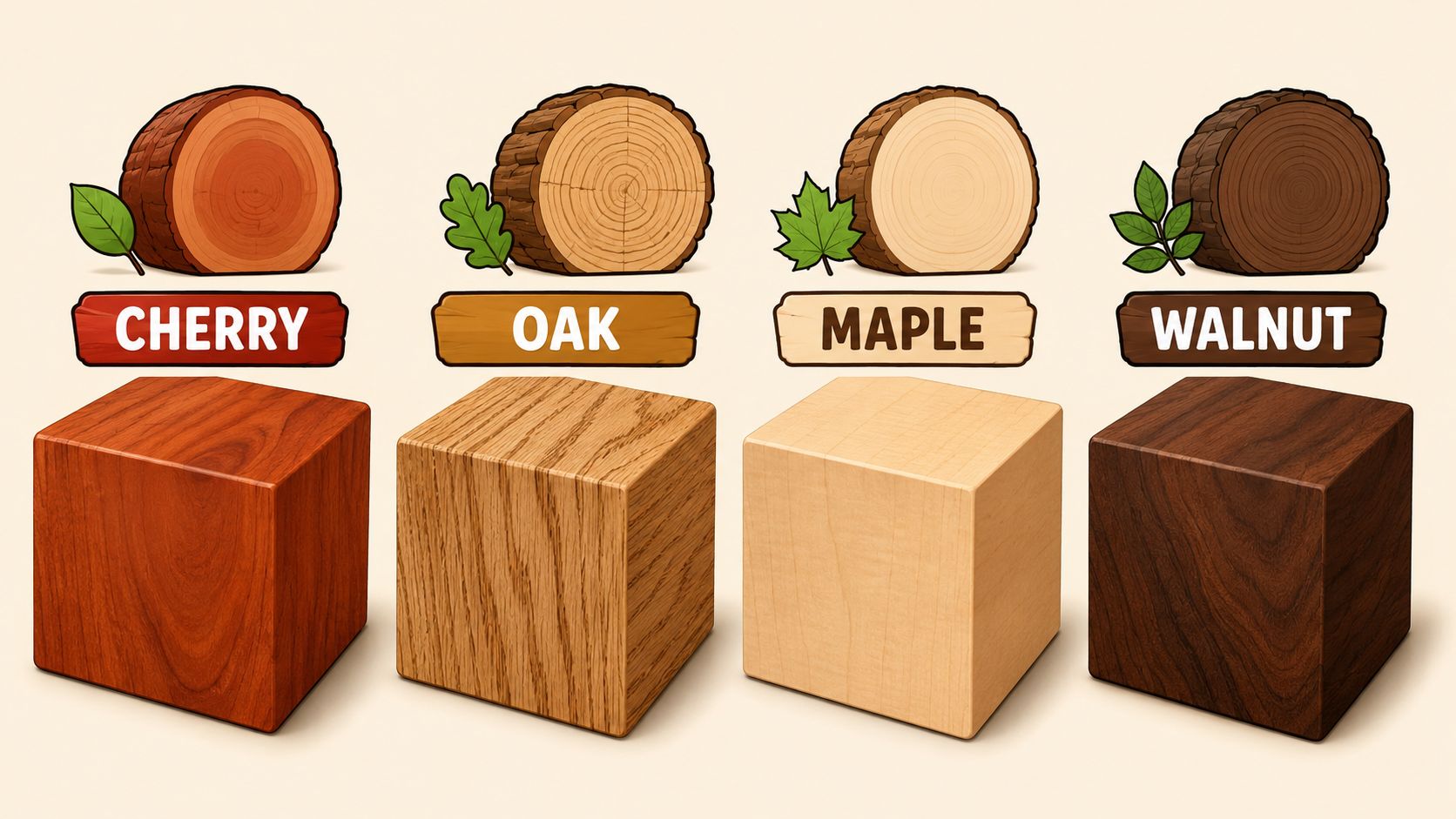
A good selection process starts with temperament, not trend. Some homes need the warmth of a wood that deepens over time. Others need a cleaner, brighter face that blends with painted trim, stone, or leather upholstery. Buyers comparing options often benefit from a closer look at how to choose the right hardwood for longevity and style.
The personality of each hardwood
Cherry has a refined, calm surface. Its grain is generally smooth and elegant, and its color develops into a richer patina with age. In a dining room that doubles as a work zone, cherry often softens the whole atmosphere.
Oak carries more visible grain and more visual movement. It feels traditional in the best sense of the word. The figure is assertive, and the wood brings a sense of backbone to a table desk with a larger footprint.
Maple reads cleaner and brighter. It suits interiors where crisp lines matter and where too much grain activity would compete with the room. Maple often feels refined.
Walnut has depth and quiet drama. The darker tone gives a solid wood table desk a library-like presence, especially when paired with top-grain leather or darker flooring.
Some buyers choose with their eyes first. Others choose with their home in mind. The strongest results usually happen when both line up.
Solid Hardwood Comparison
| Wood Species | Character & Grain | Color Profile | Best For |
|---|---|---|---|
| Cherry | Smooth, understated, graceful grain | Warm tones that deepen beautifully over time | Traditional rooms, transitional homes, heirloom dining-work spaces |
| Oak | Bold, expressive, visibly textured grain | Natural warmth with strong visual definition | Amish-made dining sets, larger table desks, classic interiors |
| Maple | Fine, even, restrained grain | Light and clean, often the brightest of the four | Contemporary spaces, tailored rooms, quieter visual palettes |
| Walnut | Rich, elegant, substantial grain | Deep brown with luxurious depth | Statement pieces, darker interiors, sophisticated mixed-material rooms |
Some practical pairings help narrow the field:
- For a bright Columbus breakfast room: Maple keeps the room airy.
- For a more formal shared workspace: Walnut adds depth without fuss.
- For a family table desk with heritage character: Oak brings visible craftsmanship.
- For a piece that will mellow into age: Cherry rewards patience.
The right answer rarely comes from a catalog swatch alone. It comes from seeing full boards, larger samples, and finished pieces under real showroom light.
The Markers of Amish Craftsmanship and Quality
Material starts the conversation. Craftsmanship finishes it. A desk can be made from excellent wood and still fall short if the joinery, balance, and finishing work are careless. That's why Amish-made furniture holds such a strong place in the discussion around Amish-made dining sets and solid-wood case goods.
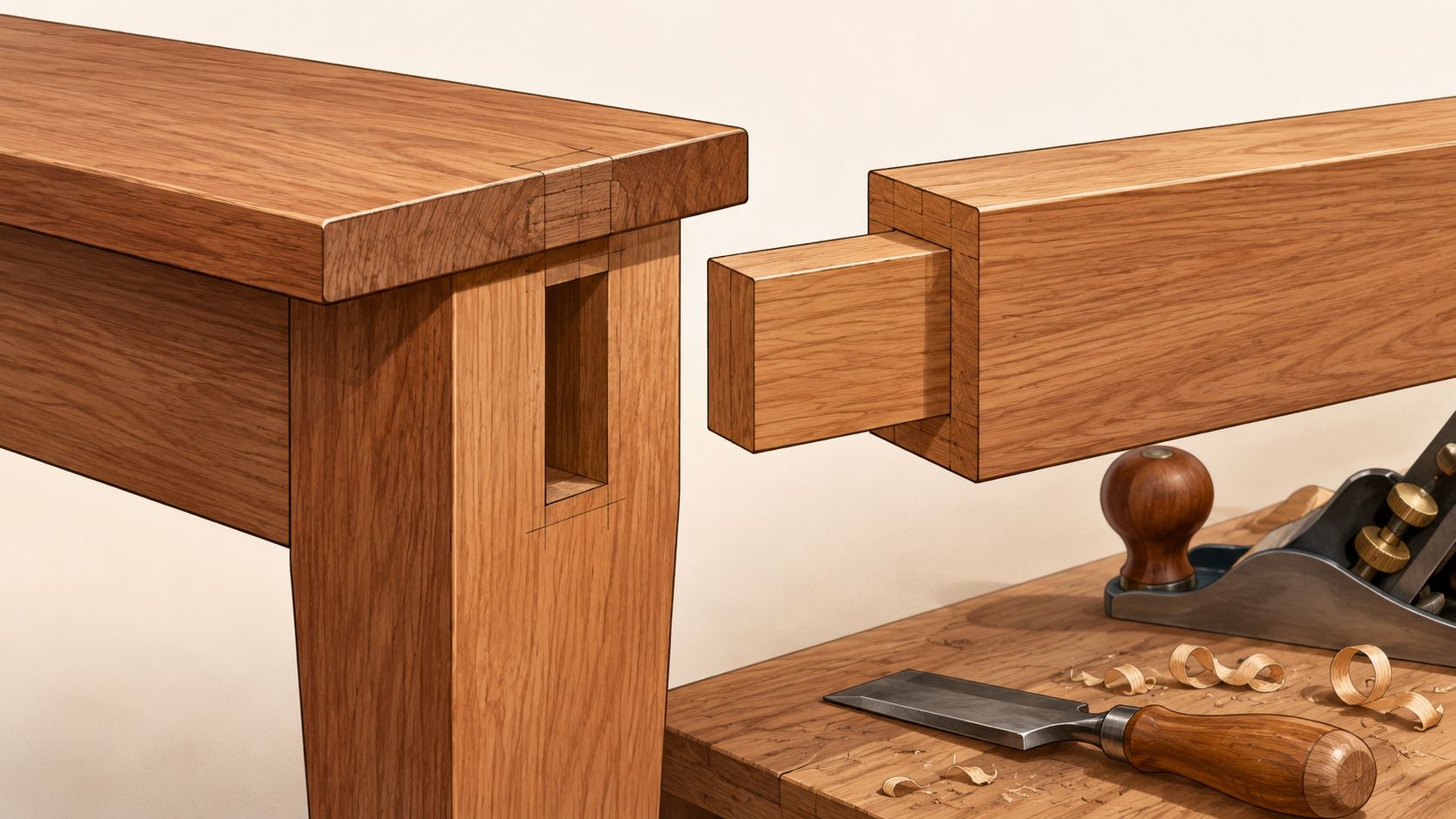
A buyer studying Amish construction is really studying discipline. Proportions tend to be balanced. Parts fit cleanly. Decorative choices don't distract from the underlying structure. That's part of why so many homeowners looking at bench-made dining surfaces also spend time with Amish-made dining tables, where construction details are easier to read.
Joinery tells the truth
Good joinery is visible even when it isn't exposed. The desk feels square. It stands without twist. Drawers move with a settled glide rather than a scrape.
A few classic signs matter most:
- Mortise-and-tenon joints: These connect framing members with mechanical strength, not just fasteners.
- Dovetail drawers: These resist pulling apart over time and signal careful drawer construction.
- Thick, balanced aprons and supports: These help the top stay composed and visually grounded.
- Consistent alignment: Gaps, uneven reveals, and racked lines usually point to rushed work.
The conversation becomes even more important when a desk must hold substantial weight. One overlooked gap in furniture guidance involves structural requirements for desks supporting vintage CRT equipment or heavy modern electronics. According to Lenovo's guide to wood computer desks, 70% of desk sagging complaints in the last 12 months relate to undersized solid wood tops under heavy loads rather than veneer failure. For buyers placing weighty monitors or equipment on a table desk, that's a specification issue, not a styling issue.
Finish, balance, and small signs of care
A fine finish should protect the wood without burying it. The surface ought to feel smooth, but still alive to the touch. The pores, figure, and subtle shifts in grain should remain legible under the finish.
Watch for these details in person:
- Edges with intention: Softened where the hand rests, not left sharp.
- Even sheen: Not blotchy, gummy, or cloudy under light.
- Underside care: A maker who respects the hidden surfaces usually respects the visible ones too.
- Base-to-top proportion: The desk shouldn't look top-heavy or frail.
The smallest details often reveal the largest truth. Furniture made with patience usually looks calm from every angle.
Designing Your Custom Solid Wood Desk
Most homeowners don't need more options. They need the right questions. A custom desk works when daily habits, room scale, wood character, and craftsmanship are translated into clear specifications before the piece is built.
Start with the way the piece will be used
A solid wood table desk may sound simple, but the useful details live in the proportions. A buyer should think about elbow room, leg clearance, the number of chairs the piece must accommodate, and whether the top needs to handle paper-heavy work, a monitor, or frequent shared use.
One practical benchmark comes from desktop construction itself. According to Desky's office desk wood guide, an optimal solid wood desk top thickness is 1.0 to 1.5 inches (2.54 to 3.81 cm) for rigidity and handling, and hardwoods like oak and birch are preferred for resistance to denting and scratching. The same source notes that full-thickness hardwood can be refinished multiple times, which matters when a desk is meant to stay in service for decades.
That baseline helps, but some buyers need more than a standard specification. A larger span, heavier equipment, or a multi-use room may call for thicker stock, a different base design, or grain orientation chosen with load in mind.
How the custom process becomes clear
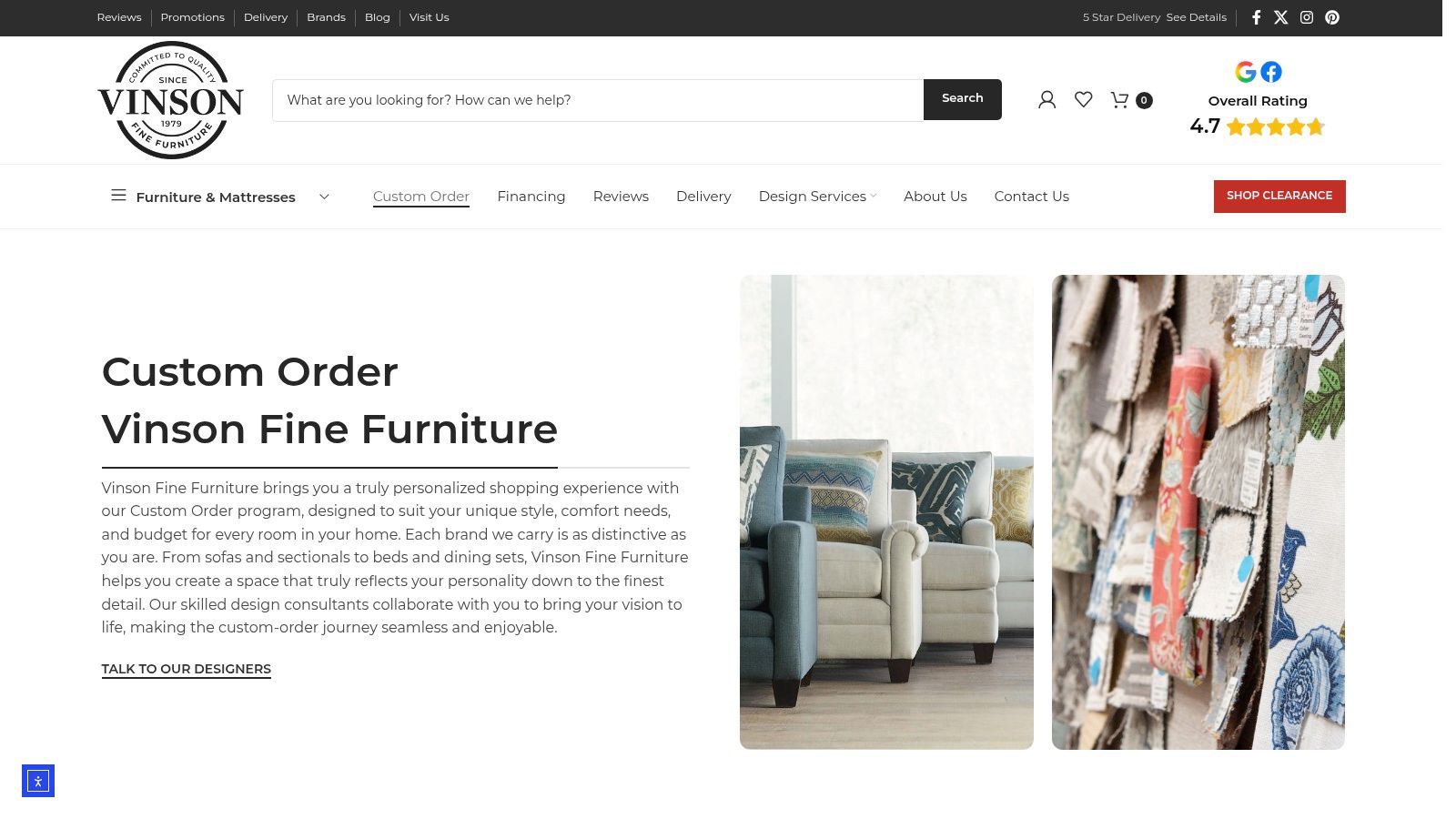
Guided customization earns its keep. Vinson Fine Furniture's custom-made office furniture options sit within a broader design process that emphasizes material choice, sizing, and visual planning. The store's Custom Order Program allows customers to fully customize solid wood table desks with specific fabric choices, finish types, and size dimensions, supported by advanced 3D digital visualizers that let homeowners preview the finished piece before construction begins, as shown on the Vinson custom order page.
For the Columbus buyer, that matters because custom work can otherwise feel abstract. In an In-Store Design Studio, complimentary design consultations help turn broad preferences into decisions. A homeowner may begin with “something warm and substantial” and leave with a clearer plan: solid-maple or solid-cherry, a softer edge profile, a particular stain, and dimensions suited to the room.
The customization story extends beyond desks too. Brands such as Canadel, Mavin, and Smith Brothers of Berne are especially relevant when a room needs coordination across categories. A dining-height table desk may need to sit comfortably near Mavin bedroom furniture, or within a space that also includes Smith Brothers furniture Easton shoppers recognize for top-grain leather seating and refined tailoring. Some buyers furnish the whole room at once, pairing the desk area with custom leather sectionals Columbus homeowners can try out, along with swivel chairs, recliners, rockers, or gliders that bring premium motion and comfort into the same design language.
A few finishing choices often complete the specification:
- Wood and finish: Cherry for warmth, maple for brightness, walnut for depth, oak for visible grain.
- Edge treatment: Crisper for a precise look, softer for a more relaxed hand feel.
- Base design: More open for chair movement, more architectural for visual weight.
- Surface protection: For everyday writing and laptop use, many owners add soft accessories such as premium felt desk mats to protect the finish while keeping the wood visible around the perimeter.
A custom piece becomes easier to commission when the buyer can see scale, finish, and proportion before a board is ever cut.
Understanding Value and The Lifetime Investment
A well-made desk isn't judged fairly by sticker price alone. It needs to be judged by service life, repairability, appearance over time, and how often the household will rely on it. That's where the language of investment becomes more useful than the language of upfront cost.
Cost over time versus cost today
A short-term desk often seems affordable because the comparison happens at the register. The better comparison happens across years of use. A piece that wobbles, scars easily, or feels dated quickly tends to be replaced long before a homeowner expected. A solid hardwood desk asks for more commitment up front, but it keeps paying that back in stability, longevity, and the ability to age gracefully.
That's especially relevant in a category that continues to grow. The global wood dining table market, which includes solid wood tables and desks, is projected to grow from USD 4.75 Billion in 2024 to USD 10.13 Billion by 2035 at a 7.13% CAGR between 2025 and 2035, according to Spherical Insights on the wood dining table market. Buyers are placing more value on table-style wood pieces that can serve multiple roles.
Where value becomes visible
Value also shows up in how a retailer supports the purchase. The strongest programs reduce risk and expand options.
- Low Price Guarantee: A 110% refund on the difference if a lower price is found at a local authorized dealer within the stated period.
- Clearance Gallery: Savings of up to 70% on floor samples, overstocks, and seasonal closeouts.
- White-Glove Delivery: Careful placement, assembly, and packaging removal matter when the piece is heavy and meant to arrive in perfect condition.
Those details matter to the savvy luxury shopper. They create room for thoughtful buying instead of rushed compromise.
Lifetime Care and The Vinson Experience in Columbus
A solid wood desk doesn't demand complicated care. It asks for steadiness. Daily habits matter more than elaborate treatments, and small protective routines preserve both the finish and the feel of the piece.
Simple habits that protect the wood
The goal is to keep the surface clean, dry, and out of stressful conditions. Wood is durable, but it still responds to heat, moisture, and abrasion.
A few sensible habits go a long way:
- Use a soft cloth: Dust regularly without anything abrasive.
- Wipe spills promptly: Standing moisture is harder on finishes than quick contact.
- Avoid harsh cleaners: Gentle cleaning protects the finish layer and the look of the grain.
- Mind placement: Keep the desk away from strong heat sources and extreme temperature swings.
- Use pads where needed: Lamps, equipment, and writing accessories benefit from a buffer.
Minor marks don't mean a piece is ruined. One of the quiet strengths of real hardwood is that it can often be refreshed rather than discarded. That repairable character is part of what makes solid wood furniture Ohio buyers seek out such a rational long-term choice.
Why the showroom visit still matters
Furniture like this should be experienced physically before it's chosen. Grain needs light. Weight needs a hand on the edge. A chair at the desk needs a sit-test. Proportion becomes much easier to judge when a buyer can walk around the piece, step back, and compare wood species in the same room.
That's why so many Central Ohio homeowners still begin with where to buy solid wood furniture in Columbus. A showroom visit does more than confirm style. It reveals balance, finish quality, and the subtle comfort details that photographs flatten.
Easton Town Center remains an especially practical destination for that process. A homeowner can compare cherry against walnut, study Amish-made dining sets up close, feel the buttery hand of top-grain and performance leathers, and test the motion of sectionals, reclining seats, swivel chairs, rockers, and gliders in the same trip. For many rooms, that combination matters because a desk isn't chosen in isolation. It has to live with the rest of the home.
A thoughtful next step is a visit to Vinson Fine Furniture at Easton Town Center, where Columbus homeowners can handle solid cherry, oak, maple, and walnut in person, explore complimentary design consultations in the In-Store Design Studio, review custom possibilities for brands like Canadel, Mavin, and Smith Brothers, and browse both current collections and the Clearance Gallery for long-term value.