Solid Wood Folding Dining Table: Buyer’s Guide for 2026


Dinner is over, but the chairs still block the route to the kitchen. A larger table would make hosting easier, yet leaving it open would crowd the room every day. A solid wood folding dining table can solve that problem, provided its compact shape doesn't come at the expense of dependable support.
The important purchase decision happens underneath the top. Hinges, supports, fasteners, and solid hardwood must work together through repeated opening and seasonal changes in the home. For a Columbus homeowner buying for long-term use, smooth operation on the showroom floor is only the starting point.
Fold Types Compared at a Glance
Fold types for solid wood dining tables
| Fold type | How it opens | Storage footprint | Best fit |
|---|---|---|---|
| Gateleg | Swing-out gate legs support a drop leaf | Narrow central footprint, with leaves hanging alongside the base | Round or oval dining areas that double as work surfaces |
| Drop-leaf | Hinged side leaves fold down against the apron | Reduced tabletop width, with the fixed center and base setting the minimum depth | Small condos, daily dining corners, or hallway-adjacent spaces |
| Butterfly leaf | A hinged center leaf unfolds from storage inside the table | The closed table remains standing at its everyday size | Occasional guests without separate leaf storage |
| Fold-down pivot base | The top folds along a hinge line and the base pivots for upright storage | An edge-standing profile governed by the base and pivot assembly | Tight spaces with a designated, secure storage location |
A gateleg table places support beneath the raised leaf, but the swinging legs must leave enough room for diners' knees and chair placement. A drop-leaf table keeps a usable center surface available, making it practical when only part of the top needs to remain open. A butterfly-leaf table stores its extension within the frame, although the closed table still occupies a dining-table footprint. A fold-down pivot-base table prioritizes storage, placing greater importance on controlled handling and the quality of the pivot assembly.
Match the mechanism to daily use
The best mechanism is the one the household will operate. A substantial solid-oak top may feel reassuring during dinner but awkward when someone needs to reposition it before every meal. Handles, accessible locks, and a clear opening sequence matter as much as the folded dimensions.
Gateleg designs deserve a chair test with every support deployed. A gate can sit exactly where a diner expects to place a foot, and an otherwise generous top can conceal cramped seating underneath. Drop-leaf designs need a similar check because the hanging leaf can interfere with knees when seating is placed along the narrow side.
The rectangular drop-leaf dining table provides a useful starting point for considering this format. The practical question isn't whether the leaves lower, but whether the remaining surface works for ordinary meals without rearranging the room.
Space-planning rule: Measure the table in its working configuration, with chairs occupied and pulled back, not just with the seats tucked underneath.
Measure both versions of the room
Open dimensions should come from the exact model specification, not a category average. The folded measurement must include projecting feet, hanging leaves, handles, and any part of the base that remains outside the tabletop edge.
A floor outline made with painter's tape helps reveal conflicts with a buffet, doorway, or kitchen route. Place the intended chairs around that outline and pull them back as someone would when standing. Then mark the proposed storage footprint separately.
A folding table earns its place only when both configurations work. A generous open top offers little benefit if the folded base still blocks a cupboard or the upright table cannot be secured safely.
Load Path and Pre-Purchase Checks
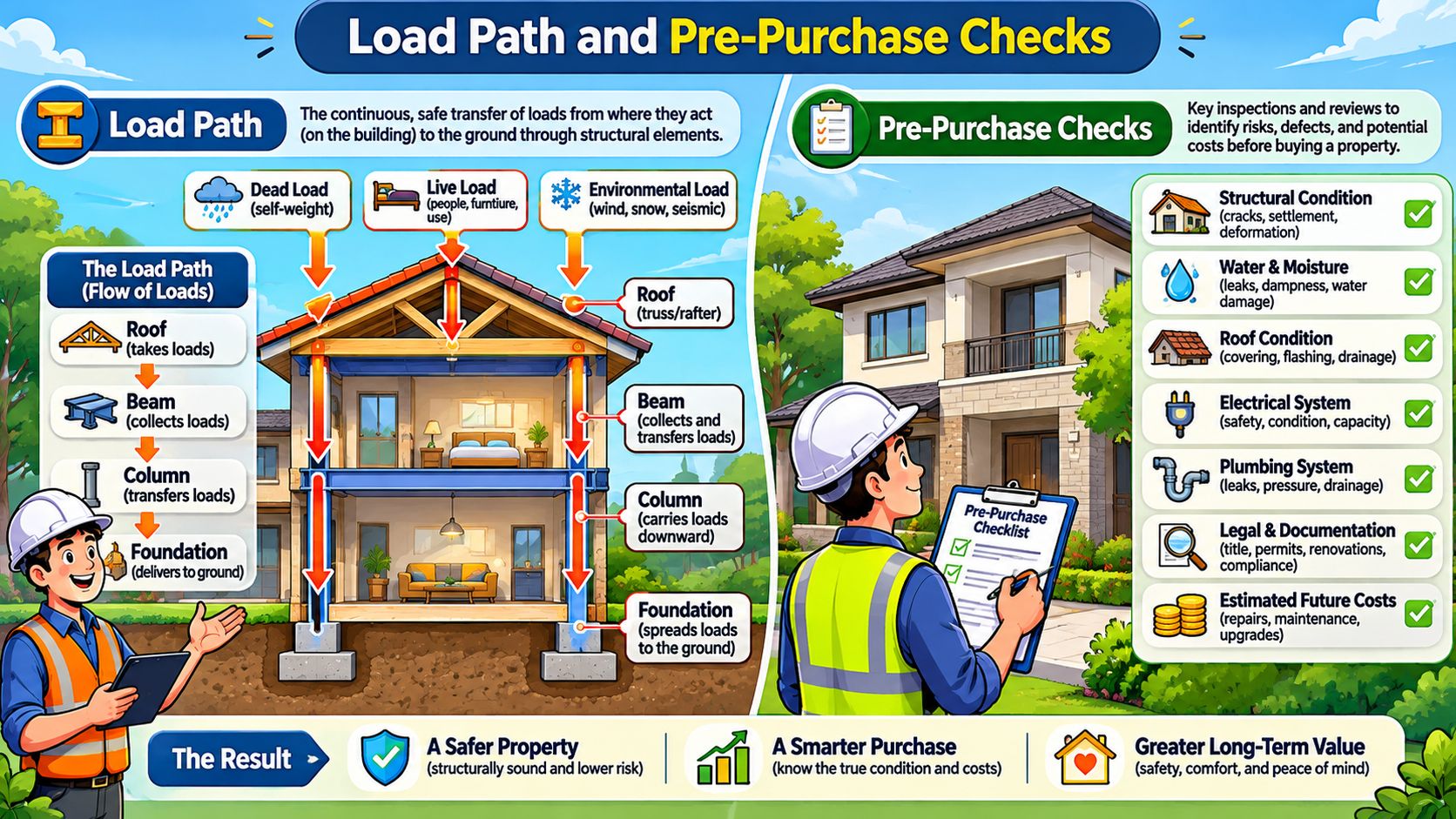
A folding mechanism carries load like any other structural joint. The load path should run from the tabletop through supported leaves, aprons, and legs to the floor. Hinges guide movement and transfer forces, but an unsupported hinge leaf should not become the only thing holding dinner above the floor. The same issue shows up when wood changes dimension: the hinge plates, screw holes, and supports must tolerate the same swelling and shrinking that affect the top.
A door hinge works because rotation depends on sound attachment to the surrounding frame. On a folding table, broad bearing surfaces, sensible screw spacing, and positively engaged supports reduce stress concentrated around a small patch of wood. That matters most where a moving leaf meets a fixed frame, because the load and the wood movement arrive at the same joint.
The U.S. Forest Service Wood Handbook identifies moisture control, storage, handling, and design as important factors in preventing dimensional-change problems. It also explains that end grain dries faster than side grain. Exposed ends and hardware-adjacent components therefore deserve inspection rather than a judgment based only on the polished upper surface.
How to run the checks
With permission from the showroom team, use the table as a buyer would, with slow inputs and close attention to the underside. Open it fully and engage every lock. Supports should reach their intended stops, panels should meet level, and the secured position should be unmistakable, whether or not the lock makes a sound. Press moderately near the center and each folding joint, then watch the support beneath the pressure point. Movement at a hinge differs from rocking caused by an uneven floor.
Open and close the table several times. Smooth movement should repeat without lifting, forcing, binding, rattling, or a change in alignment when the top returns flush. Inspect underneath for top attachments, support blocks, hinge plates, and fasteners. Ask how each connection accommodates adjustment and wood movement, especially where a broad solid top is held near a moving joint.
| Check | What good looks like | Red flag |
|---|---|---|
| Open fully and engage every lock | Positive engagement; level panels | Unexplained gap or step between panels |
| Press center and each folding joint | Firm support without rocking | Wobble, lifting supports, or hinge play |
| Fold and reopen repeatedly | Smooth motion; top returns flush | Binding, rattling, or changing alignment |
| Look underneath at attachments | Movement allowance and accessible hardware | Wide top rigidly restrained without an evident allowance |
| Ask about hardware replacement | Identifiable, serviceable hinges and fasteners | No clear answer about parts or repair |
A loose fastener may need attention. A split pivot block requires a different response. Repeated tightening will not restore damaged screw-holding wood, and oversized replacement screws can create another problem when the surrounding material is already compromised.
The relationship between joinery and hardware matters here. A sturdy mortise-and-tenon base cannot compensate for an inadequately supported leaf, just as an impressive hinge cannot correct a loose frame. The guide to various wood joints helps distinguish frame construction from the moving connections.
Record the inspection findings and photograph the underside with permission. After delivery, those records provide a baseline for checking assembly, alignment, and any concern that needs prompt attention.
How Solid Hardwood Moves and Which Species to Choose
Solid hardwood changes dimension with moisture. It swells as it absorbs moisture from humid air and shrinks as it dries, with substantially more movement across the grain than along it, as Purdue Extension explains. A wide dining top therefore needs construction that permits movement rather than attempting to prevent it.
The mechanism and the wood must be considered together. A hinge can remain mechanically sound while its mounting points shift enough to make adjoining panels bind. Elongated screw holes, figure-eight fasteners, tabletop clips, and other floating-top details allow appropriate movement without surrendering support.
Solid hardwood species for a folding dining top
| Species | Grain and color | Movement and finishing note |
|---|---|---|
| Black cherry | Fine grain; warm red-brown that deepens with age | Check cross-grain movement allowance and top attachment |
| Red oak | Open grain with a pronounced ring pattern; pinkish-tan tones | Finish all faces to slow moisture exchange |
| White oak | Tan-brown color with visible rays, especially when quartersawn | Quartersawn boards are worth considering for a wide top |
| Hard maple | Pale, fine grain with occasional subtle figure | Dense wood still needs freedom to move across its width |
| Black walnut | Rich chocolate tones with generally straight grain | Grain orientation and a balanced finish matter alongside species |
Choose the boards, not just the species name
Density doesn't provide a shortcut to dimensional stability. Board width, grain orientation, drying, and attachment details all affect how a finished tabletop behaves. A dense solid-maple top still requires movement allowance.
Quartersawn white oak and quartersawn walnut are sensible candidates when stability across a broad surface is a priority. Neither makes the engineering optional. A balanced finish on the top, underside, and edges slows moisture exchange but doesn't stop it.
The walnut versus maple guide offers another way to consider appearance alongside practical expectations. The right choice should complement the room without relying on stain alone to disguise a grain pattern the homeowner doesn't enjoy.
A stable-looking seam in the showroom is a snapshot. The attachment system determines whether that seam can remain serviceable through seasonal change.
Prepare for a Columbus home
Keep the table away from radiators, direct HVAC discharge, and damp exterior walls. A storage position against a cold wall can expose the folded piece to a different environment from the dining area where it normally stands.
Ask how the tabletop was dried and whether its moisture condition suits the intended indoor environment. Conservation guidance discussed by SensMat emphasizes understanding environmental fluctuations rather than chasing a single perfect reading.
In a Columbus home, heated winters and air-conditioned summers make seasonal observation useful. A room humidity logger can reveal the pattern across the year. Periodically opening a stored table also gives the owner an opportunity to notice resistance before forcing a reluctant joint.
Ohio Craft and Custom Options for Your Table
Ohio's furniture-making reputation has a substantial manufacturing foundation. The USDA Forest Service describes approximately 400 shops in and around the Holmes County Amish furniture cluster, and notes that most Amish furniture is made from nearly all solid wood. That regional context gives Amish-made dining sets a practical meaning beyond a style label, especially when the top and folding parts must be considered as one system through seasonal change.
A separate Forest Service study of the Ohio cluster identifies semi-customized solid-hardwood furniture as an important competitive opportunity. Local hardwood resources and flexible production allow buyers to consider dimensions and configurations without abandoning a consistent construction standard. For a folding table, that flexibility matters because leaf geometry, hinge placement, and support clearance all affect how well the mechanism tolerates a top that swells and shrinks.

Turn room measurements into a specification
A household dining corner may need to serve everyday meals and occasional guests. Choosing a finish first will not solve a support leg that blocks the preferred chair arrangement. The useful starting point is a measured plan showing the open top, folded storage position, chairs, and access routes.
Vinson Fine Furniture's In-Store Design Studio and Complimentary Design Consultations support that planning process. Its Custom Order Program includes fabric, leather, finish, size, and configuration choices, with digital visualizers helping communicate selections. Folding-table availability and mechanism-specific alterations still need confirmation before an order is finalized.
A visualizer shows an option; confirm separately that the combination can be manufactured. Autodesk's furniture-design documentation describes visualization as a way to communicate and validate configurations before fabrication.
Keep craftsmanship and origin precise
Mavin supports custom solid-wood bedroom lines, while Smith Brothers is a partner brand in the Custom Order Program. They represent distinct furniture capabilities, not interchangeable product categories. A search for Mavin bedroom furniture or Smith Brothers furniture Easton should lead to a coordinated design conversation without implying either brand makes every folding mechanism.
For a discussion about custom hardwood dining tables, a written specification should include:
- Top construction: Species, thickness, and grain orientation.
- Finish coverage: The selected finish and treatment of underside and edges.
- Mechanism: Hinge type, support arrangement, and locking method.
- Configuration: Leaf arrangement and confirmed open dimensions.
- Storage: Folded size, handling requirements, and intended location.
The final step before ordering is requesting a sample finish board. View it beside the flooring and chairs under the room's actual lighting, then compare it with the grain and edge treatment. That keeps color, wood movement, and the folding hardware in the same decision instead of treating them as separate choices.
Sustainability and Cost Per Year of Use
Solid wood isn't automatically the lowest-impact choice just because it's solid wood. A 2025 life-cycle assessment database covering 25 furniture pieces found that heavier furniture groups generally carried greater environmental impacts, with pre-production typically contributing the largest share. Material labels alone don't establish the result for an individual table.
That doesn't weaken the case for a repairable hardwood table. It changes the question from what the furniture is called to how long the household can realistically keep using it. A table that remains useful through moves, repairs, and changing seating needs has a different ownership story from one discarded after a failed proprietary mechanism.
Examine the service-life assumptions
A substantial top brings weight as well as potential longevity. That weight affects handling and transport, while an inaccessible pivot assembly can make an otherwise sound piece difficult to maintain. Durability depends on both the timber and the parts that permit it to fold.
A buyer's sustainability checklist should stay specific:
- Repairable components: Can a hinge, support, leaf, or damaged top be replaced without discarding the entire table?
- Sourcing documentation: Is responsible-sourcing information available for the selected hardwood?
- Expected use: Does the configuration suit likely household changes, not just the current floor plan?
- Transport and packaging: How far will the piece travel, and what packaging accompanies delivery?
The same buy-less, use-longer thinking applies outside furniture. For households evaluating reusable outdoor equipment, HYDAWAY's guide offers a related opportunity to browse low-waste camping essentials. The relevant principle is selecting equipment that remains useful rather than collecting replacements.
Ownership test: A repairable table only delivers its potential value if the household likes using it enough to keep it.
Calculate use rather than celebrating the markdown
Consider a hypothetical ownership example, not a price quote or service-life promise. A table purchased for $1,500 and used for 25 years costs $60 per year before delivery, maintenance, or repairs. A $600 table replaced after five years costs $120 per year on the same simplified basis.
Those assumed lifespans determine the result. If the more expensive table doesn't fit the household or becomes impractical to operate, its projected value disappears. Conversely, a well-chosen clearance piece may provide long service without requiring the highest initial expenditure.
The useful calculation is total expected ownership cost divided by realistic years of use. Include likely repair expenses and avoid treating a warranty, a heavy top, or a sale label as proof of longevity. Environmental impact and annual cost aren't identical measures, but both improve when a suitable table remains in service.
Test the Table in Easton Before You Commit
A showroom visit can answer questions that photography cannot. At Easton Town Center, evaluate a folding table with the intended seating arranged around it. Sit at a folding joint, check knee clearance, and confirm that reaching a lock doesn't require an awkward lift. Work the leaf several times, because a table that feels smooth when empty can bind once chairs, diners, and seasonal wood movement are part of the equation.
Vinson Fine Furniture is a family-owned business, formerly known as Kitchen Tables & More, serving Columbus and Central Ohio. Its emphasis on solid hardwood furniture and long-term ownership makes a measured, hands-on visit more useful than choosing from a finish photograph alone. The handcrafted furniture planning guide provides context for preparing that visit.
Bring a usable room brief
The strongest Design Studio consultation begins with a few practical materials:
- Measured dimensions: Include doorways, nearby storage, and the available folded footprint.
- Seating requirements: Record ordinary use and the occasions that require extra places.
- Room photographs: Show flooring, adjoining furniture, and daylight.
- Decision priorities: Rank storage convenience, appearance, ease of operation, and repair access.
The Design Studio can then address dining tables, chairs, buffets, and complete dining sets as a coordinated arrangement. Many pieces can be customized with a choice of fabric, leather, wood finish, size, and configuration. That matters with folding furniture. The top, leaves, supports, and finish should be considered together, since hinges have to tolerate the same swelling and shrinking that the wood does across the year.
Vinson Fine Furniture also offers Custom Order options, including custom dining by Canadel and custom bedroom and dining lines by Mavin. Dining room furniture includes dining tables, chairs, buffets, and complete dining sets in a range of styles and finishes. A wider visit can also cover sectionals and occasional seating, including swivel chairs and accent chairs, when the same room plan calls for coordinated pieces.
Confirm value and delivery details
Vinson offers a Low Price Guarantee, and clearance items are offered at up to 70% off. Financing is available for qualified orders. A floor-sample dining table warrants an underside inspection and mechanism test, not merely a glance for visible scratches. Open and close the leaf, feel for play at the joint, and make sure the support lands cleanly under the load.
Design Services and the Design Studio can help organize preferences before the visit, especially if the table must serve daily meals and occasional overflow seating. White-Glove Delivery includes inspection, placement, assembly, and removal of packaging, making delivery access and the intended table location useful details to settle beforehand.
For questions about available folding configurations or consultation arrangements, customers can call (614) 476-5858 ext.3.