Mattress Buying Guide for Better Sleep

Two shoppers lie on the same plush pillow-top in a showroom. One feels cradled and relaxed. The other notices heat building beneath the shoulders and a hollow sensation at the lower back. Neither reaction is wrong, and the higher price or softer surface doesn't make that display the right choice for either sleeper.
A mattress deserves the same deliberate attention as a solid-maple dining table or a bench-made leather sectional. It affects nightly comfort, room planning, partner compatibility, and the timing of the next major purchase. Online mattress buying surged during the pandemic and reached 45% of mattress sales in 2021, then settled at 36% in later Consumer Reports surveys, so today's shopper must weigh showroom testing against online convenience rather than treating either channel as automatically superior.
This mattress buying guide gives the decision a practical order. It focuses on construction, support, body position, household needs, room fit, testing, care, and purchase protection. The Easton showroom should function as a testing lab, not a place where shoppers accept the most expensive display as a universal answer.
Start With the Right Mattress Decision
The first mistake happens before anyone compares coil systems or comfort layers. Shoppers walk onto a sales floor with a vague goal, lie on a plush model, and let the surface sensation make the decision. That approach confuses immediate softness with long-term suitability.
A confident buyer answers four questions first:
- Who sleeps on it: One adult, two partners, a child, or a guest? A solo side sleeper and a couple with different sleep temperatures have different requirements.
- What the room allows: The bed must leave practical clearance for nightstands, doors, drawers, and walking paths. A larger mattress isn't an upgrade if it makes the bedroom difficult to use.
- What the body is already reporting: Shoulder pressure, morning stiffness, heat retention, partner movement, and difficulty getting out of bed each point toward a different construction or accessory.
- What budget feels comfortable over a long ownership horizon: A mattress is a durable furnishing, so the purchase should be judged by construction, comfort, and expected service rather than by a dramatic showroom discount.
A long-term furnishing, not a seasonal accessory
Better Sleep Council research summarized by Sleep Savvy found that consumers expected to keep a new mattress for 9.4 years on average, down from 10.9 years in earlier research. The median time people kept their last mattress fell to 8.9 years from 10.3 years in 2007, and nearly three-quarters replaced their last mattress within 8.9 years, while only 10% kept it longer (Better Sleep Council research summary).
That replacement pattern changes the buying question. The right mattress isn't the one that feels impressive for a few minutes. It should remain comfortable, structurally sound, and compatible with the bedroom and household for a substantial stretch of daily use.
Practical rule: Patience during the first twenty minutes of shopping can prevent years of restless nights.
Build a personal brief before the showroom
A short written brief keeps the floor conversation useful. Each shopper should note the usual sleep position, partner concerns, temperature preference, recurring pressure points, current mattress problems, desired size, and a spending limit that won't create financial strain.
This same design-minded process works for the rest of the bedroom. A bed frame, nightstand, lighting plan, and bedding palette should support the mattress rather than compete with it. Columbus homeowners seeking solid wood furniture in Ohio, Mavin bedroom furniture, or a complete bedroom plan can use a design consultation to consider the sleep surface and the room as one composition.
Compare Mattress Types and Constructions
A mattress label matters less than what the sleeper feels beneath the shoulders, hips, ribs, and lower back. Construction determines whether the surface hugs, floats, rebounds, or stays almost still when a partner turns.
Memory foam offers close contouring and strong motion isolation. The body sinks gradually into the comfort layer, which can relieve pressure for a side sleeper, but that enveloping feel may retain heat and make repositioning slower. Foam performance depends heavily on density and composition, so a floor label that says “foam” provides too little information by itself.
Traditional innerspring construction feels more buoyant. Coils create airflow and a familiar pushback, while the open structure generally makes turning easier. The trade-off is greater motion transmission in some designs, especially when partners share a surface without individually responsive coil units or substantial comfort layers.
Hybrids combine a coil core with foam or latex above it. They typically offer more bounce than all-foam beds while preserving meaningful pressure relief. Natural latex feels springy and buoyant rather than enveloping, often sleeps cooler, and tends to suit shoppers who want resilience and long-term value. Sleep Foundation identifies high-quality latex and hybrid mattresses as durable performers, while foam durability varies according to its materials and density.
| Construction | Feel & Support | Motion Transfer | Durability & Care |
|---|---|---|---|
| Memory foam | Deep contouring with a slower response | Usually strong isolation | Inspect foam density, protect from spills, and check foundation requirements |
| Innerspring | Responsive, lifted feel with airflow | Can transmit more movement | Compare coil design and gauge, not coil count alone |
| Hybrid | Balanced pressure relief and pushback | Often a useful middle ground | Evaluate coil system, comfort-layer composition, and rotation guidance |
| Latex | Buoyant, resilient, and breathable | More responsive than isolating | High-quality latex generally supports long-term durability, with proper protection |
Translate the specification sheet
Coil count doesn't prove quality on its own. Coil gauge, coil shape, individual responsiveness, layer thickness, foam density, latex composition, edge reinforcement, and the foundation beneath the mattress tell a more complete story.
Restless partners often appreciate a hybrid or memory foam design with controlled movement. Heavier sleepers should look closely at core strength, edge stability, and how much the comfort layer compresses. Allergy-prone households should ask about removable covers, certified foams, latex content, and cleaning requirements rather than relying on broad “hypoallergenic” language.
A shopper comparing all-foam and hybrid constructions can use this memory foam versus hybrid mattress comparison to organize the questions before visiting the floor. A used mattress also deserves a careful inspection before it enters a bedroom. Guidance on the signs of bed bugs on a mattress can help households identify visible warning signs and make a safer replacement decision.
Understand Firmness, Support, and Body Weight
A mattress can feel firm in the showroom yet lose support once your body settles into its layers. Firmness describes the initial pushback from the comfort surface. Support describes how well the internal structure keeps your spine aligned as you change positions and remain under pressure. They affect one another, but they are not interchangeable.
A plush mattress can still support the body when its core resists excessive sagging. A very firm surface can create pressure at the shoulders and hips or leave the pelvis poorly supported. The Sleep Foundation firmness scale guidance places common mattresses between 3 and 8 on a 1-to-10 firmness scale. Medium, 5, and medium firm, 6, provide useful starting points, not universal answers.
Use body weight as a testing filter
Body weight changes the feel of every construction. A lighter sleeper usually compresses the comfort layers less and experiences a firmer surface. A heavier sleeper moves farther into those layers and may need a thicker comfort system or stronger core to keep the pelvis from sinking below the shoulders.
For sleepers around 130 to 230 pounds, medium and medium-firm surfaces often make practical first tests. That range narrows the showroom choices, but alignment and pressure relief make the final decision.
Use this sequence on the floor:
- Lie in your normal sleep position instead of sitting upright.
- Notice whether your shoulders and hips settle without a sharp pressure point.
- Check whether your lower back feels supported rather than suspended.
- Ask a companion or consultant to view your spine from the side.
- Change positions and repeat the check.
Stay on each candidate long enough to notice whether support remains consistent after the first impression fades.
Read alignment, not the label
Side sleepers need the shoulder and hip to receive pressure relief while the waist remains gently supported. Back sleepers should avoid a visible bow through the midsection, and the lumbar area should not feel pushed upward. Stomach sleepers generally need a flatter plane that limits abdominal sinkage.
Persistent pain calls for a broader review of the sleep setup. A mattress is not a medical treatment. Shoppers considering adjustable air support can review practical information on air bed and spine health, then assess whether the surface offers stable support without excessive movement.
Use a body-specific reference before visiting the showroom. This mattress guide for different body types helps turn general firmness labels into a focused test. Treat the Easton showroom like a testing lab for a long-term furniture decision. Compare how each mattress carries your weight, supports your alignment, and feels after several position changes, then choose the construction that fits your body and household rather than chasing a universal firmness label.
Choose by Sleep Position and Household Needs
A mattress that suits one sleeper can frustrate another because each body loads the surface differently. Test every candidate by position, then judge whether its support stays consistent as you move. The Easton showroom should function as a practical testing lab for a long-term furniture decision, not as a place to accept one firmness level for everyone.
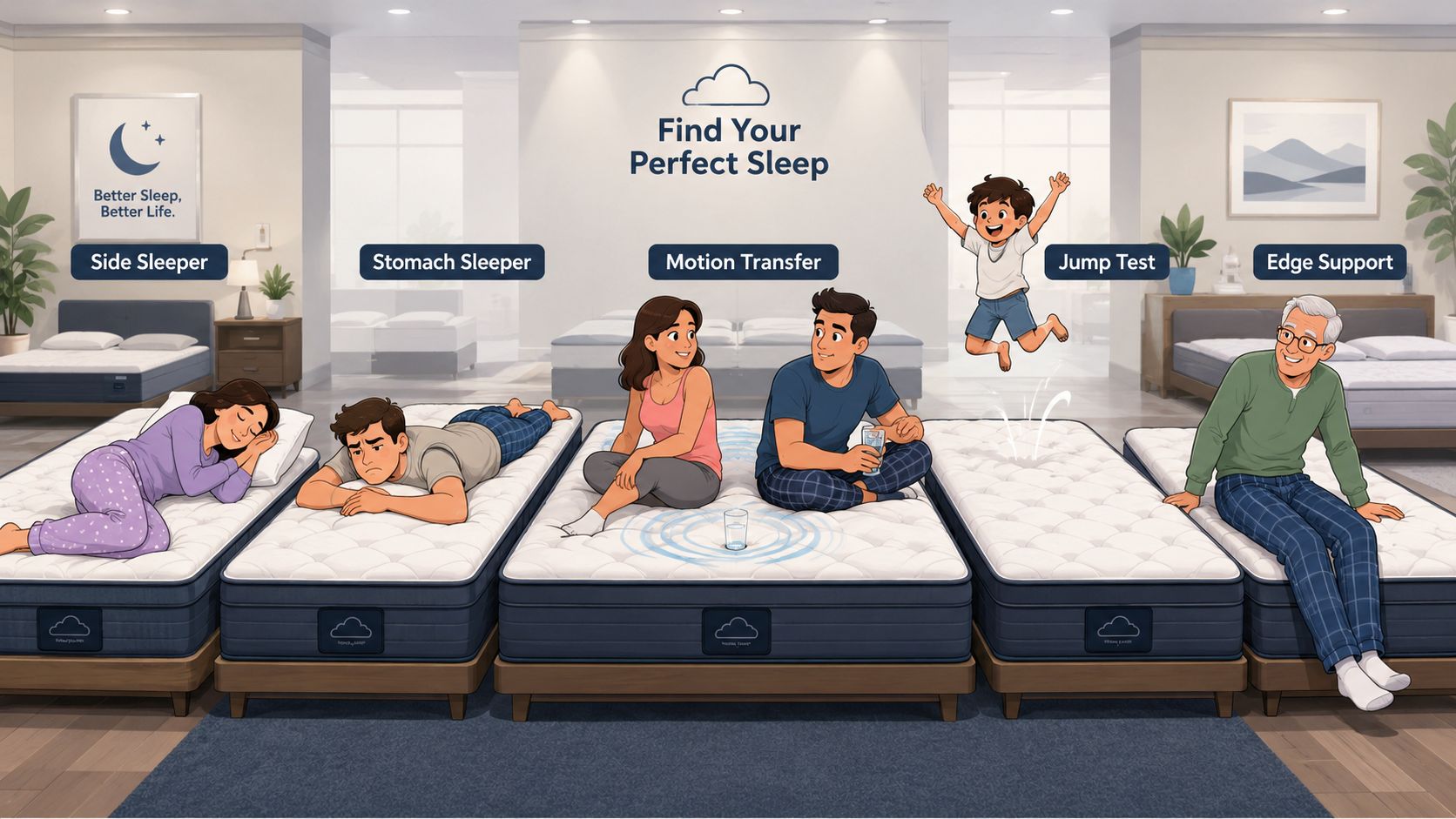
Five realistic floor scenarios
The side sleeper needs cushioning beneath the shoulder and hip while the waist remains supported. Start with a medium or medium-soft surface and check whether your shoulder settles without your midsection dropping. Match pillow loft to shoulder width so your neck stays level. Memory foam can offer close pressure relief, while latex or a hybrid usually makes turning easier.
The back sleeper needs even pushback beneath the lumbar area. Medium to medium-firm constructions provide a useful starting point. Confirm that the pelvis does not sink and that the lower back feels supported rather than pushed into an arch.
The stomach sleeper needs a flatter, firmer plane that limits midsection sinkage. A thin pillow can reduce neck flexion in this position. Begin with a firmer hybrid or innerspring that has controlled cushioning.
The combination sleeper changes positions during the night, so the surface must respond quickly. A mid-range hybrid or buoyant latex build can make rolling from side to back easier than foam that closely hugs the body.
The couple must address movement, usable space, and heat at the same time. Motion isolation limits disturbance from a partner, edge support preserves the outer sleeping area, and breathable construction can reduce heat buildup. A split configuration lets each person choose a different feel without replacing the entire bedroom arrangement. Couples can prepare a shared feature list with this mattress guide for two sleepers.
For shoppers with neck discomfort, adjust the sleep setup before blaming the mattress. These sleeping-with-neck-pain tips provide useful context. Test the mattress with your usual pillow, then compare each position and choose the construction that supports both sleepers' bodies and routines.
Evaluate Health, Replacement, and Sizing Needs
A new mattress isn't always the first fix. A worn pillow, an unprotected surface, poor room placement, or an inadequate foundation can create discomfort that a new mattress won't solve. The useful question is whether the sleep surface has lost structural performance or whether a smaller adjustment can restore alignment and comfort.
Separate repairable problems from replacement triggers
A topper may soften a surface that feels too firm, but it can't reliably correct a sagging core. A new pillow may improve neck position, but it won't repair collapsing edges or springs that press through the fabric. Consumer Reports recommends assessing neutral spine alignment, pressure relief, and stable edge support before replacing the entire mattress.
Replacement signals include:
- Visible sagging: A deep body impression or uneven center indicates structural fatigue, not merely a preference for a softer feel.
- Hardware you can feel: Springs, ridges, or broken components deserve more attention than a temporary comfort complaint.
- Morning pain that fades: Repeated stiffness that eases after getting up can indicate that the bed isn't maintaining alignment.
- New allergy symptoms: A long-used, poorly protected mattress may collect dust and irritants, especially when the household's sleep environment has changed.
- Better sleep elsewhere: Consistent comfort on a guest bed or during travel is a meaningful comparison, even though it doesn't identify the exact replacement construction.
Account for sensitivities and support
Households with allergies or asthma should ask about washable protectors, encasements, latex content, foam certifications, and cleaning limits. Certification language should be read carefully, because it can describe emissions, material content, or a different performance standard.
Back discomfort calls for observation rather than a reflexive choice of extra-firm. The better fit may provide lumbar cradling while keeping the pelvis level. A qualified healthcare professional should address persistent or worsening pain.
Size the mattress to the room
Room fit determines whether a larger sleep surface improves life or crowds the bedroom. Standard dimensions provide a starting point, but door swings, nightstands, drawers, and walking paths must also be measured.
| Size | Dimensions (in) | Best For | Min. Room Width |
|---|---|---|---|
| Twin | 39 × 75 | One sleeper, children, guests, or compact rooms | Measure for the mattress plus usable walkways |
| Twin XL | 39 × 80 | Taller solo sleepers and flexible guest spaces | Measure length and side clearance |
| Full | 54 × 75 | One adult wanting more width | Confirm clearance for both sides |
| Queen | 60 × 80 | Most couples or solo sleepers wanting room | Confirm nightstand and walkway placement |
| King | 76 × 80 | Couples needing greater personal space | Reserve generous side and foot clearance |
| California King | 72 × 84 | Taller couples needing extra length | Measure length, doors, and furniture access |
A split option can resolve different firmness preferences, adjustable-base needs, or movement concerns without changing bedrooms. Height matters too. A very tall mattress and foundation combination may make getting in and out awkward, while a low profile can be difficult for some adults.
Test Mattresses With Confidence
A mattress test should resemble a short rehearsal of a normal night, not a quick perch on the edge. Shoppers should visit the Easton showroom prepared to remove coats, use the pillow they normally sleep on, and give each serious candidate enough time for the body to settle.
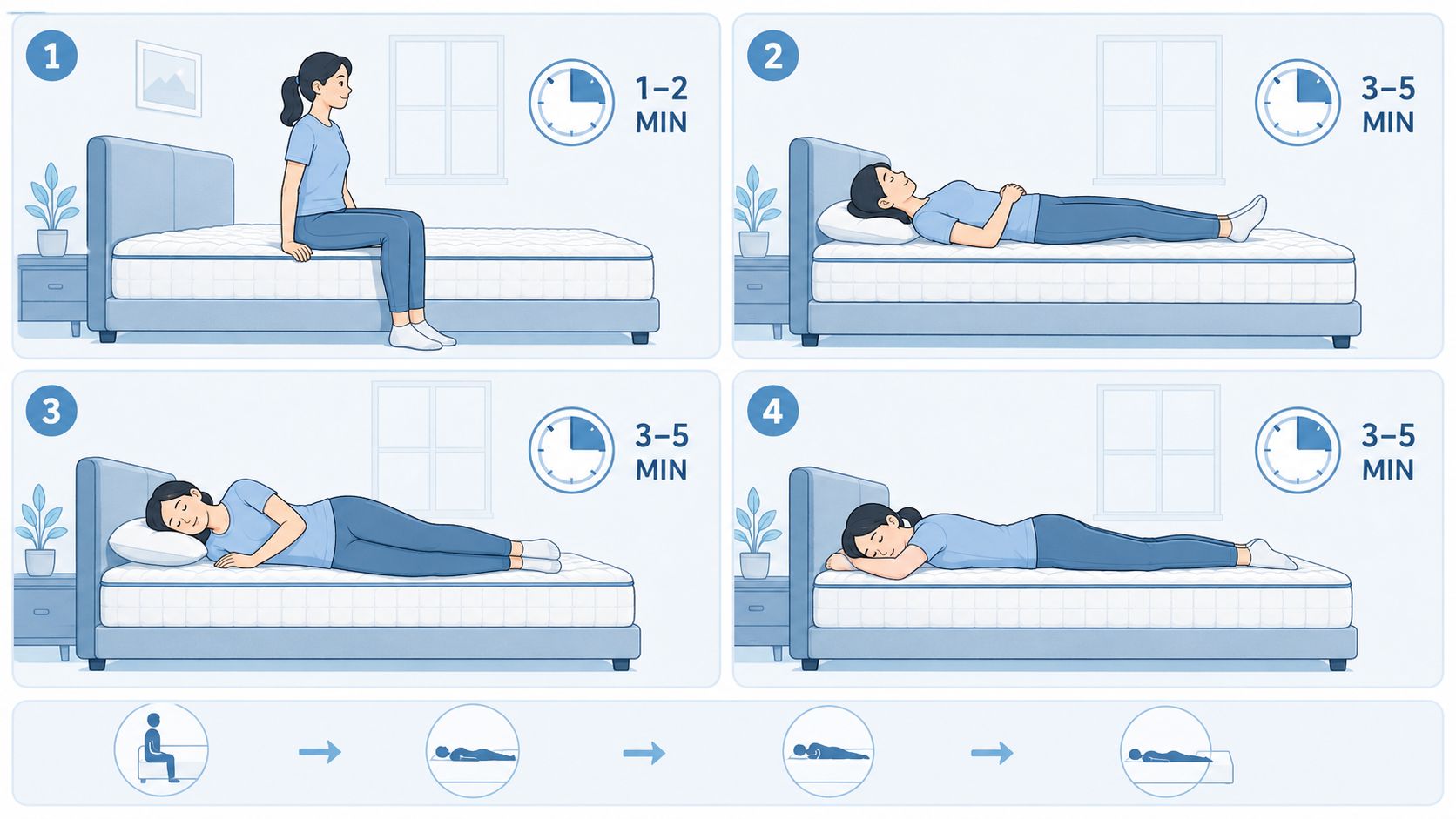
Follow a repeatable lie-down protocol
The Easton sit-test should quickly become a lie-down test:
- Back position: Spend two minutes noticing lumbar contact, shoulder relaxation, and pelvic stability.
- Left side: Spend one minute checking hip and shoulder pressure, then change sides.
- Right side: Spend one minute looking for numbness, twisting, or a hollow at the waist.
- Stomach position: Combination and stomach sleepers should complete a final check for midsection sinkage.
- Partner movement: Have a companion turn, sit, and rise while the other sleeper remains still.
The final decision should follow at least ten minutes in each resting position, not a hurried first impression. The body often notices pressure and heat only after remaining still.
Ask the floor consultant what the mattress is built to do, not what the marketing label promises.
Ask questions that reveal construction
A serious showroom conversation should cover:
- Coil system: What coil design and gauge create the support core?
- Comfort layers: What materials sit above the core, and what are their densities or compositions?
- Edge structure: Does the perimeter remain stable when a sleeper sits or uses the full surface?
- Certifications: Which materials or emissions standards do the certifications address?
- Foundation: What base does the manufacturer require, and does the current bed frame meet those conditions?
- Warranty exclusions: Are stains, unsuitable foundations, body impressions, transportation, or comfort changes excluded?
Trial language should explain how long the household can test the mattress, whether the original packaging matters, and who pays for transport or pickup. Warranty language should distinguish manufacturing defects from normal softening or a preference change. Financing terms should be evaluated by total repayment, promotional dates, and deferred-interest conditions, not by the monthly figure alone.
White-glove delivery is more than drop-off. It means a trained crew brings the item inside, places it in the chosen room, assembles or installs it when required, and removes packaging debris before leaving (white-glove furniture delivery explained). The Vinson mattress return policy should be read before purchase so the household understands the practical steps if the trial doesn't produce a good fit.
Plan for Lifespan, Care, and Purchase Protection
A mattress is a long-term household purchase, much like a solid hardwood bed or dresser. Judge it by construction, care requirements, foundation compatibility, and purchase terms before committing. The Easton showroom works best as a testing lab, where your household can compare materials and comfort rather than assume one mattress suits everyone.
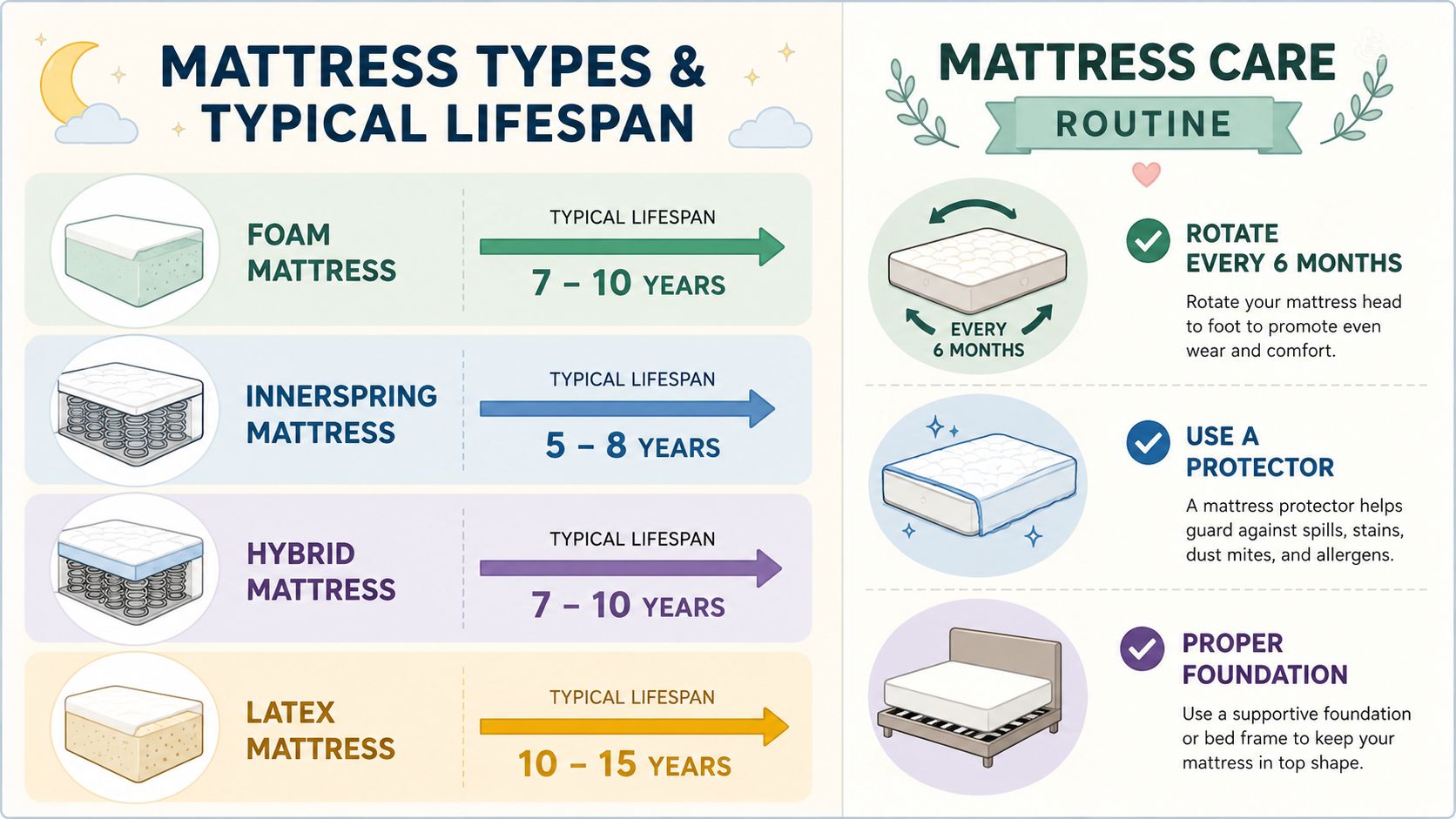
Latex and hybrid constructions can offer strong durability, while foam performance depends heavily on its density and composition. Innerspring longevity also reflects the coil system, comfort materials, edge structure, and how evenly the surface carries weight. Use the maker's construction and care instructions as the primary guide, not a generic lifespan promise.
Protect the sleep system
A suitable foundation keeps the mattress level and spreads weight across the surface. An adjustable base adds positioning options only when the mattress is designed for that use. An old, bowed, or poorly supported base can shorten the new mattress's useful life and create warranty complications.
Most modern one-sided mattresses should be rotated, not flipped, unless the manufacturer permits flipping. Add a washable protector to guard against spills, perspiration, and household irritants. Keep the room ventilated, manage humidity, and treat spills promptly. These habits help protect fabrics, foams, and support materials. Follow this guide to proper mattress maintenance and cleaning so routine care becomes part of ownership.
The same design-minded discipline applies to bedroom furniture. Solid hardwood is a sound choice for a room intended to serve the household for decades. One industry guide estimates that solid hardwood furniture can last 30 to 100 or more years with basic care, while other common furniture materials are estimated at 5 to 15 years (solid hardwood furniture lifespan guidance). Vinson sells solid hardwood furniture in solid cherry, oak, maple, and walnut.
Read the protection in plain language
A trial period protects the comfort decision. Confirm the required testing period, protector rules, return steps, and any transportation or restocking conditions before purchase. Ask who pays for pickup or transport, and whether the original packaging must be retained.
A warranty generally covers manufacturing defects under stated conditions. It typically does not cover stains, misuse, an unsuitable foundation, normal material softening, or a change in personal preference. Evaluate financing by the total repayment, promotional expiration date, and any deferred-interest condition, not the monthly figure alone.
Vinson's local services can simplify the broader room decision. The In-Store Design Studio provides Complimentary Design Consultations, while the Custom Order Program supports fabric and finish selections and uses 3D visualizers for brands such as Smith Brothers of Berne, Canadel, and Mavin. Its 110% Low Price Guarantee and Clearance Gallery savings up to 70% should be reviewed as separate value considerations, never as substitutes for mattress construction or fit.
Make Your Final Mattress Choice
The final choice should fit a written checklist, not a showroom mood. No online ranking can replace lying on a quality surface in the usual sleep positions, testing pressure relief, and checking whether the spine remains neutral.
| Decision Criterion | What to Verify |
|---|---|
| Construction | Compare foam, coils, hybrid, or latex by layers, density, coil design, and edge support |
| Firmness | Test the surface against body weight and usual sleep position |
| Support | Confirm that the spine stays neutral and the pelvis doesn't sink excessively |
| Household needs | Check motion isolation, temperature, turning ease, and partner preferences |
| Health concerns | Review pressure points, pillow fit, allergy controls, and persistent pain signals |
| Size | Measure the room, walkways, nightstands, doors, and access to drawers |
| Foundation | Confirm that the frame, foundation, or adjustable base meets manufacturer requirements |
| Testing | Lie down in normal positions and evaluate the mattress with the actual pillow |
| Protection | Review trial, return, warranty, financing, delivery, and setup terms |
A well-planned bedroom should feel coherent as well as comfortable. The Easton showroom lets Columbus shoppers test a mattress while considering the surrounding bed frame, nightstands, bedding, and room proportions. The design team can also help coordinate solid hardwood bedroom furniture, American-made Smith Brothers seating, Amish-made Mavin bedroom pieces, and North American crafted Canadel dining furniture through a broader home plan.
For homeowners comparing custom leather sectionals in Columbus, premium top-grain or performance leather, motorized power motion, swivel chairs, rockers, and gliders offer the same lesson as mattress shopping. Materials, construction, fit, and daily use matter more than a dramatic label. A mattress should earn its place through that same disciplined evaluation.
Vinson Fine Furniture offers an Easton showroom sit-test, complimentary design consultations, custom order support with 3D visualizers, and white-glove delivery for a complete sleep and bedroom plan. Visit Vinson Fine Furniture to test mattress options in person, review the Low Price Guarantee, and choose a sleep system that fits both the body and the room.