Rectangular Drop Leaf Dining Table Buyer’s Guide


A dining nook in a Central Ohio home often has several jobs. It may hold breakfast, homework, a laptop during the workday, and a holiday meal when relatives arrive. A rectangular drop leaf dining table can meet those changing needs without asking the room to remain permanently arranged for its largest gathering. The right choice, however, depends on more than a folding top. Hinge construction, support design, hardwood species, clearances, and finish all affect whether the table feels like lasting furniture or a temporary compromise.
For homeowners in Columbus, Westerville, Dublin, and Powell, the showroom sit-test matters. A table can look appropriately sized in a photograph yet feel cramped when chairs pull out or awkward when a leaf is raised. The following guide approaches the decision as a furniture investment, with attention to solid hardwood construction, Amish-made workmanship, and the practical details that shape everyday use.
Why a Rectangular Drop Leaf Dining Table Earns Its Place
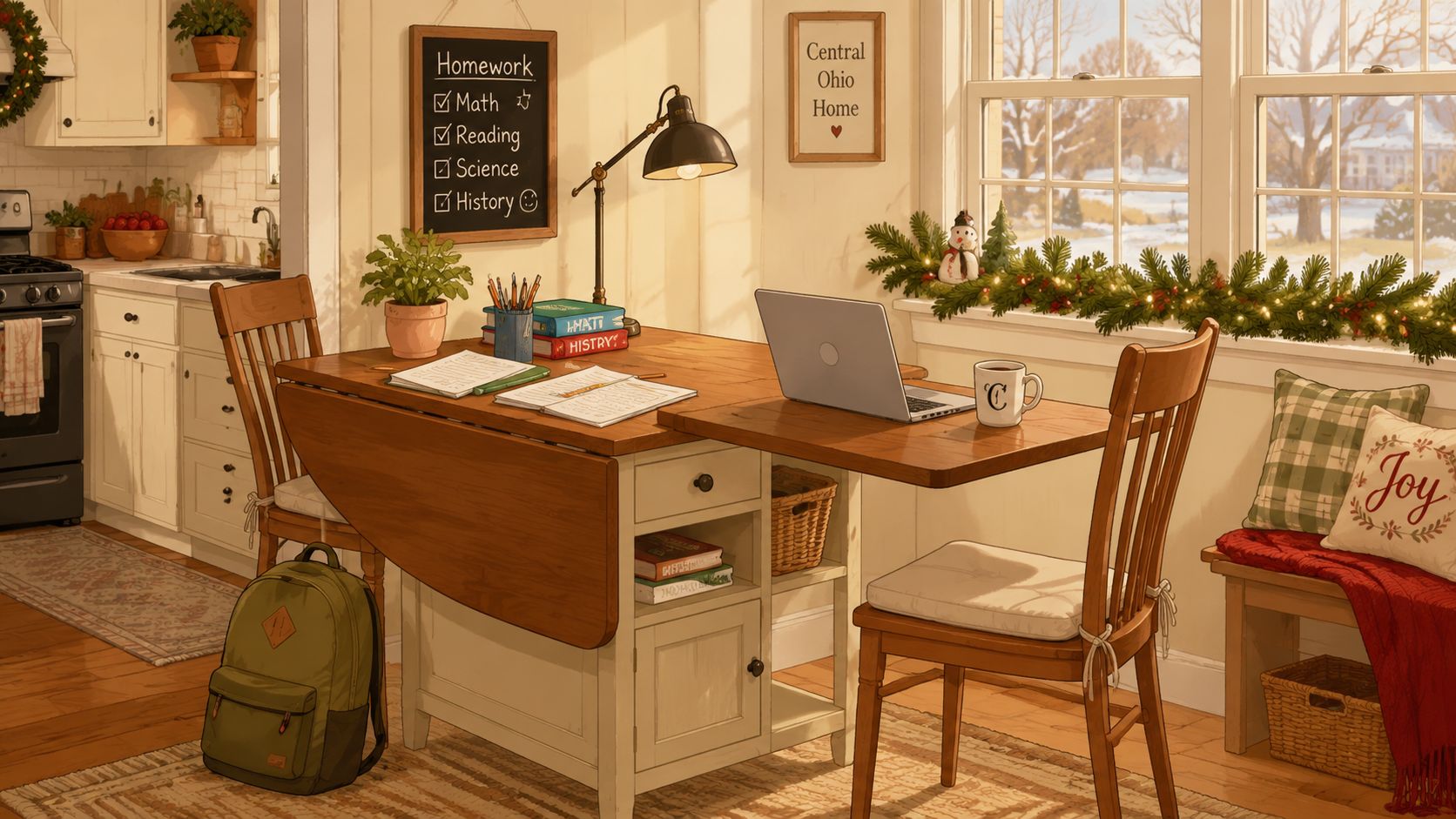
A growing Columbus household might have a dining area just beyond the kitchen, with a wall on one side and a walkway on the other. During the morning, the table stays compact enough for two chairs and a clear path. By afternoon, it becomes a homework station. On a weekend evening, both leaves rise and the same surface accommodates a larger meal.
That flexibility comes from a fixed center section paired with hinged leaves. In many rectangular designs, the leaves fold down beside the base when they aren't needed, reducing the table's visual and physical presence. Swing-out arms or gate-leg supports then carry the raised leaves when the household needs more dining space. The result is furniture that changes function without leaving the room or requiring storage in another part of the house.
A long design tradition with modern usefulness
Drop-leaf tables belong to a furniture tradition documented in England as far back as the late 16th century. The related gateleg form emerged in 16th-century England and later spread to colonial America in the 17th century, while surviving Elizabethan and Jacobean examples continue to document the design's history. The history of the drop-leaf table helps explain why the form still feels familiar: it solves a permanent space problem with movable parts.
Early examples were valued because they could be pushed against a wall when they weren't needed. Larger tables used supporting legs that swung outward beneath the leaves, a practical idea that remains visible in contemporary construction. The design never depended on novelty. It depended on making one room serve more than one purpose.
For a homeowner furnishing an open-concept kitchen in Westerville or Powell, that heritage pairs naturally with solid cherry, oak, maple, or walnut. These hardwoods give the table a tactile presence when fully open, while the folded profile keeps the dining zone visually calm during ordinary days. A rectangular shape also works well against a wall, along a kitchen island, or between a breakfast area and a living room.
Design principle: A drop leaf table earns its floor space when its compact mode is useful every day and its expanded mode solves a real hosting need.
Before visiting a showroom, homeowners can review guidance on table shapes and seating arrangements and identify how the dining area functions now. The best table isn't the largest one that fits. It's the one that supports the household's ordinary routine without making special occasions difficult.
How the Hinged Design Works
At a showroom, start with the table closed. A rectangular drop leaf dining table is built around a stationary center section that carries the main apron and base. This fixed portion sets the everyday proportions and gives both leaves a stable reference point. One side may fold down while the opposite side remains fixed, or both leaves may lower to create a narrow, console-like profile for a Central Ohio dining area.
Each leaf connects to the center through a joint made for repeated movement. Traditional construction often uses a rule joint, a shaped meeting point between the fixed top and the leaf. The hinge sits inside that relationship, allowing the leaf to rotate into place while keeping the raised tabletop visually continuous. Fine Woodworking's explanation of drop-leaf and gate-leg tables describes the historical use of hinged table forms and the supporting-leg logic behind them.
What supports the raised leaf
The hinge positions the leaf, but it should not carry the entire load. A dish or resting elbow near the outer edge creates downward force that must travel into the support beneath the leaf.
- Gate legs swing outward from the base and move under the leaf. Their broad support gives the table a traditional appearance and spreads the load through a substantial leg.
- Swing arms pivot from the apron or base and move into position beneath the leaf. They keep the outline cleaner and can limit how much hardware or leg movement crosses the floor.
- Hinged brackets suit lighter, smaller designs. For a table used daily, inspect the bracket, fasteners, and joinery closely before choosing this arrangement.
The technical guidance for drop-leaf table construction explains why a support arm matters. A loaded leaf acts like a short beam extending from the hinge. The farther the weight sits from that hinge, the more bending force reaches the joint. A properly engaged support carries that force into the base and helps limit sag.
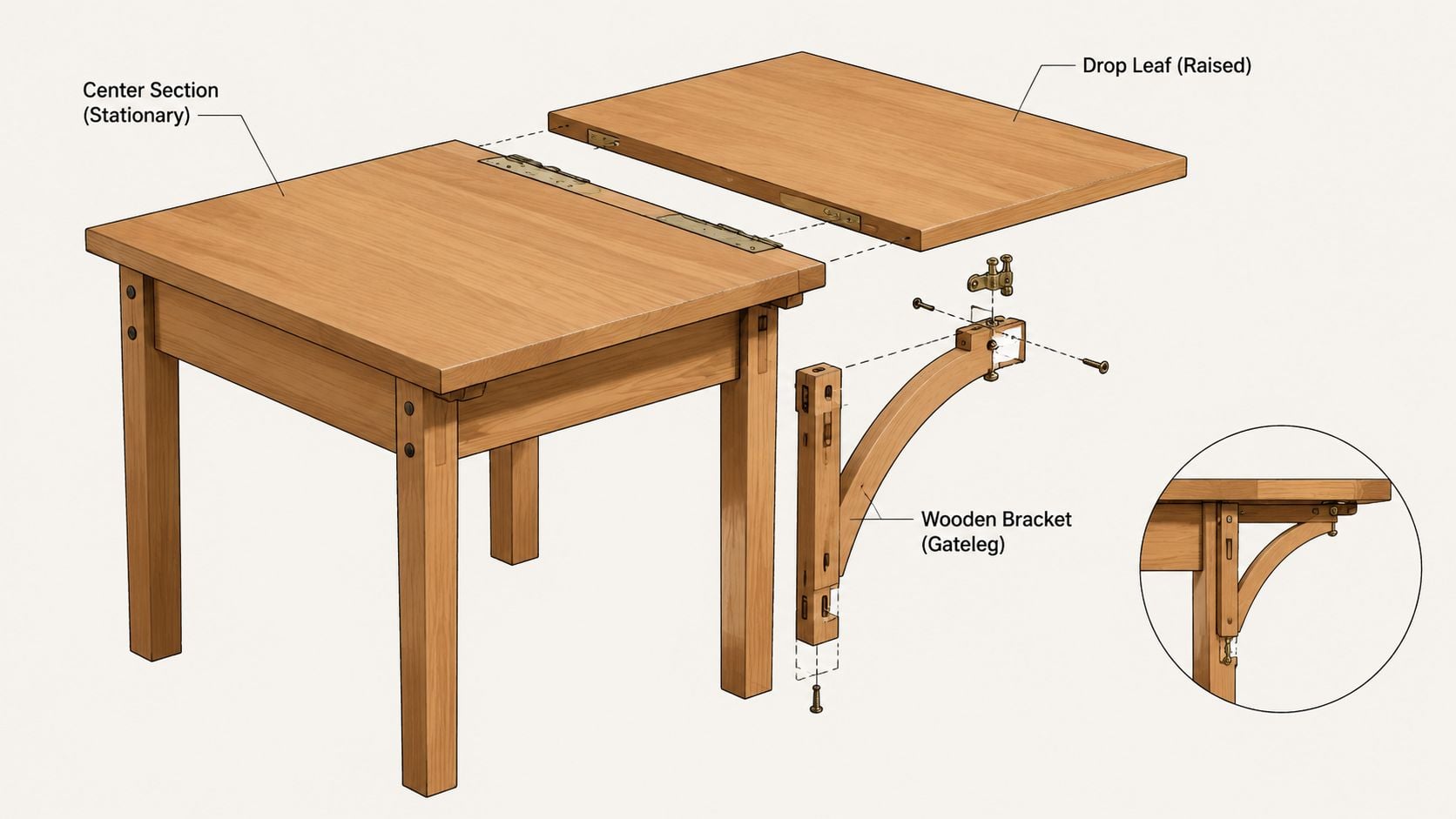
Solid hardwood supports long service because the leaves and joints cycle through opening and closing many times. Carefully machined components can be fitted, adjusted, and maintained as part of the table's construction. Ask to operate each leaf at the showroom. Watch the support engage, listen for looseness, and check that the leaf settles level with the center.
When the leaves are lowered, protect them from pressure and store them according to the table's design. Vinson's guide to storing a table leaf can help prevent avoidable damage during everyday use. Movement should feel controlled and deliberate, a useful sign that the hinge, support, and hardwood parts are working together.
Standard Dimensions and Room Layout Planning
Measurements should happen before the finish is chosen. A common planning example begins with a table measuring 36 by 48 inches when closed, expanding to 36 by 72 inches with one leaf raised and 36 by 96 inches with both leaves raised. Rectangular models often fall within a width range of 36 to 42 inches, although the exact proportions vary by collection and custom order.
The seating changes with each configuration. A compact table may serve two to four people closed, four to six with one leaf raised, and six to eight with both leaves raised. Those capacities are planning ranges, not guarantees. Chair width, apron placement, pedestal shape, and the dining habits of the household all affect comfort.
For domestic tables, international testing methods use a 50 kg centered tabletop load, and European furniture standards define safety, strength, and durability requirements for domestic tables. The ISO 19682 furniture standard reference provides useful context for why stability and durability deserve attention alongside appearance. Practical sizing guidance also commonly targets a 29 to 30 inch dining height, 24 to 26 inches of knee clearance per person, and a base footprint of at least 60% of the open tabletop depth to help reduce tipping risk when leaves are raised.
A working clearance plan
The following table gives a starting framework for sketching the room. The wall-clearance figures in this planning example should be treated as layout targets, then checked against the actual chair and circulation pattern.
| Configuration | Table Size (W x L) | Seats | Min. Wall Clearance | Recommended Clearance |
|---|---|---|---|---|
| Closed | 36 x 48 inches | 2 to 4 | 36 inches | 48 inches |
| One leaf raised | 36 x 72 inches | 4 to 6 | 36 inches | 48 inches |
| Both leaves raised | 36 x 96 inches | 6 to 8 | 48 inches | 60 to 72 inches |
A practical room formula is simple:
Required room length = open table length + clearance on the seating ends.
Required room width = table width + clearance on the sides where chairs pull out.
A 48-inch gap between the table edge and a wall supports ordinary circulation. A 60-inch gap is more suitable where people need to pass behind seated guests, while 72 inches creates room for fuller service movement. Homeowners should mark the closed, one-leaf, and fully open footprints with painter's tape, then walk the route between the refrigerator, sink, doorway, and seating. The self-storing leaf dining table information can help buyers think through leaf storage while they compare actual dimensions.
Choosing the Right Solid Hardwood
The hardwood species affects more than color. It changes the way grain catches light, how a finish develops, and how the table relates to cabinetry, flooring, and nearby seating. Solid cherry, oak, maple, and walnut each bring a different visual language to a drop-leaf design.
| Hardwood | Color & Grain | Janka Hardness | Best Room Style | Aging Behavior |
|---|---|---|---|---|
| Cherry | Warm reddish-brown with a smooth, relatively restrained grain | Confirm with the maker for the selected species and build | Traditional and transitional | Deepens and develops a richer patina with light exposure |
| Oak | Pronounced open grain with a strong natural texture | Confirm with the maker for the selected species and build | Farmhouse and relaxed classic rooms | Holds visual character as the finish matures |
| Maple | Pale, tight grain with a clean surface | Confirm with the maker for the selected species and build | Modern, light transitional, and painted interiors | Maintains a restrained appearance while showing finish character |
| Walnut | Deep brown tones with expressive figure | Confirm with the maker for the selected species and build | Statement dining rooms and tailored interiors | Gains depth while preserving its dramatic visual presence |
The table intentionally avoids assigning unverified hardness figures. A buyer who needs a species-specific hardness rating should request the maker's specification for the exact board and finish package. That detail matters because leaf edges, hinge mortises, and support-arm contact points need accurate machining and consistent alignment.
Matching wood to daily life
Cherry suits a room with traditional millwork or warm transitional upholstery. Its changing patina rewards natural light, although direct sun can alter any wood finish over time. Oak's visible grain can make everyday marks feel integrated into a farmhouse setting, while maple offers a quieter field for a modern room or a carefully selected painted finish.
Walnut creates a stronger focal point. It works especially well when the table needs to anchor a restrained dining room rather than blend into pale cabinetry. Stain absorption also varies by species, so a showroom sample is more reliable than a small digital color chip.
Solid hardwood furniture is widely regarded as a long-life category. Quality pieces are commonly described as lasting 20 to 50 or more years, with some well-made hardwood furniture lasting 100 years or more, depending on construction, care, and environment. This overview of solid wood furniture longevity supports the investment-homeowner view: a well-built table can be maintained, repaired, and passed forward rather than treated as a short-term purchase.
For a closer look at species, construction, and dining-room proportions, buyers can review solid wood dining table guidance before selecting a finish.
Matching Style to Room
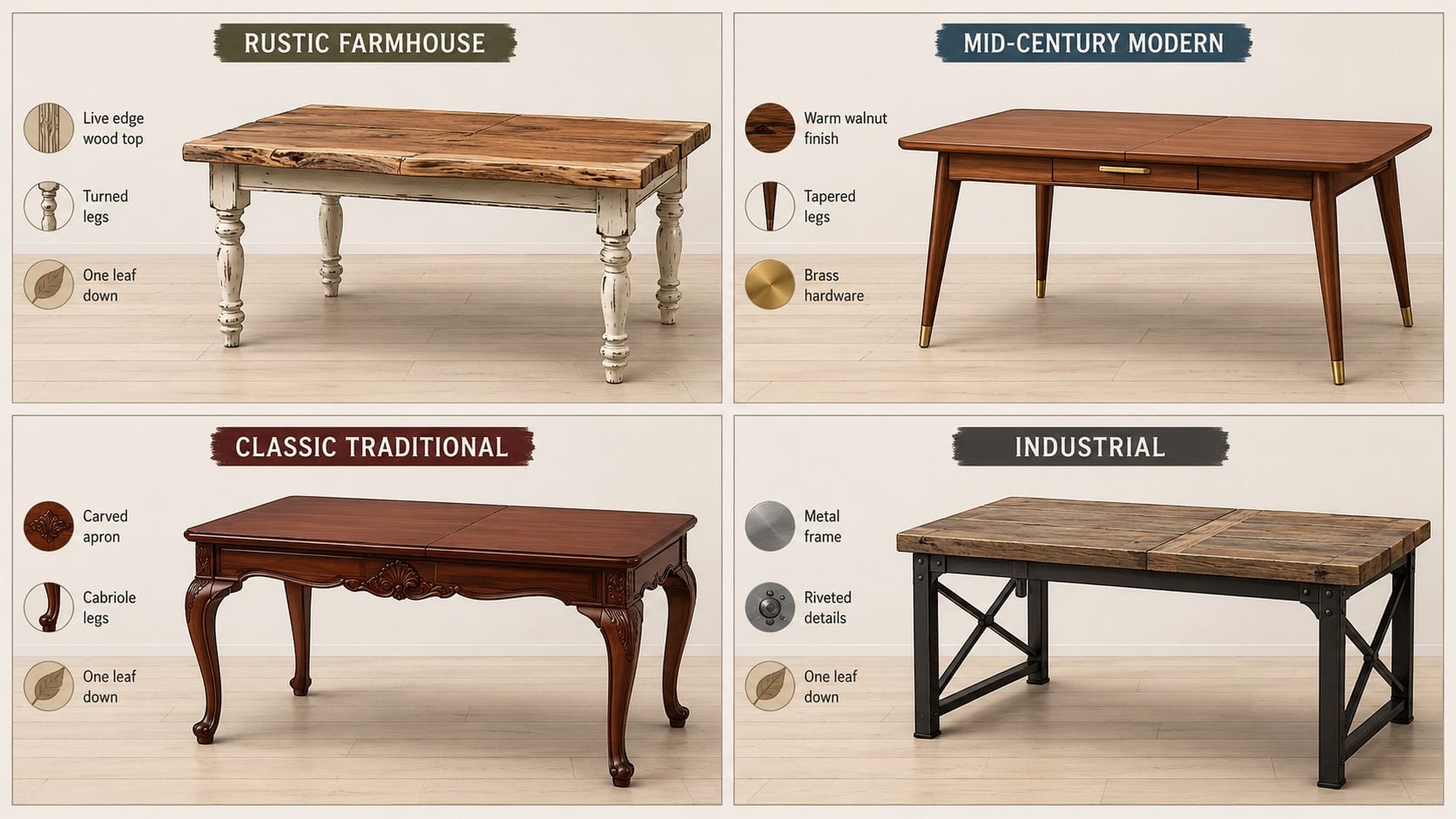
A drop leaf mechanism doesn't dictate a single decorating style. The base, apron, edge profile, and finish determine whether the table feels relaxed, formal, custom, or spare.
Four directions that translate well
Farmhouse rooms benefit from oak or maple, a matte finish, square edges, and turned legs that add warmth without excessive ornament. A more substantial apron can reinforce the grounded character, but buyers should check that it doesn't reduce knee room when the leaves are lowered.
Traditional dining rooms can carry turned or cabriole legs, a deeper skirt, and a richer stain. The table should relate to the room's existing millwork rather than compete with it. Chairs with arms require extra attention around the apron and leg placement.
Transitional interiors often benefit from shaker-inspired legs, gently eased edges, and cherry or walnut. This combination keeps the table comfortable in a mixed room where classic upholstery meets cleaner cabinetry.
Modern settings call for tapered legs, a minimal apron, and a finish that lets geometry lead. Light maple or natural cherry can keep the table visually quiet while preserving the depth of real wood.
Leg shape affects more than appearance. A gate leg or turned leg can occupy the space where a chair would otherwise tuck, while a pedestal or carefully positioned support can open the seating zone. Finish sheen should also coordinate with adjacent flooring, trim, and cabinetry. The dining room style guide offers additional direction for homeowners who are narrowing the room's visual vocabulary.
A useful showroom test is to sit in the intended chair with the leaf both raised and lowered. Check the knee area, place hands on the edge, and look across the top from a standing position. A style decision is successful when the table looks appropriate in its compact mode and still feels complete when fully expanded.
Care and Maintenance for Decades of Use
Solid hardwood responds to its environment. It expands and contracts as indoor moisture changes, and the rule joint is designed to accommodate that seasonal movement. Small shifts in alignment or the feel of a joint across the year aren't automatically defects. They can indicate that the wood is moving as a natural material, provided the table remains stable and the hardware stays properly engaged.
Daily habits that protect the finish
Use a soft, dry cloth for ordinary dust. For food residue, a lightly damp cloth with a mild soap solution is preferable to soaking the top or allowing liquid to collect near the hinge. Wipe spills promptly, especially around leaf joints and apron edges.
- Protect the surface: Use placemats and coasters that don't trap moisture or attach to the finish.
- Avoid aggressive products: Glass-top adhesives, silicone placemats, abrasive pads, and strong solvents can interfere with a finish or leave residue.
- Control the room: Keep the table away from direct heating vents and intense, concentrated sunlight where possible.
- Move carefully: Lift the table or use appropriate furniture-moving practices instead of dragging it across the floor.
Homeowners protecting both table and flooring can also consult this practical resource on keeping hardwood floors scratch-free. Felt protection under chair legs and careful movement help preserve the entire dining area, not just the tabletop.
Inspect the moving parts
At seasonal transitions, raise each leaf and check that the support arm or gate leg reaches its proper position. Look for loose screws, uneven contact, or a hinge that feels rough. Hardware should be tightened gently with the correct driver, and any lubricant should be approved for the specific mechanism so it doesn't migrate onto the wood.
Finish maintenance depends on the finish system. Some surfaces need only cleaning, while others may benefit from a maker-approved wax or oil refresh. The furniture maker's care instructions should control the schedule. A solid hardwood table built for long service rewards consistency more than elaborate treatment.
Customization and the Path to Purchase
The strongest reason to visit a showroom is that a rectangular drop leaf dining table involves several decisions that are difficult to judge from a screen. The table must fit the room in its compact state, provide comfortable seating when open, and coordinate with chairs, flooring, cabinetry, and adjacent living spaces. A design consultation turns those separate questions into one measured plan.
Start with the room, not the catalog
Homeowners can begin by photographing the dining area from the main entry points. The room image should show door swings, nearby counters, floor transitions, vents, and the path people use most often. A visualizer can then help preview different rectangular configurations against the room's existing proportions.
The Custom Order Program extends that process beyond size. Through partnerships with Smith Brothers of Berne, Canadel, and Mavin, buyers can explore fabrics, finishes, and 3D visualizers for coordinated furniture decisions. Smith Brothers is made in Indiana, Mavin is Amish-made in Ohio, and Canadel is handcrafted in Quebec. Together, those lines represent American-made and broader North American craftsmanship, while each has a distinct role in a furnished home.
Refine the table with a specialist
A complimentary consultation in the In-Store Design Studio gives the buyer a place to examine actual wood samples and operate comparable mechanisms. The discussion should cover:
- Dimensions: Confirm the closed footprint, each open configuration, and the room clearances.
- Hardwood species: Compare solid cherry, oak, maple, and walnut beside the room's cabinetry and flooring.
- Edge profile: Decide whether the top should feel crisp, eased, or more traditionally shaped.
- Base design: Test knee clearance with the chosen chairs, especially if the table uses gate legs or a substantial apron.
- Leaf mechanism: Raise and lower the leaves, verify support engagement, and inspect the underside hardware.
- Finish: Compare sheen and color in the showroom's natural and interior lighting.
This sit-test is particularly valuable for an investment homeowner. The table should feel stable under ordinary contact, the chairs should tuck naturally, and the open configuration shouldn't make the dining area feel like a passageway obstacle.
Consider the whole room
Dining furniture often sets the tone for nearby living-room and bedroom choices. Vinson's solid hardwood standard keeps wood discussions centered on cherry, oak, maple, and walnut, while its broader furniture selection includes premium motion and leather options for other rooms. Top-grain and performance leathers can be considered for seating, including motorized or power-motion sectionals and reclining pieces. Swivel chairs, accent chairs, rockers, and gliders add movement where the room calls for occasional seating.
That broader planning context can be useful for a homeowner furnishing an entire house. A table's finish may repeat a walnut tone in a living room, while a maple dining piece can keep an open-concept plan lighter. Buyers searching for Solid wood furniture Ohio, Amish-made dining sets, Custom leather sectionals Columbus, Smith Brothers furniture Easton, or Mavin bedroom furniture can address those related needs during the same design conversation, without treating the dining table as an isolated purchase.
Review value and delivery details
Vinson's Low Price Guarantee provides a 110% refund of the difference when its stated conditions are met. The Clearance Gallery offers savings of up to 70% on eligible floor samples, overstocks, and seasonal closeouts. Those routes serve different buyers. A custom table prioritizes exact dimensions and finish, while clearance can make sense when an available piece already suits the room.
Financing options may also help a household coordinate a larger furnishing plan, subject to approval and current terms. Warranty coverage should be reviewed before the order is finalized, including what the maker covers for construction, finish, and hardware.
White-glove delivery means more than leaving a carton at the door. The service is commonly defined as bringing furniture inside, placing it in the room of choice, assembling or installing it when needed, and removing packaging materials. This explanation of white-glove furniture delivery clarifies the difference between full-service placement and curbside delivery.
For Central Ohio buyers, the practical sequence is straightforward:
- Measure and tape the room in all table positions.
- Schedule an Easton Town Center showroom visit.
- Bring room photos, floor samples, or cabinet color references.
- Test the leaf motion and chair clearance.
- Confirm the custom specifications, warranty, financing terms, and delivery scope.
- Clear doorways and the intended dining area before the delivery window.
Custom Amish-made pieces may require a longer lead time than an immediately available showroom item. The exact schedule depends on the selected maker, materials, finish, and production queue, so the showroom should provide the current estimate at order placement. That transparency allows the homeowner to plan around renovation dates, move-ins, and entertaining commitments.
Vinson Fine Furniture offers solid hardwood dining tables, an In-Store Design Studio, Complimentary Design Consultations, custom options through Smith Brothers, Canadel, and Mavin, and white-glove delivery for Central Ohio homes. Visit Vinson Fine Furniture in Easton Town Center to operate a rectangular drop leaf dining table, test the seating clearance, compare cherry, oak, maple, and walnut finishes, and plan a piece that fits the room for years to come.