How To Improve Sleep Quality: Get Better Sleep Tonight


You went to bed on time. You stayed there long enough. But morning still feels heavy, and by midafternoon you're reaching for coffee, wondering why a full night in bed didn't do the job.
That disconnect is usually where people get stuck. They focus on sleep duration and miss sleep quality. Hours matter, but they aren't the whole story. If you wake often, overheat, sink into a worn mattress, or never settle into deeper sleep, time in bed can feel unproductive.
As a design consultant, I've seen this from another angle. Many homeowners work hard on habits but leave the bedroom itself unchanged. They dim lights and cut screens, yet sleep on an aging mattress, pair it with a creaking frame, or treat the bedroom like a mixed-use room for work, storage, and rest. A better routine helps. A better environment helps too.
The True Measure of a Good Night's Rest
A good night isn't just "I was in bed for eight hours." It's simpler and more honest than that. Did you fall asleep without a long struggle, stay asleep reasonably well, and wake up feeling restored?
That last part matters more than many people realize. A 2023 American College of Cardiology summary of research reported that men and women with five key low-risk sleep habits, including feeling well-rested on waking, lived 4.7 years longer for men and 2.4 years longer for women than those with poor sleep habits. That finding shifts the conversation. Sleep quality isn't a luxury. It's part of long-term health.
One reason sleep feels confusing is that people use one word to describe several different problems. "I'm a bad sleeper" could mean:
- Falling asleep is hard because the mind is still active
- Staying asleep is hard because the room is noisy, bright, or uncomfortable
- Waking refreshed is hard because the body never settles enough
Those problems don't all have the same fix.
Good sleep is something you feel in the morning, not just something you count at night.
The body also moves through different sleep stages, each with a different job. If you're curious about that deeper rhythm, this guide on REM sleep and why it matters is a helpful next read.
The most effective approach is usually a combination of behavior and environment. Keep a stable schedule. Reduce evening stimulation. Then look carefully at the room itself. The temperature, darkness, sound, and physical support under your body all shape whether sleep becomes restorative or fragmented.
Mastering Your Sleep Schedule and Daily Habits
A common scene plays out like this: you go to bed at a reasonable hour, lie there waiting to feel sleepy, and then wake up groggy anyway. The problem is often less about choosing the perfect bedtime and more about giving the body a steady rhythm to follow.
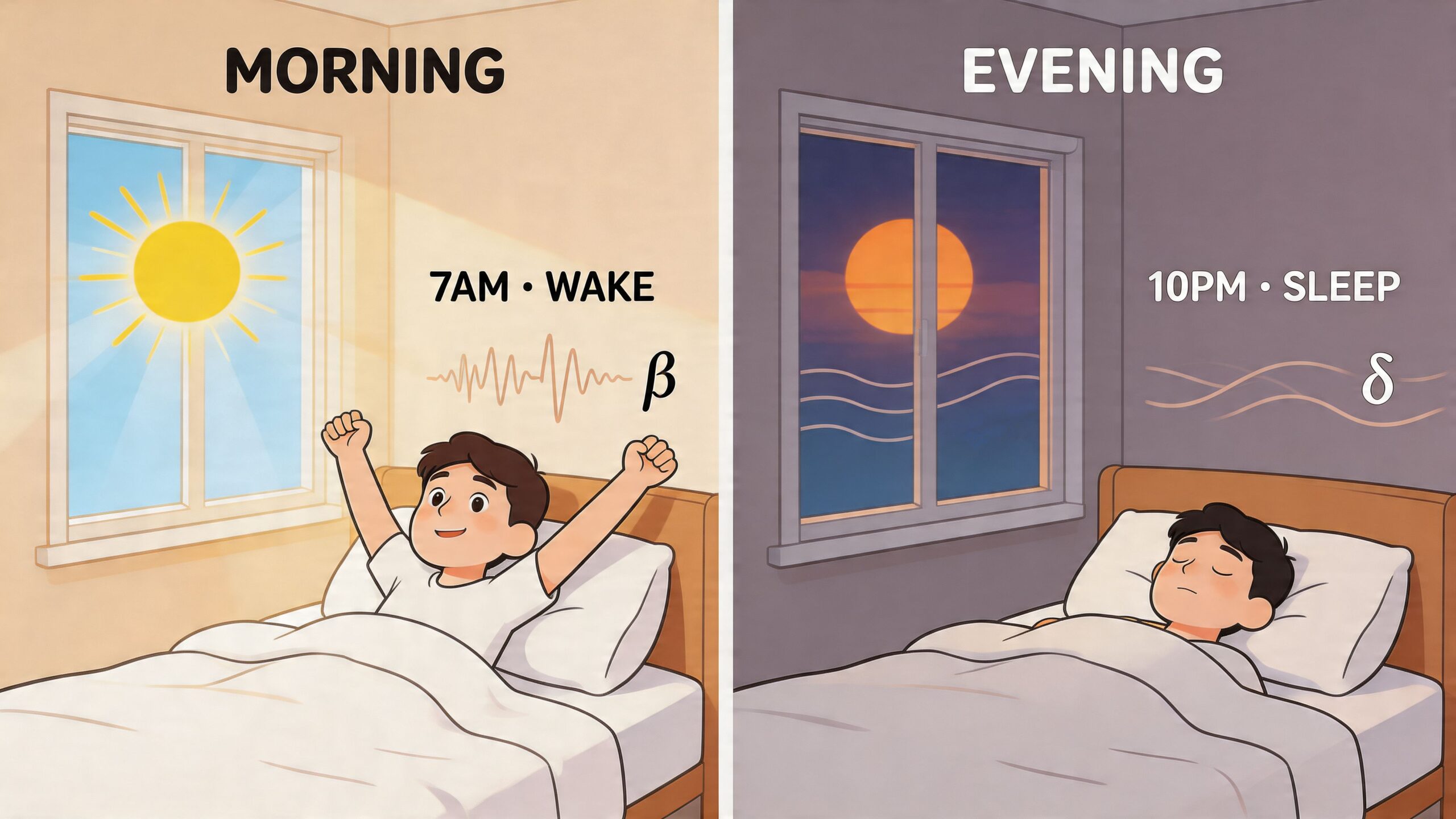
Your sleep system works a lot like a well-made clock. It keeps better time when the signals are clear and repeated. If your wake-up time shifts by an hour or two from one day to the next, your body has to keep recalibrating. That makes it harder to feel sleepy at night and harder to feel alert in the morning.
Start with one fixed wake-up time
The most useful anchor is the time you get out of bed, not the time you hope to fall asleep.
The Sleep Foundation's explanation of sleep quality calculation describes sleep efficiency as the share of time in bed that is spent sleeping. In plain terms, a long night in bed does not always mean a restorative night. If you regularly lie awake for long stretches, your body can start to treat bedtime as uncertain rather than automatic.
A practical reset usually looks like this:
- Choose a wake time you can keep most days. Include weekends if possible.
- Count backward to set a realistic bedtime window. Aim for enough time in bed without forcing an early bedtime that leaves you staring at the ceiling.
- Hold that pattern for at least a couple of weeks. Sleep timing improves through repetition.
- Adjust in small increments. Fifteen to thirty minutes is easier for the body to accept than a dramatic overnight shift.
Seasonal light changes can make this harder than it sounds. If darker evenings or later sunrises have thrown off your routine, this guide to adjusting your sleep schedule as the days get shorter offers a useful next step.
Protect your body's light cues
Light is one of the main ways the brain sets its internal clock. Morning brightness helps the body feel alert earlier in the day. Late-night brightness can delay that rhythm, which is why many people feel tired in a general sense but still not ready to sleep.
This is often mistaken for poor discipline. In reality, the room may be sending the wrong instructions.
A bright kitchen, cool-toned recessed lights, television glare, and a phone held inches from the face all tell the brain that the day is still active. In homes we help furnish at Vinson Fine Furniture, this is one of the most overlooked parts of sleep improvement. People focus on willpower, yet the physical setting keeps pressing the opposite message.
Use a few clear rules:
- Get morning light soon after waking. Outdoor light is especially helpful.
- Lower light levels as evening progresses. Lamps work better than bright overhead fixtures late at night.
- Reduce stimulating screen time close to bed. If screens are necessary, dim them aggressively.
- Keep the bedroom visually quiet. The space should feel settled before you do.
Watch the habits that quietly disrupt sleep
Even a steady schedule can get pulled off course by a few familiar patterns.
- Late caffeine can leave enough stimulation in the system to delay sleep.
- Alcohol close to bedtime may make you feel drowsy at first, but many people find that sleep becomes lighter and more fragmented later in the night.
- Sleeping much later on weekends can make Monday morning feel like a small jet lag episode.
- Long or late naps can reduce the sleep pressure that helps you fall asleep at night.
Consistency matters more than perfection.
One off night will happen. The goal is to make irregular nights occasional, not routine.
Build a short pre-sleep sequence
A bedtime routine does not need to be elaborate. It needs to be repeatable enough that the brain starts recognizing the pattern.
A simple sequence might look like this:
- lower the lights
- put the phone away
- wash up
- read a few pages
- get into bed when you are ready to sleep
That last step is more important than it appears. If the bed becomes a place where you scroll, worry, answer messages, or wait restlessly for sleep, the brain starts linking the bed with wakefulness. Good furniture and a supportive mattress help the body relax, but habits still teach the mind what the bed is for. The best results usually come when both are working together, like a well-designed room where every piece has a clear purpose.
Designing the Ideal Bedroom Environment for Sleep
Habits set the stage, but the room does a surprising amount of the work.
I've met many homeowners who do nearly everything right during the day, then try to recover in a bedroom that fights them all night. The room is too warm, the window treatment leaks light, the bed shifts when a partner moves, or the mattress has stopped supporting the body well. Good intentions can't fully overcome a poor sleep setting.

Make the room feel like a destination for rest
A sleep-friendly bedroom should feel visually calm and physically quiet. The best rooms for rest usually share the same qualities:
- Cool air that doesn't leave you tossing off covers
- Low light with minimal glow from windows or electronics
- Less noise from traffic, hallways, or a shifting bed
- Clear purpose so the room reads as restful, not overworked
The room doesn't need to be sparse or impersonal. It should send one clear message: the day concludes here.
A detailed guide on creating a sleep sanctuary through lighting, temperature, mattress, and bedding can help if you're evaluating several room elements at once.
Temperature, darkness, and sound are not minor details
People often treat these as finishing touches. They're not. They are basic conditions for uninterrupted sleep.
The bedroom should feel slightly cool, not stuffy. Darkness should be strong enough that your eyes and brain don't keep receiving "daytime" input. Noise should be reduced as much as possible, especially repetitive or unpredictable sound.
If you're wondering why this matters so much, think of sleep as a gradual surrender. The body settles when it feels safe, supported, and undisturbed. Heat, light, and noise all interrupt that process.
A bedroom doesn't have to be large to feel restorative. It has to be controlled.
The bed itself is part of the environment
This is the part standard sleep advice often skips. A room can be dark and quiet, but if the bed shifts, squeaks, or no longer supports you properly, sleep still gets fragmented.
According to Sleep Foundation's healthy sleep tips, mattresses that are 7 to 10 years old can lose up to 70% of their supportive capability, which correlates with reduced sleep efficiency. The same guidance notes that a high-quality solid bed frame can reduce motion transfer and noise, both common sources of partner disturbance.
That has direct design implications.
Why a solid-wood bed frame changes the feel of the room
A substantial bed frame does more than complete the look. It changes the physical experience of sleep.
| Bedroom element | What it affects at night | What to look for |
|---|---|---|
| Solid bed frame | Stability, noise, motion transfer | Tight joinery, substantial construction, quiet performance |
| Mattress support | Alignment, pressure relief, comfort | Even support across the full surface |
| Blackout window treatment | Light intrusion | Better coverage and less edge glow |
| Bedding layers | Temperature regulation | Breathable materials and manageable warmth |
A solid-wood frame with proper structure feels planted. That steadiness matters when one partner turns or gets up earlier than the other. It also affects perception. A bed that feels stable can help the whole room feel calmer.
A calmer visual palette helps the mind settle
There is also a design psychology component that people underestimate. If your bedroom is crowded with visual noise, harsh contrast, or mismatched pieces that make the space feel unresolved, relaxation gets harder.
A sleep-oriented room often benefits from:
- Natural finishes rather than glossy, attention-grabbing surfaces
- Soft, layered textiles that absorb sound and add comfort
- Fewer exposed distractions such as work piles or bright charging stations
- Balanced scale so the room feels grounded rather than cramped
This isn't about chasing a trend. It's about reducing friction. The more your room feels composed, the easier it is to let your nervous system slow down.
For homeowners in Columbus working on a full bedroom refresh, design planning proves helpful. The right frame, nightstands, lighting, rug, and bedding should work together, not compete for attention.
Selecting a Mattress That Transforms Your Sleep
A mattress is the most personal furniture purchase in the home. Two people can lie on the same bed and have completely different reactions. One feels cradled. The other feels stuck. One gets shoulder relief. The other wakes with tension in the lower back.
That is why mattress shopping should be more than reading labels.
What the main mattress types tend to feel like
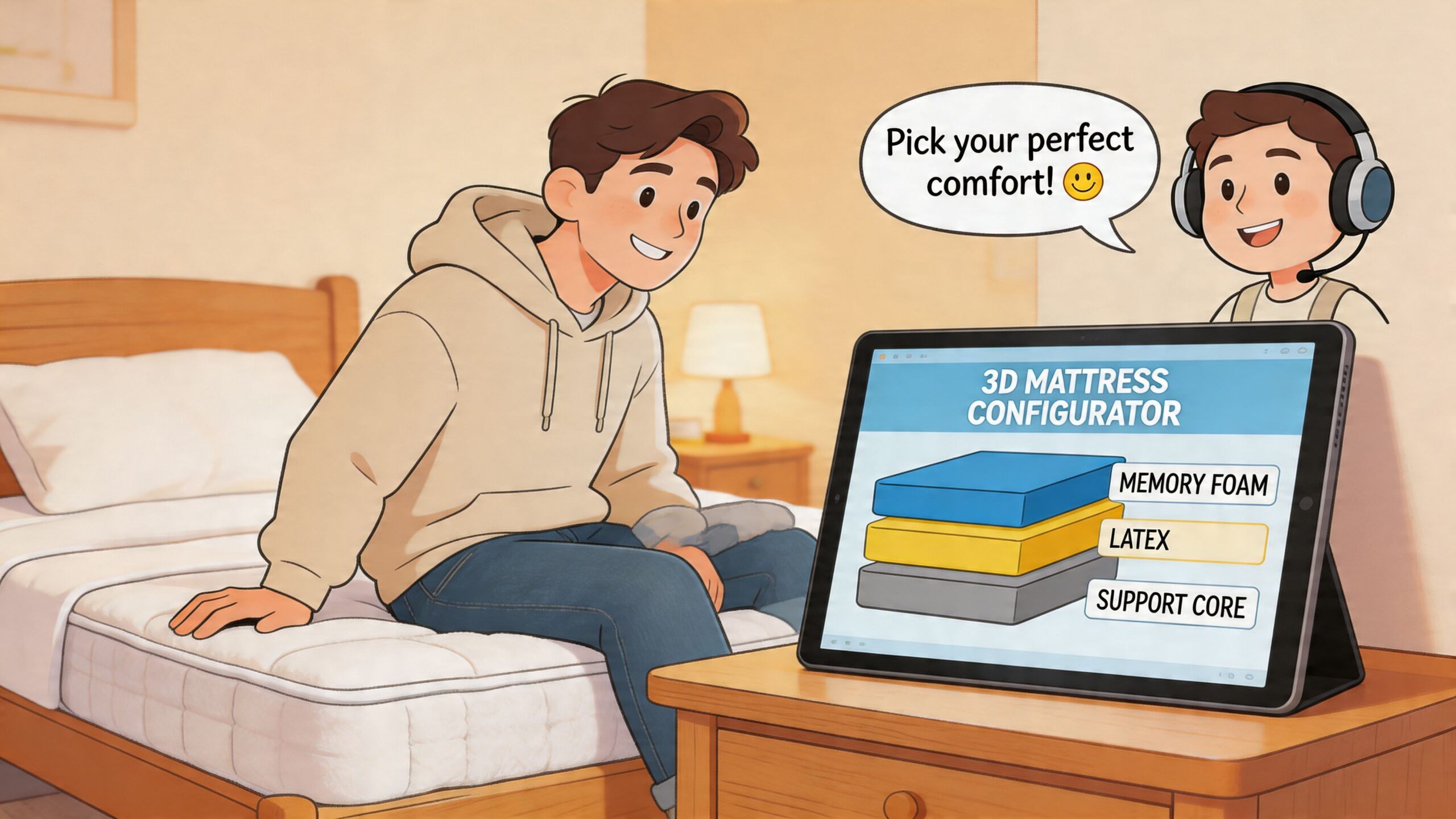
Each category solves a different comfort problem. The right choice depends on how you sleep, how easily you overheat, whether you share the bed, and what kind of support feels natural to your body.
| Mattress type | Often suits | Typical feel | Common reason people choose it |
|---|---|---|---|
| Memory foam | Side sleepers, pressure-sensitive sleepers, couples | Conforming, cushioned, motion-absorbing | Pressure relief and less partner disturbance |
| Innerspring | People who prefer a lifted, traditional feel | More responsive, easier to move on | Strong surface support and familiar feel |
| Hybrid | Sleepers who want contouring plus support | Balanced, layered, versatile | A mix of cushioning and structure |
These aren't rigid rules. They are starting points.
Match the mattress to the way you actually sleep
A common mistake is choosing based on a quick first impression. Very soft beds can feel luxurious for a minute, then prove unsupportive over a full night. Very firm beds can feel "healthy" in a showroom but create pressure at the shoulders and hips later.
Use these decision cues instead:
- If you sleep on your side, pressure relief often matters because the shoulders and hips bear more load.
- If you sleep on your back, even support usually matters more than plushness alone.
- If you change positions often, a mattress with easier movement can feel more natural.
- If you share the bed, motion control becomes more important than many couples expect.
Readers often ask whether one mattress works for every position. Usually, no. The goal is the best overall compromise for your body and your habits.
The right mattress shouldn't feel impressive for thirty seconds. It should feel quietly right after your body has a chance to settle.
Why an in-person test still matters
Online descriptions can help narrow the field, but they can't tell you how your shoulders land, whether your lower back feels supported, or whether you feel stable near the edge. That's why an in-person trial remains valuable.
If you're comparing options, this mattress buying guide is a useful framework before you visit a showroom.
During a proper trial, don't just sit on the edge and bounce once. Lie down in your usual sleep position. Stay there long enough to notice pressure points. Roll once or twice. If you shop with a partner, test movement and edge support together.
Think beyond the mattress label
The full sleep system matters. A well-chosen mattress performs best when the foundation under it is stable and when the surrounding room supports rest.
That may include:
- A quieter frame that doesn't shift or creak
- Bed height that feels easy to enter and exit
- Layered bedding that helps with temperature control
- A bedroom plan that reduces clutter and visual stimulation
This is also where personalized guidance can be useful. Vinson Fine Furniture at Easton Town Center offers premium mattress lines such as Tempur-Pedic, Sealy, and Stearns & Foster, along with an in-store Design Studio, Custom Order Program with configurable finishes and materials, a Low Price Guarantee with a 110% refund of the difference, a Clearance Gallery with savings up to 70%, flexible financing through Synchrony HOME, and White-Glove In-Home Delivery. For an investment purchase like a mattress, those logistics can make the process easier to compare and complete.
The best mattress choice isn't the most expensive one or the most talked-about one. It's the one that fits your body, your room, and your nightly routine.
Integrating Sleep-Friendly Lifestyle Choices
A well-made bed can support your body beautifully, but sleep quality is also shaped by what happens in the hours before you lie down. Habits act like the room's hidden architecture. You do not always see them, but they can either support rest or work against it.
Use movement to support deeper sleep
Regular movement helps the body build sleep pressure, regulate stress, and settle more fully at night. Earlier in the article, we noted research showing that exercise is linked with longer sleep and more restorative deep sleep. The practical lesson is simple. Consistent activity during the week usually helps more than occasional hard workouts.
Walking is often enough. Cycling, swimming, and other moderate exercise can help too. What matters most is repeatability.
Many people also notice that timing changes the result. A brisk walk in the morning or afternoon often feels different from intense exercise late at night, when the body may still feel alert and revved up at bedtime.
Be more deliberate about evening food and drink
Dinner and late-night snacks can either calm the system or keep it busy. Heavy meals, excess alcohol, and foods that leave you overly full, thirsty, or uncomfortable often show up later as restlessness, heat, or middle-of-the-night wake-ups.
A lighter, simpler approach usually works better in the evening:
- Choose meals that feel satisfying without feeling heavy
- Be cautious with alcohol if you tend to wake during the night
- Pick a small snack that feels steady and easy to digest if you are hungry
This is one of the clearest places where lifestyle and environment meet. Even a beautiful bedroom has a harder job to do when the body is still digesting a large meal or reacting to alcohol.
Create a wind-down routine your home can support
The mind rarely shifts from productivity to sleep in a single step. It needs a transition period, much like a dimmer switch works better than a bright overhead light snapping off all at once.
That transition does not need to be elaborate. Reading, stretching, taking a warm shower, or listening to something calm can all work. The better question is whether your home makes those habits easy to repeat. A comfortable chair in the corner, softer bedside lighting, and surfaces that are free of clutter help signal that the day is closing.
For more practical ideas, this guide to better sleep habits you can actually use at home offers simple routines that fit real evenings, not ideal ones.
The larger point is often missed in sleep advice. Good sleep hygiene is not only about discipline. It is also about setup. When your furniture, lighting, layout, and evening habits all point in the same direction, your bedroom starts to function less like a storage space with a bed in it and more like a room designed for recovery.
When to Seek Professional Guidance for Sleep Issues
Some sleep problems improve when you fix schedule, light, comfort, and stress. Others don't. Knowing the difference can save you time and frustration.
A useful first question is this: Does the problem seem tied to context, or does it persist no matter what you change? If the issue began after a move, renovation, new job schedule, or bedroom setup change, environmental causes are worth addressing carefully. An old mattress, a disruptive room, or a setup that never lets you fully relax can create sleep trouble that feels medical but starts in the environment.
Signs the environment may be a major factor
These patterns often point to the room or routine as a major contributor:
- You sleep better away from home in hotels or guest rooms
- Your sleep worsened after changing bedrooms or furniture
- Your partner's movement wakes you often
- You feel discomfort, heat, or pressure when lying down
Those are practical clues. They suggest the bedroom deserves a close audit before you assume the problem is purely internal.
Signs it's time to talk with a clinician
Persistent sleep trouble deserves professional attention, especially if you don't feel rested despite making reasonable changes, or if daytime functioning is suffering. In those cases, a healthcare professional can help rule out sleep disorders and other medical contributors.
One evidence-based option for ongoing insomnia is CBT-I. According to Healthline's summary of better sleep strategies, Cognitive Behavioral Therapy for Insomnia has an 80% efficacy rate at one year, outperforming medication. The same source also notes that environmental issues, including stress from a move or a disruptive bedroom, are often overlooked first steps.
That sequence matters. Improve what you can control in the room. If the problem remains, seek clinical guidance rather than continuing to guess.
A practical first step that isn't medical
For many homeowners, it helps to assess the physical setup with fresh eyes. Is the mattress too old? Is the frame unstable? Is the room crowded or overstimulating? Are the window coverings failing to block light?
A design consultation can help identify those friction points. It won't diagnose a disorder, but it can clarify whether the bedroom itself is undermining your sleep. If a replacement is needed, shoppers who want more value flexibility often look at clearance options, financing, and delivery support so the process doesn't add more stress than it removes.
Investing in Rest Your Journey to Better Sleep Begins Tonight
Better sleep rarely comes from one dramatic change. It comes from a series of clear decisions that work together. Keep your schedule steady. Move your body regularly. Make evenings quieter. Build a bedroom that supports rest instead of competing with it.
That last piece deserves more attention than it usually gets. A supportive mattress, a stable bed frame, softer lighting, and a calmer room aren't decorative extras. They shape what your body experiences for hours every night. If you're serious about how to improve sleep quality, the physical setting belongs in the conversation.
For many homeowners, this is also a mindset shift. The bedroom isn't just another room to furnish later. It's one of the most consequential spaces in the home because it affects how you feel every morning.
If you're ready to take the next step, visiting a showroom can be useful not for pressure, but for clarity. You can feel differences in support, compare materials in person, and think through the room as a whole rather than as isolated purchases.
If you'd like help turning your bedroom into a more restful, better-designed space, explore Vinson Fine Furniture and take the Design Quiz to start narrowing your style and comfort preferences before visiting the Easton Town Center showroom.