Iron Wrought Mirror: A Buyer’s Guide to Timeless Style

A lot of homeowners reach this point at the same time. The sofa is in place, the rug is down, the lighting is handled, and one wall still feels unfinished. It isn’t empty in a useful way. It’s empty in a way that makes the whole room feel less resolved.
That’s where an iron wrought mirror earns its place.
A good one does more than reflect a room. It adds structure to a soft space, light to a dim corner, and a sense of permanence that lighter, trend-driven pieces often miss. In a modern or transitional home, that matters. You want something with character, but you don’t want the room to tip into theme decorating.
More Than a Reflection An Introduction
In design consultations, I often see the same hesitation. A homeowner wants a focal point, but they don’t want something flashy. They want the room to feel finished, not staged. A wrought iron mirror solves that problem because it carries two qualities at once. It feels architectural, and it still feels personal.

That balance has deep roots. Decorated Iron Age mirrors are extraordinarily rare, with only 58 known examples worldwide, a detail noted in Museum Crush’s feature on the Oxfordshire Mirror. Those objects were elite possessions. They weren’t filler pieces. They signaled taste, status, and craftsmanship.
You can still feel that legacy today, even in a very current home.
Why iron changes the mood of a room
Iron has presence. Wood brings warmth. Upholstery brings softness. Glass brings light. Wrought iron does something different. It outlines the wall. It creates a visible edge, which helps anchor open-plan rooms and tall vertical spaces that can otherwise feel vague.
That’s especially useful in homes with:
- Tall entry walls where art can feel too small
- Dining rooms with solid wood furniture that need contrast
- Bedrooms with upholstered beds that benefit from a sharper silhouette
- Home offices that need one strong statement piece rather than many small accents
A mirror can fill space. A wrought iron mirror can define it.
Why it works in modern homes
Some readers hear “wrought iron” and immediately picture heavy Tuscan scrolls or rustic lodge interiors. That’s a common misunderstanding. Today’s iron mirrors range from ornate and traditional to clean-lined and minimalist. The material itself isn’t locked into one style.
In a Columbus home with pale oak floors, soft white walls, and clean-lined upholstery, a black iron frame can create the exact amount of contrast the room needs. In a more layered setting with walnut, leather, and natural stone, a forged bronze finish can add depth without shouting for attention.
The point isn’t nostalgia. It’s permanence.
When you choose an iron wrought mirror well, you’re not just filling a blank wall. You’re giving the room a stronger point of view.
What Defines a True Wrought Iron Mirror
Most buyers use “metal mirror” and “wrought iron mirror” as if they mean the same thing. They don’t. If you care about longevity, the difference matters.
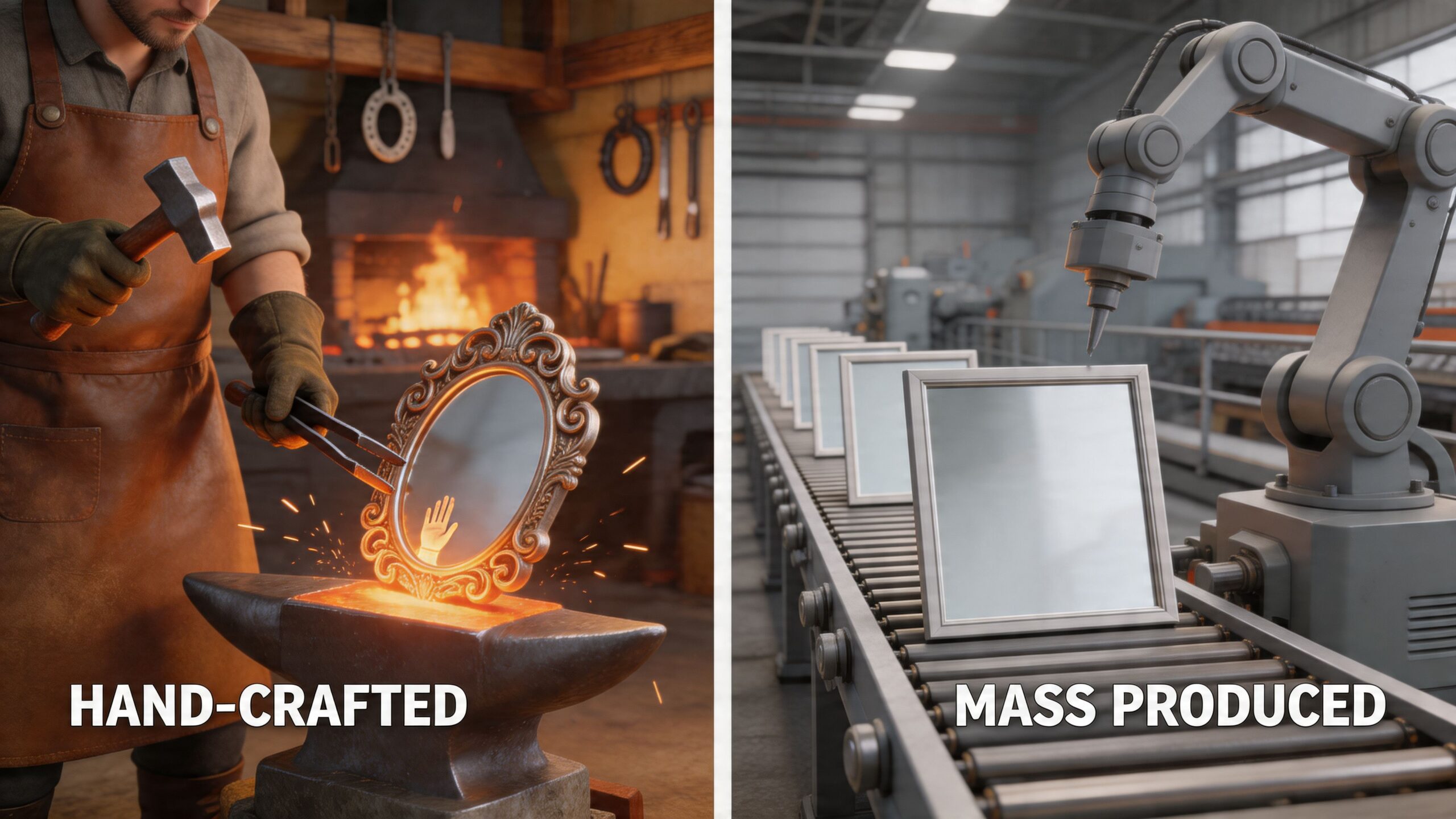
Wrought means worked. A true wrought iron frame is shaped and refined through forging, rather than poured into a mold and painted to look old. The easiest comparison is pottery. A hand-thrown bowl carries small variations that make it feel alive. A factory-made mug can be useful, but it won’t have that same depth or individuality.
Wrought iron versus cast iron and mild steel
Cast iron is poured into a form. That process can create bold shapes, but it doesn’t give you the same hand-forged character. Mild steel can be practical and widely available, but many frames marketed under the “wrought iron” label are really lighter steel products with a decorative finish.
A true wrought iron mirror usually feels different the moment you touch it. The frame has visual density. The lines look worked rather than stamped. The finish tends to reveal more texture and subtle variation.
Why the material performs differently
Premium hand-forged wrought iron frames show real structural substance. According to Moon Mirror’s specifications for antique hand-forged metal framed mirrors, wrought iron frames exhibit superior tensile strength and a fibrous microstructure that provides exceptional fatigue resistance. The same product data notes that premium frames can weigh over 60 lbs and use 1-inch thick solid iron.
Those details aren’t trivia. They tell you why a heavier frame tends to stay truer over time.
Consider what a mirror frame deals with in everyday life:
- Wall vibration from doors closing nearby
- Seasonal humidity changes in bathrooms and entryways
- Repeated handling during moves or room updates
- Gravity over years on a tall vertical installation
A substantial forged frame is better suited to that kind of long-term use than a thin decorative alternative.
Practical rule: If a mirror is meant to become part of your home’s architecture, not just one season’s styling, pay attention to how the frame is made, not just how it looks online.
For a broader look at how metal details influence a room, this guide on what you should know about metal accents is a useful companion.
What buyers often overlook
The finish matters, but the core build matters more. A painted frame can imitate a look. It can’t imitate mass, forged texture, or hand-worked detail very convincingly. That’s why two mirrors can appear similar in a photo and feel completely different in person.
If you’re shopping for an investment piece, ask simple questions:
- Is the frame forged or cast?
- Does the piece have visible hand-worked variation?
- Will the weight and construction suit the wall and room?
Those questions will tell you more than marketing adjectives ever will.
Exploring Common Styles and Finishes
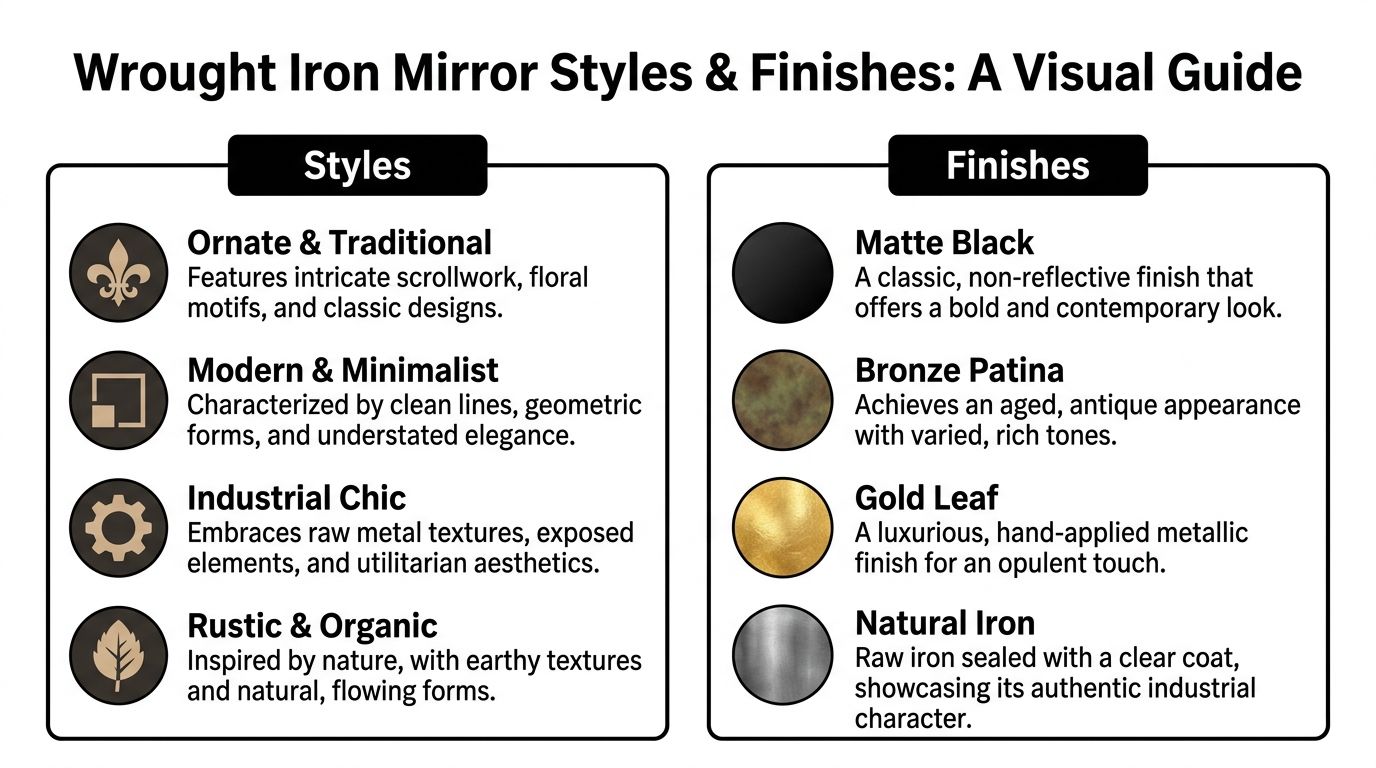
Wrought iron isn’t one look. It’s a material with a surprisingly wide design range. That’s why it works so well in homes that don’t want to feel locked into one era.
Four style directions worth knowing
Ornate and traditional mirrors have visible scrollwork, curved lines, and a more decorative profile. They work well when the room already has classic millwork, richer wood tones, or formal symmetry.
Modern and minimalist frames strip iron down to line and proportion. Think slim rectangular outlines, softened corners, and quiet geometry. These are often the best fit for transitional homes that want warmth without ornament.
Industrial chic pieces lean into rawness. You’ll see darker finishes, simplified forms, and a stronger workshop feel. They pair naturally with brick, concrete tones, aged wood, and matte black hardware.
Rustic and organic mirrors soften iron with movement. The frame may include branch-like curves, hand-hammered irregularity, or an aged patina that feels closer to nature than industry.
How finishes change the room
Finish is where many homeowners make the final design decision. The same frame in matte black and forged bronze can tell two different stories.
Here’s a simple comparison:
| Finish | Aesthetic | Best For | Maintenance Level |
|---|---|---|---|
| Matte Black | Crisp, tailored, high-contrast | Modern, transitional, monochrome rooms | Low |
| Bronze Patina | Layered, warm, slightly aged | Traditional spaces, warm woods, leather | Moderate |
| Gold Leaf | Decorative, luminous, dressier | Formal rooms, glam accents, statement walls | Moderate |
| Natural Iron | Raw, honest, textural | Industrial and minimalist interiors | Moderate |
Matching style to the rest of the home
A common mistake is choosing the mirror first and forcing the room to adapt. It usually works better the other way around. Start with the architecture and the major furniture pieces already in the room.
If you have solid wood furniture Ohio homeowners often gravitate toward, especially oak, maple, or walnut dining and bedroom pieces, iron adds needed contrast. If the room already includes top-grain leather or darker wood, a warmer finish usually settles in more naturally than a stark black.
If your home leans contemporary, keep these pairings in mind:
- Soft white walls plus pale wood floors often suit matte black frames
- Walnut or cherry furniture tends to pair well with bronze patina
- Mixed metals in lighting and hardware can handle natural iron if the lines are clean
- Formal dining rooms can support gold-toned finishes if the scale is disciplined
A good style comparison can help sharpen those choices. This article on industrial vs. rustic furniture styles is especially helpful if your room sits between those two worlds.
Why customization matters more than trend labels
Off-the-floor labels like “farmhouse,” “industrial,” or “Spanish revival” only get you so far. Most real homes are mixed. A Columbus homeowner might have a modern sectional, an Amish-made sideboard, and vintage-inspired lighting in the same house.
That’s why customization matters. The right finish can connect the mirror to existing cabinet hardware, dining bases, sconces, or flooring undertones. The right shape can make a traditional material feel thoroughly current.
The smartest mirror choices don’t copy a showroom vignette. They respond to your architecture, your light, and the pieces you already plan to keep.
Sizing and Placement The Art of Scale
A beautiful mirror in the wrong size will always look slightly off. Most placement problems aren’t about style. They’re about proportion.
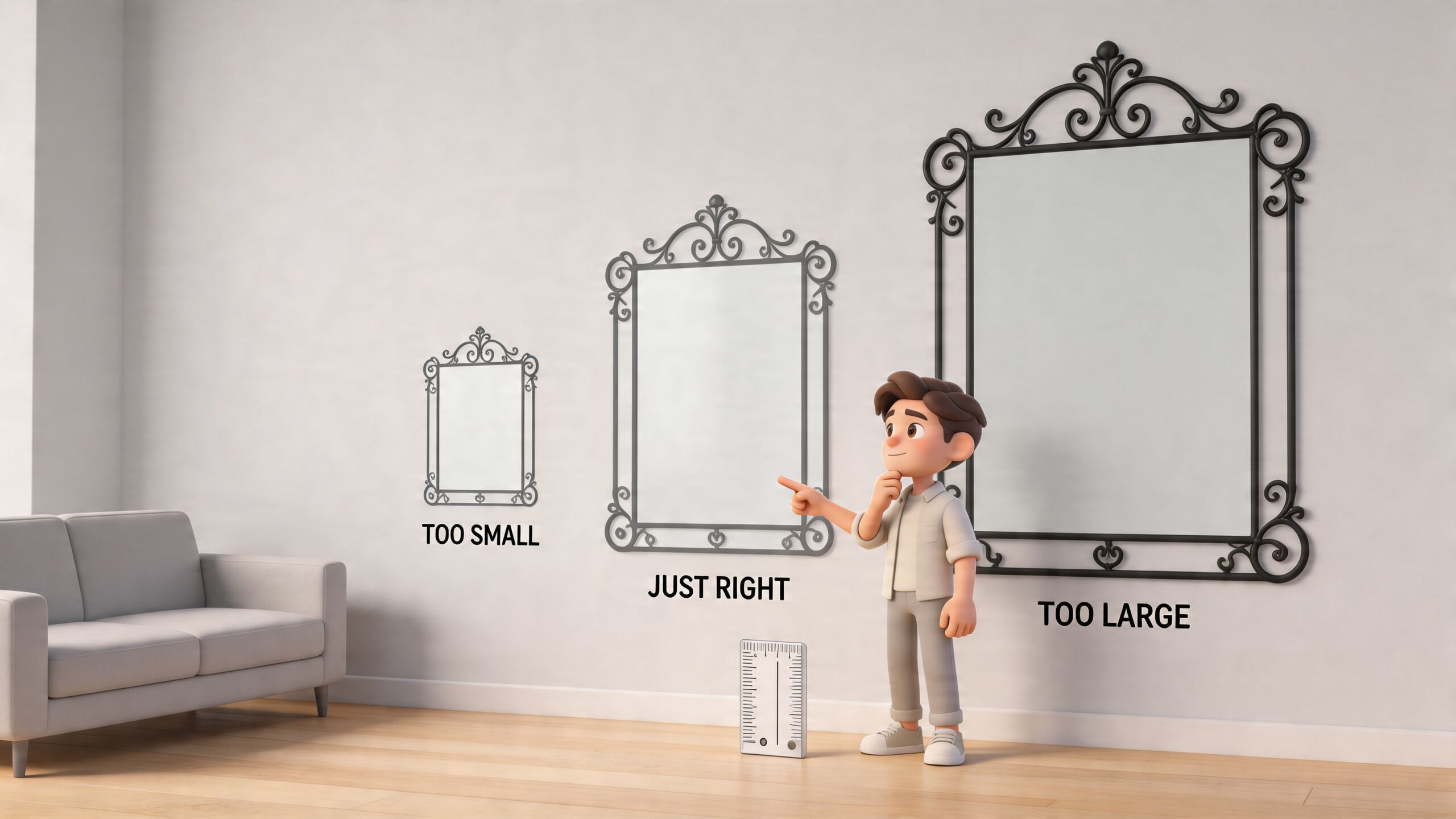
Homeowners usually go too small. They choose a mirror that feels “safe,” then wonder why the wall still looks unfinished. An iron wrought mirror needs enough visual authority to relate to the furniture below it.
A simple rule over furniture
A reliable starting point is the two-thirds rule. Over a console, dresser, or sideboard, the mirror should usually span about two-thirds of the furniture’s width. That creates connection without making the top piece feel top-heavy.
If the frame is visually open with lots of negative space, you can sometimes go a bit larger. If it’s dense and ornate, a slightly narrower choice may feel more balanced.
Room by room placement
Entryway
An entry mirror should feel welcoming and useful. Place it above a console high enough for comfortable sightlines, but low enough to stay visually connected to the surface below. This is often where wrought iron shines because it gives a transitional foyer immediate structure.
Living room
Over a mantel, the mirror should relate to the width and height of the fireplace wall, not float independently. In rooms with high ceilings, a vertically oriented mirror can help pull the eye upward without needing multiple framed pieces.
Dining room
A mirror in the dining room should reflect something worth seeing. That might be a chandelier, artwork opposite the wall, or a window view. If the room includes custom dining sets, especially in solid wood, iron can keep the arrangement from feeling too wood-heavy.
Bedroom
Bedrooms need restraint. If the bed is the star, a mirror should support it, not compete with it. Over a dresser, it can add polish and morning function. In a dressing corner near one of the best mattresses Easton Town Center shoppers often compare in a premium sleep showroom, a tall iron mirror can help complete the suite.
Why larger iron mirrors hold up well
Large vertical mirrors create more stress on a frame than many buyers realize. That’s one reason handcrafted iron remains appealing at bigger scales. Virtue Glass Group’s vintage wrought iron mirror details note that handcrafted wrought iron scrollwork can increase a frame’s moment of inertia by up to 40%, which helps distribute weight and prevent sagging over time.
That means decorative detailing can have a structural role, not just an aesthetic one.
A large mirror shouldn’t look nervous on the wall. It should look settled.
When to ask for help
Scale gets trickier when you’re dealing with:
- A narrow wall between windows
- A tall staircase landing
- A double dresser with lamps
- A fireplace with strong vertical millwork
In those cases, mockups help. Blue tape on the wall helps. So does studying hanging height before anyone starts drilling. This guide to hanging your picture with precision offers a practical framework for getting placement right.
If you remember only one principle, remember this: the mirror should relate to the architecture and the furniture at the same time. When it does, the room feels resolved.
Styling Your Mirror With Furniture and Decor
Placement gives the mirror order. Styling gives it company.
The strongest rooms use contrast on purpose. Wrought iron works because it brings edge and line. Around it, you want materials that either soften that effect or echo it in a more subtle way.
Pairing iron with warmer materials
Iron and wood are one of the most dependable combinations in interiors. A black or bronzed frame above a walnut sideboard creates instant balance. The wood feels richer. The iron feels more intentional.
Leather works the same way. If you have a top-grain leather chair or a finely crafted sectional nearby, the mirror can repeat that sense of durability. Textiles then keep the room from feeling too rigid. Linen drapery, a wool rug, or an upholstered bench help absorb the visual hardness of metal.
A few combinations that consistently work well:
- Iron plus oak gives a clean, grounded transitional look
- Iron plus walnut feels deeper and more refined
- Iron plus leather adds a collected, library-like richness
- Iron plus bouclé or linen keeps a strong frame from feeling severe
What to place beneath the mirror
The surface below matters almost as much as the mirror itself. A wrought iron piece usually benefits from a lower arrangement that’s edited and sculptural rather than busy.
Try a small vignette with contrast:
- A ceramic lamp for softness and light
- A wood bowl or tray to bring natural warmth
- One stack of books to add height variation
- A branch, greenery, or a single vase for movement
Keep the center relatively open so the reflection stays clean. If every inch of the console is crowded, the mirror loses some of its quiet authority.
The mirror should reflect a room that feels composed, not cluttered.
Mixing styles without making the room feel confused
Many well-furnished homes combine styles rather than follow one strict category. That’s especially true if you’ve invested over time. You may have an Amish-made furniture dining table, a contemporary upholstered bed, and a more classic chest in the same home.
That’s not a problem if you repeat a few design cues. A wrought iron mirror can become the bridge piece because it carries both craftsmanship and structure. It can connect a sleek room to more traditional elements without making the space feel themed.
If you’re trying to combine old and new more confidently, this guide on how to mix furniture styles is worth reading.
For homeowners planning a broader room update, visual planning tools help. Seeing an iron mirror next to a Canadel dining group or beside a Smith Brothers seating arrangement before ordering often leads to better decisions than shopping each piece in isolation.
Care and Maintenance to Preserve Your Investment
A quality mirror shouldn’t require complicated upkeep. It does need the right habits.
For routine care, dust the frame with a soft, dry cloth. Don’t soak iron with water, and don’t spray harsh cleaners directly onto the frame. If you need to remove residue, use a lightly damp cloth and dry the surface right away.
Caring for the frame and the glass
Use one cloth for the metal and another for the glass. That prevents cleaner residue from building up on the finish. Spray glass cleaner onto the cloth, not onto the mirror itself, so liquid doesn’t creep into edges or backing.
A few sensible rules go a long way:
- Dust first so grit doesn’t scratch the finish
- Clean glass second with a dedicated cloth
- Avoid abrasive products on textured or antiqued surfaces
- Check bathroom placement if the room holds steam for long periods
Why finish quality matters
Higher-quality antiqued finishes often include anti-rust treatment. As noted earlier in the product category, premium finishes using copper-lead-free silvering can reduce oxidation rates compared with untreated iron. That’s especially useful in Ohio homes where humidity shifts through the year.
You don’t need to baby a well-made piece. You do need to respect the finish.
If your mirror sits in an entryway, bedroom, or dining room, maintenance is usually straightforward. In a bath or dressing area, be more attentive about moisture and surface residue. A little consistency preserves both the iron and the reflection.
The Vinson Advantage Your Partner in Design
Buying a mirror sounds simple until it has to relate to the wall, the furniture below it, the finish of the lighting, and the mood of the entire room. That’s why a design-focused furniture destination matters.
At Vinson’s advantage page, you can see how the experience is built around four things investment homeowners need.
First is customization. The Custom Order Program gives you room to personalize finishes, configurations, and coordinating pieces through digital 3D visualizers. That matters when you’re trying to connect a mirror to custom dining sets, solid wood furniture Ohio homes are built around, or a bedroom with a very specific palette.
Second is design support. The In-Store Design Studio offers complimentary consultations that help with scale, finish coordination, and room planning. For a statement mirror, that kind of guidance can prevent costly mistakes.
Third is value. The Low Price Guarantee includes a 110% refund of the difference if you find a lower price at a local authorized dealer within the stated period, and the Clearance Gallery offers savings of up to 70% on select pieces, as described by the retailer’s published policy.
Fourth is ease. Flexible financing through Synchrony HOME and White-Glove In-Home Delivery make larger design decisions much easier to carry through, especially when you’re furnishing more than one room at once.
For homeowners searching for a furniture store Columbus Ohio shoppers can visit in person, especially one that also offers best mattresses Easton Town Center buyers can test and Amish-made furniture with long-term value, that combination is hard to overlook.
If you’re ready to find an iron wrought mirror that feels right in your home, visit Vinson Fine Furniture at Easton Town Center. You can explore heirloom-quality furnishings, use the in-store design studio, review custom options with 3D visualizers, browse the Clearance Gallery for added value, and get expert help planning a room that feels finished for years, not just for now.