Leather Sectionals with Chaise: A Buyer’s Guide


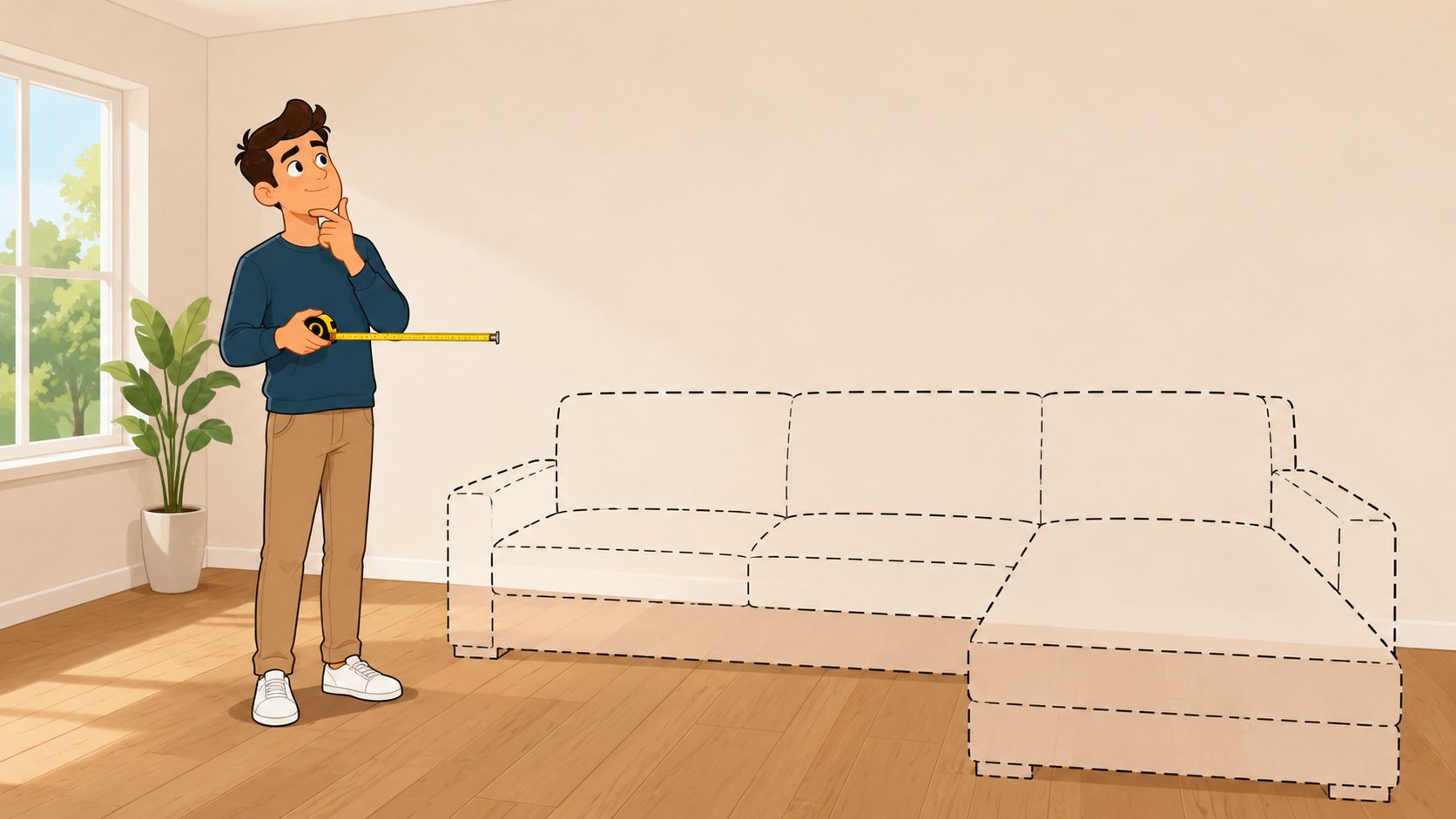
A couple stands in the middle of a living room with a tape measure, one person holding the end at the wall, the other trying to picture where the chaise will land. That's the moment when leather sectionals with chaise stop being a style choice and become a layout decision, because a chaise either fits the room's circulation or it doesn't. At this price point, the buyer isn't choosing a couch, they're choosing how the room lives for years.
Why a Leather Chaise Sectional Is a Different Kind of Purchase
A chaise sectional changes the room before it changes the seating. The longer leg reaches into the floor plan, so the buyer has to think about traffic flow, conversation space, and where the room's focal point sits, not just whether the leather looks good. That's why this purchase deserves the same deliberation as another major home decision, especially when the piece will anchor daily life.
The market signal backs that up. Leather has stayed a major upholstery material for decades, with Furniture Today reporting 34% of all upholstery retail sales and 29% of upholstery unit sales in the referenced year, plus $7.4 billion in leather retail sales in 2009, while the global sectional sofa market is estimated at $22.4 billion in 2025 and projected to reach $36.8 billion by 2034 at a 5.2% CAGR (Furniture Today). Sectionals are not fringe pieces anymore, and L-shaped designs hold the largest share at 42.3% of the sectional market in the same source.
Practical rule: A chaise sectional should be judged like a room layout first and a leather purchase second.
That's why the best buyers walk in with four questions already in mind. What leather grade is worth the money, which configuration suits the household, where does the chaise belong in the room, and what customization is worth paying for? A good starting point is this sectional buying guide, because the smartest decision starts before anyone sits down.
Understanding Leather Grades and What Makes It Last
The leather conversation needs to come before the chaise conversation. If the hide and frame are wrong, the sectional won't age well no matter how smart the layout is. The buyer should think in layers, first the leather surface, then the structure beneath it, then the cushion support that takes the daily abuse.
Read the leather like a finish, not a label
Full-grain leather keeps the most natural character, top-grain is refined for a cleaner look, corrected leather has more surface alteration, and split leather comes from the lower portion of the hide. The tighter the grain and the fewer the surface corrections, the more the leather tends to develop character rather than act like a coated surface that wears flat. That's the tactile difference a shopper feels when running a hand across the arm versus pressing into the seat edge.
Top-grain and performance leathers make sense for premium chaise sectionals because they hold up to repeated sitting, lounging, and the friction created by a chaise end. Bonded and split leathers are weak bets in this category, especially for a buyer expecting long service life. A clean, finished surface can look good on day one, but the test is how it handles years of contact at the seat and arm.
The frame matters just as much. A solid hardwood frame, especially kiln-dried hardwood, gives the sectional the backbone it needs, which is why a buyer should treat the structure under the leather as a priority. For more detail on selection logic, a useful reference is how to choose leather furniture.
| Leather Grade | Durability | Feel Over Time | Best For |
|---|---|---|---|
| Full-grain | Highest character and natural aging | Develops a rich patina | Buyers who want heirloom presence |
| Top-grain | Strong and refined | Softens gracefully | Premium family rooms |
| Corrected | Moderate, more processed surface | More uniform, less nuanced | Style-first buyers |
| Split | Lower for this category | Can feel less substantial | Lower-stakes spaces |
A chaise sectional lives or dies on the material underneath the styling. The leather needs to be worthy of the lounge position, and the frame needs to survive the way people use a sectional.
Choosing the Right Sectional Configuration
The chaise is not the default answer. It's one answer, and sometimes it's the wrong one.
Match the layout to the room, not the catalog photo
An L-shape with one chaise is the cleanest choice for many family rooms because it gives one true lounging end without swallowing the whole floor. A two-chaise sectional makes sense when a large room needs symmetry and the household wants multiple lounge spots, but it can crowd tables and tighten circulation. A U-shaped sectional delivers a lot of seating, yet it often feels heavy and inward-facing, so it works best only when the room is generous and the family wants a conversation pit.
Direct rule: More seats usually beat a longer lounge leg in busy homes.
A modular sectional is the smartest call for households that move pieces around, host often, or expect the room to change over time. It gives the buyer flexibility that a fixed chaise can't. For a formal sitting room, modularity is usually the better move because the room often needs breathing space more than one oversized lounge end.
The decision comes down to use. A TV wall family room often benefits from a single chaise because one person can stretch out while everyone else keeps a clear sightline. An open-plan condo usually needs a layout that protects traffic flow, which makes modular or armless seating more sensible than a fixed chaise. A larger formal space can handle a chaise if the sectional floats properly, but that only works when the rest of the room is intentional.
For buyers who want to design the layout instead of settling for whatever is staged, design your own sectional is the right mindset. The piece should fit the household first, then the leather and trim choices.
Measuring Your Room and Picking Chaise Orientation
Buyers who measure only the width often discover too late that the chaise blocks a doorway, swallows a path, or leaves a power recliner pinned too close to the wall. That mistake shows up fast on delivery day, and it is expensive to fix after the fact.

Start with painter's tape on the floor. Mark the main sofa body, then mark the chaise projection so the layout is visible before anyone orders anything. Then walk the room the way it will be used, from hallway to seating area, from seating area to TV, and from seating area to the nearest doorway. For a clear measuring reference, how to measure furniture gives you the right framework.
Left chaise or right chaise
Pick the chaise side that lets the longer leg stretch away from the main walk-through. If one side of the room carries the main traffic lane, do not force the chaise into it. If the sofa sits against a wall, leave enough space so the chaise does not pinch the route to a window, doorway, or side table.
A floating sectional needs even more discipline. The chaise should support the room's focal wall, not fight it. If the TV sits opposite the sectional, place the chaise on the side that keeps foot traffic out of the main viewing lane. If the room opens into another space, let the chaise protect the transition instead of cutting across it.
Delivery day matters too. Some chaise sectionals are far less forgiving than they look on a screen. Power reclining double-chaise models can need 25 inches from the wall for full recline, and larger configurations can get heavy fast. Sectional dimensions also change the way a room feels, since chaise layouts can range from compact footprints to wider pieces that add a long lounging leg and more depth in the room.
Some shoppers only discover those limits after the piece arrives. Read the room first, then decide whether the chaise supports daily movement, door clearances, and the way people sit in the space.
Customizing Your Sectional Through the In-Store Design Studio
A chaise sectional at this level should not be bought from a dropdown menu. The buyer needs to feel the leather, compare the stitching, and see how the shade shifts under real showroom light.
Why the showroom beats the screen
The In-Store Design Studio gives the shopper a place to test scale and finish in one visit, with complimentary design consultations that turn a hard purchase into a guided one. Book a complimentary consultation through the free interior design consultation page to sort out the layout, leather, and finish with a design consultant. That matters most on custom leather sectionals Columbus buyers are weighing, because chestnut reads warmer than graphite, and a cleaner arm or tighter seam looks different in person than on a flat screen. The tactile decision is the whole point.
The Custom Order Program also opens up material and finish choices through brands such as Smith Brothers of Berne, Canadel, and Mavin, with digital visualizers that help buyers see a piece before it's built. That helps when the sectional has to work with other wood tones, motion features, or a more formal living room palette. Vinson Fine Furniture can handle that process at Easton Town Center, where the showroom format lets buyers sit-test, compare swatches, and narrow the choice without guessing.
A good customization session usually covers a few specific calls.
- Leather tone: Chestnut warms a room, graphite sharpens it.
- Stitch detail: Contrast stitching reads more structured, while matching thread disappears.
- Motion features: Power recline or headrest changes the way the chaise will be used every day.
- Scale: Arm height and seat depth can change the whole visual weight of the piece.
The best custom order is the one that solves a room problem before it becomes a regret.
Online-only ordering makes those choices feel abstract. In person, the buyer can compare how a hand lands on the arm, how deep the seat feels, and whether the chaise looks balanced beside a nearby table or lamp. The showroom also makes it easier to judge the build, the finish, and the way the sectional will live in the room once it is delivered. That is where a showroom earns its keep.
Construction Details That Separate a 10-Year Sectional From a 30-Year One
The visible leather is only half the story. The frame, suspension, cushion core, and stitching are what determine whether the sectional settles into the room or starts sagging into it.
What to ask before paying premium money
A serious sectional should start with a solid hardwood frame, ideally kiln-dried, because that gives the piece stability as humidity and daily use change over time. Under that, the suspension should be designed to support the body evenly, not just keep the seats from collapsing in the first year. Cushion engineering matters too, and a strong guide recommends high-density foam cores at 1.8 pounds per cubic foot or higher, ideally with pocketed coils underneath the foam, because that combination resists sagging better than all-foam cushioning.
The stitching deserves attention as well. For a leather chaise sectional, the buyer should care about thread quality because the seams carry stress where the body settles and shifts. A useful reference on choosing upholstery thread for durability can help frame why stitch integrity matters, even when the leather itself looks immaculate.
A clean spec sheet should answer these questions:
- Frame: Is it solid hardwood, and is it kiln-dried?
- Leather: Is the seating surface top-grain or full-grain, or is the piece using leather-match in less critical areas?
- Cushions: Is the foam dense enough to resist early collapse?
- Support: Are there coils or another reinforcement layer under the seat foam?
- Movement clearance: Does the recline envelope fit the room, not just the footprint?
The delivery side matters because chaise sectionals are bulky in ways standard sofas aren't. The longer leg concentrates size and weight, which can complicate turning radius, doorway clearance, and wall clearance on a moving day. A buyer who ignores that part of the purchase often discovers the problem after the truck arrives, which is exactly when the mistake becomes expensive.
Care, Delivery, Financing, and Clearance Savings
Leather rewards simple discipline. Dust it lightly, condition it on a regular rhythm, keep it out of harsh sun, and blot spills before they settle. That's the whole routine, and it works because leather lasts longer when it isn't dried out, overheated, or scrubbed aggressively.
A seasonal habit keeps the piece looking better.
- Spring: Dust seams and inspect the chaise end where friction is highest.
- Summer: Keep direct sunlight off the seating surface.
- Fall: Condition the leather so it stays supple through heating season.
- Winter: Blot spills quickly and avoid aggressive cleaners.
White-glove delivery is the right move for chaise sectionals because the piece needs careful placement, multi-point inspection, and full packaging removal. Financing through the Synchrony HOME Credit Card can help qualified buyers spread out the purchase, and a renovation financing reference like South Jersey renovation financing guide shows how buyers often structure large home updates around manageable payment plans. For bargain hunters, the Clearance Gallery can deliver floor samples and closeouts at up to 70% off, while the Low Price Guarantee refunds 110% of the difference if a local authorized dealer undercuts the price within 30 days.
That combination matters because this isn't a one-day purchase. It's a decision about upkeep, delivery, and how much room the budget has left after the sectional arrives.
Bringing It All Together at Easton Town Center
The buyer who does this right uses a simple filter. Match the leather grade to the way the room gets used, match the configuration to household size, tape the footprint on the floor before buying, and use customization to solve the final fit and feel. Once those four decisions line up, the sectional stops being a guess.
Easton Town Center gives buyers a place to compare those choices in person, with the room scale, leather hand, and chaise orientation all visible at once. The smart move is to book a complimentary consultation, sit-test the options, and leave with a sectional that belongs to the room instead of just filling it.
Vinson Fine Furniture gives Columbus homeowners a place to compare custom leather sectionals, solid hardwood craftsmanship, and guided design choices in one showroom visit. Visit Vinson Fine Furniture to plan a chaise sectional that fits your room, your routine, and the way you live.