
Biophilic Design Living Room: A Step-by-Step Guide


On a gray Columbus evening, the living room can look finished and still feel wrong. The sofa is decent, the rug is new, the plant corner is trying hard, yet the room still asks for something the eye and body can rest on after work, homework, and the usual end-of-day noise.
That mismatch is where a biophilic design living room earns its keep. The goal is not to scatter a few plants around and call it calm, it's to shape the room around sightlines, light, material honesty, and a maintenance level the household can live with.
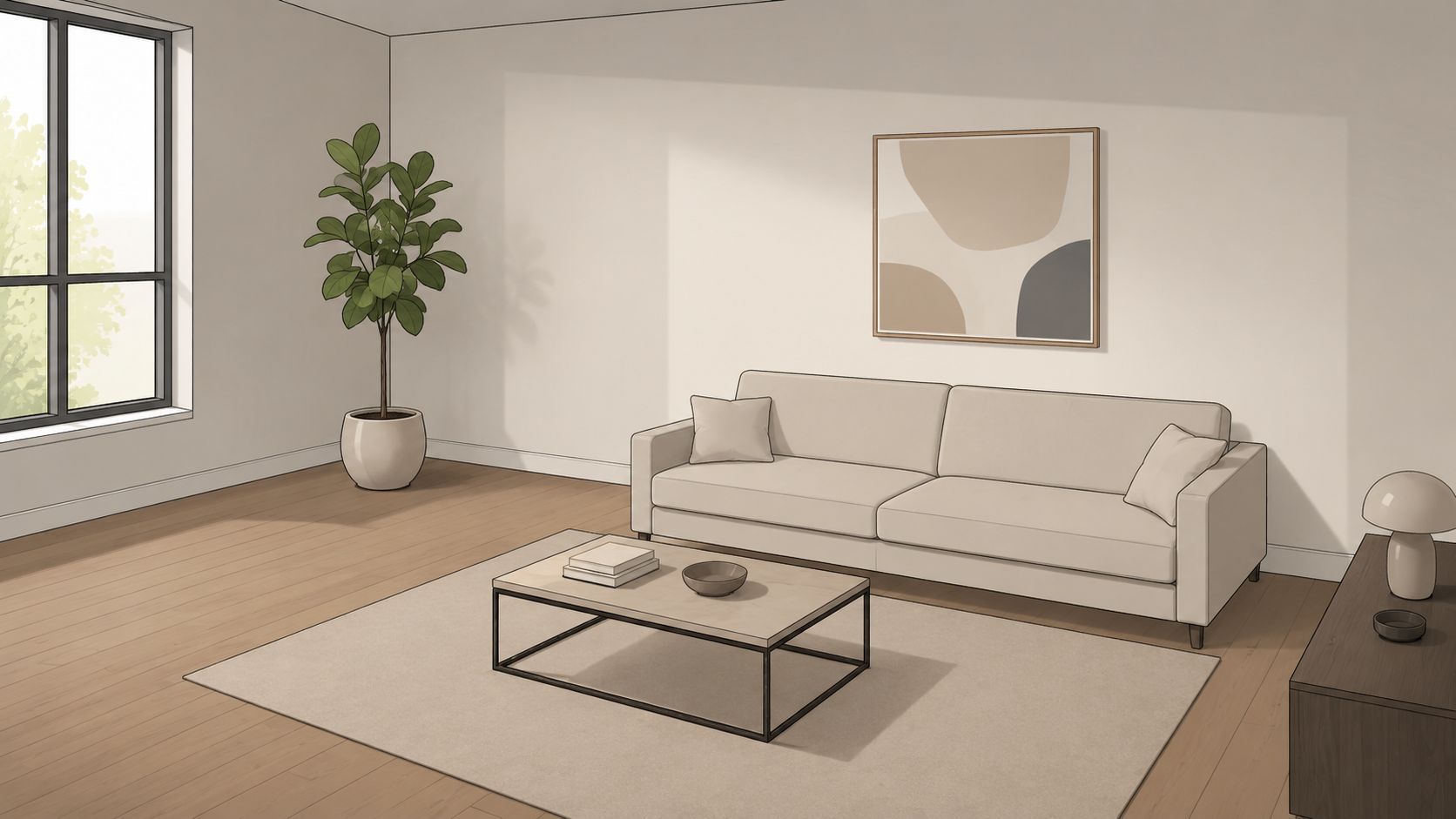
The best working lens is simple. Align the room to a real view, keep natural materials in the foreground, and let daylight and ventilation do more of the heavy lifting than decor ever can. That's the part most Pinterest rooms miss, because they treat nature as a theme instead of a system, while a practical biophilic room treats it as daily exposure that supports stress recovery and focus. A useful overview of the indoor-air side of that thinking sits in browse indoor air quality insights, which pairs well with a room that already feels lighter and easier to breathe in.
Why Your Living Room Feels Off and What Biophilic Design Does Fixes
A lot of living rooms fail for the same reason a hotel lobby can feel lovely but not comforting. They are visually polished, yet they do not give the body any reason to settle. The result is a room that photographs well and still feels like a chore to sit in on a Tuesday night.
Biophilic design is more than plants
For a homeowner, biophilic design means bringing in the parts of nature that the room can use, not just the parts that look good in a vignette. The working framework from Terrapin Bright Green's 14 Patterns is useful here because it points toward visual connection to nature, natural materials, and light and ventilation as recurring drivers of a restorative room. That lens matters because the room needs to do more than suggest nature. It needs to behave like a calmer place to live.
Practical rule: if the room only looks “green” in photos, it probably is not biophilic enough to change how the space feels.
That difference shows up fast in real homes. A single chair aimed toward a window, a wood table with visible grain, and a daylight path that stays open will usually do more for daily comfort than a cluster of decorative planters pushed into a dim corner. For a broader look at how indoor conditions shape comfort, browse indoor air quality insights pairs well with a room that already feels lighter and easier to breathe in.
Why the room needs nature in view, not just on shelves
The point is repeated low-intensity contact with nature patterns. Terrapin Bright Green's guidance recommends keeping natural elements visible for 5-20 minutes per day and using non-rhythmic sensory cues roughly every 20 minutes for about 20 seconds to sustain that exposure in the room. That is a useful reminder for homeowners who want relief, not a greenhouse. The same thinking also fits a stress-reducing layout, and a practical version of that approach is outlined in design your room to help you reduce stress.
A room built this way can support calmer evenings because the eye keeps landing on wood, light, and living texture instead of hard visual static. It also explains why a room full of trendy accessories can still feel flat. Nature has to be built into the way the room functions, not sprinkled on top.
Start With a Spatial Audit Before You Buy Anything
The quickest way to waste money on a biophilic room is to shop before reading the room itself. The stronger move is to map where the eye naturally goes, where daylight lands, and where the room is acoustically dull or visually busy. That audit takes less time than a return trip and saves a lot of second-guessing later.
Read the room before the furniture arrives
Start with the strongest view line. In a typical Columbus living room, that might be the window facing the yard, the treeline, or even the best patch of sky, and the primary seating should face or angle toward that opening first. The seating arrangement can then build outward from that anchor instead of fighting it.
Then check how light moves through the room during the day. Morning light, midday brightness, and late-afternoon glare each change what the room can hold comfortably. A west-facing window may need softer treatment later in the day, while a north-facing room often benefits from lighter materials and more deliberate layering.
A single strong seat aimed at the best view usually does more for the room than six scattered objects competing for attention.
Use a short audit before spending a dollar
A simple checklist keeps the process honest.
- Map the best view: Stand in the doorway and identify the one line of sight that feels most restful.
- Mark the brightest zone: Note where daylight lands first, and where it fades by evening.
- Find the dead wall: Listen for the acoustically hard surface that makes the room feel echoey.
- Spot the visual clutter: Identify one corner that needs to calm down instead of collecting more objects.
- Choose the anchor seat: Place the main chair or sectional to support the strongest view line first.
That same thinking shows up in a broader room-planning approach, which is why a useful next step is a space planning consultation before the first major purchase. A room that respects its own sightlines almost always feels more intentional than one assembled piece by piece without a map.
Choosing Materials That Age Beautifully Instead of Falling Apart
Biophilic design becomes expensive in the wrong way when the materials can't handle real life. Kids kick feet against table legs, pets climb where they shouldn't, humidity swings with the season, and coffee cups leave traces whether anyone planned for them or not. That's why the material palette matters as much as the plant list.
Build the room from surfaces that can take a beating
Solid hardwood gives a living room gravity and warmth that softens over time instead of looking tired. Oak, maple, cherry, and walnut each bring a different grain and tone, but they share the same basic virtue, they feel substantial and can age with character rather than collapse into disposable furniture. Top-grain and performance leather do a similar job in seating, because they deliver tactile richness with real durability when cared for correctly.
Natural textiles like linen, wool, and cotton make the room feel breathable and layered. Stone and ceramic accents add cool contrast, which keeps the room from becoming visually heavy. Used together, these materials create the kind of mix that feels collected, not staged.
The room should feel like it could survive another season of Central Ohio weather without needing to start over.
Solid hardwood versus engineered alternatives
The comparison is straightforward. If the room is meant to anchor family life for years, the repairability and feel of solid hardwood matter more than a low-friction purchase.
| Attribute | Solid Hardwood | Engineered Wood / MDF / Particle Board |
|---|---|---|
| Durability | Built for long-term use | More vulnerable to wear and breakdown |
| Repairability | Can often be refinished or repaired | Repair options are limited |
| Feel | Dense, weighty, natural to the touch | Lighter, flatter, less substantial |
| Aging | Develops character with use | Often shows damage faster |
| Design value | Holds visual presence over time | Can feel temporary faster |
That distinction is why a solid-maple coffee table or a top-grain leather sectional stays relevant long after the trend cycle moves on. A room anchored that way doesn't need constant replacement, which is the ultimate luxury for an investment homeowner. For a deeper hardwood breakdown, this guide to wood furniture longevity and style is a practical companion to the material decisions here.
Lighting and Layout That Work With Your Windows, Not Against Them
Windows should lead the layout, not get treated like a backdrop after the furniture has already been chosen. In a biophilic room, lighting and layout are one decision because the goal is to let daylight do the quiet work for as much of the day as possible, then hand off smoothly to warm evening light.
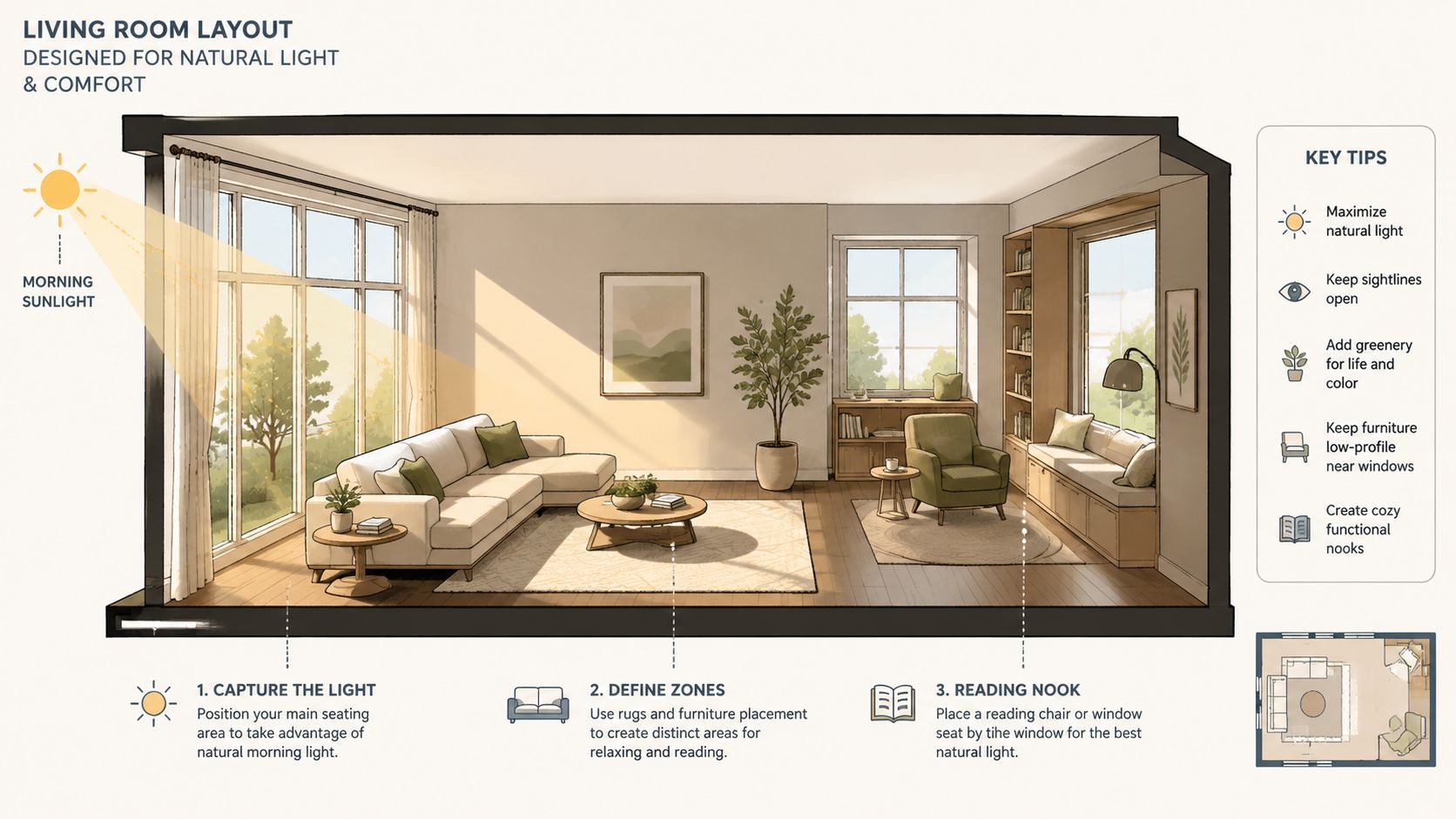
Let the windows set the rhythm
In a Central Ohio home, window orientation changes the entire mood of the room. A harsh west-facing exposure may need sheer linen layered with a heavier natural-fiber drape so the space stays bright without turning harsh in late afternoon. The goal is diffusion, not blackout, because the room still needs to feel connected to the outside.
Lighting temperature matters too. 2700K gives a softer evening feel, while 3000K reads a touch crisper without losing warmth. For a living room meant to calm down after work, that warmer band usually fits better than anything cool or blue-toned.
A helpful companion for homeowners thinking about daylight as a design element is daylighting solutions for homes. The bigger principle remains the same even without a skylight, daylight should read as the primary source from morning through the afternoon, with fixtures taking over only after that.
Shape seating around light, not against it
Primary seating should support the best natural view, then secondary seats should orbit that anchor. A leather swivel chair solves the common problem of one excellent seat and several awkward ones because it lets a guest turn toward conversation, a window, or a fire without breaking the room's flow. A power reclining sectional can do something even more useful in an open family room, it lets more than one person face the view instead of forcing everyone to default to the television.
That's where motion pieces become design tools, not just comfort upgrades. When the layout works, the room feels more open, less defensive, and easier to use at different times of day.
A Realistic Plant Strategy for Real Households
A living room does not improve just because every corner holds a plant. Too many plants can make the room feel crowded, fragile, and hard to keep up with, especially if every surface turns into a watering chore or a pet hazard. The better approach is to match the plant plan to the household's actual light, schedule, and tolerance for upkeep.
Match the plant to the job it has to do
Low-commitment foundation plants, like snake plant, pothos, and ZZ, belong in corners that need life without daily attention. They fit busy households, dimmer rooms, and renters who want softness without creating another routine to manage. These plants support the room subtly instead of asking for constant correction.
Mid-commitment feature plants can carry more visual weight. A fiddle leaf fig, olive, or bird of paradise can hold a corner near a strong view line if the light is right and the owner is willing to rotate the plant and watch for stress. Used with restraint, they start to read as part of the room's architecture.
High-commitment pieces only make sense where the household can support them. Large planters, living walls, and water features can look beautiful, but they need stable light, regular cleaning, and a level of consistency many homes do not have.
- For allergy-sensitive homes: Keep the plant count lower, choose easier-to-clean leaves, and stay ahead of leaf litter.
- For pet households: Confirm safety before bringing in a new plant, then place it where the animal cannot treat it like a snack.
- For renters: Use freestanding planters and movable groupings so the room stays flexible.
- For busy families: Start with low-maintenance greens, then add one stronger feature only if the schedule can support it.
For homeowners who want houseplants that fit alongside new furniture without looking fussy, this guide to coordinating indoor greenery with room pieces is a useful reference. For smaller households that need safer options, pet-safe succulent picks can help narrow the field. The strongest rule still holds, the most sustainable biophilic room is the one that stays alive without becoming another item on the task list.
Anchoring the Room With Furniture Built to Last
Furniture carries the room, so it should follow the same nature-led logic as the plants. A biophilic living room feels settled when the seating, table surfaces, and accent chairs read as solid, tactile, and meant for daily use, not just display. That is the point where the room stops looking staged and starts holding up to real life.
Choose the pieces that hold the whole composition together
Primary seating needs to handle actual contact. A top-grain leather sectional or a performance-leather power reclining sofa gives the room both softness and structure, which matters when the space has to serve film nights, reading, guests, and family traffic. The center of the room should be just as grounded, and a solid-cherry or solid-walnut coffee table from a reputable solid-wood maker keeps the composition calm instead of visually busy.
An accent layer finishes the room without crowding it. A swivel glider or rocker lets one person follow changing light through the day, which is useful in rooms that move from bright morning use to a quieter evening setting.
Customize the room instead of forcing it
The practical way to get the fit right is a Custom Order Program with fabrics, finishes, and configurations chosen in the In-Store Design Studio during a complimentary consultation, then reviewed in a 3D visualizer before anything is built. That process matters because biophilic rooms depend on proportion and tactile harmony as much as color.
A few pieces can still be handled with value sensitivity. The Low Price Guarantee with a 110% refund on the difference and the Clearance Gallery can help a homeowner balance long-term quality with immediate budget discipline, especially when the room needs more than one anchor.
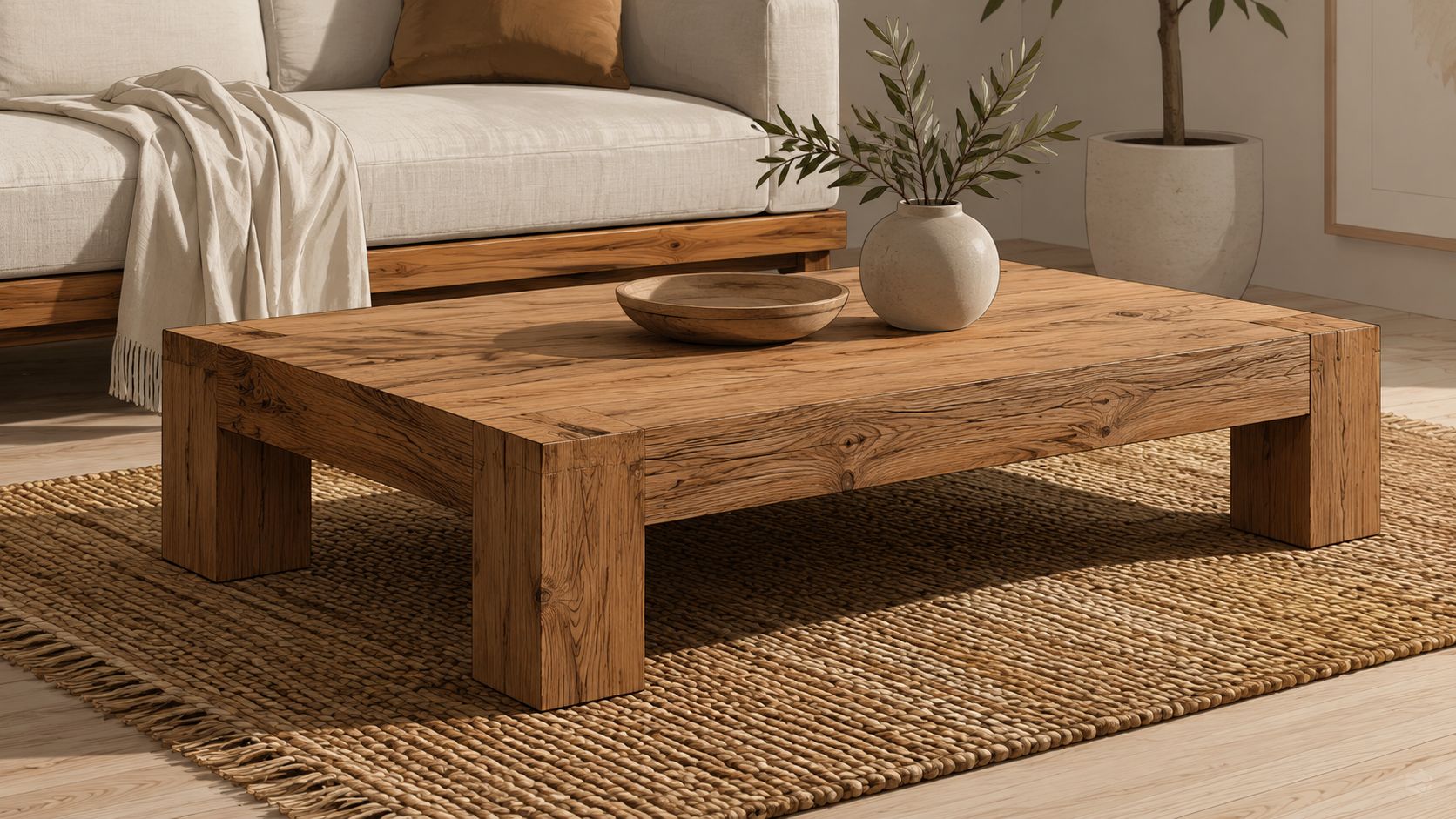
For homeowners near Easton Town Center, Vinson Fine Furniture fits naturally into that process because it offers solid hardwood living room pieces, custom upholstery and finishes, and in-person design support for rooms that need to be measured, not guessed at. The biophilic room stays durable only if the furniture holding it together does the same.
Maintenance, Care, and a Simple Closing Checklist
A nature-led room only works when upkeep stays calm and predictable. Solid hardwood should be cared for with stable indoor humidity, gentle cleaners, and routine dusting, while leather should be conditioned only when it starts to look dry, not on a nervous weekly schedule. Plants need less drama than commonly assumed, but they still need a repeatable watering rhythm and a reason to rotate toward the strongest light.
Keep the room steady
- Solid hardwood: Wipe with a soft, damp cloth, avoid harsh all-purpose sprays, and keep moisture extremes in check.
- Leather seating: Clean spills quickly, then condition only as needed so the surface doesn't become greasy or overtreated.
- Foundation plants: Check soil before watering, then stay consistent rather than reactive.
- Feature plants: Rotate them occasionally so growth doesn't lean one way and the room keeps its balance.
- Quarterly reset: Vacuum under swivel chairs, reassess the room's light path, and remove any pieces that fight the material palette.
The practical finish for a new or fully refreshed room can include White-Glove Delivery and a multi-point inspection, especially when the household is furnishing several spaces at once. That service matters because the room should arrive ready to live in, not ready for another weekend of assembly.
For wood care specifics that keep the anchor pieces in good shape, this wood furniture care guide is worth keeping close. The checklist for this week is simple, spatial audit complete, primary seating anchored to the view line, material palette locked, plant tier chosen, and a consultation booked at the Easton showroom if the plan needs a professional eye before the purchase is final.
Visit Vinson Fine Furniture at Easton Town Center to see solid hardwood living room pieces, custom seating, and in-store design support in person. For homeowners building a biophilic living room that has to survive kids, pets, and everyday use, the showroom is where the sit-test, the material choices, and the room plan can come together before anything is ordered.